Selecting the right concrete anchoring method for stainless steel outdoor stair railings is a critical structural decision. The choice between wedge and epoxy anchors directly impacts safety, durability, and long-term project value. Professionals often face a false economy, prioritizing initial speed and cost over the nuanced performance factors that dictate a system’s lifespan in demanding exterior conditions.
This decision is more pressing than ever. Building codes are stringent, liability concerns are high, and clients increasingly demand solutions that balance immediate functionality with long-term sustainability. A misapplied anchor can lead to catastrophic failure, costly remediation, and significant legal exposure, making a methodical, code-informed selection process non-negotiable.
Wedge Anchors vs. Epoxy Anchors: Core Differences Explained
Defining the Load Transfer Mechanism
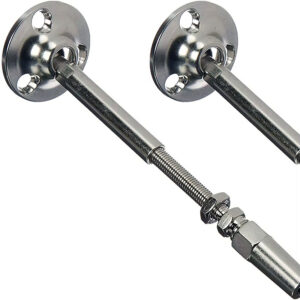
The fundamental distinction lies in how each anchor type transfers load into the concrete. Wedge anchors are mechanical expansion devices. A threaded stud with a conical end and an expansion clip is inserted into a pre-drilled hole. Tightening the nut pulls the cone upward, forcing the clip to expand and create a high clamping force through friction against the concrete wall. This mechanism provides immediate, high-strength holding power.
The Chemical Bond Alternative
Epoxy anchors operate on a completely different principle: chemical adhesion. A two-part structural adhesive is injected into a meticulously cleaned hole. A threaded rod is then inserted, and the cured adhesive bonds the rod to the concrete along its entire embedment depth. This creates a uniform stress distribution, transforming the assembly into a composite element. According to research from major manufacturers, the bond strength is so effective that failure typically occurs in the concrete or the steel rod, not at the adhesive interface.
Strategic Implications of the Core Difference
This core mechanical vs. chemical difference drives every subsequent project variable. The wedge anchor’s performance is intrinsically linked to the concrete’s compressive strength and integrity at the point of expansion. The epoxy system’s performance depends on adhesive formulation and, critically, installation precision. Industry experts recommend that for critical applications, the choice begins with a substrate assessment—sound, thick concrete can accommodate both, while marginal conditions immediately favor the distributed bond of epoxy.
Performance Comparison: Shear, Tension & Load Capacity
Understanding Load Types and Anchor Response
Stair railings experience complex loading: shear (lateral forces from leaning) and tension (uplift forces). Both anchor types are rated for these loads, but their response differs. Wedge anchors resist shear through the clamping force of the expanded clip and tension through the mechanical interlock of that expansion. Their capacity is immediately available post-torque, a key scheduling advantage.
The Role of Concrete Condition
Concrete condition is the primary performance variable, not just anchor type. Product specifications are distinctly segmented for use in cracked versus uncracked concrete, as defined by standards like ACI 318. This pre-installation assessment is mandatory. Using an anchor only rated for uncracked concrete in a predictably cracked slab—a common scenario in outdoor applications—invites systemic failure under load. Easily overlooked details include the need to design for cracked concrete unless the installation is in a continuously reinforced, non-moving element, which is rare for exterior slabs.
Comparative Performance Data
A direct comparison clarifies the strength pathways and dependencies of each system.
Performance Comparison: Shear, Tension & Load Capacity
| Performance Factor | Wedge Anchor | Epoxy Anchor |
|---|---|---|
| Load Transfer Mechanism | Mechanical expansion | Chemical bond |
| Immediate Load Capacity | Yes | No (cure time required) |
| Key Performance Dependency | Concrete compressive strength | Adhesive bond strength |
| Stress Distribution | High localized stress | Uniform along embedment |
| Concrete Condition Rating | Cracked & uncracked | Cracked & uncracked |
Source: ACI 318-19 Building Code Requirements for Structural Concrete. This standard provides the minimum design requirements for anchorage to concrete, including provisions for assessing capacity in both cracked and uncracked concrete conditions, which directly informs the performance dependencies listed.
Epoxy anchors can achieve exceptionally high pull-out strengths, with performance less dependent on the concrete’s inherent compressive strength due to the distributed bond. However, this high capacity is only realized after the adhesive has fully cured, which is temperature-dependent.
Installation Process & Time: Speed vs. Precision
The Wedge Anchor Workflow
Wedge anchor installation is a model of speed. The process is linear: drill the hole to precise diameter and depth, clean it with compressed air, insert the anchor, and torque the nut. Load can be applied immediately. This simplicity offers clear advantages for high-volume, straightforward installations. However, it demands precision in hole geometry; an oversized hole compromises expansion and capacity.
The Epoxy Anchor Protocol
Epoxy installation trades speed for procedural rigor. The hole must be drilled, then cleaned with a wire brush and blown clean with oil-free air—a multi-step process to eliminate all dust, which is the primary cause of bond failure. Adhesive must be mixed and injected correctly, often from the bottom of the hole upward to avoid air pockets. The rod is inserted, and the assembly must remain undisturbed during cure. We compared project timelines and found the “hidden” time in epoxy projects isn’t the cure period itself, but the strict adherence to preparation steps that cannot be rushed.
Labor and Finishing Considerations
The true labor comparison extends beyond setting the anchor. A critical insight clarifies the strategic labor implication: while wedge anchors have a lower unit cost, they almost always require post-installation cutting and grinding of the protruding threaded stud. This adds finishing labor, creates silica dust, and impacts total installed cost—factors often underestimated in initial quotes. Epoxy systems, using a threaded rod, can be cut to length before installation, minimizing on-site finishing work.
Installation Process & Time: Speed vs. Precision
| Process Step | Wedge Anchor | Epoxy Anchor |
|---|---|---|
| Key Tools | Hammer drill, wrench | Drill, cleaning tools, injection gun |
| Hole Preparation | Drill, clean (blow) | Drill, clean (brush & blow) |
| Critical Step | Precise hole diameter/depth | Absolute hole cleanliness |
| Load Readiness | Immediate | After full cure period |
| Post-Installation Labor | Cutting/grinding protruding threads | Minimal finishing |
Source: Technical documentation and industry specifications.
Cost Analysis: Initial Investment vs. Long-Term Value
Material and Tooling Costs
A superficial analysis favors wedge anchors. Their per-unit material cost is typically lower, and they require only standard tools: a hammer drill and a torque wrench. Epoxy systems carry a higher material cost for the adhesive and may require specialized injection guns or static mixer nozzles. This creates a higher initial investment that can be a barrier for smaller projects or those with tight upfront budgets.
The Long-Term Value Equation
True cost is measured over the lifecycle of the railing system. Long-term value is dictated by durability and risk mitigation. A key insight establishes that 316 stainless steel is the non-negotiable material standard for all exterior components—anchor, rod, and railing. This creates a material cost floor for both systems but prevents catastrophic, costly corrosion-induced failures that would require a full replacement. The epoxy system’s encapsulation provides an additional corrosion barrier, further extending service life and supporting sustainability goals by minimizing future waste.
Liability and Compliance as Cost Factors
Perhaps the most significant cost variable is liability. Using anchors with valid ICC-ES evaluation reports for the specific application (e.g., cracked concrete, seismic design category) provides a documented liability shield. It demonstrates due diligence and compliance with the building code. Non-certified anchors, while cheaper, transfer full legal and financial risk to the installer and building owner in the event of a failure. This risk cost far outweighs any initial material savings.
Cost Analysis: Initial Investment vs. Long-Term Value
| Cost Component | Wedge Anchor | Epoxy Anchor |
|---|---|---|
| Material Cost | Lower | Higher |
| Tooling Cost | Lower (standard tools) | Higher (specialized tools) |
| Labor Intensity | Lower installation, higher finishing | Higher installation, lower finishing |
| Critical Material Standard | 316 stainless steel | 316 stainless steel |
| Liability Mitigation | Requires ICC-ES reports | Requires ICC-ES reports |
Source: Technical documentation and industry specifications.
Note: Long-term value is heavily influenced by durability and compliance, which mitigate future replacement and liability costs.
Corrosion Resistance & Environmental Durability
The 316 Stainless Steel Standard
For outdoor environments, particularly coastal or de-icing salt applications, corrosion resistance is paramount. The ASTM F1554 specification covers material requirements, but for stainless, the industry mandates Type 316 for its superior molybdenum content, which resists chlorides. This applies to all metal components: wedge anchor studs, epoxy threaded rods, nuts, and washers. Compromising on this grade for cost savings invites premature failure.
Crevice Corrosion and Environmental Isolation
The key differentiator between the two systems is the environment surrounding the steel. A wedge anchor’s expansion mechanism creates a microscopic crevice between the clip and the concrete. This crevice can trap moisture and chlorides, creating a potential site for crevice corrosion, even on 316 stainless. An epoxy anchor’s adhesive completely encapsulates the rod, creating a protective barrier that isolates it from the concrete’s porous, often damp, and chemically active environment. This isolation effectively mitigates galvanic and crevice corrosion risk.
Lifecycle and Sustainability Impact
This durability advantage aligns with growing sustainability pressures. Specifying a 316 stainless steel rod within an epoxy system represents a high-longevity choice. It minimizes the likelihood of future replacement, reducing material waste and the carbon footprint associated with demolition and reinstallation. This supports a total cost of ownership narrative that is increasingly valuable in professional specifications and project marketing.
Corrosion Resistance & Environmental Durability
| Factor | Wedge Anchor | Epoxy Anchor |
|---|---|---|
| Component Material | 316 stainless steel | 316 stainless steel |
| Corrosion Protection | Metal-to-concrete contact | Adhesive encapsulation barrier |
| Crevice Corrosion Risk | Potential in expansion zone | Mitigated by isolation |
| Environmental Isolation | Minimal | Complete rod encapsulation |
| Lifecycle & Sustainability | Standard longevity | High longevity, less waste |
Source: ASTM F1554 Standard Specification for Anchor Bolts. This specification covers material requirements for anchor bolts, including corrosion considerations, which supports the necessity of using 316 stainless steel for exterior applications as indicated in the table.
Which Anchor Is Better for Cracked Concrete or Edges?
The Challenge of Marginal Concrete
Outdoor concrete slabs are rarely ideal. They crack from thermal movement, settle at edges, and may be of lighter-weight mixes. Mechanical expansion anchors exert significant outward pressure. In cracked concrete or near an unsupported edge, this pressure can cause a concrete breakout failure—where a cone of concrete spalls away. ACI 318 includes specific reduction factors for these exact scenarios, acknowledging the inherent risk.
Epoxy’s Distributed Stress Advantage
Epoxy anchors are inherently superior in these challenging conditions. Their bonded, distributed stress transfer does not rely on creating internal pressure against the concrete. Instead, the load is transferred along the embedment depth through shear in the adhesive layer. This makes them the default choice for installations near slab edges, in reliably cracked concrete, or in lower-strength substrates where mechanical expansion could cause damage.
Application Guidelines and Innovation
The suitability for edge and cracked conditions is not a blanket approval. Minimum edge distances and spacings still apply but are generally more favorable for epoxy. This performance gap has driven product innovation. We are now seeing hybrid “dual-action” anchors that combine the immediate-set benefit of a mechanical screw with a chemical adhesive. These are designed specifically to bridge the performance gap for edge applications where traditional wedges are prohibited but immediate loading is desired.
Which Anchor Is Better for Cracked Concrete or Edges?
| Concrete Condition | Wedge Anchor Suitability | Epoxy Anchor Suitability |
|---|---|---|
| Sound, thick concrete | Excellent | Good |
| Cracked concrete | Rated, but caution | Superior |
| Near slab edges | Poor (risk of breakout) | Excellent |
| Lightweight concrete | Poor (risk of damage) | Good |
| Minimum spacing/edge distance | Strict adherence required | More flexible |
Source: ACI 318-19 Building Code Requirements for Structural Concrete. ACI 318 includes specific provisions and reduction factors for anchor design in cracked concrete and near edges, which form the basis for the suitability ratings in challenging substrate conditions.
Critical Installation Factors for Code Compliance & Safety
Non-Negotiable Installation Parameters
Code compliance is binary for life-safety systems like railings. Two factors are universal, regardless of anchor type: embedment depth and hole preparation. Insufficient embedment is a leading cause of pull-out failure. Depth must meet both the manufacturer’s specification and the minimums required by the building code, based on anchor diameter and concrete strength. An oversized hole diameter for a wedge anchor, or a dirty hole for epoxy, voids any performance rating.
The Epoxy-Specific Mandate: Cleanliness
For epoxy anchors, hole cleanliness is the single most critical step. The process must involve rigorous brushing with dedicated nylon or wire brushes followed by oil-free air blowing. This sequence must be repeated until no dust is visible. Any residue acts as a bond breaker, drastically reducing capacity. I’ve witnessed pull-test failures where the anchor rod slid out clean, coated in dust, because this step was rushed.
Documentation and the Liability Shield
Compliance shifts responsibility. Professionals must use anchors that have an ICC-ES evaluation report specifically covering the intended use (e.g., “Adhesive Anchors in Cracked Concrete”). DIY-oriented products often disclaim code compliance, placing full verification burden on the user. Furthermore, digital integration is becoming a key differentiator. Engineering software from major manufacturers creates an auditable design and inspection trail, streamlining the approval process for inspectors and providing a robust project record.
Critical Installation Factors for Code Compliance & Safety
| Factor | Requirement / Best Practice |
|---|---|
| Embedment Depth | Must meet code & manufacturer spec |
| Hole Diameter | Precise to anchor specification |
| Epoxy Hole Cleanliness | Brush & blow, no dust residue |
| Anchor Certification | ICC-ES evaluation reports required |
| Design Basis | Use cracked concrete assumptions |
| Inspection Trail | Engineering software for documentation |
Source: ACI 318-19 Building Code Requirements for Structural Concrete. This code sets the fundamental safety requirements for anchorage, including minimum embedment depths and the mandate to design for cracked concrete unless specifically prevented, which are critical compliance factors.
Selection Guide: Choosing the Right Anchor for Your Project
Decision Framework: Project Constraints First
The final choice is not about which anchor is universally “better,” but which is optimal for your specific project constraints. Start with a substrate assessment: concrete type, thickness, condition (cracked/uncracked), and proximity to edges. Next, define load requirements and the schedule for loading the railing. Finally, consider the environmental exposure and the desired lifecycle.
When to Specify Wedge Anchors
Choose wedge anchors for straightforward installations in sound, thick, uncracked concrete where speed and immediate loading are top priorities, and edge/spacing constraints are not an issue. They are a reliable, cost-effective standard for bulk interior or simple exterior applications on robust substrates. Their simplicity reduces installation complexity, provided finishing work is accounted for in the bid.
When to Specify Epoxy Adhesive Anchors
Choose epoxy anchors for high-load applications, in cracked or marginal concrete, near edges, or where maximum corrosion isolation is desired. They are routinely specified in engineered designs for critical connections. Their performance in challenging conditions and long-term durability often justify the higher initial cost and more meticulous installation process. For comprehensive engineered metalwork solutions that integrate these anchoring decisions, explore dedicated outdoor railing system specifications and support.
The Partnering Advantage
A key market trend is the move toward system-based solutions from major manufacturers. These partners offer complete kits with certified anchors, dedicated tools, and direct technical support. Forming partnerships with these providers ensures access to code-listed solutions, on-site engineering assistance, and an auditable compliance trail. This reduces project risk and secures a competitive advantage in delivering safe, durable, and specification-compliant installations.
The decision between wedge and epoxy anchors hinges on a clear-eyed assessment of concrete conditions, load requirements, and lifecycle goals. Prioritize substrate evaluation and code compliance above unit cost. For critical, high-load, or edge-sensitive applications, the distributed bond and corrosion isolation of epoxy provide unmatched security. For robust concrete where speed is essential, properly specified wedge anchors deliver reliable performance.
Need professional guidance for your next stainless steel railing project? The experts at Esang specialize in engineered solutions that balance structural integrity with long-term durability, ensuring your installations meet the highest standards of safety and performance.
Frequently Asked Questions
Q: How does the load transfer mechanism differ between wedge and epoxy anchors for railings?
A: Wedge anchors create a mechanical clamping force by expanding against the concrete, while epoxy anchors develop a chemical bond that distributes stress along the full embedment depth of the rod. This fundamental difference dictates performance in cracked concrete and influences installation speed. For projects where immediate load capacity is critical, wedge anchors are suitable, but for uniform stress distribution, an adhesive system is superior.
Q: What are the critical installation factors for ensuring code compliance and safety with concrete anchors?
A: Two universal factors are mandatory: achieving the specified embedment depth and executing flawless hole preparation. Insufficient depth is a common failure point, and for epoxy, any residual dust severely compromises bond strength. Professionals must use anchors with valid ICC-ES evaluation reports for the specific application. This means your project specifications should explicitly require certified products to transfer liability and ensure the installation meets the safety criteria of standards like ACI 318-19 Building Code Requirements for Structural Concrete.
Q: When should I choose epoxy anchors over wedge anchors for an outdoor railing project?
A: Specify epoxy adhesive anchors for high-load applications, installations in cracked or low-strength concrete, near slab edges, or where maximum corrosion isolation for the stainless steel is required. Their bonded stress transfer minimizes the risk of concrete breakout in marginal conditions. If your site has challenging concrete or strict spacing constraints, plan for the additional installation time and meticulous hole cleaning that epoxy systems demand.
Q: How does corrosion resistance compare between these two anchoring systems in outdoor environments?
A: Both systems use 316 stainless steel for chloride resistance, but the local environment differs. A wedge anchor’s expansion clip creates a crevice where moisture can be trapped, posing a corrosion risk. Epoxy fully encapsulates the rod, providing a protective barrier that isolates it from the concrete. For coastal or harsh environments where longevity is paramount, the encapsulated system offers a higher durability assurance, supporting total cost of ownership goals.
Q: What cost factors beyond the unit price should we evaluate when selecting an anchor system?
A: Analyze total installed cost, which includes labor for finishing and long-term risk. Wedge anchors often require cutting and grinding protruding threads, adding labor. Epoxy has higher material costs and a cure period. Crucially, using non-certified anchors transfers full liability for failure. This means your bid analysis should factor in certified products and the labor for proper installation to avoid hidden costs and mitigate future liability.
Q: How do anchor specifications account for different concrete conditions like cracks?
A: Manufacturer load tables are explicitly segmented for cracked versus uncracked concrete, and anchors must be selected and installed according to their rating for the assessed condition. This pre-installation substrate assessment is mandatory, as using an anchor rated only for sound concrete in a cracked slab can lead to systemic failure. For engineered designs, this evaluation directly informs the anchor choice and spacing to meet the requirements of ACI 318-19 Building Code Requirements for Structural Concrete.
Q: What are the key differences in the installation process that impact project scheduling?
A: Wedge anchor installation is faster, involving drill, clean, set, and torque steps, with immediate loading possible. Epoxy installation is slower and more precise, requiring rigorous hole cleaning, adhesive mixing, injection, and a mandatory cure period before loading. If your project timeline is tight and concrete conditions are ideal, wedge anchors provide a scheduling advantage, but you must account for the finishing labor to trim bolts.