For inspectors and project managers, the certification of cable railing systems presents a critical compliance challenge. The process extends beyond a single load test; it demands a layered verification protocol against a fragmented regulatory landscape. Misinterpreting the interplay between visual inspection, proof load testing, and jurisdictional codes can lead to project delays, failed inspections, and significant liability exposure.
The stakes are high. A certified system is a legally defensible asset, while a non-compliant one represents a profound safety and financial risk. This guide provides the technical framework and decision criteria needed to execute a defensible certification process, from initial inspection through recertification.
Key Inspection Protocols for Cable Railing Systems
The Mandatory Baseline: Visual Inspection
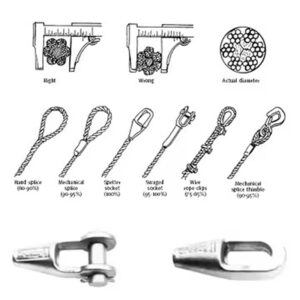
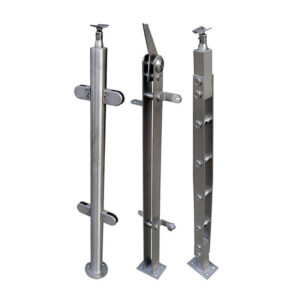
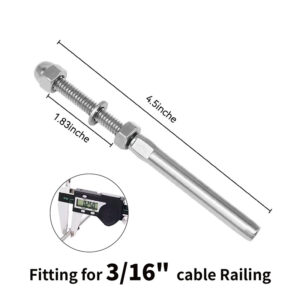
A rigorous visual inspection is the non-negotiable first step, establishing a baseline before any load is applied. This protocol requires a systematic examination of all components. For the cable itself, inspectors must check the entire length for broken wires, with critical rejection criteria including six randomly distributed broken wires in one rope lay or three in one strand. They must also measure for excessive wear, such as a diameter reduction of 1/32 inch for common sizes, and look for deformation like kinks or corrosion. All terminal fittings, swages, turnbuckles, and structural posts must be inspected for cracks, deformation, and proper installation.
A Layered System of Verification
This multi-phase approach underscores that certification is not a single test but a layered system of verification, a principle mandated by regulations like Washington’s WAC, which requires an annual examination in conjunction with each proof load test. Effective project planning must therefore account for the time and cost of this full protocol. In my experience, the most common oversight is neglecting to inspect the backside of posts and fittings where corrosion and cracks often initiate unseen.
Inspection Criteria and Rejection Thresholds
The following table outlines the critical inspection points and rejection criteria for the primary components of a cable railing system, based on established industry specifications.
| Component | Critical Rejection Criteria | Inspection Focus |
|---|---|---|
| Wire Rope | 6 broken wires (rope lay) | Random distribution check |
| Wire Rope | 3 broken wires (strand) | Single strand inspection |
| Wire Rope | 1/32 inch diameter reduction | Wear measurement |
| Fittings & Hardware | Visible cracks or deformation | Visual integrity check |
| Structural Posts | Bending or excessive corrosion | Installation & condition |
Source: ANSI/NAAMM Guide Specifications for Metal Railing Systems and Rails. This guide provides comprehensive material and performance specifications, forming the basis for visual inspection criteria and rejection thresholds for metal railing components.
Understanding Proof Load Testing vs. Visual Inspection
Qualitative Assessment vs. Quantitative Verification
Visual inspection and proof load testing are complementary but distinct verification methods. A visual inspection is a qualitative assessment of condition, identifying visible defects, wear, or damage that could lead to failure. In contrast, a proof load test is a quantitative, nondestructive performance verification. It applies a load greater than the intended safe working load (SWL)—often 125% to 200%—to validate the assembly’s construction, materials, and workmanship under stress without causing permanent deformation.
The Strategic Value of a Conservative Protocol
The strategic value of a robust testing protocol, such as a 200% load strategy, signals a conservative safety philosophy that embeds extreme safety factors. This approach not only meets code but provides specifiers a powerful tool for mitigating liability in high-risk environments, shifting market competition toward verification assurance as a key differentiator. Industry experts recommend specifying proof load percentages in project documents to lock in this safety margin from the outset.
Step-by-Step Guide to the 200-Pound Load Test Procedure
Procedure and Equipment Setup
Executing a 200-pound load test requires calibrated equipment and a methodical approach to verify a railing’s capacity to handle a 200-pound concentrated load, as per IBC International Building Code Section 1607.7 Loads on Handrails and Guards requirements. The procedure begins by securely mounting the cable railing assembly or a representative section to a certified test apparatus. Tension is then gradually applied until reaching the proof load. For a 200-pound rail load with a 200% safety factor, this equates to a 400-pound test load.
Monitoring and Data Integrity
This load is held for a defined period while the system is monitored for failure, terminal slippage, or permanent deformation. The test equipment, often a load cell, typically produces a data graph of the load cycle. This data logging is becoming a critical liability asset, providing forensic evidence of proper procedure. A final post-test visual inspection confirms no damage occurred during testing. We compared setups using digital load cells versus analog gauges and found the former provides indisputable, timestamped records for compliance audits.
The 200-Pound Load Test Protocol
The following sequence details the critical steps and parameters for a compliant proof load test, based on established evaluation criteria.
| Step | Key Parameter / Action | Purpose / Outcome |
|---|---|---|
| 1. Mount Assembly | Certified test apparatus | Secure, representative setup |
| 2. Apply Load | 400-pound proof load | 200% safety factor verification |
| 3. Hold Load | Defined period (e.g., 60 sec) | Monitor for failure/slippage |
| 4. Monitor System | Load cell data graph | Quantitative performance record |
| 5. Final Inspection | Post-test visual check | Confirm no permanent damage |
Source: ICC-ES Acceptance Criteria for Handrails and Guards AC273. AC273 establishes the specific test methods and performance requirements, including proof load procedures and acceptance criteria, for certifying guardrail systems to model building codes.
Essential Documentation for Certification & Compliance
The Critical Deliverables
The test certificate is the critical deliverable, serving as legally defensible proof of compliance. It must include the test date, applied proof load, equipment identifier, and authorization from the testing entity. Inspectors must also verify that periodic and annual inspection records are maintained on file for the mandated period, often 48 months. Material certifications for wire rope and components, along with code compliance reports like ICC-ES evaluations, complete the documentation package.
Documentation as a Strategic Asset
The strategic implication is clear: the value of a testing service hinges on its ability to generate, manage, and supply this documentation, which must survive regulatory audit. Furthermore, the recertification process involves tangible outputs like physical tags on certified systems, linking the physical asset to its digital compliance history for complete lifecycle tracking. Easily overlooked details include ensuring the certificate explicitly references the tested cable railing system configuration and components to avoid ambiguity.
Common Failure Points and Rejection Criteria for Inspectors
Component-Specific Failure Modes
Inspectors must be vigilant for specific failure points that mandate rejection. For wire rope, critical flaws include the specified broken wire counts, diameter reduction beyond thresholds, and deformation like kinking or bird-caging. Hardware presents its own risks: hooks with throat opening distortion exceeding 15%, cracked or corroded fittings, and loose connections all constitute rejection criteria. Structural members, such as posts, must be checked for bending, cracking, or excessive corrosion.
Implications for Recertification
Understanding these points is vital because any assembly suffering such damage requires retesting after repair before returning to service—a recertification trigger. This underscores the need for meticulous inspection to avoid the operational downtime and cost of full recertification procedures. According to research from material failure analyses, terminal fittings at the tensioning mechanism are the most frequent point of incipient failure under cyclic loading.
Inspector’s Guide to Failure Thresholds
This table summarizes the definitive rejection criteria for common failure points in cable railing systems, providing inspectors with clear go/no-go thresholds.
| Component | Failure Point | Rejection Threshold |
|---|---|---|
| Wire Rope | Broken wires | 6 per rope lay |
| Wire Rope | Diameter reduction | >1/32 inch |
| Wire Rope | Deformation | Kinks or bird-caging |
| Hooks | Throat opening distortion | Exceeds 15% |
| Fittings | Cracks or severe corrosion | Visible damage |
| Connections | Loose hardware | Any movement under hand force |
Source: ANSI/NAAMM Guide Specifications for Metal Railing Systems and Rails. The NAAMM guide details material tolerances, wear limits, and defect criteria that form the basis for rejection during inspection of metal railing systems.
How to Interpret and Apply Relevant Standards (IBC, OSHA)
Navigating the Code Hierarchy
Inspectors must navigate a complex regulatory landscape. The International Building Code (IBC) governs the design load, typically requiring guardrails to resist a 200-pound concentrated load. OSHA standards, particularly for general industry and construction, provide requirements for fall protection systems and safe work practices during installation and maintenance. Furthermore, state-specific regulations, like California’s Title 8 or Washington’s WAC, can impose additional or more stringent requirements for inspection frequency and tester accreditation.
The Requirement for Localized Knowledge
This regulatory fragmentation demands specialized local knowledge. A successful inspector or project team cannot rely on a one-size-fits-all approach but must confirm the specific administrative codes applicable to the project’s jurisdiction to ensure full compliance. For example, referencing ASTM F2958 Standard Specification for Ornamental Aluminum Railing Systems and Rails provides test method credibility, but it does not supersede local jurisdictional amendments to the IBC.
Recertification Requirements and Testing Frequency
The Fixed Compliance Calendar
Certification is not perpetual; it operates on a rigid compliance calendar defined by regulation. A detailed annual visual inspection is a minimum requirement. A full unit proof load test is typically mandated every four years. Missing these fixed intervals triggers more stringent “initial certification” requirements, creating significant project risk. Additional recertification triggers include any event that compromises integrity: damage necessitating repair, modification of the system, or extended idleness.
Strategic Calendar Management
Asset managers must implement proactive tracking systems for these due dates. The strategic implication is that managing this calendar is as critical as the initial certification to prevent costly downtime and ensure continuous compliance. In my practice, the most effective systems use digital asset tags scanned during inspections to automatically update a central compliance database and trigger recertification work orders.
Mandated Intervals and Triggers
The following framework outlines the standard recertification frequencies and the events that necessitate unscheduled testing, based on a synthesis of industry codes.
| Requirement | Mandated Frequency | Trigger Events |
|---|---|---|
| Visual Inspection | Annual minimum | Regulatory compliance calendar |
| Proof Load Test | Every 4 years | Fixed interval |
| Initial Certification | Post-repair or modification | System integrity compromise |
| Recertification | After extended idleness | 1 month (rope), 3 months (equipment) |
| Record Retention | 48 months minimum | Audit readiness |
Source: Technical documentation and industry specifications. Frequency mandates are typically derived from a synthesis of IBC requirements, OSHA guidelines, and state-specific administrative codes (e.g., Washington WAC).
Selecting a Certified Testing Provider: A Checklist for Inspectors
Credentials as a Risk Mitigation Tool
Choosing the right testing partner is a strategic decision that impacts project risk. Inspectors and specifiers should use a checklist that verifies critical credentials. First, confirm the provider’s personnel are “accredited” or “certified” by the relevant authority, such as a state DOSH program, as this qualification can be a project bottleneck. Second, ensure they use annually calibrated equipment and provide comprehensive documentation, including data logs.
Evaluating Service Scope and Expertise
Third, evaluate their knowledge of local jurisdictional codes. Firms that offer integrated design-build-test services present a compelling advantage by reducing coordination friction and liability handoffs. Ultimately, selecting a provider with robust protocols transforms compliance from a project hurdle into a verifiable asset, de-risking the installation and ensuring long-term safety. Industry experts recommend conducting reference checks on a provider’s past projects in similar jurisdictions.
Inspector’s Provider Evaluation Checklist
This checklist provides a structured framework for evaluating potential testing providers, focusing on criteria that directly impact project risk and compliance defensibility.
| Selection Criteria | Key Verification | Strategic Impact |
|---|---|---|
| Personnel Accreditation | State DOSH certification | Avoids project bottlenecks |
| Test Equipment | Annual calibration certificates | Ensures result validity |
| Documentation | Comprehensive data logs | Creates liability asset |
| Code Knowledge | Local jurisdictional expertise | Ensures full compliance |
| Service Scope | Design-build-test integration | Reduces coordination friction |
Source: Technical documentation and industry specifications. Checklist criteria are compiled from industry best practices for mitigating project risk and ensuring defensible certification from qualified testing entities.
A defensible certification process hinges on three priorities: implementing the full layered protocol of visual and load testing, maintaining rigorous documentation for the full retention period, and proactively managing the recertification calendar. Treating certification as a one-time event, rather than a lifecycle requirement, is the most common source of compliance failure.
Need a certified system backed by documented testing protocols? Esang provides code-compliant solutions with verification data to support your project’s compliance requirements. For specific technical inquiries, you can also Contact Us.
Frequently Asked Questions
Q: What is the difference between a visual inspection and a proof load test for cable railings?
A: A visual inspection is a qualitative check for visible defects like corrosion or broken wires, while a proof load test is a quantitative, non-destructive performance verification. The test applies a load exceeding the safe working limit—often 200% of the design load—to validate the system’s integrity under stress without causing permanent damage. For projects where liability mitigation is critical, such as high-traffic public spaces, specifying a 200% proof load strategy provides a substantial safety factor beyond basic code compliance.
Q: How do you properly execute a 200-pound concentrated load test for IBC compliance?
A: To verify IBC compliance for a 200-pound guardrail load, you must apply a proof load that incorporates the required safety factor, typically 400 pounds for a 200% strategy. The load is applied gradually using calibrated equipment, held for a specified duration, and monitored for slippage or deformation, with the entire cycle documented by a data logger. This means your testing provider must supply detailed data logs as forensic evidence of the procedure, which is essential for meeting the verification requirements in ICC-ES AC273.
Q: What specific wire rope defects require immediate rejection during an inspection?
A: Inspectors must reject cable with six or more randomly distributed broken wires in one rope lay, or three broken wires in a single strand. Other critical flaws include a diameter reduction of 1/32 inch for common sizes, and any deformation like kinks or bird-caging. This means facilities in corrosive coastal environments should plan for more frequent inspections to catch these degradation signs early and avoid the operational shutdown required for a full recertification.
Q: How often does a cable railing system need recertification, and what triggers it?
A: A full unit proof load test is typically mandated every four years, with a detailed annual visual inspection as a minimum. Recertification is also triggered by any damage, modification, or extended idleness of the system. This creates a rigid compliance calendar, so asset managers must implement proactive tracking systems for these dates to prevent costly project delays and ensure continuous adherence to standards like IBC 1607.7.
Q: What should be on a checklist for selecting a certified load testing provider?
A: Your checklist must verify the provider’s personnel hold accreditation from the relevant state authority, such as a DOSH program. Confirm they use annually calibrated equipment and can supply comprehensive documentation, including data-logged test results. Finally, assess their knowledge of local jurisdictional codes. For complex projects, selecting a firm with integrated design-build-test services reduces coordination risk and transforms compliance from a hurdle into a verifiable asset.
Q: What documentation is legally required to prove cable railing compliance?
A: The essential package includes the test certificate with the date, applied load, and authorizing signature, material certifications for components, and maintained inspection records for the mandated period—often 48 months. Code compliance reports, such as an ICC-ES evaluation report, are also critical. This means the value of your testing service hinges on its ability to generate and manage this documentation to survive a regulatory audit.
Q: How do state regulations like Washington’s WAC impact inspection protocols?
A: State codes like Washington’s WAC can impose more stringent requirements than national model codes, such as mandating an annual examination in conjunction with each proof load test. This regulatory fragmentation demands specialized local knowledge. For your project planning, you must confirm the specific administrative codes for the jurisdiction to allocate appropriate time and budget, as a one-size-fits-all approach risks non-compliance and rejection.