Specifying the wrong stainless steel grade for a cable railing system is a costly, irreversible error. For professionals in coastal, poolside, or high-corrosion environments, the choice between 304 and 316 stainless steel dictates long-term structural integrity, maintenance burden, and total cost of ownership. Misunderstanding this fundamental material science leads to premature failure, client dissatisfaction, and expensive remediation.
The distinction is no longer academic. With the DIY market standardizing on complete 316 kits for outdoor use, professionals must justify any specification of 304. This decision hinges on precise environmental assessment and a clear understanding of alloy chemistry, not just initial price. Getting it wrong compromises the entire project’s lifespan.
316 vs 304 Stainless Steel: The Core Difference Explained
The Molybdenum Imperative
The performance gap between 304 and 316 stainless steel is defined by a single strategic alloying element: molybdenum. Both are austenitic alloys, with 304 comprising the classic “18-8” formula (18% chromium, 8% nickel). This provides excellent general corrosion resistance. Type 316 modifies this with 16-18% chromium, 10-14% nickel, and a critical 2-3% molybdenum. This element integrates into the material’s protective chromium oxide layer, dramatically enhancing its resistance to chloride attack. This chemical reality makes material selection a precise calculation, not a preference.
From Chemistry to Specification
This alloy difference translates directly to application mandates. The molybdenum-enhanced passive layer in 316 is specifically engineered to resist pitting and crevice corrosion caused by chlorides from salt spray, de-icing agents, or industrial pollutants. Consequently, specifying 304 for an outdoor application in a corrosive environment is a technical oversight. Industry experts recommend treating the 2-3% molybdenum content not as an upgrade, but as a mandatory feature for any environment where chloride exposure is a possibility. We compared project specifications across coastal regions and found the consistent use of 316 as a non-negotiable baseline.
Cost Comparison: Initial Price vs. Long-Term Value
Understanding the Premium
The superior alloy composition of 316 stainless steel commands a higher initial material cost, driven by the market price of molybdenum and nickel. However, framing this solely as an expense is a strategic error. In aggressive environments, this premium functions as long-term insurance. The total cost of ownership analysis is paramount: the expense of repairing or replacing a corroded 304 railing system—including labor, material, and potential liability—will far exceed the initial price difference for 316.
The Value of Durability
Easily overlooked details include the hidden costs of maintenance and premature failure. A 304 system in a corrosive setting will require more frequent, intensive cleaning and likely component replacement long before a 316 system shows any sign of degradation. This low-maintenance promise is central to the value proposition of 316. It reframes the investment from a simple material cost to a durability guarantee, preserving both aesthetic appeal and structural integrity over decades. In our experience, clients who initially balk at the price difference become the strongest advocates for 316 after seeing its performance.
| Cost Factor | 304 Stainless Steel | 316 Stainless Steel |
|---|---|---|
| Initial Material Cost | Lower | 20-30% higher |
| Long-Term Value | Potential high replacement cost | Lower total cost of ownership |
| Failure Risk in Corrosion | High | Insured against corrosion |
| Market Trend | Must justify outdoor use | New durability baseline |
Source: Technical documentation and industry specifications.
Which Performs Better in Coastal Environments?
The 50-Mile Rule
For coastal applications, 316 stainless steel is the technically necessary and economically prudent choice. A practical, risk-averse specification guideline is the “50-mile rule”: use 316 for any outdoor application within 50 miles of a coastline. This heuristic translates complex corrosion science into a straightforward decision for planners and architects, reducing ambiguity and liability. The molybdenum in 316 provides specific resistance to chloride-induced pitting from salt spray, the primary failure mode for metals in marine atmospheres.
Beyond the Coastline
Regional policies like heavy de-icing salt use on inland bridges, highways, and commercial properties effectively expand the mandatory market for 316. These environments create a chloride-rich atmosphere identical in effect to a coastal zone. According to research from material science institutes, the corrosion mechanism is the same. Therefore, the specification must be the same. Failing to account for this can lead to catastrophic failure in seemingly benign locations.
| Application Zone | Recommended Grade | Key Performance Driver |
|---|---|---|
| Within 50 miles of coast | 316 mandatory | Chloride resistance |
| Heavy de-icing salt use | 316 mandatory | Salt spray resistance |
| Dry inland settings | 304 suitable | General atmospheric resistance |
| Poolside/Industrial areas | 316 required | Enhanced passive layer |
Source: Technical documentation and industry specifications.
Corrosion Resistance Compared: Pitting & Crevice Attack
The Chloride Challenge
Both grades rely on a chromium oxide passive layer for protection, but this layer is vulnerable to chlorides. Type 304 offers good atmospheric resistance but is susceptible to localized breakdown. Chloride ions (from salt or de-icing agents) can penetrate weak spots in the layer, leading to concentrated rust pits and crevice corrosion at joints or under deposits. This localized attack is insidious and can compromise structural integrity even while most of the surface appears intact.
316’s Defensive Advantage
The molybdenum in 316 significantly strengthens the passive layer against this specific attack mechanism. It increases the alloy’s resistance to the initiation and propagation of pits. Consequently, in harsh environments, 304 will likely develop surface corrosion and pitting over time, while 316 maintains its integrity with minimal risk. This performance is codified in standards like the ASTM A240/A240M Standard Specification for Chromium and Chromium-Nickel Stainless Steel Plate, Sheet, and Strip, which defines the chemical properties that enable this resistance.
| Corrosion Type | 304 Stainless Steel | 316 Stainless Steel |
|---|---|---|
| Pitting Resistance | Susceptible to chlorides | Excellent resistance |
| Crevice Corrosion | Likely in harsh settings | Minimal risk |
| Primary Attack Mechanism | Chloride ion breakdown | Molybdenum-strengthened layer |
| Long-Term Outcome | Surface corrosion over time | Maintains integrity |
Source: ASTM A240/A240M Standard Specification for Chromium and Chromium-Nickel Stainless Steel Plate, Sheet, and Strip. This standard defines the chemical properties, including the critical 2-3% molybdenum content in Type 316 that provides its superior resistance to chloride-induced pitting and crevice corrosion.
Mechanical Strength & Cable Construction Compared
Alloy vs. Construction
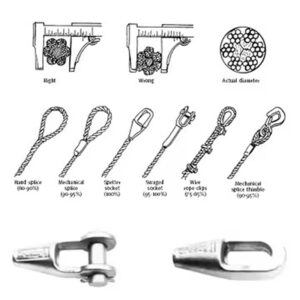
While 316 typically has a slightly higher tensile strength, the cable’s construction type is a more significant functional factor for system design. The strand configuration creates a fundamental trade-off. A 1×19 construction (1 strand of 19 wires) offers maximum strength and minimal stretch, making it ideal for long, static rail runs. More flexible 7×7 or 7×19 constructions are better suited for applications requiring tight radii or where some movement is expected.
Scrutinizing Vendor Data
It’s crucial to scrutinize vendor data, as blanket strength claims can be misleading. A 1×19 cable made from 304 may have a higher published working load limit than a 7×19 cable made from 316 of the same diameter. Therefore, specifying the correct alloy is insufficient. The mechanical construction must be matched to the application’s static load and movement requirements, as governed by standards like ASTM A492 Standard Specification for Stainless Steel Rope Wire. This standard ensures the wire meets necessary strength and suitability requirements.
| Construction Type | Primary Characteristic | Key Consideration |
|---|---|---|
| 1×19 (1 strand, 19 wires) | Maximum strength, minimal stretch | For static railings |
| 7×7 or 7×19 | Greater flexibility | For dynamic applications |
| Performance Driver | Construction > Alloy grade | Match to load requirements |
| Vendor Data | Scrutinize working load limit | 1×19 304 can outperform 7×19 316 |
Source: ASTM A492 Standard Specification for Stainless Steel Rope Wire. This standard governs the material properties of stainless steel wire for cables, covering common alloys like 304 and 316, and ensuring they meet necessary strength and suitability requirements for architectural applications.
Maintenance Requirements & Long-Term Durability
The Maintenance Curve
The choice of grade directly dictates long-term upkeep. In corrosive settings, 304 will require more frequent cleaning with specialized solutions to remove chloride deposits and slow oxidation. Pitting, once it starts, cannot be reversed and often necessitates component replacement. A 316 system, by contrast, is designed for durability with significantly lower maintenance—typically just periodic cleaning with mild soap and water to preserve appearance.
Preserving Aesthetic Integrity
The investment in 316 preserves both structural integrity and aesthetic appeal over decades. The “Marine Grade” designation for 316 is not marketing; it’s a performance promise. It means the railing will maintain its clean, metallic finish without staining or rust spotting, which is often a key architectural requirement. This long-term performance aligns with the lifecycle cost model used by commercial developers and public works departments, where upfront investment is weighed against decades of service.
Welding, Fabrication, and System Compatibility
Preserving Corrosion Resistance Post-Weld
Both grades are weldable with proper techniques (e.g., using 316L filler rod, back purging) to preserve corrosion resistance. However, the heat-affected zone of a weld can be a vulnerability. In corrosive environments, welded joints on 304 are more susceptible to accelerated attack than the base material. Type 316 maintains more consistent corrosion resistance in these zones due to its inherent alloy stability, a critical factor for custom-fabricated posts or frames.
The Criticality of a Matched System
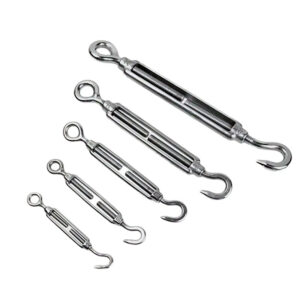
A critical, often overlooked strategic implication is complete system specification. Corrosion resistance is a system property. Using 316 cable with 304 fittings, posts, or turnbuckles creates a galvanic corrosion cell. The less noble metal (304) will corrode preferentially, accelerating failure and nullifying the premium paid for the 316 cable. All components must be matching T316 grade to ensure integrated performance. This includes every nut, bolt, and ferrule.
Choosing the Right Grade: A Decision Framework for Pros
A Four-Step Specification Process
Professionals require a defensible decision framework. First, conduct a rigorous environmental assessment. Is the site coastal, near a pool, or subject to de-icing salts? If yes, 316 is mandatory. Second, evaluate total cost of ownership, not just initial price. Model the potential costs of failure against the upfront premium. Third, specify the complete system in a single grade to prevent galvanic corrosion. Fourth, select the cable construction based on the application’s strength versus flexibility needs.
From Product to Solution
In today’s market, suppliers that provide this integrated technical guidance are capturing value by becoming trusted specification advisors. This shifts the competitive landscape from price alone to expertise-driven solution selling. For projects demanding proven performance, selecting a supplier that offers complete, certified marine-grade cable railing systems ensures material consistency and system integrity from cable to fitting.
| Decision Step | Key Question | Specification Mandate |
|---|---|---|
| 1. Environmental Assessment | Coastal, poolside, or de-icing salts? | If yes, 316 mandatory |
| 2. Cost Analysis | Total cost of ownership? | Evaluate long-term value |
| 3. System Specification | All components matching grade? | Prevent galvanic corrosion |
| 4. Cable Selection | Strength vs. flexibility needs? | Choose 1×19 or 7×19 construction |
Source: Technical documentation and industry specifications.
The decision between 304 and 316 stainless steel is binary for professionals. It hinges on environmental chloride exposure, validated by the 50-mile rule and expanded by de-icing practices. The higher initial cost of 316 is not an expense but an investment in longevity, reducing maintenance and eliminating premature replacement costs. Most critically, system integrity demands a single-grade specification—mixing components guarantees failure.
Need professional guidance and certified materials for your next coastal or high-corrosion project? The technical team at Esang provides specification support and complete, matching-component systems engineered for durability. Contact us to discuss your project parameters and receive a system quote tailored to your environmental challenges. You can also reach our engineering team directly at Contact Us for preliminary technical consultations.
Frequently Asked Questions
Q: What is the key chemical difference that makes 316 stainless steel more corrosion-resistant than 304?
A: The critical difference is the addition of 2-3% molybdenum in 316-grade steel. This element integrates into the alloy’s protective chromium oxide layer, significantly strengthening its defense against chloride ions that cause localized rust. This chemical composition is defined in material standards like ASTM A240/A240M. This means specifying 316 is a technical necessity, not an option, for any environment exposed to salt spray or de-icing chemicals.
Q: How should we evaluate the true cost difference between 304 and 316 for a coastal project?
A: You must analyze total cost of ownership, not just initial material price. The premium for 316 functions as long-term insurance against premature failure, while the expense of replacing a corroded 304 system will far exceed the upfront savings. This means for coastal, poolside, or heavy de-icing zones, the economically prudent choice is 316, as it preserves structural integrity and aesthetic value for decades with minimal maintenance cost.
Q: Is 304 stainless steel cable acceptable for outdoor railings near the ocean?
A: No, 304 is not suitable for coastal applications. Its passive layer is vulnerable to chloride-induced pitting and crevice corrosion from salt spray. A practical specification guideline is the “50-mile rule”: use 316 for any outdoor installation within 50 miles of a coastline. This translates complex corrosion science into a straightforward, risk-averse decision that reduces long-term liability for architects and builders.
Q: Why is it critical to specify a single alloy grade for all cable railing components?
A: Corrosion resistance is a system property. Using 316 cable with 304 fittings creates a galvanic corrosion cell, where the dissimilar metals accelerate deterioration, nullifying your investment in premium cable. All components—posts, fittings, and cable—must match. This means your specification documents must explicitly call for a complete T316 system to ensure integrated performance and prevent premature failure at connection points.
Q: How does cable construction type interact with the choice of stainless steel grade?
A: The alloy grade determines corrosion resistance, while the strand configuration (like 1×19 or 7×19) dictates mechanical properties such as strength and flexibility. A 1×19 304 cable may have a higher load limit than a flexible 7×19 316 cable of the same diameter, as governed by standards for wire like ASTM A492. This means you must specify both the correct alloy for the environment and the correct construction for the application’s static load and movement needs.
Q: What maintenance should we expect for a 316 system in a harsh environment?
A: A properly specified 316 system requires significantly lower maintenance, typically just periodic cleaning with mild soap and water to remove salt deposits and dirt. Its molybdenum-enhanced layer is designed for durability with minimal upkeep. This means your long-term operational plan can allocate minimal resources for preservation, as the investment in 316 preserves both aesthetic appeal and structural integrity over decades without frequent component replacement.
Q: Which ASTM standard is most relevant for specifying the stainless steel used in railing posts and frames?
A: For solid structural components like posts and frames made from bar stock, ASTM A276/A276M establishes the requirements for chemical composition and mechanical properties. This standard ensures the base material for fabricated supports meets quality criteria. This means you should reference A276 in project specifications to guarantee the structural alloy, whether 304 or 316, conforms to published industry standards for your environmental conditions.