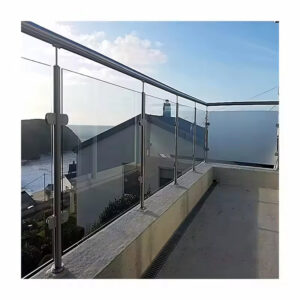
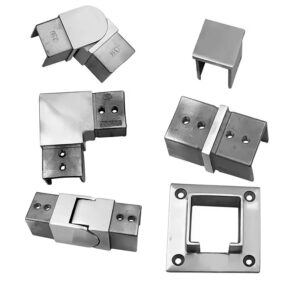
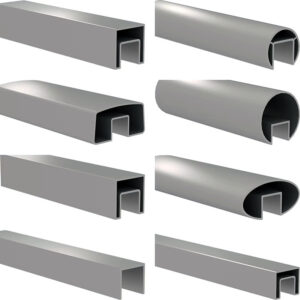
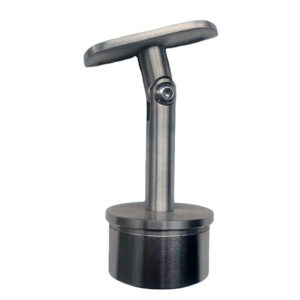
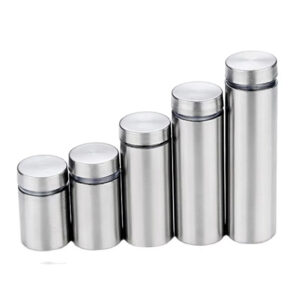
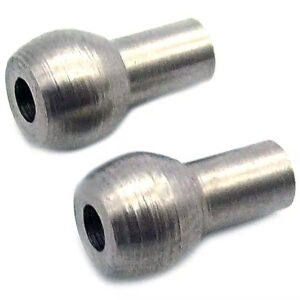
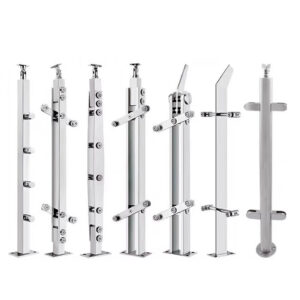
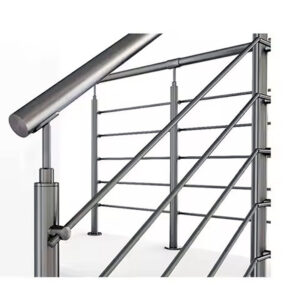
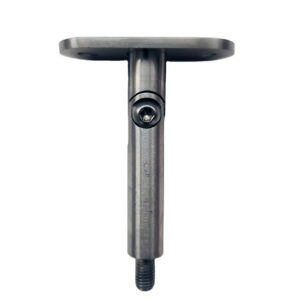
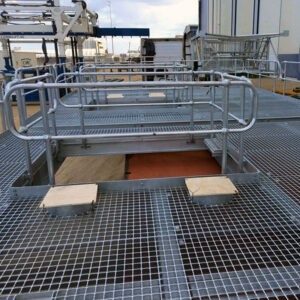
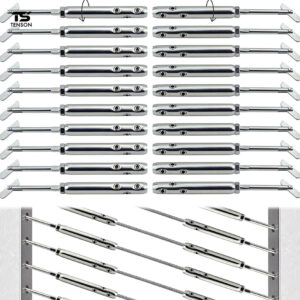
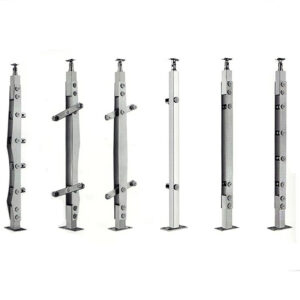
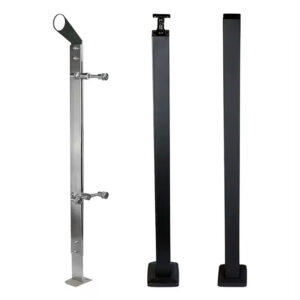
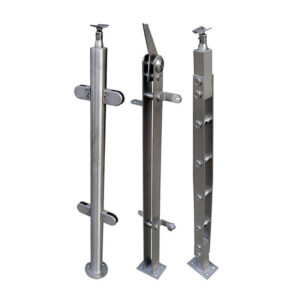
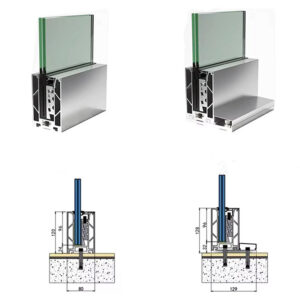
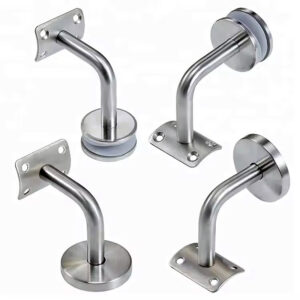
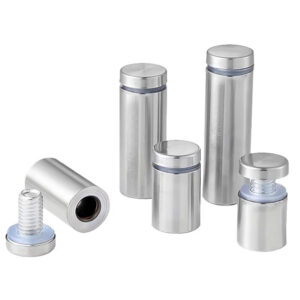
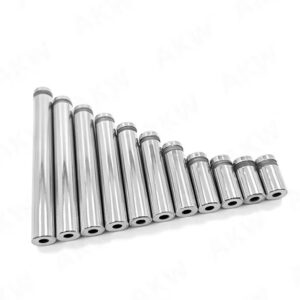
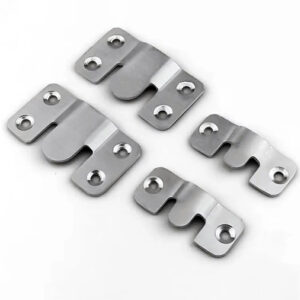
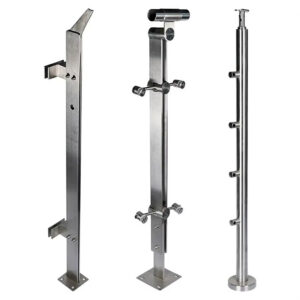
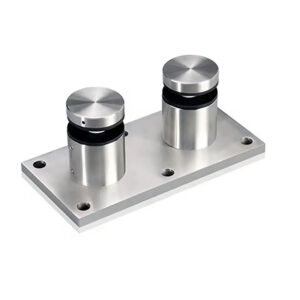
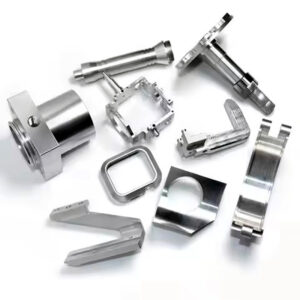
Most supplier shortlisting mistakes in railing projects don’t surface at the quoting stage — they surface on delivery day, when a satin finish that looked acceptable in a catalogue photograph reads differently across mixed tube and sheet components at the job site, or when fasteners specified on the bill of materials simply aren’t in the crate. By then, the contractor is managing a site rejection, a delayed submittal, or a re-order that compresses the install schedule on both ends. The decision that prevents this isn’t about finding the lowest FOB price or the widest product range — it’s about confirming that a supplier’s quality process, documentation capability, and finish control are aligned with what the project actually requires before a purchase order is issued. The checklist that follows is structured to help contractors, importers, and railing installers make that judgment with the right evidence in hand.
Supplier qualification beyond catalogue breadth
A broad catalogue is not evidence of process control, and treating it as a qualification signal is one of the more costly shortcuts in railing procurement. A supplier with hundreds of SKUs and no documented quality management system is still a supplier with no documented quality management system. What matters at the qualification stage is whether the supplier operates under a process framework that reduces output variability — and whether they can demonstrate that through auditable documentation rather than a well-designed product page.
ISO 9001:2015 is the reference point most procurement teams recognize here. Its relevance is specific: the standard describes the requirements for a quality management system, not the performance requirements of any particular railing product. A supplier holding ISO 9001 certification signals that their production, inspection, and corrective action processes are documented and subject to third-party audit. It does not guarantee that any individual product meets a specific load rating, finish specification, or dimensional tolerance. Treating certification as product compliance is a common misreading that leads contractors to skip the technical verification steps that actually matter downstream.
The practical implication is this: ISO 9001 status is a useful filter for reducing process-level risk, but it should sit at the beginning of the qualification checklist, not the end of it. A supplier who cannot produce mill certificates on request, who does not maintain records of finish lot inspections, or whose lead times are not backed by documented production scheduling presents a procurement and liability exposure regardless of their certification status. The absence of a formal quality credential, conversely, isn’t automatically disqualifying — but it shifts the burden onto the buyer to verify process control through other means, and that verification takes time that most project schedules cannot absorb.
Contractor and importer checks for tube, bracket, and finish compatibility
Finish compatibility is the area where specification assumptions most frequently diverge from what a supplier can actually deliver. The gap is rarely about product availability — most suppliers can describe their finish options in a catalogue. The gap is about whether the satin finish applied to extruded tube stock will match the satin finish applied to a sheet metal bracket when both are installed side by side on a job site wall. That variation is almost never flagged at the quoting stage, but it is the most common reason for site sample rejection after delivery.
The distinction matters because satin finishing is not a single process. Hand-applied shop finishing and machine-applied sheet finishing produce different directional scratch patterns, different sheen levels under oblique light, and different tactile textures. When tube and bracket components come from the same production line using the same method, the result is typically consistent. When they come from different production stages, or when a supplier applies finishing manually to some parts and mechanically to others, the output can diverge enough to trigger rejection — particularly in commercial interiors where finish uniformity is part of the architectural specification.
Bead blasting introduces a harder threshold. As a finishing method, it is unsuitable for stainless steel sheet substrate — the process can compromise the surface in ways that affect both appearance and corrosion resistance. Any bill of materials that carries bead blast as the specified finish for sheet components will need to be corrected, and if that correction happens after a supplier has already been selected and samples approved, it restarts the approval path. The implication for importers coordinating between contractor BOMs and supplier catalogues is that finish terminology must be reconciled before sample orders are placed, not after.
The three-point check covering finish consistency, bead blasting exclusion, and material grade should be confirmed directly with the supplier before the quote is finalized.
| Check / Issue | Why It Matters | What to Clarify with Supplier |
|---|---|---|
| Finish consistency between tube and sheet parts | Uncontrolled satin variation can cause site sample rejection | Confirm finishing method (hand‑applied vs. sheet‑applied) and sample approval process |
| Bead blasting on stainless steel sheet | Bead blasting is unsuitable for sheet; specification will fail | Verify bead blast is excluded for sheet components and an alternative finish is available |
| Material grade for outdoor projects | Non‑316 stainless steel risks outdoor corrosion failure | Require AISI 316 grade proof and mill certificates for outdoor railing |
On material grade: AISI 316 stainless steel is the planning standard for outdoor railing environments because of its molybdenum content and its resistance to chloride-induced corrosion. Specifying 304 for an exterior application in a coastal or humid environment is a foreseeable durability risk, and mill certificates are the only reliable way to confirm grade — a supplier’s verbal assurance or catalogue notation is not sufficient evidence for a project record.
Commercial facility requirements that change documentation demand
The documentation burden on a commercial railing project is qualitatively different from what a residential or light commercial project requires, and it changes the supplier qualification criteria in ways that are easy to underestimate until a submittal is rejected or a LEED credit application stalls.
Commercial facilities — particularly those pursuing LEED certification or operating under institutional procurement requirements — often require documentation that goes well beyond product data sheets. LEED credit documentation requires material sourcing records, recycled content data, and sometimes regional manufacturing information. Submittal packages for commercial architectural projects typically require shop drawings reviewed against specifications like NAAMM AMP 521-01, which covers pipe railing system design and installation requirements, or NAAMM AMP 500-06, which addresses metal finishes in architectural applications. A supplier who cannot support documentation at this level isn’t necessarily a poor manufacturer — but they are a poor fit for commercial project procurement, regardless of their unit pricing.
The friction point for contractors and importers is that documentation capability is rarely disclosed upfront. Suppliers who support AIA continuing education and can provide structured LEED credit documentation have built that capability intentionally, and it signals a level of commercial project experience that affects more than paperwork. It typically means the supplier’s internal processes — shop drawing production, sample approval workflows, finish lot traceability — are aligned with how commercial projects actually operate. Suppliers without that infrastructure tend to surface documentation gaps late, at the stage when a submittal rejection delays a construction draw or a LEED reviewer requests records the supplier cannot produce.
For contractors managing multiple commercial projects simultaneously, this asymmetry compounds quickly. A supplier that reduces documentation burden across multiple submittals is worth more than the unit price difference, particularly when rework on a submittal package costs more in project management time than the margin saved on FOB pricing.
Communication friction around submittals, samples, and shipment packing
The operational cost of poor communication between a contractor’s project team and a supplier’s sales or technical staff is easy to underestimate because it tends to accumulate in small increments — a sample that needs to be re-ordered because finish terminology wasn’t aligned, a submittal round-trip that takes two weeks instead of three days, a shipment that arrives with bracket hardware missing because the packing list wasn’t reconciled against the BOM before dispatch.
Individually, each of these friction points looks like a minor inconvenience. Cumulatively, they tend to compress the install window, create schedule float that wasn’t planned for, and occasionally trigger liquidated damages clauses on time-sensitive commercial projects. The relevant question at the supplier qualification stage isn’t whether communication friction will occur — it will — but whether the supplier has structured their support resources to reduce it in ways that align with how project teams actually work.
The three support mechanisms that most consistently reduce friction in railing procurement are installation documentation resources that support submittal preparation, a direct path for drawing upload and technical review, and access to regional sales representation with engineering capability rather than order-taking-only sales contact.
| Support Resource | What It Provides | How It Reduces Friction |
|---|---|---|
| Architect’s Corner | Installation videos, schematic parts templates | Speeds up submittal preparation and improves document accuracy |
| Custom Parts & Design service | Direct drawing upload and personalized review | Cuts back‑and‑forth by centralizing sample and submittal feedback |
| Regional sales representatives | Engineering guidance and product information | Shortens problem‑resolution loops with direct technical support |
Shipment packing deserves separate attention because it tends to be overlooked until a crate is opened. Finish damage in transit — scratches on satin tube from inadequate separation, dents in thin-wall cap components from loose packing — creates a site rejection scenario that no amount of good documentation will resolve quickly. A supplier’s packing standards should be verified before the first order, either through a reference check with a contractor who has received shipments from them, or by requesting photographs of a packed export crate as part of the sample process. This is particularly important for importers managing long-haul freight where re-inspection on arrival is the first opportunity to identify damage that occurred weeks earlier.
For projects where submittal complexity is high, resources like an Architect’s Corner with schematic parts templates and installation videos materially reduce the preparation time for documentation packages. The Stainless Railing Systems: What Buyers Must Confirm Between Tube Tolerance Finish Quality and Connector Compatibility article covers the tolerance and connector compatibility dimensions of this problem in more detail, which is worth reviewing before finalizing submittal specifications.
Shortlist decision after technical and export evidence is complete
By the time a supplier reaches the shortlist stage, the evaluation has already filtered for product family fit, grade control, finish process alignment, and documentation capability. What remains is a final review of the operational and export evidence — the indicators that tell you whether a supplier can execute the project, not just quote it accurately.
The distinction between a supplier who can produce the right product and a supplier who can manage the project through detailing, manufacture, and delivery is not always obvious from catalogue and certification review. It becomes visible in the evidence they provide at the shortlist stage: whether they assign a dedicated project manager to commercial orders, whether their shop drawing turnaround is consistent with the project submittal schedule, whether their export packing documentation — commercial invoices, packing lists, certificates of origin — is complete and accurate without chasing.
A supplier with dedicated project management oversight covering detailing, manufacture, and installation coordination reduces the contract-timeline risk that arises when responsibilities are fragmented across a supplier’s internal teams. For importers managing projects across multiple time zones, this is a practical consideration: a single accountable contact who can track production status, flag potential delays before they affect the shipping window, and confirm that packing matches the BOM is more valuable than a lower unit price that requires three separate contacts to resolve a discrepancy.
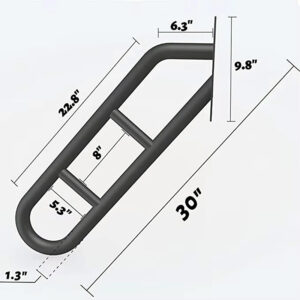
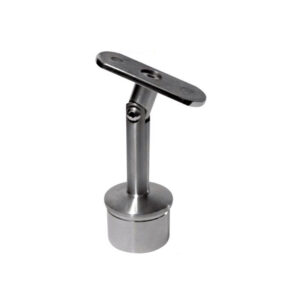
The final shortlist check should confirm that the supplier can support both the target rail system and the complete project documentation path — not one without the other. A supplier that is strong on product but weak on documentation may be appropriate for residential or straightforward commercial work, but is a procurement risk on any project where submittal rejection or LEED documentation gaps have schedule or financial consequences. Conversely, a supplier with strong documentation infrastructure but limited experience with a specific product system — stainless steel wall handrails for a continuous wall-mount run, for example, or heavy duty wall handrails for a high-load industrial stair — may still present a fabrication risk that surfaces in dimensional inconsistency or load-path errors that are difficult to catch before installation.
The shortlist should survive only if both dimensions are confirmed.
The most durable takeaway from this checklist is that the evaluation criteria which predict a successful procurement relationship are not the same criteria that appear first in a supplier comparison. Catalogue breadth and FOB unit price are visible early; finish process control, documentation infrastructure, and shipment packing discipline are visible only when you ask for evidence of them directly. Before finalizing a supplier decision, confirm in writing: what finishing method is used for each component type in the specified system, whether mill certificates are available for the ordered grade, what the submittal support path looks like for the project’s documentation requirements, and who owns project management accountability from production through export. If any of those questions produces a vague or delayed response, that is itself meaningful procurement data — and it is better to surface it before award than after delivery.
Frequently Asked Questions
Q: What if the project is residential rather than commercial — does this checklist still apply?
A: Most of it applies, but the documentation threshold is lower. Residential projects rarely require LEED credit records, NAAMM-referenced shop drawings, or AIA submittal packages, so a supplier without commercial documentation infrastructure is not automatically disqualified. The checks that remain fully relevant regardless of project type are finish process control, grade verification via mill certificates, and shipment packing standards — these affect site acceptance and durability on any project, not just commercial ones.
Q: After a supplier passes the checklist and a purchase order is issued, what should happen before the first shipment leaves?
A: Request a pre-shipment photograph of a packed export crate and reconcile the packing list against the project bill of materials before dispatch is confirmed. This is the last practical checkpoint to catch missing fasteners, incorrect quantities, or inadequate finish protection before the freight window closes. For long-haul imports, damage or missing components discovered on arrival cannot be resolved quickly, and re-orders at that stage will compress the install schedule in both directions.
Q: At what point does a general hardware supplier become an acceptable alternative to a specialized railing supplier?
A: On projects where the rail system uses standard off-the-shelf profiles with no mixed substrate finishing and no commercial submittal requirement, a general hardware supplier may carry enough of the product range to be viable. The risk increases sharply when the project mixes tube and sheet components in the same finish specification, requires traceability documentation for material grade, or has a submittal path tied to architect review. In those conditions, the compatibility and documentation gaps that a general supplier typically cannot close will surface as project costs, not just inconveniences.
Q: Is a supplier without ISO 9001 certification worth keeping on the shortlist if their samples pass inspection?
A: Possibly, but only if you can verify process control through an alternative path — typically a reference check with a contractor who has received multiple shipments, plus direct review of how the supplier handles finish lot records and corrective actions when a batch fails inspection. A passing sample confirms one production run; it does not confirm that the supplier’s process is stable enough to reproduce that output across a full project order. Without ISO 9001 or equivalent evidence, that verification burden falls entirely on the buyer and takes time most project schedules do not have built in.
Q: How should the trade-off between a lower FOB price from a general supplier and stronger project support from a specialist be decided?
A: Calculate the decision at the project level, not the unit level. A lower FOB price narrows quickly when a single submittal rejection costs two weeks of project management time, a finish mismatch requires re-sampling, or a missing fastener triggers a re-order that delays a construction draw. On straightforward projects with no submittal complexity and standard product profiles, the price difference may be justifiable. On commercial projects where documentation gaps have schedule or financial consequences, the unit price advantage from a general supplier rarely survives contact with one avoidable failure point.