When contractors discover mid-installation that a glass panel’s hole pattern doesn’t match the spigot machining drawing, the job doesn’t pause cleanly — it stops. Custom glass is almost always non-returnable once fabricated, which means a single interface mismatch between what the glass processor cut and what the hardware supplier machined can produce financial loss with no recovery path. The underlying cause is rarely a fabrication defect; it’s an ownership gap that opened at the quotation stage, when no one was assigned to confirm that the two drawings agreed. Understanding how to define and close that gap — by structuring procurement around hardware families with explicit interface ownership rather than individual SKUs — is what separates a clean installation sequence from a costly coordination failure.
Supplier scope starts with hardware families, not isolated SKUs
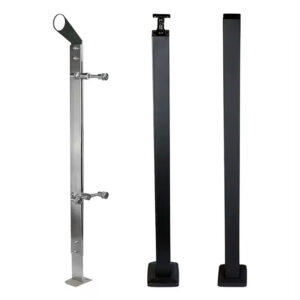
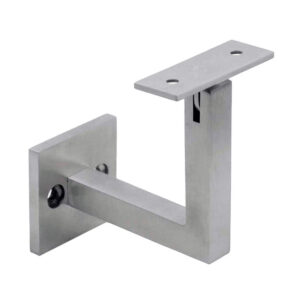
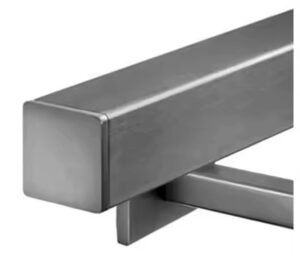
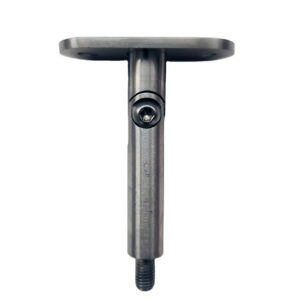
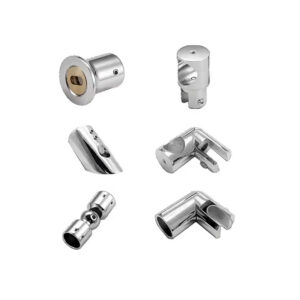
A quotation structured around individual SKUs creates a procurement illusion: it looks complete because it has part numbers and prices, but it doesn’t tell you whether those parts work together. The practical starting point for any glass railing package is a bill of hardware families — clamps, spigots, standoffs, channels, brackets, cap rails, and spare parts — each treated as a discrete category with its own geometry requirements, finish specification, and interface dependencies.
The distinction matters because incompatibility almost never shows up as two obviously wrong parts. It shows up as a gasket that fits loosely, a channel track that accepts the glass edge but leaves inadequate bite, or a standoff that sits at the right height but with a mounting flange that conflicts with the substrate detail. These are family-level interface failures, not SKU-level selection errors. When the quotation is organized by hardware families from the start, each family gets an owner — someone responsible for confirming that its components are compatible with adjacent families — before production begins.
For teams evaluating a potential supplier’s scope, the practical question isn’t whether they stock every component, but whether they can quote each family coherently: with consistent alloy grade, finish code, glass range, and spare-part naming. A supplier who quotes clamps and spigots but treats cap rails and channels as separate sourcing decisions is implicitly pushing drawing coordination responsibility back onto the project team. That’s a scope gap worth surfacing before submitting a purchase order, not after the glass is cut.
Clamp, spigot, standoff and channel interface ownership
Interface ownership is the assignment of responsibility for confirming that two components — typically a hardware piece and a glass panel — will physically fit in the field before either is fabricated. When that assignment is missing, both parties can proceed in parallel under the assumption that the other has checked compatibility. The result surfaces at installation.
The most consequential interface decisions involve measurement markers: spigot centers, clamp heights, edge clearances, and connector angles. These aren’t generic inputs — they’re the geometry that the glass processor uses to locate holes and edge treatments. If those markers are established without coordinating with hardware machining drawings, the risk isn’t a small tolerance gap; it’s a systematic offset that repeats across every panel in the run.
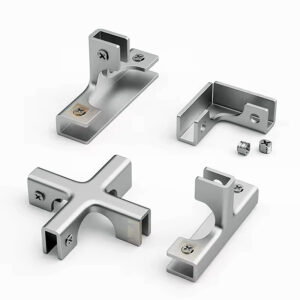
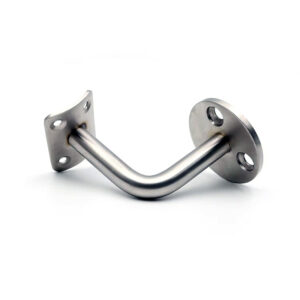
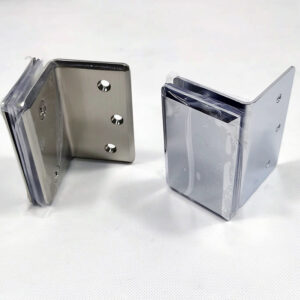
Connector type adds another layer. Wall connectors, 135° and 90° corner connectors, 180° pass-through types, adjustable connectors, and narrow or wide variants each carry their own hole pattern geometry and gasket profile requirements. A project with multiple corner types that sources each connector independently, without confirming that all hole patterns reference the same center spacing standard, is building in field-drilling risk from the beginning. For base-shoe systems specifically, the continuous aluminum U-channel must be matched to glass thickness — typically 12 mm for frameless configurations — and recessed flush. If track dimensions and glass edge fit aren’t confirmed before the channel is ordered, the glass fabricator is working against an unverified assumption.
| Interface Aspect | What to Confirm Before Ordering | Risque en cas d'incertitude |
|---|---|---|
| Measurement markers | Spigot centers, clamp heights, edge clearances, and connector angles | Measurement errors lead to field adjustments and misalignment |
| Connector types | Account for wall, 135°, 90°, 180°, adjustable, narrow, and wide connectors; each requires specific hole patterns and gasket fit | Mismatched hole patterns, gasket incompatibility, field drilling |
| Base-shoe channel | Continuous aluminum U-channel matched to glass thickness (typically 12 mm), recessed flush; confirm track dimensions and glass edge fit | Glass panel incompatibility with channel, rework required |
Leaving interface ownership unresolved doesn’t just create field adjustment work. It creates a decision vacuum that gets filled informally — usually by whoever is on-site when the parts arrive — which is the least controlled point in the entire supply chain to be making fabrication-affecting decisions.
Finish matching and spare-part naming across the package
Finish mismatch in a glass railing run is visible in a way that most structural failures aren’t. Two components sourced from different suppliers, both described as “brushed stainless,” can look noticeably different under natural light if their surface treatment processes or alloy grades differ. More consequentially, 304 and 316 stainless steel perform differently in marine or high-humidity environments, and mixing them within a single railing run — even with similar surface appearance — can produce uneven corrosion performance over time. Specifying alloy grade and finish coating consistently across every hardware family isn’t a cosmetic decision; it’s a corrosion-control commitment.
The downstream implication that projects most often underestimate is spare-part reordering. A gasket replaced 18 months after installation needs to match the original in alloy grade, finish code, and dimensional tolerance. If those attributes weren’t locked at the quotation stage — if the original spec just said “stainless gasket” without a finish code or alloy reference — the replacement order relies on whoever handles procurement at that point to match something they weren’t involved in specifying. That’s where field-fitting errors come from, not from the initial installation.
| Exigence | What to Specify in Quotation | Pourquoi c'est important |
|---|---|---|
| Alloy grade and finish coating | Specify 304 or 316 marine-grade stainless steel and coating consistently for clamps, spigots, and channels | Prevents visible finish mismatch and differing corrosion performance within the same railing run |
| Spare-part naming convention | Include exact finish code and alloy reference in every spare-part name (gaskets, set screws, standoff cylinders) | Enables accurate reordering without field-fitting errors; avoids guesswork and delays |
The practical implication for quotation review is straightforward: check that every spare part listed — gaskets, set screws, standoff cylinders, channel end caps — carries the same finish code and alloy reference as its parent hardware family. If a supplier’s quotation omits that detail for spare parts, it’s worth requesting it explicitly before sign-off, because correcting it later means either guessing on reorders or initiating a field-fitting exercise the original procurement was supposed to prevent. For reference, round glass clamps in both 304 and 316 grades illustrate how alloy selection surfaces at the individual component level and should carry through to every item in the same family.
Risks of splitting a glass railing package across vendors
Split sourcing has a straightforward cost argument: if a distributor stocks hardware at a lower unit price than a full-scope supplier, separating glass from hardware and sourcing each independently appears to reduce line-item cost. What that calculation doesn’t capture is drawing coordination burden and the specific financial risk that comes from producing incompatible, non-returnable components.
Custom glass panels and fabricated hardware are almost always final sale once production begins. That asymmetry changes the risk profile of split sourcing significantly. In a single-supplier arrangement, the supplier can cross-reference the glass processor’s panel drawings against hardware machining drawings before releasing either to production. In a split arrangement, that cross-check either doesn’t happen, or it becomes the project manager’s responsibility to coordinate between two parties who have no contractual obligation to each other. Out-of-square corners and non-level substrate surfaces, which become more visible in frameless systems precisely because there’s no post or frame to absorb minor misalignment, are the conditions where an unchecked interface compatibility gap produces rejected glass panels.
Lead time divergence creates a separate scheduling risk. Standard stock hardware typically ships in days; custom glass panels typically require several weeks of fabrication lead time. When those timelines are managed by different vendors without a shared delivery schedule, the install sequence becomes contingent on whoever arrives last — and the party that arrives first creates a storage and staging problem on a job site that wasn’t planned for it. That delay rarely appears in a unit-price comparison.
| Facteur de risque | Conséquence potentielle | Ce qu'il faut clarifier |
|---|---|---|
| Incompatible final-sale parts | Custom glass panels and hardware are usually non-returnable; mixing suppliers without interface control can produce incompatible, unusable components | Confirmation of compatibility between glass processor drawings and hardware machining drawings before production |
| Unchecked interface compatibility | Out-of-square corners and non-level surfaces become more visible in frameless systems; split sourcing leaves this check unperformed | Who will verify glass-to-hardware fit; single supplier can cross-check, otherwise responsibility falls between parties |
| Lead time mismatches | Standard stock hardware ships in 3–10 days while custom glass panels take 3–6 weeks; split vendors cause asynchronous delivery | Coordinated delivery schedule or the ability of one supplier to synchronize shipment |
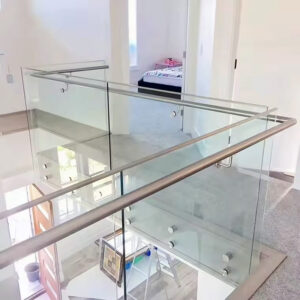
The trade-off isn’t that split sourcing is always the wrong choice. It’s that the cost of drawing coordination and the financial exposure from incompatible, non-returnable parts need to be priced into the decision explicitly, not discovered after fabrication has started. For projects where frameless systems are involved, the post-mounted glass railing installation sequence illustrates how spigot placement and glass panel fit depend on pre-confirmed interface dimensions — a dependency that becomes a coordination liability when hardware and glass are sourced separately.
Scope checklist for a complete supplier quotation
A complete supplier quotation requires complete field inputs. The most common reason a quotation comes back requiring revision isn’t price negotiation — it’s that the supplier couldn’t confirm hardware selection or glass sizing because the measurement data was incomplete. Overall run lengths, corner angles, substrate type, hardware placement locations, and photographs or dimensioned sketches are the minimum inputs needed for a supplier to produce a quotation that holds through fabrication.
Glass thickness determines which hardware families apply. Post-mounted systems typically use 10 mm glass; frameless spigot and base-shoe systems typically require 12 mm to meet the structural demands of an unframed panel. Specifying the wrong thickness at quotation doesn’t just affect glass cost — it changes clamp sizing, channel track dimensions, and the hardware’s rated load capacity. Similarly, guard height requirements — commonly 36 inches for residential applications and 42 inches for commercial — affect which hardware configurations meet the project’s design intent and should be confirmed before cap rail selection is finalized. These are design figures that reflect common U.S. building practice; confirming the governing jurisdiction’s specific requirements remains the project team’s responsibility.
| Checklist Category | Items to Confirm/Measure | Pourquoi c'est important |
|---|---|---|
| Site conditions | Overall run lengths, corner angles, substrate type, photos or sketches | Ensures hardware layout matches the field, reducing modifications |
| Glass specifications | Panel dimensions, glass thickness (10 mm for post-mounted, 12 mm for frameless spigot/shoe) | Determines clamp size, channel fit, and structural capacity |
| Guard height and top rail | Target guard height: 36″ residential, 42″ commercial; confirm top rail requirements | Code compliance and correct hardware selection |
| Hardware placement | Spigot, clamp, and connector locations along the run | Prevents ordering errors and ensures interface alignment |
| Spare parts identification | Exact finish code and alloy grade included in spare-part names | Allows accurate reordering without field fitting |
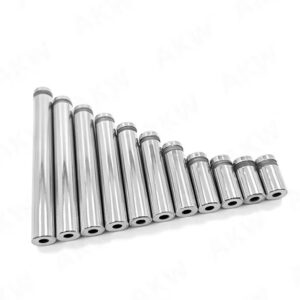
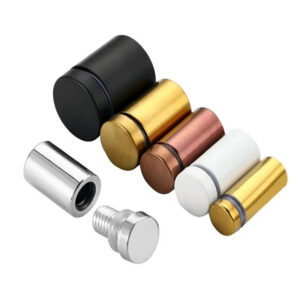
The spare-part section of a quotation is where scope completeness is most often sacrificed in the interest of simplifying the document. Omitting finish codes and alloy references from spare-part line items doesn’t shorten the quotation in a meaningful way — it just defers a specification decision to a future reorder where there’s no fabrication drawing to reference. Requiring consistent part naming from the start, with finish code and alloy grade embedded in each line item, is a small discipline at quotation stage that eliminates a significant source of friction in post-installation maintenance. Embouts en verre pour montage en surface et ensembles de rails de fixation en verre illustrate how individual hardware families each carry their own finish and alloy parameters that need to be captured at this stage.
The most durable procurement decision in a glass railing project is defining interface ownership before requesting prices — confirming who will cross-reference glass processor drawings against hardware machining drawings, and that every hardware family in the package carries a consistent alloy grade, finish code, and spare-part naming convention. That definition work happens at the quotation stage, not after fabrication begins, because the financial exposure from non-returnable components makes late discovery of incompatibility a cost event rather than a scheduling adjustment.
Before issuing a final purchase order, confirm that each hardware family in the quotation has an assigned owner for interface compatibility, that finish codes and alloy grades are consistent across clamps, spigots, channels, and cap rails, and that spare-part line items carry the same specificity as the primary components. If a quotation leaves any of those three points unaddressed, the gap it creates won’t stay invisible for long.
Questions fréquemment posées
Q: What happens if the glass processor and hardware supplier are in different countries with different standard hole-pattern conventions?
A: The project team must assign a single party to reconcile the two drawing sets before either enters production — this is the interface ownership gap the article describes, and geography amplifies it. Different manufacturing regions can apply different center-spacing standards for spigot holes and clamp bores, meaning a panel fabricated to one regional convention will not align with hardware machined to another. The resolution is requiring both suppliers to sign off on a shared interface drawing, not just exchange separate shop drawings, before fabrication is released.
Q: Once a supplier is confirmed as full-scope and the quotation is signed off, what should happen before fabrication is released?
A: Issue a formal interface confirmation document — a single sheet that records the agreed hole patterns, edge clearances, glass thickness, and finish codes from both the hardware machining drawings and the glass processor’s panel drawings, signed by both parties. This converts the quotation’s compatibility assumptions into a fabrication-stage commitment. Without it, each party proceeds under their own interpretation of “agreed dimensions,” which is the exact condition that produces mismatched panels at installation.
Q: Is a full-scope single supplier still the right choice when the project uses a non-standard corner configuration the supplier doesn’t carry in stock?
A: Not necessarily — this is the boundary condition where split sourcing becomes defensible, but only if the project team formally accepts the drawing coordination role the article assigns to a single supplier. If a full-scope supplier cannot provide a custom 135° or adjustable connector that matches the rest of the package’s finish code and alloy grade, sourcing that one family externally is reasonable, provided someone on the project team is explicitly assigned to cross-reference that supplier’s machining drawing against the glass processor’s panel drawing before production starts. The risk doesn’t disappear; it transfers.
Q: How does the 304 versus 316 alloy decision affect long-term maintenance cost, not just initial corrosion performance?
A: Choosing 316 in a marine or high-humidity environment reduces long-term maintenance cost even though the upfront unit price is higher, because 316’s molybdenum content resists chloride-induced pitting that would otherwise require early gasket and standoff replacement. The more consequential maintenance factor, though, is finish-code consistency at the quotation stage: a mixed-alloy run where some families were sourced in 304 and others in 316 creates a reordering problem at every maintenance cycle, because the replacement parts must be matched to whichever alloy was originally installed — information that may not be retrievable if it wasn’t recorded in the original spare-part line items.
Q: For a small residential project with a short railing run, does the coordination discipline described here still justify the overhead, or is it sized for commercial scale?
A: The discipline scales down without changing in kind — the financial exposure from non-returnable custom glass is the same regardless of run length, and a single mismatched hole pattern on a ten-panel residential install carries the same recovery cost as on a larger project. The practical difference is that a short run has fewer hardware families and fewer corner types to coordinate, so the interface confirmation exercise takes less time. The minimum that remains constant at any scale is confirming glass thickness, spigot or clamp hole pattern, and alloy grade before releasing fabrication — those three checks are not overhead that can be skipped on smaller projects; they are the minimum viable scope regardless of project size.