A railing anchor rarely fails because the stainless component itself corrodes. It fails because of what sits around it: a fastener of a different alloy, a sealant that traps rather than sheds water, a crevice too tight to inspect, or a drainage path that was never verified on site. Deciding whether an anchor detail is acceptable means looking past the grade stamped on the component and examining the interface it sits inside.
Where moisture and metal interfaces create anchor risk
Dissimilar-metal risk around a railing anchor comes from two conditions operating together: an electrical or galvanic interface between unlike metals, and a path that lets moisture remain in contact with that interface long enough to sustain a reaction. Neither condition alone is sufficient. A dissimilar-metal contact that stays dry for extended periods behaves differently from the same contact under repeated wetting, and a wet interface between compatible metals carries a different risk than the same moisture against an incompatible pairing. This is why a generic statement that “stainless and aluminum shouldn’t touch” is incomplete without knowing whether the detail allows water to sit at that junction or drain away from it.
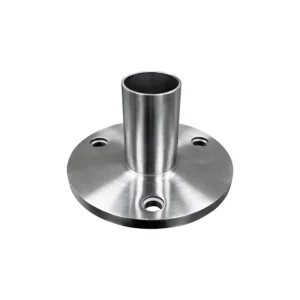
The anchor assembly itself compounds this because it is rarely a single material. A baseplate, a fastener, a washer, a sealant bead, and sometimes a dissimilar structural substrate all meet at one point. Each interface between two different materials is a candidate location for a reaction, and each is also a candidate location for moisture retention if the geometry does not shed water. Where the fastener is a different alloy from the bracket it secures, the contact area is small but concentrated, which changes how a reaction there behaves compared with a broad contact between two plates.
Crevice conditions sit alongside galvanic conditions as a separate mechanism. A tight gap between two surfaces, even where both surfaces are the same stainless grade, can retain moisture and debris, and the chemistry in that confined space changes once oxygen exchange with the open environment is restricted. This means a detail with no dissimilar-metal contact at all can still be vulnerable if its geometry creates a crevice that stays wet and cannot be flushed or inspected. Recognizing which mechanism is in play for a given anchor detail, or whether both are, determines whether the fix is a material or isolation change, a geometry change, or a maintenance-access change.
Exposure, drainage, and crevice conditions to document
| Condition to document | Project-specific record | Why it matters to the review |
|---|---|---|
| Actual exposure around the anchor | Record the atmospheric exposure for each anchor detail, including relevant airborne salinity or other contaminants | Exposure context affects corrosion risk, but atmospheric classification alone does not select a stainless grade or predict component life |
| Drainage path | Record how water drains from the anchor and its surrounding interfaces | Drainage affects whether moisture and debris can remain around the detail |
| Crevice condition | Identify tight crevices around the anchor and adjacent interfaces | Tight crevices can retain moisture and debris, so material selection alone does not remove the risk |
| Cleaning access | Record whether the anchor, crevices, and surrounding surfaces can be reached for cleaning | Access determines whether retained contaminants and debris can be addressed during maintenance |
Before any material or finish decision can be evaluated, the project needs a record of the actual conditions surrounding each anchor, because the same anchor design carries different risk depending on where and how it sits. Atmospheric exposure is the starting point, and ISO 9223:2012 classifies atmospheric corrosivity using first-year specimen corrosion and factors such as wetness, sulfur dioxide, and airborne salinity. That classification establishes environmental context, but it does not select a stainless grade or predict how long a given component will perform at a specific anchor point. The buyer still needs to record what that exposure actually looks like at each detail location rather than treating a site-wide classification as sufficient for every anchor on the project.
Drainage is a separate input from exposure. Two anchors in the same atmospheric classification can carry different risk if one sheds water immediately and the other allows it to pool against a baseplate or around a fastener head. Where a drainage path is interrupted by sealant, by a change in surface slope, or by an adjoining component, moisture dwell time increases even though the surrounding atmosphere has not changed. This is why drainage needs its own documentation rather than being assumed from exposure classification alone.
Crevice condition and cleaning access complete the record. A crevice that cannot be reached for cleaning carries a different risk than one that can, even if both retain moisture at similar rates, because retained debris and contaminants in an inaccessible crevice have no routine way of being removed. Recording whether each anchor, its fasteners, and its adjacent interfaces can actually be reached during a maintenance visit determines whether a design that is theoretically acceptable remains acceptable once installed and in service. Tight crevices can retain moisture and debris regardless of the material chosen, so documenting access is not a secondary step but a determination of whether the material specification can actually hold up to the exposure it was chosen for.
Stainless grade, finish, fastener, and adjacent-metal compatibility
| Detail input | Compatibility check | Límite de decisión |
|---|---|---|
| Stainless grade | Record the grade specified for the anchor detail and assess it against the actual exposure | The environmental context does not by itself select the stainless grade or predict service life |
| Acabado superficial | Record the specified finish and consider its relationship to exposure and cleaning access | Finish selection does not remove drainage, crevice, or maintenance risk |
| Fastener material | Record the fastener material used with the anchor | Review it together with the stainless component and adjacent metals rather than as an isolated choice |
| Adjacent metals | Identify the metals in contact with or immediately beside the anchor assembly | Dissimilar-material interfaces require a deliberate compatibility review |
| Isolation detail | Where isolation is proposed, check its compatibility with drainage, movement, sealants, and applicable project fire or durability requirements | Isolation cannot be accepted on metal separation alone |
Once exposure, drainage, and crevice conditions are documented, the individual material choices can be evaluated against them rather than in isolation. Stainless grade selection depends on matching a documented exposure to a grade’s resistance characteristics, but the environmental classification alone does not make that selection; it is an input the specifier weighs against the grade, not a substitute for the decision. A grade suitable for one documented exposure may be inadequate for another even where both sites carry a similar general classification, because local factors such as salinity exposure or sheltering can diverge from a broader atmospheric rating.
Surface finish interacts with both exposure and cleaning access rather than standing alone as a corrosion-resistance measure. A finish chosen for appearance or for a specified roughness can perform differently once it sits in a location with limited cleaning access, because retained contaminants on a finish that cannot be routinely cleaned behave differently than the same finish maintained on an accessible surface. Finish and access need to be reviewed together, not finish alone.
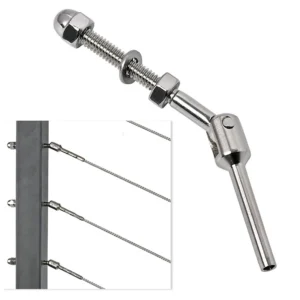
Fastener material is the point where dissimilar-metal risk most directly enters the anchor detail, because fasteners are frequently sourced or specified separately from the primary stainless component and can differ in alloy. Reviewing the fastener only against the stainless bracket or baseplate is incomplete; it needs review against whatever adjacent metals it also contacts, since a fastener bridging two different base materials creates more than one interface to evaluate.
Adjacent metals extend this review beyond the anchor assembly itself to the structure it attaches to. Where the anchor meets a dissimilar structural substrate, that contact requires the same deliberate compatibility review as a dissimilar fastener, and an isolation detail is sometimes proposed to separate the two materials. An isolation layer cannot be accepted on the basis of material separation alone; it has to remain compatible with the drainage path already documented, with any movement expected at that joint, with the sealants used nearby, and with the project’s fire or durability requirements, since a gasket or shim that solves a galvanic concern can still fail to meet those other requirements. Esang’s anchoring systems are selected against these same documented conditions during project review, which is why the exposure, drainage, and adjacent-material record from the prior step needs to be in hand before a grade, finish, or fastener decision is finalized rather than after.
Cleaning and passivation evidence within its proper boundary
| Evidence or reference | What it can support | Lo que no establece |
|---|---|---|
| ASTM A967/A967M-25 | Specified chemical passivation treatment and qualitative checks for contaminant iron on stainless parts, when passivation evidence is part of the purchase specification | Guaranteed service life or long-term coastal performance |
| ASTM A380/A380M-25 | An agreed procedure for cleaning, descaling, pickling, passivation, weld-area treatment, iron-contamination prevention, or cleanliness assessment | Structural performance qualification |
| Purchase specification | Whether passivation evidence is required and which treatment and acceptance choices apply between purchaser and supplier | Performance beyond the stated purchase requirements |
Cleaning and passivation evidence has a defined role in a railing anchor specification, and that role is narrower than it is sometimes treated. ASTM A967/A967M-25 covers chemical passivation treatments and qualitative checks for contaminant iron on stainless parts. Where passivation evidence is written into the purchase specification, this standard frames what treatment was applied and what qualitative checks were performed to confirm the surface is free of contaminant iron. It does not, on its own, establish how the component will perform over years of coastal or other aggressive exposure; the standard addresses the treatment and the acceptance check, not a service-life outcome.
ASTM A380/A380M-25 covers a related but distinct scope: cleaning, descaling, pickling, and passivation procedures, including treatment at weld areas and prevention of iron contamination, along with cleanliness assessment methods. This standard gives the purchaser and supplier a shared procedure to agree on, which matters because passivation and cleaning are not performed to a single universal method; the specific procedure, and how cleanliness is assessed afterward, is a choice made between the parties on that project. Citing the standard without confirming which procedure was agreed and applied does not establish what was actually done to the hardware in question.
The practical implication for a railing anchor review is that passivation and cleaning evidence should be requested only where it is already part of the purchase specification, not treated as a universal proof point for every project. Where a project has not specified passivation evidence as a deliverable, requesting it after the fact changes the scope of what was agreed rather than confirming compliance with an existing requirement. Where the specification does call for it, the evidence to request is the record of which treatment was applied and which qualitative or cleanliness check was performed, not a claim about how the component will behave in service afterward. Conflating a passivation certificate with a structural or long-term performance guarantee misreads what the standard was written to cover, and that distinction is worth confirming with the supplier directly rather than assumed from the presence of a certificate.
Detail approval and maintenance inputs before release
Approving a railing anchor detail for release depends on whether the documented exposure, drainage, crevice, and material inputs are coherent with each other, not on whether any single input looks acceptable on its own. A grade suited to the documented exposure does not resolve the detail if the drainage path still allows water to collect at a dissimilar-metal fastener, and a passivation record does not resolve it if the crevice at the baseplate remains inaccessible for cleaning. Release depends on the combination holding together, which is why the earlier documentation and compatibility review has to be complete before approval rather than supplemented afterward.
Maintenance access is part of what makes an approved detail remain acceptable after installation. A detail that was coherent on paper can still carry risk in service if the crevice, fastener, or isolation layer cannot actually be reached once the railing is installed and adjoining finishes are in place. Where ongoing cleaning access was assumed during design but is obstructed once construction is complete, the project should revisit whether the original material and isolation choices still match the exposure they were intended for, since maintenance capability is one of the conditions the original selection depended on.
Where isolation details were specified to separate dissimilar metals, their compatibility with drainage, movement, sealants, and fire or durability requirements needs confirmation as installed, not only as drawn, since field conditions can shift how a detail drains or moves compared with its design intent. Esang’s coastal installation hardware and related anchoring components are supplied against the specification the project defines, so any change identified during this final review, whether to grade, finish, fastener, or isolation detail, needs to be reflected in what is ordered rather than assumed to carry over automatically from an earlier specification. Where the project’s exposure, drainage, and access conditions favor a sealed, low-maintenance detail, that favors minimizing crevices and dissimilar contacts at the design stage. Where ongoing cleaning access is already part of the plan de mantenimiento, a detail with a documented isolation layer and a verified drainage path can remain acceptable even with a dissimilar-metal interface present, provided that access is maintained for the life of the installation.
Preguntas frecuentes
P: When should railing anchors on the same project be reviewed as separate exposure cases?
A: Review them separately when their atmospheric exposure, contaminant load, drainage path, crevice geometry, or cleaning access differs. Record those conditions for each detail; an atmospheric corrosivity classification provides context but does not by itself select a stainless grade or predict service life.
P: Is specifying a stainless grade enough to control corrosion risk around an anchor?
A: No. Review the grade together with the surface finish, fastener material, adjacent metals, drainage, crevices, and cleaning access because material selection alone does not remove moisture-retention or interface risks.
P: What should be checked before accepting an isolation detail between dissimilar metals?
A: Confirm how the proposed isolation works with the detail’s drainage, movement, sealants, and applicable project fire and durability requirements. Metal separation alone is not a sufficient acceptance basis.
P: When should passivation evidence be requested for stainless anchors or fasteners?
A: Request it when the purchase specification makes it a requirement and identifies the applicable treatment and acceptance basis. ASTM A967/A967M can support specified chemical passivation and qualitative checks for contaminant iron, while ASTM A380/A380M can support agreed cleaning and related treatment procedures; neither establishes guaranteed service life or structural performance.
P: Which substitutions should trigger another anchor-detail compatibility review?
A: Recheck the detail if the stainless grade, finish, fastener material, adjacent metal, sealant, or isolation arrangement changes. The review should also be repeated if the revised assembly alters drainage, crevice conditions, movement, or cleaning access.