Cartons that pass visual inspection at the factory and arrive at the destination with scratched fittings, missing fasteners, and freight claims are not an unusual outcome — they are the predictable result of packaging that was never tested against the actual conditions of the route. The damage is hard to dispute after the fact because no disassembly record exists, and the shortage is impossible to trace once components have shifted inside a sealed carton. The decision that prevents most of this is not choosing better materials; it is confirming, before release, that the pack design holds up under the specific weight, stacking load, and handling sequence of the intended route. What follows helps distributors, procurement teams, and logistics managers evaluate whether a packaging specification is genuinely validated or only assumed to be adequate.
Protection Needs of Finished Stainless Components
Finished stainless steel surfaces are more vulnerable during transit than their material hardness suggests. Brushed or mirror-polished components abrade each other under vibration in ways that no visual pre-shipment check will catch, because the damage accumulates gradually through handling cycles rather than appearing from a single impact. The practical implication is that surface protection must be built into the carton structure, not applied as afterthought wrapping.
Custom split packaging — foam inserts, dividers, and in some cases wooden crates — addresses this by ensuring that metal surfaces have no direct contact path throughout the shipment. The value of this approach is not the material itself but the constraint it imposes: each component stays in a fixed position relative to every other component, so vibration cannot generate the repeated micro-contact that causes scratching. This is commercial design guidance rather than a regulated standard, but the failure pattern it prevents is consistent and well-documented in distribution.
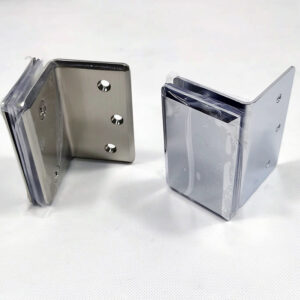
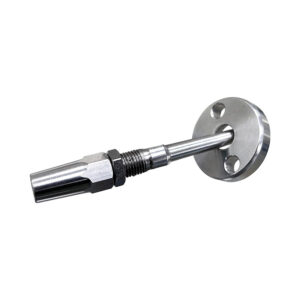
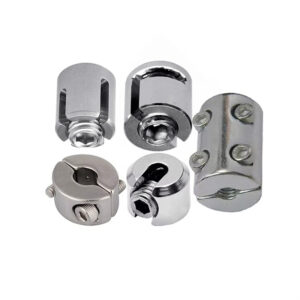
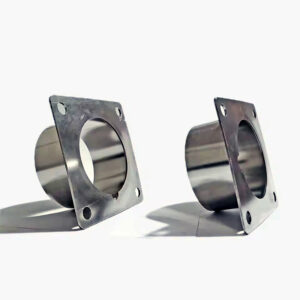
The decision implication for buyers is that surface separation needs to be designed to the specific component geometry, not specified generically. A foam layer that protects a flat plate fitting may do nothing for a threaded end cap or a cable assembly fitting with protruding geometry. Before approving a carton design, confirm that separation materials are fitted to the actual parts in the shipment, not to a notional part category.
Damage and Shortage Modes Inside Cartons
The risk inside a carton is not limited to surface finish. Heavy components that are not individually braced will move under lateral loading during handling, and when they strike lighter parts, the damage often looks like a manufacturing defect rather than a transit failure. Shortages follow a different mechanism: loose small parts — fasteners, end caps, locking inserts — shift toward carton seams, fall between inner dividers, or migrate into voids created when larger items compress their foam inserts under load. By the time a shortage claim is filed, the carton has been opened, partially unpacked, and re-examined by multiple people, making the original condition impossible to reconstruct.
These failure modes become harder to investigate without pre-seal documentation — a part count record and a photographic confirmation that components were restrained before the carton was closed. Without that evidence, the dispute defaults to he-said/she-said between the packer and the receiver.
| Risk / Issue | Likely Cause | ما الذي يجب توضيحه |
|---|---|---|
| Surface scratches & abrasion | Metal parts contact each other without adequate separation | Are separation materials (foam, dividers, custom split packaging) used to prevent metal‑to‑metal contact? |
| Component shortages | Loose parts shift or fall out of the carton during transit | Are all components restrained and secured inside the carton? Are quantities verified before sealing? |
| Surface damage & impact marks from heavy parts | Heavy components not braced, allowing movement that causes strikes | Are heavy items individually braced or fixed? Is the carton reinforced to handle weight and prevent internal movement? |
The table above covers the primary risk-and-cause pairs. The decision consequence beyond the table is that each of these modes requires a different fix: surface scratches need separation material, shortages need quantity verification at seal, and impact marks from heavy parts need structural bracing that prevents movement rather than just cushioning it. Specifying “adequate padding” in a purchase order does not differentiate between these responses and will not prevent all three failure types.
Export Transport Versus Retail Presentation
A single carton that must survive ocean freight and still present well on a distributor’s shelf or in a retail setting creates a genuine design tension. Export packaging prioritizes compressive strength, moisture resistance, and resistance to forklift and handling damage across many loading and unloading cycles. Retail packaging prioritizes legibility, labeling accuracy, and the kind of visual presentation that supports re-ordering and shelf identification. Optimizing hard for one typically compromises the other.
Some manufacturers address this by layering export protection — wooden crates, heavy-duty foam — with retail-oriented labeling, including barcodes and QR tracking codes, applied to the same outer carton or inner unit. This is a viable hybrid, but it introduces a practical verification requirement: the labels must remain legible and undamaged through the transit conditions that the outer packaging is designed to survive. A QR code that delaminated in a humid container or a barcode obscured by strapping is not a minor presentation issue; it creates receiving errors at the distributor.
| أسبكت | Export Packaging | Retail Packaging |
|---|---|---|
| Primary Priority | Transport protection (handling, stacking, moisture) | Presentation, identification, and unit‑level handling |
| Packaging Type | Heavy‑duty wooden crates, custom foam | Retail‑ready packaging with presentation‑oriented finish |
| Labeling | Logistics‑focused (barcode, QR tracking) | Consumer‑facing barcodes, product information, branding |
| Handling Unit | Bulk pallet or crate | Individual unit (e‑commerce or shelf‑ready) |
The tension between these two packaging modes matters most when the same SKU ships to both export and domestic retail channels, because a single carton specification applied across both routes will be over-engineered for one and under-protected for the other. Confirm early whether the same carton is expected to serve both functions, and if so, which condition — the harshest transit or the retail receive — sets the binding design constraint.
Packed-Weight and Route Validation
Packaging is frequently approved at the component level — someone confirms that the foam fits and the carton closes — without ever confirming what the packed carton weighs, how it palletizes with other cartons in the same shipment, or what the freight cost and carrier restrictions will be at that weight and dimension. These omissions tend to surface as surprises after the first shipment, when freight invoices are higher than estimated or when the carrier refuses a pallet configuration that the logistics plan assumed was acceptable.
Route validation matters in a related but distinct way. A carton that performs acceptably on a domestic truck shipment may fail on an ocean container load because the stacking loads, humidity exposure, and transit duration are fundamentally different. Manufacturers that describe their crating as ocean-tested across multiple destinations are providing useful signal — but that claim only applies to the routes and loading conditions actually tested. Confirm whether validation data covers your specific destination, your carrier’s handling standards, and any transshipment points that add handling cycles.
The practical pre-shipment check is to build a prototype packed unit at full weight with the actual components, palletize it at the expected stacking configuration, and verify that the carton retains its structural integrity and that internal protection holds. This is not a regulatory requirement, but it is the step that eliminates most of the freight cost surprises and damage claims that appear after release. Approving a carton spec without this step treats the first shipment as the test.
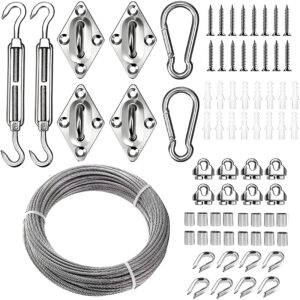
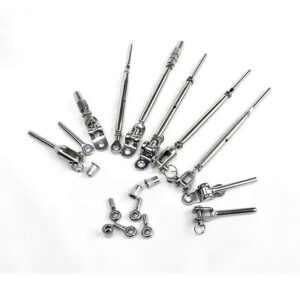
For shipments involving assembled kits such as cable assembly hardware kits, packed-weight validation also needs to account for the fact that the complete kit — including all terminals, swage fittings, and fasteners — weighs more than any individual component lot, and the internal restraint design must hold that aggregate weight through the handling sequence.
Packaging Release Evidence for Repeat Shipments
The first shipment to a new distribution channel tends to receive closer attention — someone usually checks quantities, inspects surface condition, and confirms labeling. Repeat shipments receive less scrutiny, and that is where packaging failures accumulate. Without documented release evidence tied to the original approved specification, it is difficult to determine whether a damage claim on shipment twelve reflects a packing error, a specification drift, or a carrier handling problem.
ISO 9001:2015 provides a process framework for controlling this: documented procedures, records of conformity checks, and traceability between the specification and what was actually released. Applied to packaging, this means that testing, assembly verification, and labeling checks should produce records — not just good intentions — so that repeat shipments can be confirmed against a defined baseline rather than relied upon from memory or habit.
| Validation Activity | What It Verifies | ما الذي يجب توضيحه |
|---|---|---|
| Parts testing | Functional quality and finish conformity | Are parts individually tested according to specification? Are results documented? |
| Assembly (if required) | Inter‑component fit and completeness | Is required assembly performed at the factory? Is fit confirmed and recorded? |
| Labeling to specification | Identification, traceability, and accuracy | Do labels match the purchase order (including barcode/QR if required)? |
| Pre‑shipment trial (test‑fit + packed‑product inspection) | System compatibility, surface protection, and complete kit quantities | Is a full‑system test‑fit performed before crating? Is a final packed‑product inspection done to confirm protection and completeness? |
The table identifies the core validation activities. The downstream implication for buyers is that requesting these records from a manufacturer before repeat orders is a reasonable procurement check, not an unusual demand. If a manufacturer performs pre-shipment trial assembly and tests parts to specification but produces no documentation of either, the buyer has no basis for distinguishing a conforming shipment from one that skipped a step. For distributors managing multiple SKUs and multiple origin suppliers, that documentation gap eventually creates a claim that cannot be resolved. Understanding how a supplier approaches release evidence is part of the supplier evaluation process — something worth examining before committing to volume. For buyers new to this evaluation, كيفية تقييم مورد درابزين من الفولاذ المقاوم للصدأ قبل تقديم أول طلب شراء بالجملة covers the broader qualification criteria in more detail.
The most consequential packaging decision is not material selection — it is confirming that the carton design was tested under conditions that reflect the actual route, weight, and handling sequence before the first shipment releases. Surface protection, quantity verification, structural bracing, and label durability each address a different failure mode, and approving the carton without testing all four together leaves at least one of them unresolved.
Before placing a repeat order or expanding distribution to a new channel, confirm what release documentation the manufacturer produces: whether parts are individually tested, whether assembly is verified at the factory, and whether labeling is checked against the purchase order. Those records are what make packaging specifications repeatable rather than approximate — and what give buyers defensible ground when a damage or shortage claim eventually arrives.
الأسئلة الشائعة
Q: What if my shipments are domestic only — do I still need to validate packaging against export conditions?
A: No, you do not need to replicate ocean-freight testing, but you must still match the packaging to the handling and stacking loads of your domestic carriers. A carton that survives overseas shipping is likely over-specified for truck freight, yet the same principles of surface separation, weight restraint, and pre-seal documentation apply. The critical difference is that your validation run should simulate the specific trip — pallet handling at distribution centers, courier sorting, or LTL transfers — not an extreme that never occurs on the route.
Q: After I’ve evaluated a supplier’s packaging documents, what is the practical next step before signing off on a repeat order?
A: Request a pre-shipment sample of one fully packed carton at production weight and have your own receiving team unpack it, photograph the unsealed condition, and confirm that all quantities and surfaces match the packing list. This hands-on check closes the gap between the supplier’s paperwork and your actual dock procedures, and it becomes your own release reference for future shipments.
Q: At what order size or shipment frequency is it reasonable to skip a full packed-product trial?
A: If the order is a single, low-value shipment with no planned reorder, you can accept a higher risk of cosmetic damage or small shortages and rely on generic heavy-duty packaging. However, as soon as you commit to a repeat SKU — even in modest volumes — the cost of one trial pallet is almost always lower than the accumulated freight claims, inspection labor, and supplier disputes that surface later. The threshold is therefore not a dollar value but the presence of a repeat purchase.
Q: If the same carton must serve both export freight and retail shelf display, which requirement should take priority?
A: Prioritize transport protection. Damaged components inside a beautiful box create returns that cost far more than a less-polished but legible label. You can layer essential retail identification — barcode, SKU, QR code — onto the same protective carton as long as the labels survive the journey. A label that fails in transit is a receiving error; a broken part is a sale lost entirely.
Q: For a smaller distributor, is the cost of requiring ocean-tested, fully documented packaging justified?
A: Yes, if your business relies on repeat orders and your customers expect defect-free kits. The extra cost of documented release evidence is typically a small fraction of the part value, while the liability of a mismatched or incomplete shipment — re-shipment, customer downtime, lost trust — can exceed the entire order margin. If you only fulfill one-time projects with tolerant timelines, a lighter approach may be acceptable; for any distributor building a recurring channel, the documentation pays for itself on the first avoided claim.