Committing to a fixing method before reviewing what lies beneath the substrate is one of the more predictable ways a balcony or pool railing project accumulates unplanned cost. Rebar positions, embedded waterproofing membranes, and service runs are substrate realities — but they are frequently treated as installation-phase details rather than design-phase inputs, which means they surface only after drilling has started and layout changes are no longer cheap. The decision that prevents this is straightforward in principle: spigot type should follow substrate conditions and access requirements, not the other way around. Reviewing that logic against your specific slab, finish schedule, and maintenance expectations is what makes the surface-mount versus core-drill choice defensible before fabrication is ordered.
Spigot fixing method depends on the substrate
Neither surface-mount nor core-drill spigots are universally the better choice. The distinction is a planning criterion driven by what the substrate allows, what the installation environment demands, and what future access requirements look like — not a binary between a premium and a budget option.
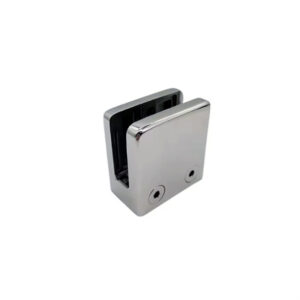
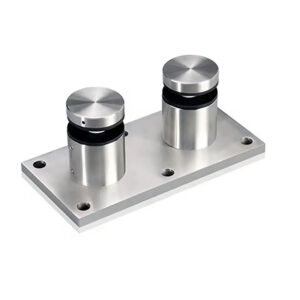
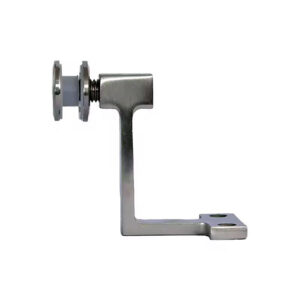
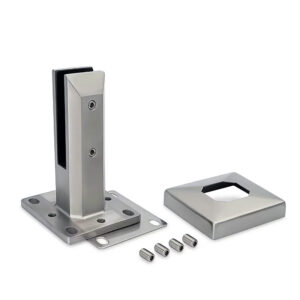
Surface-mount spigots are appropriate where the substrate is above-grade or where access for future inspection, adjustment, or glass replacement needs to remain straightforward. Pool fence installations are a typical fit: the deck surface is accessible, the aesthetic case for a concealed fixing is weaker, and the ability to reposition panels if the pool surround is modified is worth preserving. Core-drill spigots suit applications where lateral resistance and a clean elevation profile are the dominant requirements — balcony railings on high-traffic or exposed facades being the most common context, where the embedment provides greater resistance to the kind of sustained lateral and wind-induced loading those positions attract.
The mistake pattern here is treating the surface-mount versus core-drill choice as a purely aesthetic call and then discovering — after slab drawings become available — that the substrate does not actually accommodate the preferred fixing method without remediation. A slab that is too shallow for the required embedment depth, or one that carries a waterproofing system incompatible with core drilling, changes the fixing method regardless of the aesthetic preference. Both of those are substrate realities that should drive the decision, not respond to it.
Surface-mount access, inspection and replacement path
The maintenance and lifecycle argument for surface-mount spigots is more concrete than it is usually presented. Because no hole is introduced into the slab, the substrate remains fully intact and the spigot base can be unbolted without triggering any remediation work. If a spigot needs to be repositioned — because drainage falls were recalculated, because pool coping was revised, or because an installed panel spacing turned out to create a code compliance issue — the rework is limited to anchor relocation and base-plate adjustment. The same repositioning on a core-drilled installation requires patching the original bore, which may involve matching a sealed or coated concrete surface, and re-drilling in the new position.
Glass panel replacement follows a similar logic. Surface-mount spigots hold panels by clamping rather than by a connection to the glass itself, which means a cracked or damaged panel can be removed and replaced without specialist tooling or drilling. That simplicity reduces both replacement cost and the logistics of coordinating glass supply with installation access windows.
| أسبكت | How Surface-Mount Helps | Practical Benefit |
|---|---|---|
| Substrate preparation | No drilling into the foundation | Quick installation; easy access for future inspection or replacement without demolition |
| Glass panel mounting | Panels installed without pre-drilled holes | Simplifies panel swapping; lowers glass replacement cost and logistics |
| Uneven surfaces | Adjustable spacers built into floor-standing spigots | Levels height differences up to 12 mm and tilt up to 7°, reducing need for grinding or patching |
The 12 mm / 7° leveling figures in the table are product-specific design thresholds, not industry-universal minimums. What they signal is that surface-mount spigots can tolerate a defined range of substrate imperfection without requiring remedial grinding or patching — a practical consideration for pool surrounds and terrace decks where drainage falls and surface texture create uneven bearing conditions. If the substrate deviation exceeds what the adjustable spacer range can absorb, the choice is either substrate preparation or a different mounting configuration, and that determination needs to happen before anchor layout is finalized.
Core-drill embedment, depth and repair constraints
Core-drill embedment delivers a measurable stability gain: the spigot base is set into the slab rather than resting on its surface, which increases lateral resistance and reduces visible hardware at the base of each panel. For balcony railings on exposed facades or high-wind coastal sites, that embedment characteristic is a legitimate engineering input. The constraint that accompanies it deserves equal weight.
The trade-off is permanence. Once a core-drilled spigot is set and grouted, relocating it means cutting out the bore, patching with a structurally adequate repair compound, and re-drilling in the new position. On a finished terrace or balcony with sealed concrete or tile overlay, that repair is visible and often difficult to match. On a slab with a waterproofing membrane immediately below the wear surface, the patch introduces an interruption to the membrane that has to be made good before water infiltration becomes a problem. Neither of these is a rare edge case — both are predictable consequences of any layout change after installation, and both should factor into the decision when there is any realistic possibility that the panel layout may need to be revised.
The slab depth constraint is separate from the repair constraint but equally consequential. Core-drill spigots require a minimum embedment depth to develop their rated holding capacity, and that depth has to be confirmed against the actual slab construction — not assumed from drawings alone. Shallow slabs, slabs with voids, or slabs where the embedment zone coincides with post-tensioning tendons or conduit runs may not support core drilling at the intended spigot positions. Discovering that after drilling has started is the central failure pattern for this fixing method: it converts a straightforward installation task into a remediation task with cost and schedule consequences that were not in the original scope.
Waterproofing and rebar conflicts that shift cost
Subsurface interference is the review-check failure risk that most consistently converts a core-drill specification into an unplanned cost item. Waterproofing membranes are typically installed below the wear surface of balcony decks and pool surrounds — exactly the zone that core drilling penetrates. If the membrane layer is not identified before drilling starts, the bore interrupts it, and restoring continuity requires specialist repair that goes beyond what a standard railing installer would carry as part of their scope.
Rebar conflict has a different consequence. Hitting rebar mid-drill does not always mean the installation is impossible, but it may require relocating the bore, which changes the spigot spacing and may cascade into glass panel dimensions that have already been cut to the original layout. If glass was fabricated against a confirmed spigot layout that subsequently shifts because of a rebar conflict, the glass may need to be recut or replaced — a cost that arrives late and was entirely avoidable with earlier slab investigation.
The professional practice that prevents this is treating slab drawings, waterproofing details, and structural shop drawings as design-phase inputs rather than installation-phase references. In practice, those documents are sometimes obtained after the fixing method has already been specified. When they are, the risk is not that a conflict will definitely occur — it is that the probability of conflict is unknown, and the cost of discovering it mid-installation is high enough to justify the review. Pre-drill investigation, including ground-penetrating radar scanning on slabs where drawings are incomplete or unreliable, is a defensible professional step rather than an optional one, particularly where a waterproofing system is present below the deck surface.
For projects where the balcony or pool deck construction involves a membrane system, the coordination between the railing installer and the waterproofing contractor should be resolved before any drilling scope is confirmed. That coordination is a planning-phase task, not a site-phase task.
Go/no-go checks before choosing spigot type
Skipping the pre-specification checklist for either fixing method is where both surface-mount and core-drill installations accumulate avoidable problems. The checks are not complex, but they require documents that are not always in the installer’s hands at the point when the specification decision is made.
For core-drill installations, the substrate investigation is the non-negotiable prerequisite: slab depth, rebar position, waterproofing layer, and embedded services must be confirmed before the spigot layout is fixed. For surface-mount installations, the equivalent discipline is anchor layout and base-plate geometry resolved against finished flooring, drainage falls, and pool coping before fabrication is ordered. Both methods have a pre-installation checklist; the difference is that the surface-mount checklist is more forgiving to resolve after the fact, while the core-drill checklist is not.
The thresholds that define adequacy for either method are not all the same type of requirement. The 316 stainless steel specification for coastal sites within 100 miles of shore and the ASCE 7-referenced spacing reduction for high-wind zones carry strong professional consensus and should be treated as specification inputs rather than preferences. The load capacity figure of up to 600 lbs per spigot for 316 stainless steel models, rated against ASTM F2090 testing protocols, establishes the basis on which design load adequacy can be evaluated — but whether that rating governs a specific project depends on jurisdictional adoption and project-specific loading assumptions, not on the rating figure alone. Applying the figure without confirming those conditions would treat a testing-framework reference as a directly governing installation requirement, which it may not be in every jurisdiction.
| تحقق | Threshold / Requirement | ما أهمية ذلك |
|---|---|---|
| Spigot net weight | Minimum 900 g (2 lb) | Ensures stability under lateral wind and side pressure; lighter spigots risk tilting |
| Coastal material grade | 316 stainless steel required when within 100 miles of shore | Prevents premature corrosion failure from salt exposure |
| Vertical post spacing | 4–6 ft (1.2–1.8 m); reduce for panels taller than 1.2 m or in high-wind zones (ASCE 7) | Avoids glass stress and code compliance issues |
| Maximum tempered glass span | 1.8 m for 12 mm glass; thinner panels require closer spacing | Prevents glass distortion, stress cracks from excessive deflection |
| Load capacity per spigot | Up to 600 lbs per spigot for 316 stainless models (ASTM F2090) | Confirms design load rating is met; exceeding capacity risks structural failure |
| Subsurface interference (core‑drill only) | Confirm slab depth and absence of rebar, waterproofing, or embedded services before drilling | Late discovery forces layout changes, concrete patching, or delayed installation |
What happens when these checks are skipped is more instructive than the thresholds themselves. Insufficient spigot weight undermines lateral stability under wind loading in ways that may not be visible until a panel deflects under load. Incorrect spacing for the panel height and glass thickness creates glass stress that may not manifest as cracking until thermal cycling or an impact event creates the trigger. On core-drill installations, missing the subsurface interference check produces the worst timing: a conflict that surfaces during installation, when the cost of recovery is highest and the schedule pressure to proceed anyway is strongest.
حنفية زجاجية مثبتة على السطح و حنفية زجاج الحفر الأساسية represent different substrate commitments, not just different aesthetic outcomes. Treating them as interchangeable at specification stage — and deferring the substrate investigation — is the single most consistent source of downstream cost in this product category.
The fixing method decision should be settled before glass dimensions are finalized, before anchor hardware is ordered, and before waterproofing sequencing is locked. Both surface-mount and core-drill configurations have pre-installation conditions that, if unresolved, show up as rework rather than as installation complexity. The difference is that surface-mount rework is contained — an anchor relocation, a base-plate adjustment — while core-drill rework involves concrete, and possibly a membrane system, and arrives at the worst possible project stage.
What to confirm before specifying: slab depth and construction, waterproofing layer presence and type, rebar position in the intended drilling zone, finished floor level and drainage fall, panel height relative to spacing thresholds, material grade relative to site exposure, and whether the load environment calls for صنابير زجاجية مخصصة للاستخدام المكثف rather than a standard profile. Each of those inputs is available before the fixing method needs to be committed, and each one is a more reliable basis for the decision than aesthetic preference alone.
الأسئلة الشائعة
Q: What if substrate drawings and waterproofing details are not yet available when the specification decision needs to be made?
A: Delay the fixing method commitment until those documents are in hand. Specifying a core-drill spigot without confirmed slab depth, rebar position, and waterproofing layer location makes the substrate investigation a site-phase task rather than a design-phase one — which means conflicts surface during installation, when layout changes are most expensive and schedule pressure to proceed anyway is strongest. If the programme genuinely cannot wait, surface-mount is the lower-risk default because its rework path — anchor relocation and base-plate adjustment — does not involve concrete repair or membrane remediation.
Q: At what point in the project sequence does the fixing method choice become too late to change without cost consequences?
A: The practical deadline is before glass panel dimensions are finalized and anchor hardware is ordered. After glass is cut to a confirmed spigot layout, any shift in spigot position — whether from a rebar conflict discovered mid-drill or a drainage fall that forces base-plate relocation — may require glass to be recut or replaced. That cost arrives late and is avoidable if the substrate investigation and fixing method decision precede fabrication, not follow it.
Q: Does a core-drill specification still make sense on a balcony where the slab carries a waterproofing membrane but the aesthetic case for concealed fixings is strong?
A: It can, but the coordination requirement changes the scope. Where a membrane system is present, the railing installer and waterproofing contractor need to resolve bore penetration and membrane repair before any drilling scope is confirmed. That coordination is a planning-phase task; leaving it to the site phase means the membrane repair becomes an unplanned cost item and may introduce a water infiltration risk at each spigot position. If that coordination cannot be secured early, surface-mount avoids the membrane interruption entirely and preserves the substrate.
Q: How does the spigot spacing requirement interact with a decision to use thicker glass panels?
A: Thicker glass — such as 12 mm tempered — permits wider spacing than thinner panels, but the 1.8 m maximum span still applies regardless of glass thickness, and that ceiling tightens further for panels exceeding 1.2 m in height or for sites in high-wind zones under ASCE 7. Choosing thicker glass does not eliminate the spacing review; it shifts which constraint governs. Panel height and wind zone classification need to be checked against spacing thresholds before the spigot layout is finalized, irrespective of the glass specification.
Q: When does a standard-profile spigot become the wrong load tool, and how early should that determination happen?
A: The load environment assessment should happen at the same stage as the substrate investigation — before fixing method and hardware are specified. Sites with sustained lateral wind loading, high-traffic commercial balconies, or coastal exposure that requires 316 stainless steel may push the design load requirement toward a heavy-duty profile rather than a standard one. The 600 lb per spigot capacity figure for 316 stainless steel models provides a reference point, but whether it governs depends on jurisdictional requirements and project-specific loading assumptions. Confirming the load case before ordering avoids the downstream problem of discovering that the specified hardware does not meet the design load after installation is underway.