A factory-swaged cable assembly released at the wrong length is not a minor procurement correction—it is a fabrication write-off. The cable cannot be re-terminated, the replacement must be built offsite, and the project waits. That failure pattern is almost always upstream of the shop: a measurement taken before posts were fully set, a revision that didn’t reach the fabricator, or a procurement decision that committed to swaged assemblies before the structure was stable enough to support a fixed, irreversible dimension. The decision that separates these outcomes is not which fitting type is stronger or cleaner—it is who owns the run dimensions, when those dimensions are locked, and whether the structural conditions at the time of measurement actually justify a permanent commitment.
Measurement Certainty for Factory-Assembled Cables
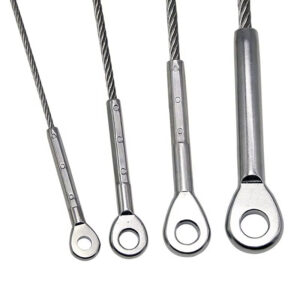
Factory-swaged assemblies are built to a specific released length. Once the hydraulic crimp is set, that dimension is fixed. The practical consequence is that the entire procurement workflow for swaged cables depends on field measurement quality at the time of order—not at the time of installation.
This is not a deficiency of swaged fittings. It is a planning criterion. Swaged assemblies deliver consistent, shop-controlled terminations precisely because the length is committed before the cable leaves the factory. The trade-off is that the contractor must provide accurate, stable measurements before that commitment is made. When measurements are taken from a partially erected structure, from drawings that haven’t been field-verified, or before termination faces are fully positioned, the risk isn’t a tolerance issue—it’s a dimensional mismatch that makes the assembled cable unusable.
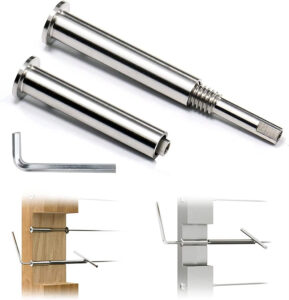
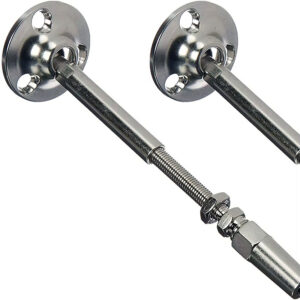
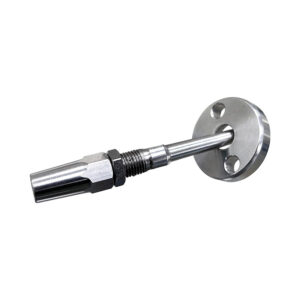
Swageless fittings handle this differently. Because the terminals are threaded and mechanically engaged at the site, the cable length can be adjusted within a range during installation. This reduces the rigidity of pre-measurement without eliminating the need for accurate field dimensions altogether. The fitting absorbs variation; the installer still measures, but the consequences of minor discrepancy are recoverable in the field rather than resolved by a replacement shipment. For projects where post spacing is subject to change or where structural conditions remain in flux at the time of procurement, that field-adjustable tolerance window is a meaningful scheduling buffer.
The relevant question for procurement is not which system measures better, but whether the project’s construction sequence allows run dimensions to be confirmed with enough certainty to justify a permanent shop release. If that threshold hasn’t been reached, the measurement advantage of factory swaging hasn’t been earned yet.
Consequences of Incorrect Released Lengths
When a swaged assembly arrives at a dimension that doesn’t match the installed post spacing, the correction path is constrained from the start. The fitting cannot be cut off and re-swaged in the field. There is no tool-based adjustment available on site. The cable must be returned or discarded, a replacement must be fabricated offsite, and the run sits open until the new assembly ships. On a multi-run project, a single mismeasured length can stall adjacent work while the sequence waits for a replacement.
The following comparison captures how swaged and swageless fittings differ across the dimensions that matter most when a released length turns out to be wrong.
| Аспект | Swaged Fittings | Бесшарнирные фитинги |
|---|---|---|
| Reusability | Cannot be reused; entire assembly must be replaced. | Reusable; can be adjusted or relocated without new fittings. |
| Correction Method | Replacement must be fabricated offsite. | On-site adjustment; no new components or offsite work required. |
| Project Schedule Impact | Causes project delays and increased downtime awaiting replacement. | Minimizes schedule disruption; adjustment happens during installation. |
| Relocation Flexibility | Cannot be relocated without new cables/fittings. | Cable can be relocated by re-terminating with the same fittings. |
Swageless fittings offer a correction mechanism that swaged assemblies fundamentally cannot: the same hardware is reused, the cable is re-terminated at the correct length, and the adjustment happens during the installation sequence rather than off the critical path. This doesn’t mean swageless fittings are immune to installation error—field assembly still requires proper seating and inspection—but the failure mode is recoverable on site rather than through a replacement fabrication cycle.
The procurement implication is direct. If dimensional liability hasn’t been fully resolved before order release, swaged assemblies front-load the risk. A single incorrect run converts a per-unit cost advantage into a delay cost that includes fabrication lead time, shipping, and any downstream schedule impact on trades waiting for that section to close.
Shop Repeatability Versus Field Flexibility
Hydraulic swaging produces a mechanically consistent termination because the crimp geometry is controlled by the tooling, not by the installer’s technique. When the same press and die set is used across a production run, the resulting assemblies carry low unit-to-unit variation in termination integrity—which is part of why swaged fittings, when properly fabricated, are considered technically straightforward. The limitation is equipment access: the press required for hydraulic swaging is a capital or rental cost that not every contractor can absorb. For fabricators who already own swaging equipment, the per-unit economics typically favor swaged assemblies on larger runs. For those without it, the equipment cost narrows or eliminates any per-unit savings.
Swageless fittings shift the locus of quality control from the shop to the field. The termination is made by the installer, using hand tools, at the time of installation. This enables parallel workflow—fittings can be applied while the frame is still being erected, without waiting for exact post dimensions to be finalized and transmitted to a fabricator. For projects with evolving layouts or compressed schedules, that sequencing flexibility is a real advantage. The trade-off is that field assembly introduces variation that shop processes eliminate, and each termination requires on-site verification.
One specification constraint limits swageless fitting selection in a way that doesn’t always surface early enough in procurement: swageless fittings are compatible only with 1×19 LH lay strand cable. Projects specifying a different cable construction—7×7, 7×19, or other lay configurations—cannot use swageless terminals, regardless of scheduling or cost preference. That compatibility check belongs in the cable specification review, not the field.
The complete trade-off picture between the two assembly types, across reliability, cost structure, equipment requirements, installation timing, cable compatibility, and adaptability, resolves differently depending on project scale and site conditions.
| Аспект | Swaged Fittings | Бесшарнирные фитинги |
|---|---|---|
| Reliability | Hydraulically crimped; technically simple and more reliable. | Field-assembled; reliable when installed correctly, but requires inspection. |
| Cost Structure | Lower per-unit cost; requires investment in swaging equipment. | Higher per-unit cost; no specialized equipment needed. |
| Equipment Requirements | Hydraulic swaging tool required; buying/renting is expensive. | Basic hand tools only; no powered tooling needed. |
| Installation Timing | Must wait for exact post and termination face measurements before fabrication. | Can be installed during frame construction; no pre-measurement wait. |
| Совместимость кабелей | Works with multiple cable constructions. | Only compatible with 1×19 LH lay strand cable. |
| Adaptability to Change | Best for permanent installations with minimal future adjustments. | Suited for areas subject to changing conditions; allows field reconfiguration. |
For permanent installations with stable geometry and no anticipated future reconfiguration, the shop-controlled consistency of swaged cable terminals is a meaningful structural and schedule advantage—provided the dimensional workflow is solid. For projects where conditions are still shifting, swageless cable assemblies absorb that variation at the cost of higher per-unit price and field inspection rigor.
Ownership of Run Dimensions and Revisions
Procurement decisions about assembly type implicitly assign dimensional liability. With factory-swaged assemblies, someone must take ownership of released measurements—and that ownership has consequences when a dimension changes after order placement.
Some fabricators handle this by accepting outside-to-outside measurements from the contractor and assuming responsibility for translating those into cut lengths. That workflow shifts the calculation burden to the supplier, but it does not shift the risk of an incorrect field measurement. If the contractor provides a dimension taken from an incompletely set structure, the resulting cable is wrong regardless of who did the arithmetic. The verification obligation remains with whoever takes the measurement.
What this means practically is that procurement should define the measurement workflow before order release, not after. The questions are: Who confirms that post positions are final? Who measures? How is that measurement communicated to the fabricator—and in what format? What happens when a run dimension changes after the order is placed but before fabrication is complete? If these questions don’t have clear answers at the time of procurement, the probability of a replacement scenario increases with every run on the project.
Revisions are the higher-risk gap. A single changed run on a multi-level or multi-bay project can propagate into adjacent cables if post positions shift. Without a documented revision path—who flags the change, who updates the released dimension, and how that reaches the fabricator before the affected cables are cut—the correction loop often runs after fabrication rather than before it. That sequence is recoverable with swageless assemblies; it is expensive with swaged ones.
For further context on how assembly type fits into the broader specification and procurement process, the Complete Stainless Steel Cable Railing Guide covers material standards and system selection across both residential and commercial applications.
Release Conditions for Swaged Assemblies
The decision to release a swaged assembly order is a structural readiness judgment, not a paperwork step. Once the order is placed and fabrication begins, the dimension is committed. The question of whether the project was actually ready to support that commitment belongs in the pre-release review, not in the post-delivery correction process.
A workable release condition for swaged assemblies generally requires that post positions are fully set and braced, that termination faces—whether into a post, a fascia plate, or an end-fitting anchor—are in their final configuration, and that any field verification measurement has been taken from the as-built condition rather than from the drawing. Where construction sequencing means posts are set in stages, only the runs whose anchor points are confirmed should be included in an early release; the remainder should be withheld until those conditions are met.
Cable material specifications referenced at order placement should align with the intended fitting type. Wire rope assemblies intended for swaged terminations should conform to recognized material standards—ISO 2408 governs dimensional and mechanical requirements for steel wire ropes—and the selected cable construction should be verified against fitting manufacturer requirements before fabrication begins. Mismatches between cable construction and fitting type are most disruptive when discovered after the cable has been cut to length.
Post-installation, each swaged assembly should be inspected at both termination ends before tensioning. The inspection is confirmatory: verify that the terminal is fully seated, that the cable is correctly routed through any intermediate hardware, and that the swaged section shows no visible deformation or cracking at the neck. Field adjustment of a factory-swaged length is not possible, so this check is the last opportunity to identify a dimension or seating problem before tension is applied. Any run that doesn’t meet dimensional confirmation at this stage returns to the same replacement path described above—which is precisely why release conditions exist as a prevention mechanism rather than a remediation one.
The core tradeoff between these two assembly types compresses to a single procurement question: how stable is the structure at the time of order? Shop-swaged assemblies deliver consistent, repeatable terminations that justify their per-unit cost and fabrication lead time—but only when the dimensions behind that release are accurate and locked. When structural conditions are still evolving, that stability hasn’t been established, and the field-adjustable nature of swageless fittings carries more practical value than any per-unit price differential.
Before committing to either system, confirm the cable specification first. If the design calls for anything other than 1×19 LH lay strand, swageless fittings are off the table regardless of scheduling preference. Then define the measurement workflow: who measures, when, how revisions reach the fabricator, and who bears dimensional liability if a released length is wrong. Those process decisions determine whether factory swaging is an asset or a liability on a given project—and they should be resolved before the first cable is ordered, not after the first mismatch arrives on site.
Frequently Asked Answers
Q: My project’s cable specification calls for 7×7 strand, not 1×19. Since swageless fittings aren’t compatible, how do I keep measurement risk under control when factory-swaged is my only option?
A: Treat every run as a single point of failure. Before releasing any dimensions, complete a hard verification of each termination point: posts must be fully set, braced, and secured in their final position, and the exact distance between termination faces must be measured twice with a calibrated tool. Then pair a formal dimension sign-off sheet with indexed photos of each run so the fabricator is working from the same reference you verified. As a further safeguard, release the order in phases—confirm the most structurally stable runs first and hold the rest until their anchor points can be proven. This frontloads the liability of a permanent fabrication, so the extra field discipline is non-negotiable.
Q: Once we’ve decided to use swaged assemblies, what is the first concrete on-site action we should take before sending measurements to the fabricator?
A: Establish a disciplined measurement protocol that goes beyond a single walkthrough. Have a second qualified person independently measure every run using the same reference points, and compare the two sets of readings for discrepancies. Only after all readings align—and only after you’ve visually confirmed that the termination faces (post, fascia plate, or anchor body) are in their permanent, installed condition—should you prepare the released lengths. Document each measurement in a format the fabricator expects, and retain that record so any later dispute over a dimension can be traced back to what was actually field-verified.
Q: Exactly how much adjustment can swageless fittings absorb, and what happens if a cable comes up too short even after field length correction?
A: The adjustability is limited to the working thread length of the stud or tensioning body—typically enough to absorb a dimensional variation of up to about two inches, though this depends on the specific fitting model. When a run falls outside that window, you are not forced into an offsite replacement: the same swageless terminal can be reused, the cable can be re-cut to a correct longer length on site, or you can substitute a longer stud if the fitting design allows it. The failure mode is therefore recoverable with only material and labour delay, not a fabrication lead time. If the cable is too short beyond what thread adjustment can fix, the basic remains reusable, which limits the financial damage to the length of replacement cable.
Q: Do swaged terminals perform reliably on angled stair or sloped runs, or does the measurement complexity tip the scale toward swageless hardware?
A: Swaged assemblies can be used on angled runs, but the risk of measurement error rises sharply because the diagonal distance between termination points must account for both horizontal offset and vertical rise in a single fixed cut length. Any post that settles or shifts even slightly after measurement will invalidate that dimension. Swageless fittings lower this risk because the installer can trim and re-terminate the cable to the final diagonal length after the hardware is in place, turning a complex pre-measurement challenge into a routine field trim. For this reason, many commercial teams default to swageless on stair runs unless all framing is locked well ahead of the order date.
Q: On a small residential project with only eight or ten runs, does the potential per-unit savings of swaged hardware really justify the risk of a measurement mistake?
A: Rarely. The absolute cost difference on a low run count is modest, while a single replacement swaged cable—with fabrication, shipping, and schedule disruption—will typically eclipse whatever you saved across the entire order. Swageless fittings, though priced higher per piece, give you an in-field recovery path that protects the installation timeline and avoids an expensive one-off replacement. For small projects, the practical calculation usually favours swageless hardware, even before accounting for the softer cost of not having to lock measurements early in the construction sequence.