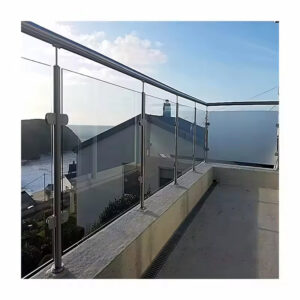
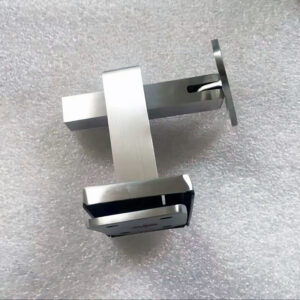
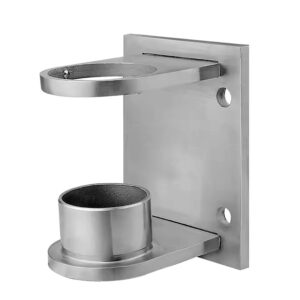
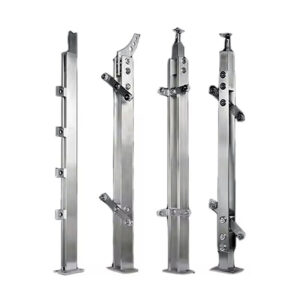
A quoted glass base shoe system can arrive with a full stack of documents and still leave the buyer unable to confirm it matches the project. The question is not whether evidence exists, but whether each piece of evidence speaks to the specific shoe profile, glass build-up, support configuration, and anchorage the project requires. Sorting that out before purchase approval determines whether the submittal package holds up under later review or creates rework once the assembly is already on order.
Evidence map from each project requirement to a document
| Project question | Evidence to request | Configuration-specific check | Граница доказательств |
|---|---|---|---|
| Does the proposed assembly match the project configuration? | Shop drawings and installation instructions | Compare the glass build-up, support components, mounting and anchor interface, corners, ends, drainage, covers, and adjacent construction with the quoted configuration. | A drawing or instruction set supports this check only when it is tied to the proposed assembly. |
| What material record accompanies the ordered material? | Applicable material inspection documents | Compare the document with the ordered material and the order requirements. | The document type alone does not prove system performance, traceability, test validity, grade conformity, or certificate authenticity. |
| Does cited testing cover the proposed assembly? | Relevant test report and scope | Compare the shoe profile, glass and support configuration, anchorage, specimen, and evaluated actions with the project assembly. | A public standard scope or test-method reference does not replace the report details, governing calculations, codes, or project engineering. |
| What does a listed standard, logo, or generic certificate support? | The underlying configuration-specific evidence | Identify the evidence to which the reference points, then check that evidence against the project assembly. | The reference is an index to evidence, not proof that the quoted system meets the project’s requirements. |
Every project requirement needs a specific document type behind it, and the two should not be assumed to correspond just because both are present in a submittal package. A requirement about how the glass, shoe, and support interact calls for shop drawings and installation instructions, not a material certificate. A requirement about the steel used in the shoe or fittings calls for a material inspection document, not a test report. A requirement about strength or post-breakage behavior calls for a test report with a defined scope, not a generic standards reference. Treating these as interchangeable is where evidence review breaks down, because a document can be legitimate and still answer the wrong question.
The practical discipline is to start from the project requirement and work outward to the document, rather than starting from whatever documents a quote happens to include and working backward to see what they might cover. A requirement for corner and end treatment, for example, cannot be satisfied by a drawing that omits those conditions, no matter how complete the rest of the drawing set is. A requirement for anchorage performance cannot be satisfied by a test report whose anchorage is not described in enough detail to compare against the proposed interface.
This also means that the absence of a one-to-one match between requirement and document is itself a finding, not a gap to paper over. Where a project question has no document that speaks to it directly, the buyer has identified exactly what still needs to be requested, rather than having to guess at a missing piece after submittal review. Where a document exists but was prepared for a different configuration, the mismatch is a configuration problem, not a documentation problem, and recognizing that distinction early is part of what keeps a review efficient.
Project information the buyer supplies, such as the intended glass build-up, support condition, and anchorage, is what allows a quotation to be prepared against the right configuration in the first place. That same information is the baseline against which every document in the evidence map is later checked, so its accuracy at the quotation stage affects how much the later evidence review can actually confirm.
Drawings and instructions tied to the quoted configuration
| Drawing area | Detail to check against the quoted configuration | Unresolved question if absent or different |
|---|---|---|
| Наслоение стекла | The glass build-up shown for the proposed assembly | Whether the drawing represents the proposed glass configuration |
| Support components | The support components shown with the glass and shoe | Whether the shown support configuration matches the proposed assembly |
| Mounting and anchorage | The mounting arrangement and anchor interface | Whether the proposed connection is represented |
| Corners and ends | The treatment shown at corners and ends | Whether these conditions are covered by the submitted configuration |
| Drainage and covers | The drainage and cover details | Whether these details belong to the quoted configuration |
| Adjacent construction | The interface with adjacent construction | Whether the assembly interface is defined for the project |
Shop drawings and installation instructions carry the most configuration-specific information in a base shoe submittal, but their value depends entirely on whether they represent the assembly that was actually quoted. A drawing set can be accurate, detailed, and professionally produced while still describing a different glass build-up, a different support arrangement, or a different anchor interface than the one priced for the project. Reviewing drawings for completeness is a separate task from reviewing them for correspondence to the quoted configuration, and both need to happen.
The glass build-up shown on a drawing determines what thickness, interlayer, or lamination the shoe and supports are expected to accommodate. If the proposed project glass differs from what the drawing shows, the mounting clearances, gasket dimensions, and bearing surfaces may no longer apply as drawn. Support components carry a parallel issue: a shoe system can be drawn with a particular combination of setting blocks, liners, or structural supports, and a different combination in the field changes how load transfers through the assembly even if the shoe profile itself is unchanged.
Mounting and anchorage details are where drawings most often need close comparison against site conditions, because the anchor interface depends on what the shoe is being fastened into, not only on the shoe’s own geometry. Corners and ends are frequently left undetailed in preliminary drawing sets, which leaves open how the system behaves at a termination or direction change. Drainage and cover details affect long-term performance in ways that are easy to treat as secondary, and the interface with adjacent construction determines whether the base shoe system will actually fit the opening or wall condition once other trades have completed their work. Each of these is a distinct point of comparison, and a drawing set that is silent on one of them has not resolved that condition for the project, regardless of how complete it appears elsewhere.
Material records and their limited proof role
A material inspection document tells the buyer something about how the steel used in the base shoe system was tested or certified by the mill or producer, following a framework such as the one described in ISO 10474 for inspection documents supplied with steel products. What it does not do, on its own, is prove that the finished base shoe system performs as a system, or that the certificate presented actually corresponds to the material in the delivered order.
These are two separate limitations, and both matter. The first is a scope limitation: an inspection document describes the material, not the completed assembly. A shoe profile, its glass interface, and its anchorage can all perform differently as a system than any single material certificate would suggest, because system performance depends on how components interact, not only on what each one is made of. The second is a verification limitation: the document type itself does not establish that the particular certificate accompanying a shipment is authentic or that it traces to the specific heat or lot delivered. A buyer who receives a document in the correct format has confirmed that a document exists, not that it corresponds to the material in hand.
The practical response is to treat a material inspection document as support for one narrow question: what the ordered material is supposed to be, according to the order requirements. Where the order specified a particular steel grade or inspection document type, the document should be checked against that specification, not read more broadly as a statement about the shoe system’s structural or corrosion performance. Where the surrounding submittal also includes separate records tied to the ordered material, such as those referenced in a balcony glass railing submittal package covering mill test reports and related documentation, the material inspection document is one part of that larger record rather than a substitute for it. The distinction between “this document exists” and “this document proves this order’s material is what it claims to be” is one the buyer needs to hold onto through the entire material record review.
Test scope matched to glass, support, shoe, and anchorage
| Scope element | Report detail to compare | Граница принятия решения |
|---|---|---|
| Shoe | Shoe profile used in the tested configuration | A different or unidentified profile does not establish a match to the proposed shoe. |
| Стекло | Glass used in the tested configuration | The glass must be compared with the proposed glass build-up before applying the report to the project. |
| Support | Support configuration used in the test | The cited scope does not establish a match when the proposed support configuration is not covered. |
| Anchorage | Anchorage used in the test assembly | The anchor interface must be compared with the proposed anchorage. |
| Specimen | Specimen described in the report | The specimen description must be sufficient to compare the tested assembly with the proposed assembly. |
| Evaluated actions | Actions evaluated by the test | A report supports only the actions within its stated scope; governing calculations, codes, and project engineering remain separate checks. |
A test report is evidence of what was tested, under the configuration that was tested, evaluated against the actions the test method defines. ASTM E2353 sets out static-strength, impact, and post-breakage test methods across defined support configurations for glazing in permanent railing systems, guards, and balustrades, and a report generated under that standard carries weight only to the extent that its specific configuration matches the project’s. A report is not evidence for a configuration it did not test, no matter how closely the standard’s title appears to match the project application.
This is where the comparison has to move component by component rather than staying at the level of “a test report was provided.” The shoe profile in the tested assembly needs to match, or be shown equivalent to, the shoe profile proposed for the project; a different or unidentified profile leaves that comparison unresolved. The glass in the tested assembly needs to be compared against the proposed glass build-up, because glass thickness, type, and lamination all affect how a base shoe system behaves under the actions the test evaluates. The support configuration and anchorage used in the test need the same scrutiny, since a report produced under one support or anchor arrangement does not extend automatically to a different arrangement, even when the shoe and glass happen to match.
The specimen description in the report is what makes any of this possible to check. Where a report describes its specimen in enough detail to compare against the proposed assembly, the buyer can make an informed judgment about applicability. Where the specimen description is thin, the report’s applicability to the project remains an open question regardless of how reputable the testing body or how relevant the standard. Finally, the actions a test evaluates are specific to that test method’s scope: a report addressing static strength and post-breakage behavior under ASTM E2353 supports conclusions about those actions and does not substitute for separate governing calculations, applicable codes, or project-specific engineering that may address other conditions entirely. Matching test scope to project configuration is a narrower and more demanding task than confirming that a recognized standard was cited, and the two should not be treated as equivalent findings.
Deviations that require designer or authority review
Once the shop drawings, material records, and test reports have been compared against the quoted configuration, some comparisons will not resolve cleanly. A shoe profile may be similar but not identical to what a cited test covered. A support condition at a corner may not appear in either the drawings or the referenced test’s specimen description. An anchorage detail may differ from the anchorage in the test assembly in a way that is not clearly immaterial. These are deviations, and they are a different category from a simple documentation gap: a documentation gap means evidence has not yet been requested, while a deviation means the available evidence does not match the project configuration as closely as the project requires.
The relevant question for a deviation is not whether the buyer or supplier judges it acceptable, but whether it falls within something a designer or the authority having jurisdiction needs to evaluate directly. A change in glass build-up relative to a tested configuration changes the structural behavior assumptions the test was meant to validate. A change in anchorage changes how load transfers into the supporting structure, which is fundamentally a structural engineering question rather than a product-matching question. A change in corner or end treatment that is not covered by either the drawings or the test scope leaves an open condition in the installed assembly that needs resolution before the detail is built, not after.
Where the project’s base documents already establish a format for routing this kind of review, such as a project specification built on a structure like UFGS 05 52 00 for metal railings, the deviation should be logged and routed through whatever submittal or RFI mechanism that specification establishes, since a guide specification of that kind exists to define the project’s own submittal structure rather than to set a universal standard. Where no such format exists for the project, the deviation still represents a question for the designer of record or the authority having jurisdiction, because resolving it requires judgment about structural adequacy or code compliance that a hardware comparison alone cannot supply. The practical discipline is distinguishing a deviation that is cosmetic or documentation-only from one that touches load path, anchorage, or glass performance, since only the latter category requires this kind of review before the project can proceed with confidence in the assembly.
Submittal register to close before purchase approval
Closing a submittal register before purchase approval means confirming that every open item identified through the evidence review has either been resolved with matching documentation or has been routed to the party responsible for resolving it. This is a closeout task, not a new review: it draws on the requirement-to-document comparisons, the drawing checks, the material record limitations, the test scope matching, and any deviations flagged for designer or authority review, and verifies that none of them remain unresolved.
An item counts as closed only when the evidence requested actually answers the project question it was meant to answer, not merely when a document matching the requested category has been received. A shop drawing submitted in response to a configuration question closes that item only if it shows the configuration actually proposed for the project; a drawing showing a different glass build-up or a different anchor interface leaves the item open even though a drawing was technically provided. The same logic applies across every category in the register: receipt of a document type is not the same as resolution of the underlying question.
Где glass railing load and anchorage specifications are part of what the project team has asked hardware buyers to confirm with suppliers, those specification items belong in the same register alongside the base shoe system’s own evidence requirements, since anchorage and load questions touch both the glass railing hardware and the base shoe assembly it sits within. A register that treats these as separate conversations risks closing one without noticing that it depends on confirmation from the other.
Before purchase approval, the buyer’s task is to look across the full register and identify what remains genuinely unresolved versus what has been answered with configuration-matched evidence. Where every item traces to a document that speaks to the proposed assembly’s specific glass, support, shoe, and anchorage, purchase approval rests on a defensible evidentiary basis. Where items remain open, approval ahead of their resolution means accepting that gap into the project rather than closing it, and that is a decision the project team should make deliberately rather than by default.
Часто задаваемые вопросы
Вопрос: Should the evidence review start with certificates or with the proposed assembly?
A: Start by defining the proposed assembly through configuration-specific shop drawings and installation instructions. Once the glass build-up, support components, shoe, mounting, anchorage, corners, ends, drainage, covers, and adjacent interfaces are clear, each certificate or report can be checked against the configuration it is meant to support.
Вопрос: How can a buyer decide whether a test report applies to the quoted glass base shoe system?
A: Compare the report’s shoe profile, glass and support configuration, anchorage, specimen, and evaluated actions with the proposed assembly. If a defining element is different or unidentified, record it as an unresolved scope gap rather than treating the report as evidence for an equivalent configuration.
Вопрос: Does a material inspection document prove that the complete system meets the project’s performance requirements?
A: No. An applicable inspection document can support the material record required for the order, but its document type alone does not prove system performance, traceability, test validity, grade conformity, or certificate authenticity; those points require their own evidence checks.
Вопрос: What should happen when the shop drawings differ from the configuration described in a test report?
A: Identify the exact difference and keep the evidence item open until the deviation is reviewed against the project’s requirements. The affected glass, support, shoe, anchorage, or interface should be referred to the responsible designer or authority instead of being assumed to fall within the cited test scope.
Вопрос: How should evidence gaps be tracked before purchase approval?
A: Use a submittal register that links each project requirement to the exact document supplied, the proposed configuration it was checked against, and a clear matched, unresolved, or review-required status. Close the register only after missing evidence and configuration deviations have an identified disposition.