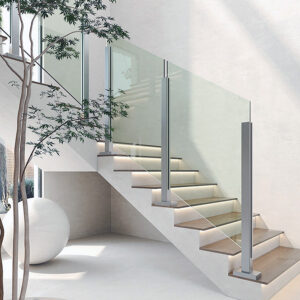
A sloped slab, a cambered deck, or an out-of-level threshold does not disqualify a project from using an adjustable post base, but it does change what the adjustment is actually being asked to do. Before specifying one, the project team needs to know whether the base is correcting a minor, anticipated variation or being asked to compensate for a surface condition that falls outside what its mechanism was designed to take up. That distinction drives nearly every decision that follows, from anchor selection to cover detailing to whether the substrate itself needs attention first.
Surface conditions an adjustable post base can reasonably accommodate
An adjustable post base works by allowing the post-to-surface interface to vary within a defined range, so the post itself can be set plumb even when the surface beneath it is not level or not flat. The mechanism accommodates a condition; it does not correct the surface. That difference matters because a buyer evaluating a sloped or uneven substrate first needs to define what has actually been measured — a consistent slope across a run, a localized dip or high point, a stepped change between adjacent sections, or a surface that varies unpredictably from post to post. Each of these is a different problem for an adjustment mechanism to absorb, even if they look similar when walking the site.
The core judgment is a comparison: what has the project measured, against what the base’s adjustment range and mechanism were intended to take up. A base designed to true up a post against gradual, predictable variation is answering a different question than one being asked to compensate for a surface that is irregular in a way no single adjustment setting can resolve consistently across a run. Where the measured variation is consistent and within the base’s intended range, adjustability functions as it is meant to — a leveling allowance built into the hardware interface. Where the variation is inconsistent, exceeds the intended range, or reflects an underlying substrate defect rather than an inherent slope, treating adjustability as a general-purpose fix risks masking a problem the hardware was never meant to solve.
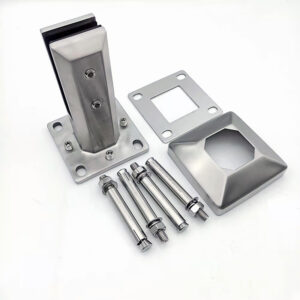
This is also where the project team should be explicit about what “uneven” means in their case. A gradual grade change across a long run of railing is not the same condition as a localized low spot from inadequate substrate preparation, even though both might read as “the surface isn’t level” during a walkthrough. The first is a condition the post base can be specified to answer; the second is a substrate issue that adjustability can conceal without resolving. Confirming which condition is actually present — through survey data, as-built measurements, or direct field verification — has to happen before the adjustment mechanism is treated as the solution rather than as one part of a larger detail that may still require substrate correction. Esang’s adjustable base plates are specified against the surface condition and adjustment range the project defines, which makes this upfront measurement step the input the rest of the selection depends on.
Adjustment effects on post height, bearing, cover fit, and finished gaps
| Leveling effect | Project check | Selection implication |
|---|---|---|
| Post height | Confirm the post height at the required adjusted position. | Carry the resulting height into the selected detail. |
| Base bearing | Confirm that the base remains stably supported at the required adjusted position. | If stable bearing would be lost, correct the substrate or use a project-specific detail. |
| Cover fit | Check the cover fit at the adjusted base position and finished-surface interface. | Resolve the fit in the selected detail rather than assuming adjustment preserves it. |
| Visible finished-surface gap | Check the visible gap after leveling and adjacent finishes are accounted for. | Include the resulting gap in project review before the detail is selected. |
Every adjustment made to compensate for a sloped or uneven surface changes more than the single dimension it was intended to fix. Moving a post base to a different position to achieve plumb or level shifts the post’s finished height relative to adjoining rail runs, infill, or handrail terminations. It can also change how much of the base’s bearing surface remains in full contact with the substrate, since an adjustment designed to correct for slope in one plane does not guarantee even contact across the full footprint of the base at the adjusted position.
Where a cover or base trim is part of the assembly, the same adjustment that corrects post alignment can leave a gap or interference at the cover-to-surface interface that the cover was not designed to span. A cover sized for a nominal, flush installation does not automatically remain correctly fitted once the base beneath it has been raised, tilted, or shimmed to compensate for an uneven surface. Similarly, the visible gap between the base and the finished surface — whether that surface is tile, decking, pavers, or another finish installed around the post — is a direct consequence of how much adjustment was required, and that gap becomes a finish-quality question once adjacent materials are in place, not only a structural one.
The practical implication is that adjustment cannot be treated as a single corrective action isolated to the post-to-surface connection. A change made to solve a bearing or alignment problem at the base propagates upward into post height and outward into cover fit and visible gap conditions, each of which needs separate confirmation at the actual adjusted position the project requires — not at a nominal or theoretical position. Where the required adjustment is modest, these downstream effects may remain within what the standard components can absorb. Where the required adjustment approaches the edge of the base’s range, each of these interfaces needs individual verification, because the components were specified against an assumed range of conditions, not against the specific adjusted position a given slope or surface variation turns out to require.
Anchor engagement and load-path questions created by leveling
| Review question | Evidence to confirm | Граница принятия решения |
|---|---|---|
| Does leveling change anchor engagement? | Anchor engagement at the required adjusted position, checked against project-specific criteria. | Adjustment alone does not establish acceptable anchor engagement. |
| Is the load path reviewed for the required adjustment? | A project-specific review or detail that covers the adjusted base condition. | If the load path remains unreviewed, correct the substrate or use a project-specific detail. |
| What do the cited references establish? | ASTM E985-24 publicly covers permanent metal railings and basic design and performance criteria; UFGS 05 52 00 provides a project-edited railing specification and submittal structure. | Neither reference alone establishes field-specific criteria, ESANG compliance, or an ESANG product requirement. |
Leveling a post base to accommodate a sloped or uneven surface changes the geometry of how that base engages its anchors, and that change has direct consequences for the load path the railing assembly depends on. An anchor’s engagement is a function of depth, embedment, and orientation relative to the substrate; when a base is shimmed, tilted, or repositioned to achieve level or plumb, the anchor points move with it, and the resulting engagement at the adjusted position may differ from the engagement the component would have at its nominal, unadjusted position.
This is a project-specific review question, not a property of the hardware alone. A railing system’s structural performance depends on the installed condition — the actual anchor engagement, actual bearing, and actual load path at the position the post was adjusted to — rather than on the component’s rated capacity at a nominal installation. Where the required leveling is minor, the shift in anchor geometry may remain within what was already accounted for in the design. Where the leveling is more significant, or where the adjustment changes the angle at which load is transferred from post to substrate, the load path needs explicit review for that adjusted condition rather than an assumption that compliance at a nominal position carries over.
Two publicly available references bound what general industry documentation can establish here, and neither substitutes for that project-specific review. ASTM E985-24 covers permanent metal railing systems and basic design and performance criteria at a public-scope level; it does not, on its own, establish field-specific anchor or load-path criteria for an adjusted installation, and the detailed technical content sits behind the paywalled standard. UFGS 05 52 00 provides a project-edited specification and submittal structure for metal railings — useful as an example of how such requirements get organized and documented on a project, but not a universal code requirement and not an ESANG product requirement. Citing either document establishes the category of consideration; it does not establish that a specific anchor engagement or load path has been reviewed and found acceptable for a given adjusted post base condition. That confirmation remains a project-specific determination, typically resting with the engineer or authority responsible for the installed assembly, and it should be documented against the actual adjusted position rather than inferred from the base’s general adjustment capability.
Installation access after adjacent finishes and infill are in place
An adjustable post base is only as useful as the installer’s ability to reach its adjustment points and anchors at the time adjustment is actually needed. This creates a sequencing question that is easy to overlook when the base is specified early in a project but installed later, after other trades have completed adjacent work. Where adjacent finishes — flooring, decking, cladding, or similar surface materials — are installed before the post base is set or adjusted, the finish itself can physically cover or restrict access to the adjustment mechanism, the anchor heads, or the fasteners that lock the adjusted position in place.
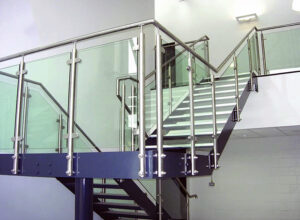
The same issue applies where glazing or infill panels are installed before post alignment is finalized. Glass panels, balusters, or infill systems that rely on the post being in its final, adjusted position can constrain the installer’s ability to reach the base afterward, particularly where the infill sits close to or over the base detail. If the sequence calls for infill installation before final post leveling, the installer may be adjusting a base that is partially enclosed, which changes both the practicality of the adjustment and the ability to verify it visually once complete.
This is a coordination question that belongs in the installation sequence, not only in the hardware selection. The project team needs to confirm, before adjacent finishes or infill proceed, whether the adjustable base requires access from above, below, or the side, and whether that access will still exist once the surrounding work is complete. Where the sequence places finish and infill work after post setting and adjustment, access is generally preserved by the order of operations itself. Where finish or infill work is scheduled first — whether for trade coordination reasons or site logistics — the sequence needs to explicitly reserve access to the adjustment points, or the adjustment needs to be completed and verified before that later work begins. A base that is fully functional on paper provides no practical benefit if the installer cannot reach it once the surrounding assembly is in place, and resolving this is a scheduling and coordination decision made before work proceeds, not a field improvisation after the fact.
Correction triggers for unstable bearing, trapped water, or excess variation
Not every surface condition should be resolved through adjustment, even when the base’s mechanical range would technically allow it. Some conditions indicate that the underlying substrate, rather than the post base detail, is the actual problem, and recognizing those conditions early avoids building a post installation on a foundation that remains deficient regardless of how the post itself is leveled.
Unstable bearing is one such trigger. If achieving the required adjusted position would leave the base without full, stable contact across its bearing surface — rather than simply offset or angled within an otherwise sound contact — the adjustment has reached the point where it is compensating for a substrate deficiency rather than a tolerable surface variation. The same applies where the adjusted position would trap water against the base or at the base-to-surface interface; a detail that resolves alignment while creating a condition for water to collect introduces a different and separate problem that the adjustment mechanism was not intended to address. Excess variation — surface conditions beyond what the base’s adjustment range was intended to absorb — is the third trigger, and it returns to the comparison made at the outset between measured condition and intended mechanism.
When any of these conditions is present, the appropriate response is to correct the substrate itself or to develop a project-specific detail for that location, rather than relying on the adjustable base to carry a condition it was not designed to resolve. This keeps the adjustment mechanism doing the job it is suited for — accommodating reasonable, anticipated variation — while directing conditions that exceed that scope toward the substrate work or custom detailing they actually require.
Часто задаваемые вопросы
Вопрос: Can an adjustable railing post base compensate for any slope or unevenness?
A: No. Measure the slope or surface variation and compare it with the base’s intended adjustment mechanism. Correct the substrate or use a project-specific detail if the required position would cause unstable bearing, trapped water, or an unreviewed load path.
Вопрос: What finished-surface details should be checked before selecting the base?
A: Check the required adjusted position against post height, base bearing, cover fit, and the visible gap at the finished surface. Carry those conditions into the selected detail so the adjustment is assessed at its actual installed position.
Вопрос: How should leveling be considered when reviewing the anchors?
A: Confirm anchor engagement at the required adjusted position and have the adjusted load path reviewed against project-specific criteria. The presence of an adjustment mechanism does not by itself establish acceptable anchor engagement or load transfer.
Вопрос: When should access to the adjustment points and anchors be planned?
A: Plan it before adjacent finishes, glazing, or infill are installed. Confirm that installers can reach both the adjustment points and anchors in the intended sequence, then revise the sequence or detail if later work would block access.
Вопрос: Do ASTM E985-24 or UFGS 05 52 00 confirm that an ESANG adjustable base is suitable for a specific project?
A: No. ASTM E985-24 provides general scope for permanent metal railing design and performance criteria, while UFGS 05 52 00 provides an example project-edited specification and submittal structure. Project parties still need to define and review the field-specific criteria for the proposed adjusted condition.