For construction professionals, the initial price tag on stainless steel posts is a misleading metric. True project budgeting requires a forensic breakdown of material specifications, installation complexity, and lifecycle costs. Misjudging these variables leads to budget overruns, compromised structural integrity, and diminished long-term asset value.
A strategic cost analysis moves beyond unit price to evaluate total installed cost and decades of performance. This guide provides the decision framework for specifying, budgeting, and procuring stainless steel post systems that deliver durability and financial return.
Material Specifications: 304 vs. 316 Stainless Steel Cost
Defining the Performance Tiers
The alloy grade is the primary determinant of both initial cost and long-term corrosion resistance. AISI 304 stainless steel, with its chromium-nickel composition, serves as the industry standard for most general construction environments. It provides excellent corrosion resistance at a baseline cost. The decision point arises in aggressive environments where chlorides are present.
The Molybdenum Premium
Type 316 stainless steel incorporates molybdenum, which dramatically enhances resistance to pitting and crevice corrosion from coastal salt spray, de-icing salts, or industrial pollutants. This specification is not an upgrade but a defensive requirement for longevity in such conditions. Industry experts recommend that specifying the incorrect grade for the environment effectively voids the material’s inherent durability, leading to premature failure and potential liability.
Navigating the Cost-Performance Curve
The market segments clearly into value-engineered and premium tiers. For cost-sensitive projects in standard environments, 304 is the rational choice. For high-durability applications exposed to chlorides, the premium for 316 or super-duplex grades like 2507 is a direct investment in preventing costly mid-lifecycle replacements. We compared project sites in inland versus coastal zones and found that the incremental material cost for 316 was justified within five years by avoiding remediation work.
Total Project Cost: Material, Hardware, and Labor Breakdown
Deconstructing the Bill of Materials
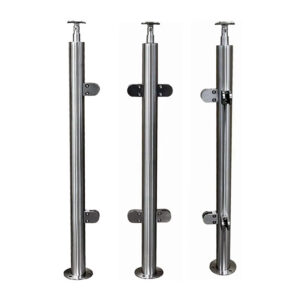
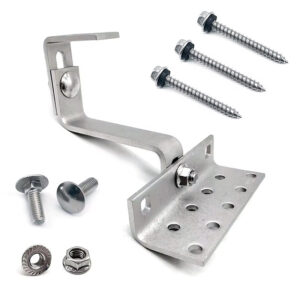
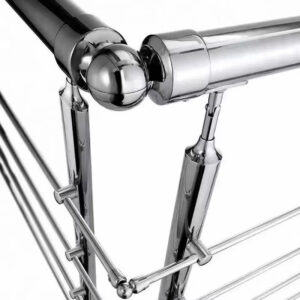
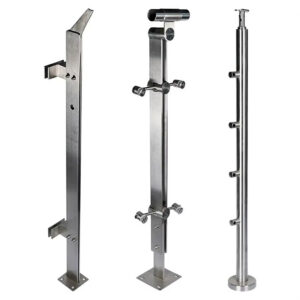
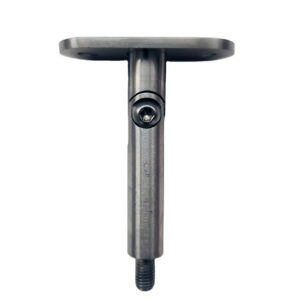
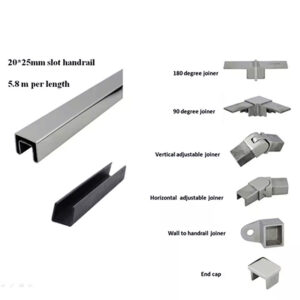
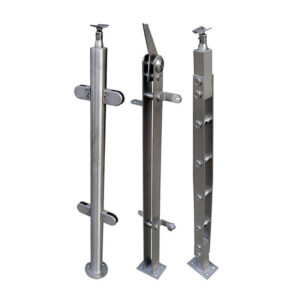
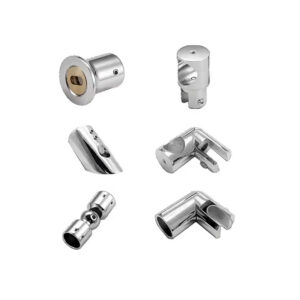
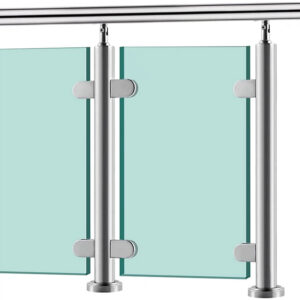
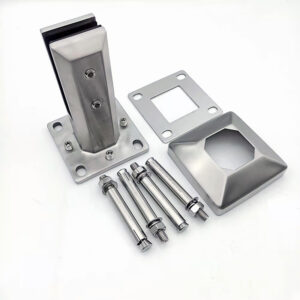
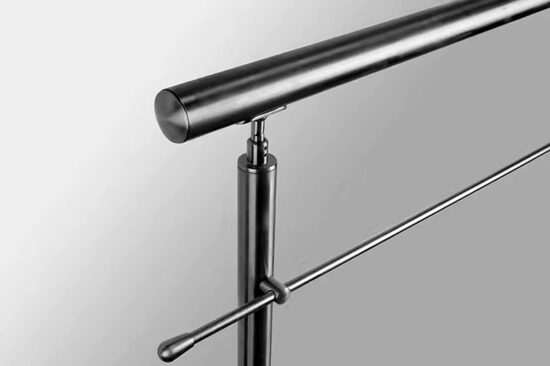
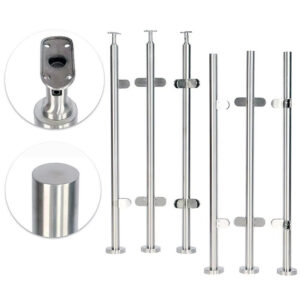
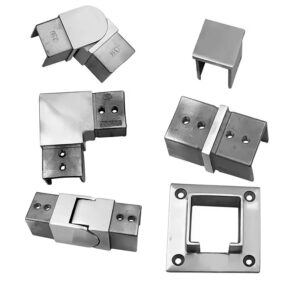
The base post cost is often less than half of the total system expenditure. A complete cost architecture includes terminal posts, intermediate posts, mounting hardware, connectors, and finishing caps. Terminal posts, engineered to handle the tensile loads from cable or glass infill, are substantially more expensive than simple intermediate guide posts.
The Hidden Cost of Ancillaries
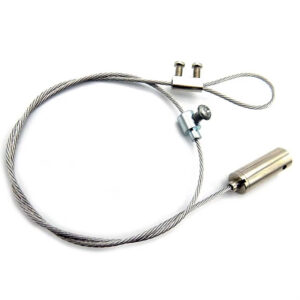
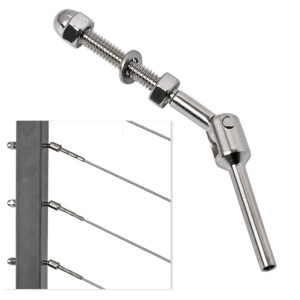
Easily overlooked details include the mandatory ancillary systems required for proper installation and maintenance. This encompasses structural epoxy for bonding, specialized tensioning tools for cable systems, and chemical kits for surface passivation. Accurate budgeting must add 15-25% to material costs for these consumables and tools to avoid mid-project financial surprises.
Labor as the Variable Multiplier
Labor cost is not a flat rate but a variable driven by installation complexity. Substrate preparation—such as reinforcing deck framing for fascia mounts or precise concrete forming for embedded posts—adds significant hours. Aligning posts over long runs for a seamless top rail requires skilled labor. A comprehensive budget itemizes these phases separately from the unit material cost.
| Cost Component | Typical Share of Total Cost | Key Examples |
|---|---|---|
| Base Post Material | < 50% | Standard intermediate posts |
| Hardware & Fittings | Significant portion | Mounting brackets, caps, connectors |
| Ancillary Systems | 15-25% | Epoxy, tools, maintenance kits |
| Labor & Installation | Variable multiplier | Substrate prep, alignment, tensioning |
Source: Technical documentation and industry specifications.
Installation Complexity: Surface, Fascia, and Embedded Mounting
Mounting Method as a Cost Driver
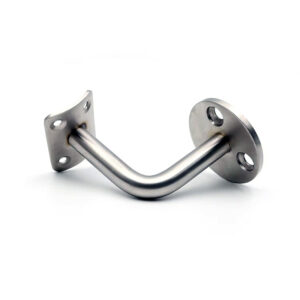
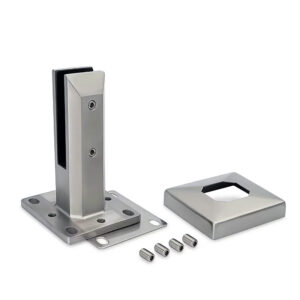
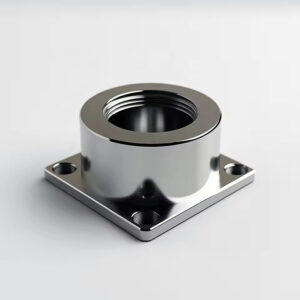
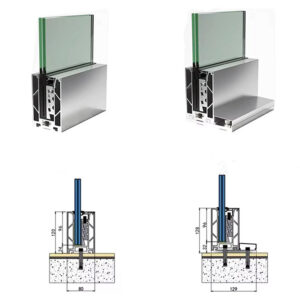
The chosen mounting method directly dictates labor intensity and hardware requirements. Deck (surface) mounting with a welded base plate is typically the most straightforward, requiring simple through-bolt fixation. Fascia (side) mounting conserves deck space but demands specialized standoff brackets, substrate reinforcement, and more complex alignment.
The Permanence of Embedded Mounting
Embedding posts into concrete footings or slabs offers unmatched permanence and rigidity. However, it introduces high risk; posts must be perfectly plumb and aligned during the concrete pour, with no room for adjustment afterward. This method often requires costly templates or jigs and carries a rework risk if tolerances are missed.
Leveraging Prefabrication
One effective lever for controlling installed cost is design standardization. Using common, manufacturer-preferred details for deck-mounted intermediate posts reduces on-site fabrication time. Specifying pre-drilled, prefabricated posts from the supplier, while carrying a higher unit cost, can yield net savings by slashing installation labor and minimizing errors. In my experience, projects that standardized on a single mounting detail saw a 20% reduction in installation time compared to those using multiple custom brackets.
Long-Term ROI: Durability and Maintenance Cost Savings
Calculating Total Cost of Ownership
The true value proposition of stainless steel is realized through total cost of ownership (TCO) analysis over a 20-30 year horizon. While the initial capital expenditure is higher than alternatives, the financial return is captured in dramatically lower recurring costs. This analysis is becoming the competitive battleground for informed specifiers.
The Minimal Maintenance Regimen
Stainless steel’s ROI is built on its passive oxide layer. Maintenance is primarily regular cleaning with mild soap and water and periodic passivation to restore this layer if damaged. This avoids the cyclical, labor-intensive repainting, sealing, or replacement of corroded components required by painted steel, aluminum, or wood.
Quantifying the Financial Return
The return is multifaceted: avoided replacement costs, reduced annual maintenance labor budgets, preserved aesthetic and property value, and enhanced structural reliability that mitigates liability risks. The durability defined by standards like EN 10088-2 forms the technical basis for this superior lifecycle performance.
| Material | Primary Maintenance Need | Maintenance Frequency | Key Financial Return |
|---|---|---|---|
| Stainless Steel | Cleaning, passivation | Periodic (years) | Avoided replacement costs |
| Painted Steel | Repainting, rust repair | Cyclic (3-5 years) | Reduced labor budgets |
| Aluminum | Scratch repair, coating | As needed | Preserved property value |
| Wood | Sealing, staining, replacement | Frequent (1-3 years) | Mitigated liability risk |
Source: EN 10088-2 Stainless steels – Part 2: Technical delivery conditions for sheet/plate and strip. This standard specifies the technical delivery conditions for stainless steel, including grades and surface finishes that directly influence its long-term durability and corrosion resistance, forming the basis for its superior lifecycle ROI.
How to Choose the Right Post Type and Mounting Method
Start with Structural and Environmental Requirements
Selection is a strategic balance, not an aesthetic preference. First, define the project’s durability tier based on environmental exposure to navigate the correct supplier ecosystem. Next, analyze load requirements: terminal posts at ends, corners, and gates must be robust enough to handle tension and impact loads, while intermediate posts primarily serve as guides.
Matching Method to Substrate
The substrate dictates the practical mounting options. Solid concrete decks suit embedded or surface mounts. Wood or composite decking typically requires surface or fascia mounting, with fascia mounts often needing additional blocking. For existing structures where core drilling is impractical, surface-mounted flanges or side-fixed brackets are the only viable choices.
The Value of Modular Design
Embracing a manufacturer’s standardized, modular component system yields disproportionate savings. It reduces custom fabrication costs, minimizes installation errors, and ensures compatibility between posts, hardware, and infill. While a custom solution might appear optimal, the cost and coordination overhead often negate any marginal benefit.
Commercial Project Budgeting: Avoiding Hidden Cost Variables
Logistics and Lead Time Integration
Commercial budgeting must extend beyond unit prices. Logistics for long components like top rails require special shipping arrangements. Project schedules must integrate realistic lead times for fabricated components to avoid expensive expedited freight. A just-in-time delivery model fails without precise coordination.
On-Site Labor Realities
Labor estimates must account for site-specific challenges. These include substrate preparation (e.g., adding blocking behind fascia), precise alignment over long runs using laser levels, and the system integration work of tensioning cables or securing glass panels. Each phase adds labor hours not reflected in a simple per-post installation quote.
Budgeting for Lifecycle Care
A comprehensive commercial budget allocates funds for lifecycle care from day one. This includes the initial post-installation passivation treatment to ensure the oxide layer is intact and provisions for periodic cleaning and inspection. These items are often essential for warranty compliance and are critical for sustaining long-term performance in commercial settings.
Stainless Steel vs. Alternative Materials for Commercial Use
The Lifecycle Cost Benchmark
When evaluated on a lifecycle basis, stainless steel consistently emerges as the most economical choice for commercial applications. The comparison hinges on longevity and the cost of maintenance interventions, not initial purchase price.
Direct Comparative Analysis
Painted carbon steel requires cyclical repainting and is susceptible to rust that can compromise structural integrity. Aluminum offers lighter weight but lower strength and is prone to scratching and galvanic corrosion. Wood, while initially inexpensive, demands constant sealing, staining, and eventual full replacement, with high associated labor costs.
The TCO Justification
The TCO analysis quantifies these avoided costs. For a commercial property owner, the higher initial capital expenditure for stainless steel is justified through operational cost avoidance, sustained asset integrity, and the preservation of property valuation. It transforms the expenditure from a cost into a long-term asset protection strategy.
| Material | Initial Cost | 20-30 Year TCO | Key Commercial Limitation |
|---|---|---|---|
| Stainless Steel | High | Most Economical | Higher capital expenditure |
| Painted Carbon Steel | Lower | High | Cyclical repainting costs |
| Aluminum | Moderate | Moderate | Lower strength, scratch-prone |
| Wood | Low | Very High | Constant sealing, replacement |
Source: Technical documentation and industry specifications.
Selecting a Supplier: Quality, Fabrication, and Support Criteria
Prioritizing Material Integrity
Supplier selection is a strategic risk management decision. The foremost criterion is material traceability and certification. Reputable suppliers provide mill certificates confirming the alloy meets ASTM A312 or ASTM A554 specifications for 304 or 316 stainless steel. This documentation is your guarantee against substandard material that will fail prematurely.
Evaluating Fabrication Capabilities
Assess the supplier’s fabrication capabilities against your project needs. Can they provide pre-drilled, pre-cut, or custom-welded components? Do they offer a complete system of compatible hardware? A supplier that provides a single-source solution for posts, rails, and fittings ensures compatibility and simplifies accountability.
The Critical Role of Technical Support
For complex installations, the supplier’s technical support is invaluable. This includes detailed CAD drawings, installation manuals, and direct access to engineers for field questions. A reliable partner provides comprehensive care instructions and specifications, which are necessary for proper installation and long-term warranty validation. They act as an extension of your project team, mitigating future claims.
The core decision points are material specification for the environment, a comprehensive bill of materials that includes ancillaries, and a supplier partnership based on quality and support. Prioritize lifecycle cost over initial price and standardize components to control complexity.
Need professional-grade stainless steel railing components and specification support? The engineers at Esang provide complete system solutions and technical guidance for commercial projects. Review their portfolio of architectural railing posts and hardware for engineered details and material certifications.
For direct consultation on your project requirements, you can also Contact Us.
Frequently Asked Questions
Q: How does the choice between 304 and 316 stainless steel affect long-term project costs and liability?
A: Selecting 304 or 316 stainless steel is a critical cost-performance decision. Type 316, with molybdenum, offers superior chloride resistance for coastal or de-icing environments, while 304 is cost-effective for general use. Material standards like EN 10088-2 define the technical delivery conditions for these grades. This means specifying the lower-cost 304 in a corrosive environment voids the material’s longevity, leading to premature failure and potential liability, making the 316 premium a defensive investment.
Q: What are the hidden cost variables in a commercial stainless steel post system budget?
A: The total installed cost extends far beyond the base post price. Terminal posts, mounting hardware, fittings, and consumables like epoxy or passivation kits can constitute over 50% of the budget. Labor is also a major variable, impacted by substrate preparation, precise alignment over long runs, and system integration complexity. For commercial projects, your budget must explicitly account for these ancillaries, specialized labor, and initial preventative treatments to avoid costly mid-project surprises and ensure warranty compliance.
Q: Which mounting method offers the best balance of cost and robustness for a new deck installation?
A: For straightforward new construction, deck (surface) mounting with a flange is typically the most cost-effective and least labor-intensive method. It avoids the specialized brackets and substrate reinforcement needed for fascia mounting or the precise alignment and rework risks of embedded concrete pours. This means for standard deck applications where aesthetics permit, you should prioritize deck-mounted intermediate posts to control installed costs while maintaining structural integrity, as defined in standards for mechanical tubing like ASTM A554.
Q: How do you justify the higher initial cost of stainless steel over alternatives like aluminum or painted steel?
A: Justification comes from a total cost of ownership (TCO) analysis over a 20-30 year horizon. Stainless steel eliminates the cyclical repainting of steel and resists structural rust, while offering greater strength and scratch resistance than aluminum. This durability results in minimal maintenance—only regular cleaning and occasional passivation—avoiding the high recurring costs of alternatives. For commercial projects, this translates to sustained asset value, lower operational budgets, and a clear ROI through avoided replacement and maintenance labor.
Q: What criteria should we prioritize when selecting a supplier for architectural stainless steel posts?
A: Move beyond unit price to evaluate material traceability, fabrication capability, and technical support. A reliable supplier provides certification for alloy grades per standards like ASTM A312, offers pre-fabricated options to reduce on-site labor, and delivers a complete system of compatible components from a single source. This means for complex installations, you should select a supplier whose ecosystem matches your project’s durability tier and who provides comprehensive care specifications to ensure system compatibility and mitigate future warranty claims.