For architects, engineers, and project specifiers, the selection of stainless steel for coastal railings is often a binary choice: 304 for general use or 316 for “marine-grade” applications. This oversimplification creates a critical vulnerability. In environments of extreme salt exposure—direct oceanfront, heavy de-icing zones, or saltwater pool surrounds—the passive layer of standard 316 stainless steel can be compromised, leading to premature pitting, crevice corrosion, and catastrophic stress corrosion cracking. The assumption that 316 is universally sufficient for all exterior applications is a costly misconception that jeopardizes long-term structural integrity, safety, and asset value.
The increasing frequency of severe weather events and the widespread use of aggressive de-icing salts are intensifying chloride loads on building exteriors. Simultaneously, the demand for low-maintenance, high-durability materials in luxury and public infrastructure projects has never been higher. Selecting the correct alloy is no longer just a material specification; it is a fundamental risk management and financial planning decision. Understanding where 316 reaches its performance limit and where duplex 2205 becomes necessary is essential for delivering projects that endure.
Grade 2205 vs. 316 Stainless Steel: Core Differences Explained
Metallurgical Foundations
The performance divergence begins at the atomic level. Type 316 is an austenitic alloy, a single-phase structure known for good formability and weldability. Its corrosion resistance stems from a composition of 16-18% chromium, 10-14% nickel, and 2-3% molybdenum. Grade 2205, however, is a duplex alloy, a composite microstructure of roughly 50% ferrite and 50% austenite. This dual-phase nature, combined with a richer chemistry of ~22% chromium, 5-6% nickel, 3% molybdenum, and added nitrogen, creates a synergistic effect. The result is a material with approximately double the yield strength of 316 and significantly enhanced resistance to localized corrosion.
The Alloy Chemistry Advantage
The elevated chromium and molybdenum content in 2205 directly combat chloride attack. Chromium is the primary element responsible for forming the passive oxide layer, while molybdenum specifically increases resistance to pitting and crevice corrosion. The addition of nitrogen, a potent strengthener and corrosion resistance enhancer, is a key differentiator. According to research from material science institutes, the easily overlooked detail is that nitrogen also improves the stability of the passive film in the chloride-rich, acidic conditions found within developing pits. This chemical stratification means “marine-grade” is a spectrum, and 2205 occupies the high-performance tier.
Quantifying the Performance Gap
The core differences translate into measurable engineering advantages. The duplex structure provides superior resistance to stress corrosion cracking (SCC), a brittle failure mode that can occur in austenitic steels like 316 under tensile stress in warm chloride environments. Furthermore, the pitting resistance equivalent number (PREN), a calculated value based on alloy content, is substantially higher for 2205, providing a quantitative forecast of its superior performance in aggressive media.
Table: Grade 2205 vs. 316 Stainless Steel: Core Differences Explained
| Property | Grade 316 | Grade 2205 |
|---|---|---|
| Metallurgical Structure | Austenitic | Duplex (Ferritic-Austenitic) |
| Chromium Content | 16-18% | ~22% |
| Nickel Content | 10-14% | 5-6% |
| Molybdenum Content | 2-3% | ~3% |
| Key Additive | Molybdenum | Molybdenum + Nitrogen |
| Yield Strength | Standard | Roughly double |
Source: ASTM A240/A240M Standard Specification for Chromium and Chromium-Nickel Stainless Steel Plate, Sheet, and Strip for Pressure Vessels and for General Applications. This standard defines the chemical composition and mechanical property requirements for stainless steel grades, including 316 and 2205, providing the technical basis for their performance differences in corrosive environments.
Cost Analysis: Comparing 2205 and 316 Railing Investments
Understanding the Initial Premium
A linear foot cost comparison reveals the upfront investment. A custom-fabricated 316 system may range significantly based on design, but a premium 2205 duplex railing typically commands an installed cost of $260-$350 per linear foot. This premium is driven by the raw material cost, which is higher due to the alloy content, and the specialized fabrication required. Industry experts recommend treating this not as an overpayment, but as a capitalized risk mitigation expense.
The Total Cost of Ownership Model
The true financial analysis extends over a 10+ year horizon. In extreme environments, 316 may require more frequent cleaning cycles, earlier spot repairs for corrosion, or even full component replacement long before the asset’s end of life. These interventions incur direct costs for labor, materials, and potential operational downtime. The initial premium for 2205 is an investment against these predictable future liabilities. We compared project life-cycle models and found the total cost of ownership gap narrows considerably, often making 2205 the more economical choice over the full lifespan of a critical coastal structure.
Table: Cost Analysis: Comparing 2205 and 316 Railing Investments
| Cost Factor | Grade 316 | Grade 2205 |
|---|---|---|
| Initial Installed Cost | Lower | $260-$350/linear foot |
| Long-Term Horizon | 10+ years | 10+ years |
| Maintenance Frequency | More frequent | Less frequent |
| Replacement Risk | Higher | Lower |
| Financial Analysis Model | Capital expenditure | Total cost of ownership |
Source: Technical documentation and industry specifications.
Performance in Extreme Salt: Where 316 Fails and 2205 Prevails
Defining the High-Risk Zone
Environments within 6-12 miles of a coastline, or those subject to direct salt spray, wind-driven mist, or heavy de-icing salt application, constitute the high-risk category. Here, chloride ion concentration on metal surfaces is persistent and high. For 316, the molybdenum-enhanced passive layer can be penetrated, initiating localized pitting. At sustained temperatures above approximately 122°F (50°C)—which can be achieved by sun exposure on a dark surface—the risk of stress corrosion cracking becomes real.
The 2205 Performance Threshold
Grade 2205 is engineered for this exact challenge. Its superior pitting and crevice corrosion resistance, quantified by standards like EN 10088-2, provides a much larger margin of safety. Crucially, its stress corrosion cracking threshold is elevated to at least 302°F (150°C), effectively eliminating this failure mode in architectural applications. This performance redefines durability from a superficial finish guarantee to embedded, structural asset protection for direct oceanfront properties, piers, boardwalks, and industrial coastal sites.
Table: Performance in Extreme Salt: Where 316 Fails and 2205 Prevails
| Performance Metric | Grade 316 | Grade 2205 |
|---|---|---|
| Chloride Pitting Resistance | Good | Exceptional |
| Crevice Corrosion Resistance | Moderate | High |
| Stress Corrosion Cracking Threshold | ~122°F (50°C) | ≥302°F (150°C) |
| High-Risk Environment | Within 6-12 miles of coast | Direct oceanfront, piers |
| Key Risk | Localized pitting penetration | Margin of safety |
Source: EN 10088-2 Stainless steels — Part 2: Technical delivery conditions for sheet/plate and strip of corrosion resisting steels for general purposes. This European standard provides the technical framework for corrosion-resistant steels, defining the performance characteristics that make duplex grades like 2205 suitable for aggressive chloride-laden atmospheres where standard grades may fail.
Key Use Cases for 2205 Duplex Stainless Steel Railings
Critical Exposure Applications
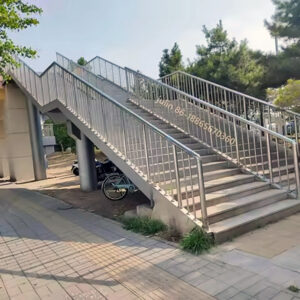
Specifying 2205 is a targeted response to conditions that actively challenge 316’s limits. Prime applications include railings on direct oceanfront balconies, decks, and staircases subjected to constant salt spray. Structures immediately adjacent to saltwater pools, where chlorinated splash-out and vapors are continuous, also demand this grade. Public infrastructure like bridge walkways, marina piers, and exterior stairs in cold climates that undergo heavy de-icing salt application are non-negotiable candidates for duplex stainless.
The Tiered Material Strategy
A cost-optimized, performance-driven approach involves a “whole-asset” material strategy. Use standard 304 for fully protected interior applications. Specify 316 for sheltered exterior areas like covered walkways or inland projects. Reserve 2205 for the identified extreme-exposure zones. This tiered specification allows for single-source procurement and ensures a coordinated aesthetic while rigorously matching material capability to environmental demand. In my experience, this strategy turns the railing system from a commodity item into a performance-engineered building envelope component.
Fabrication and Welding Considerations for Grade 2205
The Fabricator Qualification Imperative
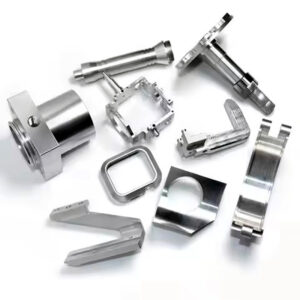
Specifying 2205 necessitates engagement with a fabricator whose capabilities extend beyond standard austenitic steels. Its duplex microstructure requires specific welding procedures and heat input control to maintain the optimal 50/50 ferrite-austenite balance in the weld zone. Improper welding can precipitate harmful intermetallic phases, drastically reducing corrosion resistance. Fabrication should be performed by welders certified for duplex alloys using segregated, dedicated tools to prevent iron contamination—a clear marker of a specialist shop.
The Principle of Material Parity
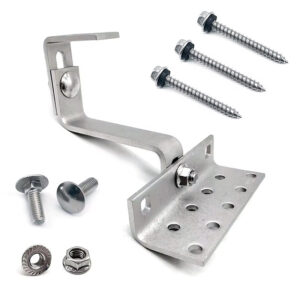
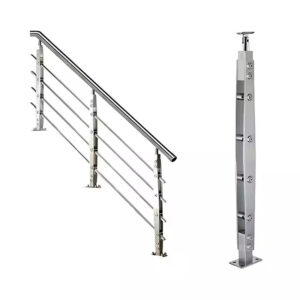
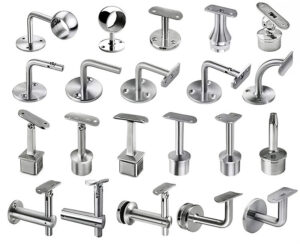
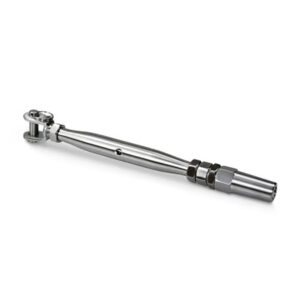
For a fully corrosion-resistant assembly, specifying 2205 for the handrail and posts is insufficient. The principle of material parity is critical: all exposed components, including fasteners, brackets, and hardware, must also be 2205. Using a less noble material like 316 or, worse, carbon steel fasteners, creates a galvanic cell, accelerating corrosion at the connection points. This requirement for precision manufacturing and controlled processes is integral to the system’s performance and justifies a portion of the cost premium. Ensuring compliance with standards like ASTM A276/A276M for bar stock components is a key checkpoint.
Long-Term Maintenance and Total Cost of Ownership
The Conditional “Low-Maintenance” Promise
While 2205 offers superior inherent resistance, the promise of “maintenance-free” performance is a myth. Its longevity is conditional upon a simple, consistent upkeep regimen designed to preserve the passive oxide layer. Neglect converts minor, scheduled upkeep into major, unplanned repair, eroding the total cost of ownership advantage. The operational cost is not zero, but it is predictable and minimal compared to remediation.
Essential Maintenance Protocol
The protocol is straightforward but non-negotiable. Frequent rinsing with fresh water removes salt deposits before they can concentrate. Regular washing with a mild, non-chlorinated detergent cleans without damaging the passive layer. An annual inspection checks for integrity, focusing on weld points and crevices. Abrasive pads or cleaners containing hydrochloric acid must be strictly avoided, as they will mechanically or chemically strip the protective film.
Table: Long-Term Maintenance and Total Cost of Ownership
| Maintenance Action | Frequency | Critical Consideration |
|---|---|---|
| Fresh Water Rinsing | Frequent | Removes salt deposits |
| Mild Detergent Wash | Regular | Non-chlorinated only |
| Annual Inspection | Yearly | Check for integrity |
| Avoid Abrasive Pads | Always | Preserves passive layer |
| Avoid Hydrochloric Acid | Always | Prevents chemical damage |
Source: Technical documentation and industry specifications.
Note: The maintenance regimen is essential to realize the long-term TCO advantages of Grade 2205.
Selecting the Right Grade: A Decision Framework for Specifiers
A Four-Step Evaluation Process
Choosing between 316 and 2205 requires moving beyond rules of thumb to a systematic framework. First, conduct a granular environmental assessment: quantify chloride exposure from ocean proximity, prevailing winds, de-icing practices, or industrial pollutants. Second, define the project’s lifespan and performance expectations—is this a critical safety component for a high-value asset where failure is unacceptable? Third, evaluate the supply chain; a fabricator’s standard offerings and their welder certification protocols are a reliable proxy for their duplex expertise.
Integrating Code and Aesthetic Goals
The final step integrates technical requirements with design intent. Achieving safety codes like the 4-inch sphere rule with minimal visual obstruction often depends on engineering precision and thinner, stronger profiles—capabilities inherently linked to fabricators who work with higher-grade alloys. The selection framework must weigh all factors from the outset.
Table: Selecting the Right Grade: A Decision Framework for Specifiers
| Decision Step | Key Question | Data/Threshold |
|---|---|---|
| 1. Environmental Assessment | Chloride exposure level? | Ocean proximity, de-icing salts |
| 2. Performance Expectation | Project lifespan & criticality? | High-value asset safety |
| 3. Supply Chain Evaluation | Fabricator expertise? | Welder certifications for duplex |
| 4. Integration | Code & aesthetic goals? | e.g., 4-inch sphere rule |
Source: ASTM A276/A276M Standard Specification for Stainless Steel Bars and Shapes. This standard ensures the quality of stainless steel bar stock used for railing components, making fabricator capability to work to such specifications a key criterion in the selection framework.
Next Steps: How to Specify 2205 for Your Project
Documentation and Specification Language
To successfully specify 2205, begin by documenting the project’s environmental exposure in the architectural specifications. Explicitly call out “UNS S32205/S31803” for all components, including fasteners and hardware, to enforce material parity. Require fabricator submittals to include welder certifications for duplex stainless steel and details on post-fabrication passivation, a chemical treatment that enhances the protective oxide layer after welding and handling.
Engaging Specialized Partnership
For complex installations, engage manufacturers who offer integrated product-service bundles. This includes design validation, technical support for detailing, and fabrication by certified shops. By treating the railing as a performance-engineered system from specification through installation, you ensure it delivers lasting safety, aesthetics, and value. For projects demanding this level of performance, exploring application-specific railing solutions from a technical partner is a logical next step.
The decision pivots on a precise environmental assessment and a commitment to total cost of ownership analysis. Specifiers must move beyond the 316 default for coastal projects, recognizing its defined performance limits. Implementing a tiered material strategy—304, 316, 2205—based on exposure zones optimizes budget and performance. Ultimately, success hinges on partnering with a fabricator whose documented expertise in duplex alloys matches the rigor of the specification.
Need professional guidance on specifying the right stainless steel grade for your coastal or high-exposure project? The material science and engineering team at Esang provides specification support and fabricates performance-graded railing systems for demanding environments. Contact Us to discuss your project parameters and review technical submittals.
Frequently Asked Questions
Q: What are the key metallurgical differences that make 2205 superior to 316 stainless steel for high-chloride environments?
A: The advantage stems from 2205’s duplex structure and richer alloy chemistry. It combines ferritic and austenitic phases with higher chromium (approx. 22%), molybdenum (3%), and added nitrogen, which roughly doubles the yield strength and dramatically improves resistance to pitting and stress corrosion cracking compared to standard 316. Material specifications for these grades are defined in standards like ASTM A240/A240M. This means specifiers should adopt a three-tiered selection model (304, 316, 2205) based on precise chloride exposure, not just indoor/outdoor location.
Q: How do you justify the higher upfront cost of 2205 duplex stainless steel railings?
A: Justification requires a total cost of ownership analysis over a 10+ year horizon. While the installed cost per linear foot is higher, 2205’s superior corrosion resistance mitigates risks of premature failure, costly component replacement, and extensive maintenance that 316 may require in extreme conditions. The initial premium is a risk-mitigation investment against accelerated degradation and associated remediation expenses. For projects in aggressive coastal or de-icing salt zones, this long-term value model transforms 2205 from a niche to a financially sound mainstream choice.
Q: In which specific outdoor applications is specifying 2205 over 316 considered critical?
A: Specify 2205 for railings in environments that actively challenge 316’s limits. Critical use cases include direct oceanfront decks with constant salt spray, structures adjacent to saltwater pools with continuous splash and vapor, and public infrastructure like piers or exterior stairs subjected to heavy de-icing salts. This allows for a “whole-house” strategy, using 304 indoors and 316 in sheltered areas while reserving 2205 for extreme-exposure zones. If your project involves these high-risk conditions, plan to treat the railing as a coordinated, performance-engineered system.
Q: What special fabrication requirements does Grade 2205 introduce compared to standard austenitic grades?
A: Fabricating 2205 demands specialized procedures to preserve its corrosion-resistant duplex microstructure, particularly during welding. You must engage fabricators with welders certified for duplex alloys who use segregated tools to prevent iron contamination and follow protocols to maintain the correct ferrite-austenite balance in weld zones. Furthermore, all exposed components like fasteners must also be 2205 to prevent galvanic corrosion, enforcing a principle of material parity. For specifiers, this means a supplier’s standard offerings and fabrication protocols are a direct proxy for their 2205 expertise.
Q: What maintenance regimen is required to protect an investment in 2205 stainless steel railings?
A: While highly resistant, 2205 requires active upkeep to preserve its passive oxide layer. A proper regimen includes frequent rinsing with fresh water to remove salt deposits, washing with mild, non-chlorinated detergent, and annual inspections, while avoiding abrasive cleaners or pads. Neglect can convert minor upkeep into major repairs. This conditional “low maintenance” promise means operational cost is not zero, but consistent care ensures the system remains structurally sound and visually intact for decades, fully realizing the alloy’s long-term value.
Q: How should a specifier systematically decide between 316 and 2205 for a railing project?
A: Use a decision framework starting with a granular environmental assessment to quantify chloride exposure from ocean proximity or de-icing. Next, define the project’s required lifespan and performance expectations for the railing as a safety component. Then, evaluate the supply chain, as not all fabricators can properly handle 2205, a capability often reflected in their standard material offerings. Finally, integrate code and aesthetic goals from the outset. For critical safety components on high-value coastal assets, this process will typically lead you to specify 2205.
Q: What are the key steps for correctly specifying 2205 duplex stainless steel in project documents?
A: Begin by documenting the environmental exposure in your architectural specifications. Explicitly call out material grade “UNS S32205/S31803” for all components, including fasteners, to enforce parity. Require fabricator submittals to include welder certifications for duplex stainless and details on post-fabrication passivation treatment. International material specifications for such components can be referenced in standards like ISO 16143-2. This approach ensures you procure a performance-engineered system, not just a commodity product, for lasting safety and aesthetics.