Specifying a cable railing system for a commercial project requires balancing aesthetics, budget, and long-term performance. The core challenge is navigating a fragmented market where material choices and project complexity create wildly different cost structures. A simple per-foot estimate is misleading. The true cost is a composite of material selection, design geometry, and compliance requirements.
This analysis is critical now. Material costs are stabilizing, but labor and fabrication complexity remain primary drivers. A strategic specification in 2025 requires moving beyond initial price to evaluate total cost of ownership. This ensures the installed system meets durability expectations without unforeseen budget overruns.
Stainless Steel vs. Aluminum vs. Wood Post Systems
Defining the Material Hierarchy
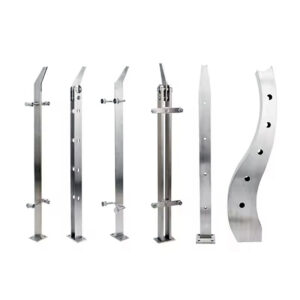
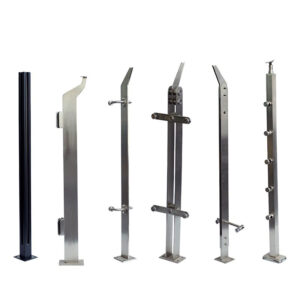
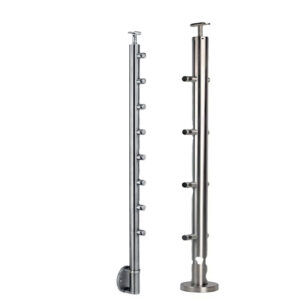
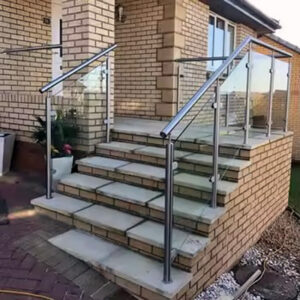
The post material establishes the system’s cost baseline and performance envelope. Wood serves as the budget-conscious entry point, aluminum as the corrosion-resistant middle tier, and stainless steel as the premium, high-durability option. This hierarchy directly correlates with structural integrity and environmental resilience. Wood’s organic composition limits its lifespan in wet or high-UV environments. Aluminum provides a passive oxide layer for protection. Stainless steel’s chromium content offers the highest inherent resistance to oxidation and corrosion.
Application and Performance Trade-offs
Each material dictates specific maintenance and lifecycle outcomes. Wood posts require a rigorous sealing schedule every two to three years to prevent rot and warping. Aluminum needs only occasional cleaning to maintain its powder-coated finish. Stainless steel demands minimal upkeep beyond washing. In our review of coastal projects, the maintenance savings of stainless over a 20-year period often offset its higher initial cost. The choice is not just aesthetic; it’s a long-term operational commitment.
Impact on Project Viability
Selecting the wrong material for the environment introduces significant risk. A wood system in a marine application will face accelerated degradation, leading to premature replacement. An aluminum system may suffice for most commercial settings, but stainless steel is non-negotiable for harsh chemical or coastal exposures. The material decision must be informed by a lifecycle analysis, not just the capital budget. This upfront diligence prevents costly retrofits.
2025 Cost per Linear Foot: A Detailed Comparison
Establishing the Baseline Ranges
Installed costs for 2025 show clear bands by material type. These ranges assume standard, straight-run sections and professional installation. They are a starting point for budgeting, not a final quote. Wood post systems typically fall between $75 and $95 per linear foot. Aluminum systems range from $150 to $240 per linear foot. Full stainless steel systems span $150 to over $285 per linear foot. The overlap between aluminum and low-end stainless highlights how design complexity can outweigh base material cost.
The Variables Behind the Range
The published per-foot price is a composite of six factors: post material, cable type and quantity, hardware, fabrication complexity, installation labor, and geographic location. A premium 1×19 galvanized aircraft cable adds cost versus a standard 7×7 construction. Ornate post machining increases fabrication time. We consistently see that these variables cause the final project cost to deviate significantly from any preliminary per-foot estimate.
Comparative Value Analysis
To understand value, you must dissect what each cost tier delivers. The wood system price is largely driven by material cost. The aluminum premium pays for integrated corrosion resistance. The stainless steel cost reflects both superior material and the specialized fabrication required. The table below provides a clear comparison of these installed cost drivers.
2025 Cost per Linear Foot: A Detailed Comparison
The following table breaks down the 2025 installed cost ranges and their primary drivers, providing a foundational benchmark for project budgeting.
| System Type | Installed Cost per LF (2025) | Key Cost Driver |
|---|---|---|
| Wood Post System | $75 – $95 | Material cost |
| Aluminum Post System | $150 – $240 | Corrosion resistance |
| Stainless Steel System | $150 – $285+ | Fabrication & material |
Source: Technical documentation and industry specifications.
Which Post Material Offers the Best Value for Your Project?
Defining Value Beyond Purchase Price
Value is measured by lifecycle cost, not invoice total. For a short-term leasehold or an inland residential deck with a five-year horizon, wood offers functional value. For a coastal hotel, a corporate headquarters, or a long-term residential asset, the corrosion-resistance premium of aluminum or stainless steel becomes a necessary investment. The value equation shifts from upfront cost to cost-per-year-of-service.
Aligning Supplier Model with Project Scope
The market bifurcates into standardized DIY kits and custom fabrication. This segmentation guides the value decision. Simple, repetitive layouts may find cost efficiency in pre-engineered aluminum kits. Complex, high-design commercial projects require the engineering support and customization of a fabricator specializing in stainless steel systems. Choosing a supplier whose core business aligns with your project’s segment ensures appropriate expertise and cost structure.
Strategic Mixing of Components
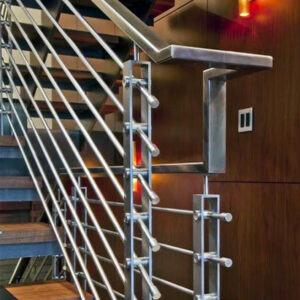
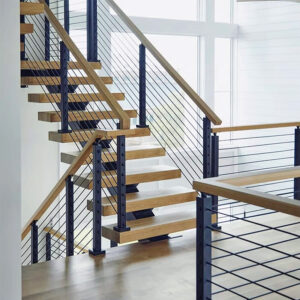
Value engineering is possible at the component level. The cable itself is a minor cost component, typically $5.50 to $13 per linear foot. The post material creates the major cost swing. This allows for strategic combinations, such as specifying premium 3/16” Type 316 stainless cables for longevity and pairing them with more economical, powder-coated steel posts for the structure. This balances performance and budget effectively.
How Project Complexity Drives Cable Railing System Cost
Layout as the Primary Cost Multiplier
Project geometry is the most significant factor in final cost. Straight runs minimize the number of posts and standard hardware. Every corner, stair transition, or elevation change requires a termination post. These specialized posts cost more and demand precise fabrication. A 55-foot straight deck can have a lower per-foot cost than a 28-foot deck with two corners, proving that complexity often outweighs total linear footage.
Quantifying the Impact of Design Choices
Specific design decisions have calculable cost effects. Increasing railing height from the residential standard of 36 inches to the commercial standard of 42 inches requires additional cables—typically 13 versus 11. This represents an 18% increase in cable material cost alone. Post design complexity, from simple round tubing to custom-machined square profiles, exponentially increases fabrication time and material waste.
The Myth of Linear Economies of Scale
Cost reductions from project scale are not guaranteed. While larger projects may see volume discounts on repetitive cable or hardware, complex layouts never achieve the low per-foot cost of simple ones. Fabrication complexity negates pure volume discounts. The table below details how specific complexity factors quantitatively impact the budget.
How Project Complexity Drives Cable Railing System Cost
This table quantifies the direct cost impact of common design complexities, moving beyond anecdotal estimates to actionable data.
| Complexity Factor | Cost Impact | Quantitative Effect |
|---|---|---|
| Corners & Stairs | +20-30% per foot | Adds termination posts |
| Railing Height (42″ vs 36″) | +18% material cost | 13 vs 11 cables |
| Post Design (Ornate) | Significant increase | Higher fabrication time |
| Straight Run Layout | Minimizes cost | Fewest posts & hardware |
Source: ICC A117.1 Accessible and Usable Buildings and Facilities. This standard dictates critical design parameters like railing height and cable spacing (4″ sphere rule), which directly determine material quantities and installation complexity, impacting the final cost.
Key Selection Criteria: Durability, Maintenance, and Aesthetics
Component-Level Cost and Performance
A strategic specification requires breaking down the system. The cable is a minor line item. The post and top rail material choice creates the major cost variance. This breakdown enables targeted value engineering. You can allocate budget to components based on their exposure and performance requirements. For instance, investing in higher-grade stainless for fittings exposed to salt spray while using a less expensive post finish for protected areas.
The Geography of Durability
Material lifespan is not absolute; it’s environmental. Stainless steel’s 50-100 year service life is justified in harsh coastal or industrial settings. Inland, powder-coated steel may deliver decades of adequate performance at a lower cost. The ASTM A276 Standard Specification for Stainless Steel Bars and Shapes defines the material properties that enable this longevity, governing the chemical composition that provides corrosion resistance. Maintenance frequency is inversely proportional to initial material quality and cost.
Aesthetic Alignment with Architectural Intent
The material choice fundamentally shapes the project’s character. Wood offers warmth and tradition. Aluminum provides clean, modern lines with color flexibility through powder coating. Stainless steel delivers a sleek, industrial, and permanent aesthetic. This is not a secondary concern; the railing is a prominent architectural feature. The selected material must support the overall design language while meeting the practical criteria of durability and upkeep.
Key Selection Criteria: Durability, Maintenance, and Aesthetics
Evaluating materials requires a side-by-side comparison of their lifecycle performance and cost contribution, as shown in this table.
| Material | Lifespan (Years) | Maintenance Level |
|---|---|---|
| Stainless Steel | 50 – 100 | Minimal |
| Aluminum | Long-term | Low |
| Wood | 10 – 30 | High (refinish 2-3 yrs) |
| Cable Cost (3/16″ Stainless) | $5.50 – $13 / LF | Minor system component |
Source: ASTM A276 Standard Specification for Stainless Steel Bars and Shapes. This standard defines the material requirements for stainless steel posts, governing their chemical composition and mechanical properties, which are the primary factors behind the material’s superior durability and longevity.
Navigating Building Codes and Compliance for Commercial Projects
Code Compliance as a Critical Path Item
Treating code approval as a final formality is a high-risk approach. Municipalities and HOAs have specific, sometimes conflicting, interpretations of the model codes. The primary regulations concern the spacing between cables (the 4-inch sphere rule) and the required railing height (typically 42 inches for commercial). Engaging the local building authority during the design phase is non-negotiable. This prevents project cancellation or costly redesign after fabrication.
The Direct Cost Impact of Code Requirements
Compliance is not free. The mandated 42-inch height directly increases material cost by requiring more cable. The need for engineered load documentation may limit supplier options to those with in-house engineering capabilities. These are fixed, calculable budget factors that must be included from the outset. Failure to account for them results in unbudgeted expenses.
Leveraging Supplier Expertise for De-risking
Leading vendors now compete on integrated service ecosystems. This includes providing free preliminary design reviews and stamped engineering calculations specific to your project’s jurisdiction. This service de-risks the compliance process. When evaluating quotes, the availability of this support is as critical as the component pricing. It transforms the supplier from a parts vendor into a compliance partner.
Total Cost of Ownership: Installation, Maintenance, and Longevity
Calculating the True Financial Horizon
The invoice is only the first financial outlay. Total cost of ownership (TCO) analysis favors materials with low maintenance and long lifespans for asset holders with a long-term horizon. For a commercial property with a 30-year holding period, stainless steel’s near-zero maintenance and 50+ year lifespan often result in a lower TCO than wood, which requires refinishing every 2-3 years and likely full replacement within that timeframe.
The Critical Role of Professional Installation
Installation labor, averaging $20 to $50 per linear foot, is a significant initial cost. However, professional installation is not an area for value engineering. Proper tensioning of cables, precise post alignment, and secure anchoring are critical for safety, performance, and longevity. A poorly installed system will fail prematurely, regardless of material quality, negating any upfront savings.
Accounting for All Project Costs
A comprehensive budget includes line items beyond the railing system itself. Permits, potential structural reinforcement of the subframe to handle tension loads, and any necessary site preparation work must be included. These are often overlooked in preliminary estimates. The final table breaks down these ongoing and initial cost components.
Total Cost of Ownership: Installation, Maintenance, and Longevity
A complete financial analysis requires accounting for all cost components over the system’s life, as detailed below.
| Cost Component | Cost Range | Frequency / Duration |
|---|---|---|
| Installation Labor | $20 – $50 / LF | One-time initial outlay |
| Wood Refinishing | Regular cost | Every 2-3 years |
| Stainless Steel Maintenance | Near-zero | Over 50+ year lifespan |
| Professional Installation | Critical factor | Ensures safety & longevity |
Source: Technical documentation and industry specifications.
Making the Final Decision: A Commercial Buyer’s Checklist
Pre-Design and Compliance Verification
First, confirm local acceptability. Engage the building department to verify cable railings are permitted and obtain their specific interpretation of cable spacing and height requirements. Second, finalize the design to minimize complexity. Lock in the linear footage, post count, and location of all corners or stairs. This creates a definitive scope for accurate quoting.
Specification and Supplier Evaluation
Third, select post and top rail materials based on a TCO analysis for your specific environment and holding period. Fourth, obtain detailed quotes based on the complete project specification, not generic per-foot estimates. This enables an apples-to-apples comparison. Fifth, evaluate suppliers on their integrated service ecosystem—design support, engineering stamps, and installation guidance—not just component pricing.
Final Budgeting and Execution
Finally, budget for the full scope: materials, professional installation, permits, and any necessary site or subframe work. This disciplined checklist ensures no variable is overlooked, leading to a successful, compliant, and financially predictable installation of your architectural cable railing systems.
The decisive factor is aligning material performance with environmental demand and financial horizon. Prioritize lifecycle cost over initial price for long-term assets. Engage suppliers as compliance partners, not just vendors. Simplify the design where possible to control the largest cost driver: complexity.
Need professional specification support for your next project? The team at Esang provides integrated design and engineering to navigate these exact decisions.
For a detailed consultation on your project requirements, you can also Contact Us.
Frequently Asked Questions
Q: How does project layout complexity impact the installed cost per linear foot for a cable railing system?
A: Layout is the primary cost multiplier, with corners, stairs, and transitions driving expenses up by 20-30% compared to straight runs. These features require expensive termination posts and complex hardware, increasing fabrication costs disproportionately. For projects where budget is a major constraint, simplifying the design by minimizing corners is the most effective strategy to control the final installed cost per foot.
Q: What building code requirements are most critical for commercial cable railing design and specification?
A: Compliance with the ICC A117.1 standard is crucial, as it mandates a 4-inch sphere cannot pass through the railing and sets commercial railing height at 42 inches. This height requirement directly increases material cost by necessitating more cables. You must engage local authorities early to confirm these and any additional municipal interpretations, as non-compliance risks project cancellation after design completion.
Q: How do you calculate the true total cost of ownership for different post materials over a 30-year horizon?
A: Total cost of ownership (TCO) includes initial price, installation labor ($20-$50/LF), maintenance, and replacement cycles. Stainless steel, with near-zero upkeep and a 50+ year lifespan, often has a lower TCO than wood, which requires refinishing every 2-3 years and may need replacement within 10-30 years. For commercial assets with a long-term holding period, the higher upfront investment in stainless steel or aluminum is typically justified by significantly reduced lifecycle expenses.
Q: When should a commercial project consider a custom-fabricated system versus a standardized kit?
A: Choose custom fabrication for high-design projects, complex layouts with corners, or when engineering stamps are required for code compliance. Standardized kits suit simple, straight-run applications with tight budgets. Select a supplier whose business model aligns with your project’s segment to ensure appropriate engineering support and quality. If your operation requires unique aesthetics or must navigate complex site geometry, plan for the integrated design services of a custom fabricator.
Q: Which material specifications govern the quality of stainless steel used in structural railing posts?
A: The material quality for structural posts is defined by standards like ASTM A276, which specifies chemical composition and mechanical properties for stainless steel bars and shapes. High-quality tubing may also reference standards such as ASTM A312. This means facilities in corrosive environments should prioritize suppliers who certify their materials to these ASTM specifications to ensure the system’s long-term durability and structural integrity.
Q: How can you strategically mix components to balance cost and performance in a cable railing system?
A: Use component-level costing to target value engineering. Since posts create the largest cost swing, pair premium 3/16″ stainless steel cables with more economical powder-coated steel posts for a balanced approach. This strategy maintains high tensile strength and corrosion resistance in the cables while managing the overall budget. For projects where upfront cost is sensitive but performance is still key, this hybrid specification can optimize value without compromising critical safety elements.