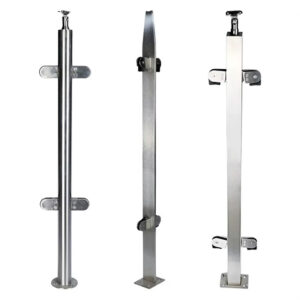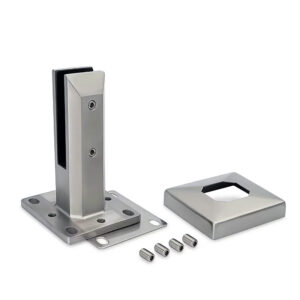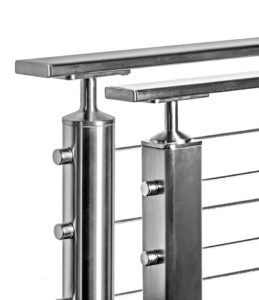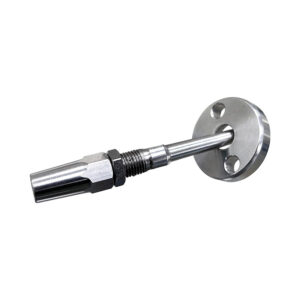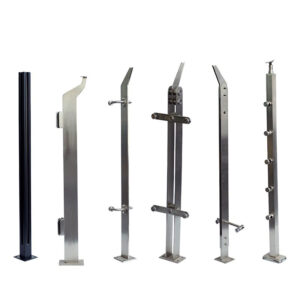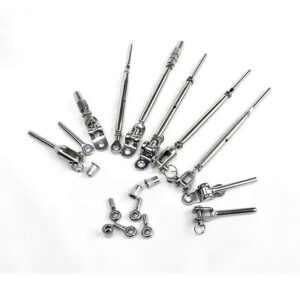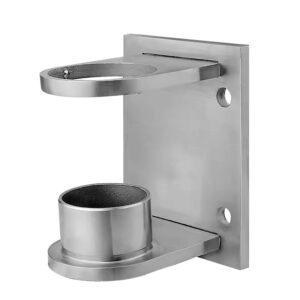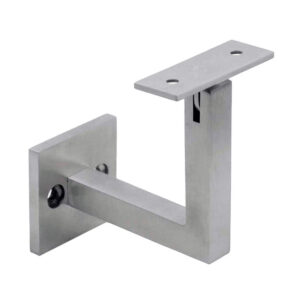
For architects, engineers, and contractors, specifying the correct stainless steel post mounting method is a foundational decision that impacts structural integrity, aesthetics, and project cost. The choice between side-mount and top-mount systems is often oversimplified to a matter of visual preference, leading to critical oversights in load path engineering and long-term performance. Misapplying a mounting method can compromise safety, void warranties, and necessitate costly retrofits.
This analysis is crucial because modern building codes demand demonstrable compliance, and client expectations for both minimalist design and durability have never been higher. The decision must integrate structural engineering, material science, and precise installation practices to create a safe, lasting, and code-compliant railing system.
Side-Mount vs. Top-Mount: Defining the Core Difference
The Fundamental Connection Point
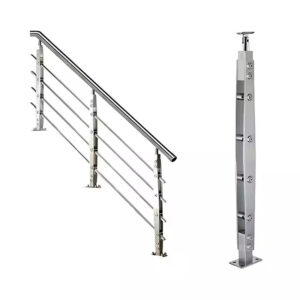
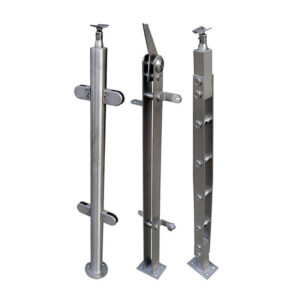
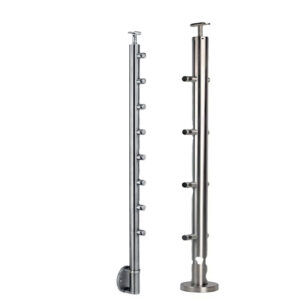
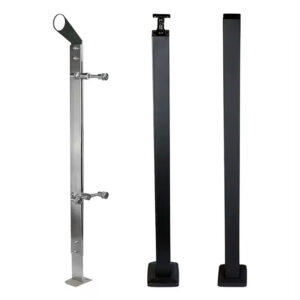
The core distinction is the point of connection to the primary structure. A top-mount post is secured via a base plate fastened directly to the horizontal walking surface. A side-mount post attaches to the vertical face, or fascia, of a deck edge, stair stringer, or balcony rim. This single difference dictates the entire load path, influencing everything from structural reinforcement needs to the final architectural profile.
Architectural and Design Implications
This choice is a primary design constraint. Side-mounting offers a clean, minimalist aesthetic by keeping the floor surface unobstructed, which is often preferred in contemporary designs. Top-mounting provides a more traditional look with a visible base plate. The decision must be made during initial structural detailing, as it impacts floor edge treatments, sight lines, and the integration of blocking or reinforcement within the building frame. We often see projects where the desire for clean lines conflicts with the feasibility of achieving a robust structural connection, requiring early collaboration.
Impact on Load Path and Integration
The mounting method defines how forces are transferred into the building. A top-mount system relies on fastener shear and the bearing of the base plate on the substrate. A side-mount system creates a cantilever, where lateral loads generate a bending moment that must be resisted by a tension/compression couple in the fasteners into the fascia. This makes the strength of the substrate and its connection to primary framing the critical variable, not just the post itself.
Cost Comparison: Installation, Materials, and Long-Term Value
Analyzing Initial Installation Expenses
A true cost analysis must separate hardware from labor and preparation. Top-mount installations typically involve simpler mechanical fastening into the deck surface, which can reduce skilled labor time. Side-mounting demands precise alignment with hidden structural framing and often requires notching or the installation of reinforced blocking, increasing complexity and labor costs. Industry experts recommend allocating 15-20% more time for side-mount installations on complex balconies to account for this precision work.
Material Selection and Lifecycle Cost
While both methods benefit from high-grade materials, the specification is non-negotiable in corrosive environments. Opting for 316 marine-grade stainless steel, as governed by standards like ASTM A480, represents a higher upfront investment but is critical for preventing failure and unsightly corrosion. The strategic trade-off is clear: stakeholders must conduct a lifecycle cost analysis that weighs initial expense against long-term durability. A cheaper, lower-grade material can lead to premature failure and costly replacement, negating any initial savings.
The Strategic Value Proposition
The “cost” conversation extends beyond dollars. Side-mounting offers value through aesthetic minimization, which can be a primary project driver for high-end designs. Top-mounting provides value through installation predictability and ease of future inspection. According to research from ANSI/BHMA A156.18, the finish and corrosion resistance of hardware directly correlate with long-term maintenance costs. This standard ensures materials meet durability benchmarks, making it a key reference for accurate lifecycle forecasting.
| Cost Factor | Top-Mount | Side-Mount |
|---|---|---|
| Installation Labor | Lower complexity | Higher complexity |
| Substrate Preparation | Minimal reinforcement | Blocking/notching required |
| Material Grade Priority | 316 stainless steel | 316 stainless steel |
| Long-Term Maintenance | Lower lifecycle cost | Higher lifecycle cost |
| Strategic Trade-off | Lower initial expense | Aesthetic minimization value |
Source: ANSI/BHMA A156.18 American National Standard for Materials and Finishes. This standard ensures hardware materials and finishes, like the specified 316 stainless steel, meet durability and corrosion resistance benchmarks critical for accurate lifecycle cost analysis in harsh environments.
Which Offers Better Load Capacity and Structural Performance?
Understanding the Complete Load Path
Load capacity is not an inherent property of the post. It is a function of the complete, engineered load path from the handrail to the building frame. A top-mount post transfers load through fastener shear and direct bearing. A side-mount post acts as a cantilever, creating a bending moment at its base. The “better” method depends entirely on the substrate’s ability to handle these specific force types. Performance is only guaranteed when the entire system is designed as an integrated unit.
Substrate Demands and Connection Integrity
Each method places different demands on the structure. Top-mount success hinges on the substrate’s crush strength and the ability to fasten into adequate framing below. Side-mount performance is wholly dependent on creating a robust, direct connection to primary structural members—not just a fascia board. This often requires engineered details showing specific fastener patterns, grades, and embedment depths. The trend toward off-site fabrication and detailed CAD engineering exists to mitigate the integration risk at this critical junction.
Validating Performance Through Standards
Compliance is demonstrated through engineering calculations or standardized testing of the specific assembly. Standards like EN 1993-1-4 provide the essential design rules for stainless steel structures, covering material properties and checks for failure modes. This codified approach moves the discussion from opinion to verified engineering, ensuring the selected mounting method and its connection detail are validated for the required design loads.
| Performance Aspect | Top-Mount Post | Side-Mount Post |
|---|---|---|
| Primary Load Path | Fastener shear & bearing | Cantilever bending moment |
| Key Structural Demand | Substrate crush strength | Robust framing connection |
| Overturning Resistance | Inherent from wide footprint | Dependent on fastener couple |
| Critical Success Factor | Integrated system engineering | Direct connection to framing |
| Performance Guarantee | CAD-engineered unit | Off-site fabricated components |
Source: EN 1993-1-4 Eurocode 3: Design of steel structures – Part 1-4: General rules – Supplementary rules for stainless steels. This standard provides the specific design rules for stainless steel structures, covering material properties and design checks for failure modes essential for engineering the complete load path of either mounting method.
Side-Mount vs. Top-Mount for Stairs: Application-Specific Analysis
Navigating Angled Rails and Concentrated Loads
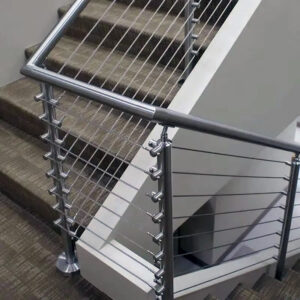
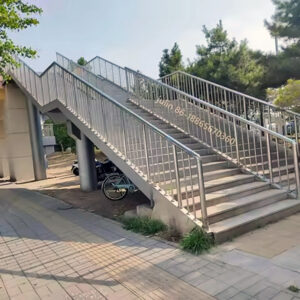
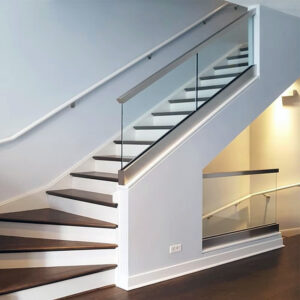
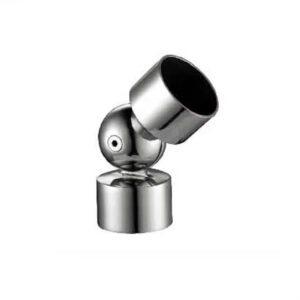
Stairs introduce unique challenges: angled rails, narrow treads, and concentrated loads. Side-mounting on stairs involves attaching to the vertical stringer face, requiring precise alignment with the structural member behind. Top-mounting places the post base on the tread nose, creating a straightforward vertical load path but concentrating forces at a potentially weak point. The geometry often dictates the method; achieving a plumb post for an angled handrail with a top-mount typically requires a specialized pivoting base plate.
Installation Complexities on Stair Stringers
Installation complexity escalates on stairs. For side-mount, techniques like notching the tread are often needed to improve the moment connection and bring the post closer to the stringer’s strong axis. For top-mount, sufficient tread thickness and reinforcement are mandatory to prevent splitting or crushing under load. Easily overlooked details include accounting for the finish materials on treads and risers, which can affect fastener grip length and connection integrity.
The Case for Pre-Engineered Solutions
For complex stair designs, leveraging manufacturer engineering support is non-negotiable. This reflects the industry shift toward controlled factory production. Using pre-fabricated components and pre-drilled mounting templates reduces field error and ensures the system performs as tested. It transforms a high-risk field fabrication task into a managed installation process.
| Consideration | Top-Mount on Stairs | Side-Mount on Stairs |
|---|---|---|
| Attachment Point | Directly on tread | Vertical stringer face |
| Load Concentration | At tread edge | Along stringer |
| Installation Complexity | Simpler fastening | Precise alignment needed |
| Common Technique | Pivoting base for plumb | Notching tread for connection |
| Key Recommendation | Manufacturer engineering support | Pre-fabricated components |
Source: Technical documentation and industry specifications.
Side-Mount vs. Top-Mount for Balconies: Key Considerations
Balancing Aesthetics with Structural Reinforcement
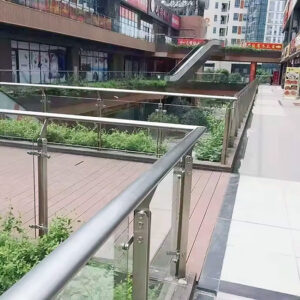
For balconies, the decision often centers on maximizing usable space versus simplifying structural demands. Side-mounting is prized for its flush, unobstructed deck surface, a key minimalist aesthetic. However, it imposes significant cantilevered loads on the balcony’s rim joist or edge beam, which must be adequately sized and fastened. Top-mounting provides a clear load path and is often easier to reinforce from below if the structure is exposed.
Waterproofing and Material Compatibility
A critical technical consideration for balconies is moisture management. Top-mount base plates create a penetration in the walking surface that must be meticulously sealed to prevent water ingress into the deck structure. For side-mount, the connection is on the vertical face, typically away from direct water pooling. Furthermore, on modern materials like composite decking or lightweight concrete, thermal expansion and material crush strength must be accounted for in the fastener and base plate design.
The Driver of Innovation
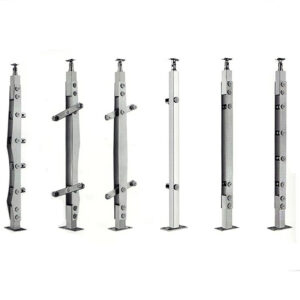
This application highlights where market trends push technical innovation. The demand for aesthetic minimization rivals pure strength as a primary driver. This has led to innovations in low-profile side-mount connections, such as internal steel plates or welded knife-plates, that distribute load without a bulky external appearance. Evaluating these advanced stainless steel railing post components requires understanding both their visual impact and their engineered load-transfer mechanism.
Installation Complexity and Best Practices Compared
A Gradient of Field Complexity
Installation complexity is not equal. Top-mounting to a wood frame deck is relatively straightforward but requires careful sealing and verification of the decking’s crush strength. Side-mounting demands accurate location of underlying framing, potential installation of blocking, and precise shimming to ensure posts are plumb without inducing twist. On concrete or steel substrates, the complexity involves correct drill bit selection, anchor specification, and potentially welding procedures qualified to material standards.
Non-Negotiable Best Practices
Best practices for both methods converge on key principles. First, use corrosion-resistant fasteners matching the post grade (e.g., 316 stainless steel). Second, connections must be made to primary structural members, never just to finish materials like fascia boards or decking planks alone. Third, follow the manufacturer’s specified torque values and fastener patterns precisely; deviation voids engineering approvals. I’ve observed that projects which fail allocate insufficient time for the substrate verification step, leading to improvisation and weakness.
Segmentation of Market Solutions
This complexity gradient has created clear market segmentation. DIY-friendly systems are almost exclusively top-mount, with pre-assembled parts designed for simple connections. Professional-grade systems for commercial or high-end residential work encompass both methods but come with detailed engineering submittals and require skilled installation. Contractors must accurately assess substrate conditions upfront and allocate appropriate labor and tools.
| Installation Step | Top-Mount Best Practice | Side-Mount Best Practice |
|---|---|---|
| Substrate Check | Verify crush strength | Locate primary framing |
| Fastener Specification | Corrosion-resistant (316 SS) | Corrosion-resistant (316 SS) |
| Critical Connection | To deck framing | To structural members |
| Precision Requirement | Careful sealing | Accurate shimming for plumb |
| Market Segmentation | DIY-friendly systems | Professional-grade systems |
Source: ASTM A480 Standard Specification for General Requirements for Flat-Rolled Stainless and Heat-Resisting Steel Plate, Sheet, and Strip. This standard ensures the base stainless steel material for fasteners and components meets essential quality and performance criteria, which is foundational for proper installation and long-term connection integrity.
Compliance, Codes, and Safety Standards for Each Method
Code Requirements and Performance Demonstration
Building codes specify design loads—typically a uniform and a concentrated force applied to the top rail—but do not prescribe mounting methods. The burden is on the designer to demonstrate that the chosen post and its connection detail meet these load requirements. This is achieved through engineering calculations or reliance on standardized test reports for specific, listed assemblies. The mounting method is simply the means to achieve the codified end: a safe, load-resisting barrier.
The Role of Documentation and Warranty
Compliance hinges on execution according to the approved engineering. This makes documentation—approved shop drawings, material certifications, installation records—a critical risk management activity. The emergence of comprehensive 20-year warranties is directly tied to this documented chain of custody. It protects the specifier, installer, and owner by ensuring the system in the field matches the system that was tested and engineered.
Authority and Reference Standards
Authoritative standards provide the technical backbone. ASTM A480 governs the base material quality. EN 1993-1-4 provides the design rules for the stainless steel components themselves. While not a standard, the International Building Code (IBC) chapters on Means of Egress and Structural Design are the enforceable benchmarks for load and safety. The project’s jurisdiction dictates which codes and referenced standards are mandatory.
Choosing the Right Post: A Decision Framework for Your Project
Define Non-Negotiable Project Drivers
Begin by isolating the primary driver. Is it a seamless aesthetic with an unobstructed floor plane? This strongly favors side-mount. Is it simplified installation, predictable costing, or ease of future modification? This leans toward top-mount. Is maximizing usable floor space on a small balcony critical? Side-mount again takes precedence. This first filter narrows the field based on project values, not just technical feasibility.
Analyze the Substrate and Environment
The second step is a forensic analysis of the existing or planned structure. Can the rim joist be easily reinforced for side-mount loads? Is the decking material thick enough to resist crushing under a top-mount plate? Simultaneously, evaluate environmental exposure. Coastal or de-icing salt environments mandate 316 stainless steel. This analysis often reveals constraints that re-prioritize the drivers from step one.
Integrate with Infill and Validate
Finally, integrate the post choice with the railing infill selection. Glass, cable, or metal panels each interact differently with post stiffness and spacing. This creates a final trade-off matrix between view, safety perception, and style. The decision is only complete after engaging with suppliers for engineering validation on the specific assembly. This framework turns a specification challenge into a value-driven, compliant solution.
| Decision Factor | Priority Question | Favored Method |
|---|---|---|
| Primary Driver | Seamless aesthetic? | Side-Mount |
| Primary Driver | Simplified installation? | Top-Mount |
| Substrate Analysis | Easy structural reinforcement? | Side-Mount |
| Environmental Exposure | Harsh/corrosive environment? | 316 Stainless Steel |
| Long-Term Value | Low maintenance expectation? | Top-Mount |
Source: Technical documentation and industry specifications.
The optimal mounting method balances structural logic, aesthetic intent, and lifecycle cost. Prioritize verifying the substrate’s capacity to handle the specific load path, and never compromise on material grade for the sake of initial savings. Documentation from engineering through installation is your best defense against liability and failure.
Need professional guidance specifying or sourcing the correct stainless steel post system for your balcony or stair project? The engineering team at Esang can provide detailed submittals and load calculations for both side-mount and top-mount applications, ensuring your design vision meets all safety and code requirements. For a direct consultation on your project specifications, you can also Contact Us.
Frequently Asked Questions
Q: How do you determine which mounting method provides superior structural performance for a balcony railing?
A: Performance depends on the engineered load path, not the post alone. Side-mount posts create a cantilever requiring robust connection to the primary rim joist, while top-mount posts resist overturning through a wider base plate footprint. The optimal choice is dictated by the substrate’s ability to support the specific force transfer mechanism. For projects where balcony aesthetics demand a flush deck surface, you must budget for and verify the structural reinforcement of the edge framing to handle the cantilevered loads.
Q: What are the key installation complexities when side-mounting posts on a stair stringer?
A: Side-mounting to a stair stringer demands precise alignment with the structural member behind the fascia, often requiring notching of treads or installation of blocking to create a secure moment connection. Ensuring posts are plumb on an angled surface adds significant complexity compared to flat deck applications. This means contractors should allocate more skilled labor time for stair installations and strongly consider using manufacturer-pre-fabricated components to guarantee alignment and safety.
Q: Which material specification is critical for stainless steel posts in corrosive coastal environments?
A: Specifying 316 marine-grade stainless steel is a non-negotiable requirement for longevity in harsh, salt-laden environments. The material’s enhanced corrosion resistance represents a higher upfront investment but is essential for lifecycle cost management. This decision should be guided by foundational material standards like ASTM A480, which governs the general requirements for stainless steel. For coastal projects, you should mandate 316-grade material certifications from suppliers to validate this specification.
Q: How does the choice between side-mount and top-mount affect long-term maintenance and warranty?
A: Both methods require corrosion-resistant fasteners and proper sealing to prevent moisture ingress, especially for top-mount base plates on balconies. However, improper installation that fails to connect to primary structural members is a leading cause of premature failure and warranty voidance. This means you must maintain detailed records, including approved shop drawings and installation photos, to demonstrate code-compliant execution and protect the validity of comprehensive long-term warranties.
Q: What is the primary compliance consideration for railing post connections under building codes?
A: Codes specify load requirements but do not mandate a mounting method; compliance hinges on proving your specific connection detail meets these loads through engineering calculations or certified assembly testing. The critical factor is ensuring fasteners are adequate and attached to sufficient structural elements, not just finish materials. For your project, this translates to requiring and reviewing stamped engineering drawings for the post-and-base assembly as a condition of approval.
Q: When selecting a post system, how should you integrate the choice of infill material like glass or cable?
A: The infill selection creates a final trade-off matrix that influences the mounting decision. Glass panels may impose different load distributions, while cable railings affect tension loads and end-post requirements. You must engage suppliers early to ensure the chosen modular post system is engineered to integrate with your specific infill. This collaborative approach turns a specification challenge into a value-driven solution, balancing view, safety perception, and architectural style.
Q: What design standard provides specific rules for calculating the strength of stainless steel railing posts?
A: The structural design and safety verification of stainless steel components should follow specialized codes that account for the material’s unique properties. EN 1993-1-4 provides these supplementary design rules for stainless steels within the Eurocode framework. If your project operates under European standards or requires rigorous international validation, your engineering calculations should reference this code for material properties and design checks against relevant failure modes.