Specifying the correct handrail height is a fundamental safety requirement, yet it remains a primary source of confusion and non-compliance in commercial construction. The core challenge lies in navigating the distinct, and sometimes conflicting, mandates between OSHA for workplace safety and the ADA for accessibility. Professionals often operate under the misconception that a single railing can satisfy both codes, leading to designs that fail inspection and create liability.
Understanding these differences is critical now, as 2025 brings renewed enforcement focus and evolving local amendments. A non-compliant handrail system isn’t just a code violation; it’s a significant safety hazard and a financial risk, potentially triggering costly rework, failed occupancy inspections, and increased liability exposure. Getting the specifications right from the design phase is non-negotiable.
Key Differences Between OSHA and ADA Handrail Height Requirements
Defining the Governing Standards
OSHA and the ADA serve different legislative purposes, which is reflected in their handrail specifications. OSHA’s Fall Protection Systems standard governs employee safety in workplaces, while the ADA Standards for Accessible Design ensure access for individuals with disabilities in public accommodations. This fundamental difference means a handrail in an office building’s public stair must meet ADA, while a handrail in a manufacturing plant’s employee-only area may fall under OSHA.
Height Specifications and Strategic Implications
The most critical variance is in permitted height ranges. For stair rail systems that also function as a handrail, OSHA specifies 36 to 38 inches. The ADA, alongside the IBC, mandates a range of 34 to 38 inches. This discrepancy underscores a vital strategic insight: guardrails and handrails are separate components with different code mandates. A 42-inch guardrail on a stair cannot serve as the compliant handrail, necessitating a two-rail system in most commercial settings. This directly impacts design complexity, material costs, and spatial planning.
Navigating the Local Code Supremacy
A deeper strategic challenge arises from local code supremacy, which creates a fragmented compliance landscape. While the ADA provides a federal baseline, local building codes can impose stricter requirements, such as fixing the handrail at exactly 38 inches. A design compliant in one jurisdiction may fail in another. Therefore, the initial project step must always be consultation with the local Authority Having Jurisdiction (AHJ). This verification is non-negotiable for avoiding costly rework.
Stainless Steel Handrail Gripping Surface: Dimensions & Clearance
The Ergonomics of the Power Grip
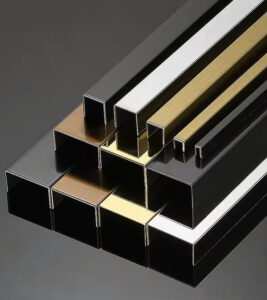
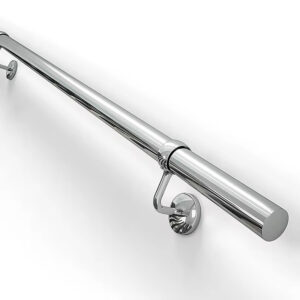
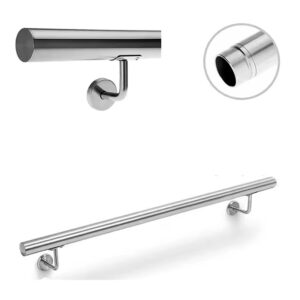
The gripping surface is where safety is codified into precise dimensions. For a circular stainless steel tube, the outside diameter must be between 1.125 inches and 2.0 inches. This range is engineered to facilitate a full “power grip,” maximizing user strength and stability. This “power grip” mandate acts as a critical design and liability filter, explicitly rejecting minimalist or decorative railings that only allow a weaker “pinch grip.” Non-circular profiles must have a perimeter between 4.0 and 6.125 inches.
Clearance and Continuous Surface Requirements
Installation clearance is equally regulated. A minimum of 1.5 inches must be maintained between the handrail and any adjacent wall, allowing adequate space for knuckles. This clearance, combined with the diameter specification, ensures the handrail is both graspable and usable along its entire length. The surface itself must be smooth, continuous, and free of obstructions or sharp edges. In my experience, designers must prioritize these ergonomic parameters over pure aesthetics to prevent functional failure in an otherwise visually appealing installation.
Key Specifications at a Glance
The following table consolidates the critical dimensional requirements for the handrail gripping surface as defined by accessibility standards.
| Parameter | Specification | Key Design Implication |
|---|---|---|
| Circular tube diameter | 1.125″ to 2.0″ | Enables full “power grip” |
| Non-circular profile perimeter | 4.0″ to 6.125″ | Alternative graspable shape |
| Minimum wall clearance | 1.5 inches | Prevents knuckle obstruction |
| Surface finish | Smooth, continuous | No snagging or obstructions |
Source: ADA Standards for Accessible Design. The standards codify precise dimensional requirements for handrail gripping surfaces to ensure they are usable by individuals with disabilities, mandating specific size ranges and clearances.
Structural Load Requirements and Bracket Spacing for Safety
The 200-Pound Load Mandate
A handrail must be structurally sound to perform its safety function. The entire system—including brackets, anchors, and tubing—must withstand a minimum load of 200 pounds applied in any direction. This requirement is not a theoretical maximum but a practical safety factor accounting for dynamic force during a fall or for support during egress. It directly dictates the structural calculus of bracket spacing, which is not an aesthetic choice.
Bracket Spacing and Substrate Integrity
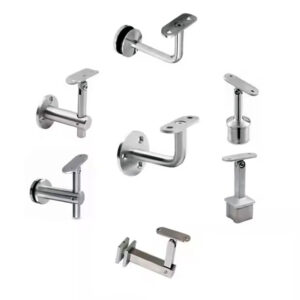
Brackets must be spaced at a maximum of 4 feet, with end brackets typically within 1 foot of the rail termination. This spacing is interdependent with the strength of the mounting substrate. A bracket anchored into drywall versus concrete requires a fundamentally different support strategy. Common installation failures often stem from improper substructure assessment, not bracket quality. Using Schedule 40 pipe or its structural equivalent is standard to ensure material integrity. The strategic implication is clear: successful installation requires a pre-installation engineering review.
Load and Support Requirements
The table below outlines the core structural requirements that govern handrail system design and installation.
| Component | Minimum Requirement | Installation Rule |
|---|---|---|
| System load capacity | 200 lbs, any direction | Dictates bracket/anchoring |
| Maximum bracket spacing | 4 feet | Ensures structural stability |
| End bracket placement | Within 1 foot of termination | Prevents rail end deflection |
| Standard tubing material | Schedule 40 pipe | Ensures material integrity |
Source: IBC Chapter 10 Means of Egress and industry standards. The IBC and structural engineering principles establish load and support requirements to ensure handrails remain secure under force during egress or a fall.
Handrail Extensions, Returns, and Continuity: A Detailed Guide
The Purpose of Extensions
Proper handrail termination is vital for safe guidance and to prevent tripping. At the top of a stair, the handrail must extend horizontally at least 12 inches beyond the nosing. At the bottom, it must extend at the stair’s slope for a distance equal to one tread depth. For ramps, a 12-inch horizontal extension is required at both top and bottom. These rules directly dictate material length and fabrication methodology, requiring material estimates to include significant overage beyond the simple run length.
Ensuring Continuous Support
Codes mandate that handrails be continuous across entire flights and landings. This continuity requirement makes fabrication for switchbacks or doglegs complex, necessitating seamless, obstruction-free bends. Fabricators must specialize in these techniques to avoid field modifications that interrupt the gripping surface, which is a compliance violation. Extensions must then “return” to a wall, post, or the floor, or continue seamlessly to an adjacent run. This prevents clothing from snagging and ensures the user’s hand is never left without support.
When Are Handrails Required? Stair and Ramp Compliance Rules
Triggering Thresholds for Installation
Handrails are not optional on most commercial stairs. They are required on any stairway with four or more risers. Stairs wider than 44 inches (per IBC/ADA) typically require a handrail on both sides. For very wide stairs—over 30 inches per IBC or over 88 inches per OSHA—an intermediate handrail is mandated to ensure no point is more than 30 inches from a handhold. On ramps with a rise greater than 6 inches, handrails are required.
The Dual-System Imperative for Children
A critical, often overlooked mandate applies to facilities designed for children. Children’s requirements introduce a dual-system design imperative. In schools or similar settings, a secondary handrail must be installed at a maximum height of 28 inches, with a minimum 9-inch vertical clearance from the primary adult rail. This is a code-specified design parameter that effectively doubles the required material, fabrication, and installation scope for these projects.
Mandatory Installation Scenarios
The following table clarifies the specific dimensional thresholds that trigger handrail requirements under major codes.
| Scenario | Handrail Requirement | Additional Specification |
|---|---|---|
| Stair riser count | 4 or more risers | Triggers requirement |
| Stair width (IBC/ADA) | Over 44 inches | Both sides required |
| Stair width (OSHA) | Over 88 inches | Intermediate handrail needed |
| Ramp rise | Greater than 6 inches | Handrail required |
| Children’s facilities | Secondary handrail at 28″ max | 9″ vertical clearance from primary rail |
Source: IBC Chapter 10 Means of Egress and ADA Standards for Accessible Design. These codes define the specific dimensional thresholds (riser count, width, rise) that mandate the installation of handrails for safety and accessibility.
The 2025 Stainless Steel Handrail Inspection Checklist
From Installation Tool to Documentation Requirement
A systematic inspection is crucial for verifying compliance. In today’s complex regulatory environment, the inspection checklist is shifting from an installation tool to a documentation requirement. The confluence of multiple codes makes post-installation verification a liability management exercise. Contractors who provide a detailed compliance dossier create a powerful competitive differentiator. This documentation turns the physical handrail into a certified asset.
Key Inspection Categories
The checklist should be organized by functional categories: Height & Alignment, Gripping Surface, Structural Integrity, Extensions & Terminations, and General Safety. Inspectors must verify that the top of the gripping surface falls within the local code’s height range consistently across the entire run. They must check for the 1.5-inch clearance, confirm bracket spacing does not exceed 4 feet, and ensure all extensions and returns are correctly implemented. Stability is key; the rail must not rotate or move under normal force.
Consolidated Field Verification Points
This table provides a consolidated checklist for field verification, drawing from OSHA, ADA, and IBC requirements.
| Inspection Category | Key Verification Item | Pass/Fail Criteria |
|---|---|---|
| Height & Alignment | Top of gripping surface | 34″-38″ (ADA) consistently |
| Gripping Surface | Diameter & clearance | 1.125″-2.0″ dia, 1.5″ clearance |
| Structural Integrity | Bracket spacing | ≤ 4 feet maximum |
| Extensions & Terminations | Top/bottom extensions | ≥ 12 inches horizontal |
| General Safety | Continuity & stability | No obstructions, no rotation |
Source: Technical documentation and industry specifications. A systematic inspection checklist consolidates criteria from OSHA, ADA, and IBC into actionable verification points for field compliance and documentation.
Common Installation Mistakes and How to Avoid Them
Frequent Code Integration Errors
The most common mistakes stem from misunderstanding how codes integrate. A major error is using a guardrail top as a handrail without providing a separate, graspable rail at the correct 34″-38″ height. Another is installing handrails that rotate within their fittings, which fails the “continuous and stable” requirement. Incorrect bracket spacing or anchoring into insufficient substrates like hollow drywall leads to structural failure under load. Neglecting the mandatory extensions at stair tops and bottoms creates trip hazards.
Strategic Mitigation Through System Selection
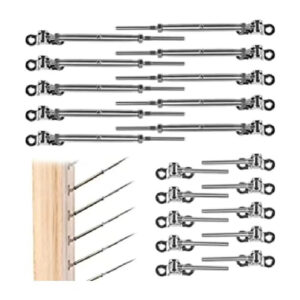
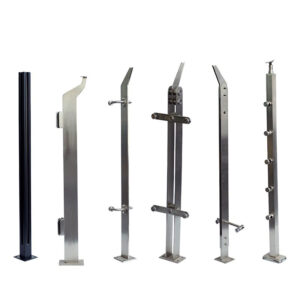
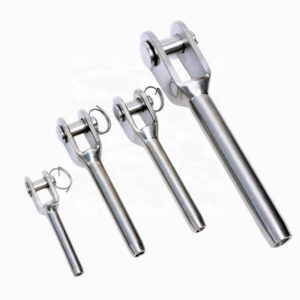
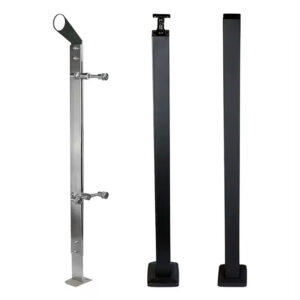
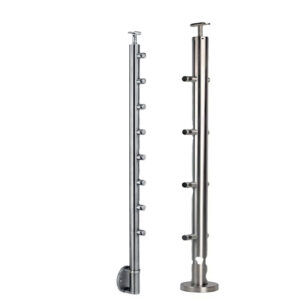
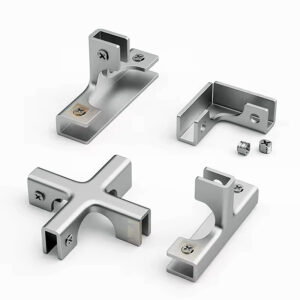
Avoiding these errors requires a holistic approach. Integrated product ecosystems will outcompete component suppliers because they reduce installer error. Sourcing a complete system—tubing, compliant brackets, proper returns, and anchoring hardware—from a single supplier ensures compatibility. Furthermore, leveraging modular, no-weld systems can mitigate risks associated with on-site fabrication and skilled labor shortages, ensuring a more predictable and code-compliant outcome, especially for retrofit projects. For complex installations, reviewing modular handrail system specifications during the design phase can prevent field adaptation issues.
Navigating Local Code Variations and AHJ Inspections
The Primacy of the Local AHJ
Final compliance is determined not by national standards alone but by the local Authority Having Jurisdiction. The fragmented compliance landscape created by local code supremacy means the ADA, IBC, and OSHA are merely starting points. Local amendments may alter height requirements, mandate specific materials, or add rules for historic buildings. Proactively engaging the AHJ during the design phase is the single most important risk mitigation strategy. Their interpretation is final.
Preparing for a Successful Inspection
Prepare for the final inspection by having all documentation organized: approved plans, product cut sheets, and the completed inspection checklist as a compliance dossier. Stainless steel is becoming the default for future-proofing assets partly because its durability and low maintenance appeal to AHJs focused on long-term safety. Presenting a robust, well-documented stainless steel system demonstrates a commitment to quality that can facilitate smoother inspections. Always schedule a pre-inspection walk-through if possible to identify any last-minute issues.
The decision framework for compliant handrail design prioritizes three actions: verify local AHJ requirements before design begins, select integrated or modular systems to reduce installation error, and document every compliance step for the final inspection. This approach transforms code compliance from a reactive cost center into a proactive value proposition, ensuring safety and minimizing liability.
Need professional guidance on specifying and installing code-compliant stainless steel handrail systems? The experts at Esang provide technical consultation and engineered solutions tailored to your project’s specific jurisdictional requirements. For a direct consultation, you can also Contact Us.
Frequently Asked Questions
Q: How do OSHA and ADA handrail height requirements differ for a commercial stair?
A: OSHA and ADA serve different purposes, leading to distinct height ranges. The ADA and IBC mandate a height of 34 to 38 inches for accessibility. OSHA permits 30 to 38 inches for general surfaces but requires 36 to 38 inches for stair rail systems that also act as a handrail. This often necessitates a two-rail system with a separate guardrail. For projects in commercial facilities, you must design for both standards and verify the stricter local code, which may fix the height at a specific point within these ranges.
Q: What are the critical dimensions for a compliant stainless steel handrail gripping surface?
A: The gripping surface must enable a secure power grip. For circular tubing, the outside diameter must be between 1.125 inches and 2.0 inches. Non-circular profiles require a perimeter of 4.0 to 6.125 inches. You must also maintain a minimum 1.5-inch clearance from any adjacent wall. These specifications are detailed in the ADA Standards for Accessible Design. This means selecting a decorative rail outside these dimensions will fail compliance and create a safety liability, regardless of its aesthetic appeal.
Q: How is bracket spacing determined to meet structural load requirements?
A: Bracket spacing is an engineering requirement, not a design choice. The entire system must withstand 200 pounds of force applied in any direction. To achieve this, brackets must be spaced no more than 4 feet apart, with end brackets typically within 1 foot of rail ends. The required spacing depends directly on the strength of the mounting substrate. For projects on non-standard surfaces like glass or thin walls, you should conduct a pre-installation engineering review to specify the correct anchoring solution.
Q: When is a secondary handrail required for children’s facilities?
A: Codes mandate a secondary handrail in facilities designed for children, such as schools. This rail must be installed at a maximum height of 28 inches, with a minimum 9-inch vertical clearance from the primary adult rail. This is a specific scoping requirement, not a recommendation. This dual-system imperative means projects for these environments must plan for double the material, fabrication, and installation scope from the initial budgeting phase to avoid costly change orders.
Q: What is the strategic value of a detailed handrail inspection checklist?
A: A systematic checklist verifies compliance across categories like height, gripping surface, and structural integrity. In today’s regulatory environment, this document is shifting from a simple verification tool to a required compliance dossier. Contractors who provide detailed documentation create a competitive advantage and a liability shield for owners. This means for any commercial project, you should require and archive a completed checklist with photographs and material certifications as proof of due diligence.
Q: How can we avoid common handrail installation mistakes related to code integration?
A: The most frequent errors involve misapplying guardrail height as handrail height, insufficient bracket anchoring, and omitting mandatory extensions. Avoid these by using integrated product ecosystems from a single supplier, which ensures component compatibility and reduces installer error. Furthermore, consider modular, no-weld systems to minimize on-site fabrication risks. For retrofit projects with skilled labor shortages, this approach delivers more predictable, code-compliant results and simplifies the AHJ inspection process.
Q: How should we navigate conflicting requirements between national standards and local building codes?
A: Local codes always supersede national standards like the ADA, IBC, or OSHA. The AHJ (Authority Having Jurisdiction) enforces local amendments, which can alter heights or add material rules. Your primary risk mitigation step is to consult the local AHJ during the design phase to confirm governing requirements. This means a handrail system compliant in one city may fail in another, so never assume national standards are sufficient without local verification.