Finished hardware that fails at distributor intake because of a mismatched carton label or an outdated logo is a specific and avoidable loss, but it happens routinely when artwork and marking are treated as post-production tasks rather than procurement deliverables. The metal parts may be dimensionally correct, surface-finished to specification, and packed at the right count, yet a single revision mismatch between the product mark and the outer carton can make the entire order commercially unusable. The decision that prevents this is not creative — it is sequential: define marking inputs per SKU, resolve the permanent-versus-removable trade-off before tooling, lock revisions across all packaging levels simultaneously, and confirm a packed golden sample before branded production begins. What follows will help you judge which marking decisions need to be closed during specification, and which gaps most often surface only at first customer inspection.
Artwork and Marking Inputs for Each SKU
Every SKU brief should resolve three marking questions before artwork files are submitted: where the required conformity mark will appear, how the brand logo or additional markings will coexist with it, and whether the hardware will carry UKCA or CE marking for the target market.
The sequence matters because UKCA/CE placement is not a flexible guideline — it sets a visibility and legibility threshold that all other markings must respect. For Great Britain, the conformity mark must appear clearly and legibly on the product itself. If the geometry, surface finish, or part size makes direct product marking impractical, the mark must then appear on the packaging or accompanying documents. The brief needs to resolve which applies for each individual SKU, not for the product range as a whole, because a cable fitting and a post cap in the same kit may have different feasibility constraints.
Brand logos and any additional identification are permitted alongside the required mark only when they serve a distinct function, do not cause confusion about the meaning of the conformity mark, and do not reduce its legibility or visibility. This is a planning criterion for artwork layout, not a creative restriction. Compliance risk activates at the point where logo size, placement, or design begins to obscure or visually compete with the required mark — so artwork spacing, contrast, and colour choices need to be confirmed against that threshold before any proof is approved.
CE marking continues to be accepted in Great Britain indefinitely as an alternative to UKCA for goods placed on the market. This is a current market-access option, not a permanent exemption from marking discipline — whichever conformity mark is chosen still demands identical placement and legibility compliance.
Each of these inputs produces a confirmable specification parameter per SKU.
| Marking Element | Regulatory Requirement | What to Specify or Confirm |
|---|---|---|
| UKCA/CE Marking Placement | Must be clearly visible and legible on the product; if not possible, on packaging or accompanying documents | Confirm that the intended marking location on each SKU allows clear visibility; if product marking is impractical, identify packaging position and ensure legibility |
| Brand Logo or Additional Markings | Must not affect the visibility, legibility, or meaning of UKCA/CE; allowed only if they serve a different function, do not cause confusion, and do not reduce legibility or visibility | Clarify artwork size, position, and colour contrast so the logo remains distinct and does not obscure or confuse the required mark |
| Acceptance of CE Marking | CE marking is accepted in Great Britain indefinitely as an alternative to UKCA for goods placed on the market | Decide whether SKUs will carry CE marking instead of UKCA; confirm that all other marking requirements still apply and that the choice meets market expectations |
Missing confirmation on any row in that table before artwork submission means the gap will be resolved under production pressure, which is where the most costly marking errors originate.
Commercial Loss From Wrong Labels or Logos
An outdated logo or mismatched carton label does not create a quality problem in the conventional sense — it creates a commercial one. Hardware that is dimensionally and metallurgically correct becomes unsellable at retail distribution if the marking violates UKCA/CE placement rules, because the goods are non-compliant at market entry regardless of the quality of the metal.
The failure modes worth tracking at the artwork proofing stage are specific. A brand logo that reduces the visibility or legibility of the UKCA/CE mark is grounds for rejection. Additional marking that visually mimics the conformity mark — through similar graphic weight, position, or labelling language — creates a compliance failure even if it was placed there for an entirely different commercial purpose. And where a SKU cannot carry the conformity mark directly on the product, a carton or packaging that also fails to carry it with adequate legibility and durability removes the only permitted fallback. Each of these is a distinct rejection pathway, not variations of the same error.
The verification rhythm that catches these failures before production is artwork proofing against the conformity marking rules — not just a visual approval of brand appearance. This is also where distributor-specific or end-market-specific requirements should be checked, because additional marking obligations can apply beyond the regulatory baseline depending on the channel. The table below maps the primary wrong-label scenarios to their regulatory exposure and the pre-production confirmation each requires.
| Wrong Label/Logo Scenario | Regulatory Risk | What to Confirm Before Production |
|---|---|---|
| Logo placement reduces visibility or legibility of UKCA/CE | Goods may be non-compliant and rejected at market entry | Verify artwork spacing and size so that the required mark remains clearly visible and legible |
| Additional marking creates confusion with the mandatory UKCA/CE meaning | Compliance failure if the marking mimics or interferes with the official mark | Confirm that the logo design, wording, and placement do not cause confusion and serve a different function |
| Packaging fails to carry the required UKCA/CE marking when the product itself cannot be marked | Non-compliant goods if no alternative marking is provided on packaging or documents | Specify that the carton or packaging carries the required mark with the correct legibility and durability |
Treating this as a representative checklist rather than an exhaustive compliance statement is the honest framing — marking rules specific to a given distributor or market may add further constraints. What the table establishes is the minimum set of failures that should be caught at artwork proofing before any production run begins.
Permanent Marking Versus Removable Identification
The choice between marking the hardware directly and relying on packaging identification is not a question of preference — it is a trade-off between lifecycle compliance assurance and production feasibility, and it needs to be settled per SKU during specification, not resolved ad hoc at tooling.
Direct product marking — etching, stamping, or a label with sufficient permanence — means the conformity mark and any traceability identification remain with the hardware for its working life. Once packaging is removed in the field, the mark survives. This is the required approach where it can be reasonably achieved. The “if feasible” clause in the placement rules functions as a threshold criterion, not a loophole. If a product can physically carry a legible, durable mark, the specification should require it; defaulting to packaging marking on parts where direct marking is achievable is difficult to defend if the marking is later queried.
Where direct product marking genuinely is not possible — due to part geometry, material surface, or minimum feature size — packaging marking is the permitted fallback. At that point, the specification burden shifts: the carton or inner-box label must compensate through explicit requirements on label material, adhesion, minimum character size, and resistance to handling and moisture through the distribution chain. Packaging marking that deteriorates or detaches before market entry fails on exactly the same legibility grounds as a missing product mark.
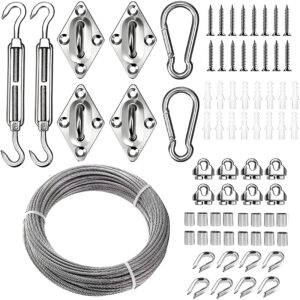
For project hardware that will be distributed through trade channels rather than retail, removable labels reduce marking cost and simplify re-branding across markets. For hardware entering retail distribution — particularly where end-users or inspectors will evaluate compliance after unpacking — the traceability argument for permanent product marking is stronger. Cable assembly hardware kits that include multiple components with different geometries are a practical example where the permanence decision may differ by component within the same kit.
The table below contrasts the two approaches against regulatory rules and the specification decisions each requires.
| Marking Location | Typical Permanence | Regulatory Rule | What to Clarify in the Specification |
|---|---|---|---|
| Product Marking (e.g., etched, stamped, reinforced label) | High – remains on the hardware for its life | UKCA/CE must be on the product if feasible; ensures compliance even when packaging is discarded | Confirm whether each SKU can be marked directly; define the required permanence (e.g., etching depth, label adhesion) |
| Packaging Marking (e.g., carton label, inner-box print) | Low – may be removed or lost after unpacking | Acceptable only when product marking is not possible; still must be clearly visible and legible on the packaging | Identify which SKUs rely on packaging marking and specify label position, size, and material to maintain legibility |
The downstream consequence of an under-specified packaging label is not a production error — it is a compliance failure that surfaces only at market entry, after the goods have already shipped.
Revision Control Across Every Packaging Level
Artwork revisions managed by separate teams for the product mark, the inner box, and the master carton create the conditions for obsolete labels to reach production without detection. When a logo is updated or a marking requirement changes, the revision needs to propagate simultaneously to every packaging level — and the cut-in point for each level needs to be confirmed before any revised artwork enters the production line.
ISO 9001:2015 addresses this through its framework for control of documented information, which requires that documents and records used in production are current, identifiable, and protected from unintended use of obsolete versions. Applied to packaging artwork, this means each file — product label, inner-box print, master-carton specification — should carry version identification, and no level should enter production on a revision that has not been confirmed against the others. The failure risk is not theoretical: a master carton printed to the previous logo revision while the product label carries the updated version produces a visible mismatch that a distributor’s intake team will identify and reject, even if both marks are individually legible and correctly placed.
The coordination cadence that reduces this risk is a simultaneous revision lock across all packaging levels, rather than sequential approvals. When product artwork is approved, inner-box and carton artwork should be confirmed in the same review cycle, not as a follow-on task. Schedule pressure tends to break this sequence — the product-level mark gets approved first because it gates tooling, and carton artwork gets deferred until closer to shipment. That deferral is where revision divergence typically originates. For teams managing this process across distributed teams or suppliers, reviewing how to evaluate a stainless steel railing supplier before your first bulk order — particularly the supplier’s documented processes for version control — can clarify what coordination discipline should be contractually confirmed upstream.
Treating revision control as a packaging-specific administrative detail understates the risk. A carton label that carries an outdated UKCA/CE placement or an obsolete logo does not represent a paperwork error — it represents goods that may not be accepted by the channel the order was built for.
Packed Golden Sample Before Branded Production
A packed golden sample is the only pre-production checkpoint that confirms every marking level simultaneously — product mark, inner-box label, and master carton — in the physical configuration that will reach the customer. Running branded production without one means that any marking placement error, legibility failure, or revision mismatch will be discovered at scale rather than on a single unit.
The function of the golden sample is to freeze the approved appearance before production tooling runs. It creates a defensible physical reference: if a conformity mark placement, logo size, or carton label specification is questioned later, the approved sample is the comparison point. Without it, approval is effectively delegated to interpretation at the time of dispute, which is an unstable position for both buyer and supplier.
What the sample should confirm is the compound result, not the individual elements in isolation. A product label that passes visual approval on its own may still fail when placed alongside the brand logo on the same face. A carton print that is legible in isolation may carry a revision that has since been superseded. The packed sample checks whether all marks coexist as specified, whether the conformity mark remains clearly visible in its final position, and whether the carton construction and label material are consistent with what the specification required. These are not separable checks — they need to be evaluated together, on a fully assembled and packed unit.
The practical consequence of skipping the golden sample under schedule pressure is that the first customer inspection becomes the effective approval event. At that point, the entire batch has already been produced, and any marking failure requires either rework, relabeling, or rejection of the order. The cost of the delay involved in producing and approving a packed sample before production begins is consistently lower than the cost of either outcome.
The decisions that prevent marking-related batch rejection are not complex, but they are earlier than most procurement timelines assign them. Artwork inputs, marking location, permanence requirements, and revision locks across all packaging levels need to be confirmed before production begins — not treated as finishing details after the hardware has been made. The specific risk to track is the compound failure: individual elements that each appear acceptable in isolation, but diverge when assembled into a packed, labeled unit. A packed golden sample before branded production begins is the one checkpoint that evaluates all of those elements simultaneously, in the configuration the channel will actually receive. Confirming what that sample needs to demonstrate — and who has authority to approve it — is the most practical next step before any branded production order is placed.
Frequently Asked Questions
Q: Do these logo and labeling rules apply if my railing hardware is sold outside the UK/EU and doesn’t need a UKCA or CE mark?
A: The specific conformity mark may not be required, but the underlying verification discipline still protects your order. Even without a regulatory mark, mismatched logos, carton labels, or revision conflicts between packaging levels can cause rejection by distributors or retailers who enforce their own labelling standards. The pre-production checks — defining marking inputs per SKU, locking revisions across all packaging levels, and approving a packed golden sample — remain the most reliable way to prevent commercially unusable goods, regardless of whether a government-mandated mark is involved.
Q: What should I include in my packed golden sample request to the supplier to make sure it’s approved correctly?
A: Specify that the sample must be produced using production-intent tooling, artwork, and packing materials, and define acceptance criteria before it ships. The request should list each marking level to be checked — product mark, inner-box label, master carton — and state that approval is contingent on confirming legibility, correct revision, and coexistence of all marks in the final packed configuration. Assign authority to a named person who will sign off before branded production begins, and make this approval step a contractual gate in the purchase order, not a courtesy review.
Q: At what point is a railing hardware component considered too small to carry a permanent mark directly, pushing the requirement onto the packaging?
A: It becomes impractical when the available surface cannot accommodate a legible mark at the minimum character height required for the conformity standard, or when marking would compromise the part’s structural integrity or corrosion resistance. Factors include curvature, surface roughness, and the minimum line width the chosen marking method can reliably produce. If any of these prevent a durable, readable mark after a reasonable production trial, packaging marking becomes the permitted fallback — but that decision should be documented per SKU and supported by a feasibility assessment, not assumed.
Q: Which permanent marking method — laser etching, stamping, or a permanent adhesive label — works best for stainless steel railing hardware?
A: No single method is universally best; the right choice depends on part geometry, surface finish, and the required lifespan of the mark. Laser etching provides high-contrast, durable marks on flat or gently curved surfaces without adding material, but it requires line-of-sight access. Stamping creates depressions that survive abrasion but can distort thin-walled parts or damage polished finishes. Permanent adhesive labels offer greater flexibility for irregular surfaces but must be validated for adhesion, chemical resistance, and edge lift under the expected environmental conditions. Evaluate each method against the specific component’s form and the mark’s required legibility over the product’s working life.
Q: If I’m placing a repeat order with identical artwork and no branding changes, do I still need another packed golden sample?
A: A new sample is generally not required for a true repeat order where the approved golden sample remains valid as the physical reference. However, that depends on no revision changes occurring at any packaging level and no switch in supplier, material, or production process that could affect mark appearance or label adhesion. If your internal revision control confirms that all artwork files, marking placement, and carton specifications are completely unchanged, the original sample continues to serve as the approval benchmark — but that condition must be verified, not assumed, before releasing the repeat order for production.