For architects, builders, and property managers in coastal regions, specifying a stainless steel cable railing system presents a unique corrosion paradox. The material is chosen for its durability, yet the relentless salt-laden atmosphere can lead to premature failure through red rust and tea staining. This isn’t a simple maintenance issue; it’s a fundamental design challenge where material science, installation precision, and proactive care intersect. A single compromised component can initiate a chain reaction of degradation, compromising both aesthetics and structural integrity.
Addressing this challenge is no longer optional. With coastal development increasing and regulatory scrutiny on safety and longevity intensifying, a failure to implement a comprehensive corrosion prevention strategy represents significant financial and liability risk. The solution lies not in a single product, but in a systematic approach that begins at specification and continues for the life of the installation.
Understanding Red Rust and Tea Staining on Stainless Steel
The Failure of the Passive Layer
Stainless steel’s corrosion resistance relies on a microscopic, self-repairing chromium oxide film. In coastal climates, airborne chloride salts are the primary aggressor. They penetrate this passive layer at weak points, leading to localized pitting. The resulting iron oxide deposits appear as red rust. Tea staining—a superficial brown or orange discoloration—is often the first visible warning sign of this ongoing chemical attack. It indicates that the passive layer is under sustained assault, even if the base metal is not yet deeply compromised.
The Accelerant: Galvanic Corrosion
The corrosion process is dramatically accelerated when dissimilar metals are in electrical contact within the system, such as stainless steel cables fastened to aluminum posts. In the presence of saltwater electrolyte, this creates a galvanic cell. The less noble metal (typically aluminum) becomes the anode and corrodes sacrificially to protect the more noble cathode (stainless steel). This electrochemical reality means galvanic corrosion is the primary failure mechanism for mixed-metal systems in marine environments. White, powdery aluminum oxide deposits at connection points are a clear indicator of active galvanic degradation.
Priority 1: Selecting the Right Marine-Grade Materials
The Non-Negotiable: 316 Stainless Steel
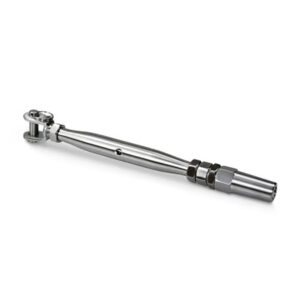
The single most critical decision is material grade. For all cables, fittings, and hardware, marine-grade 316 stainless steel with 2-3% molybdenum is mandatory. Its chloride resistance is 2-4 times greater than that of standard 304 grade. This specification must be universal; mixing 316 cables with 304 turnbuckles creates a galvanic risk within the stainless system itself. We’ve seen projects where cost-driven substitution of 304 for hidden components led to isolated but severe rust failures within two seasons.
System Integration Over Component Procurement
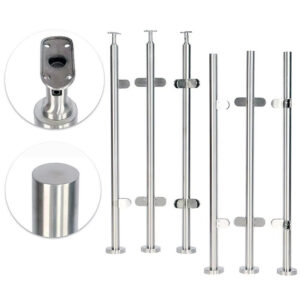
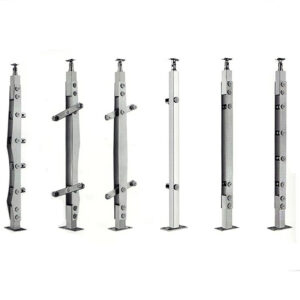
Longevity is dictated by the weakest link. For cable construction, the 1×19 configuration provides the optimal balance of tension resistance and flexibility, minimizing stretch that can stress posts. For aluminum posts, a high-performance coating applied over a multi-step pretreatment is essential. The strategic implication is clear: integrated system design trumps piecemeal procurement. Sourcing a complete, engineered kit from a single supplier ensures uniform metallurgy and compatibility, mitigating the inherent risks of mixing components from different manufacturers.
The following table outlines the critical specifications that define a coastal-ready material selection strategy.
Critical Specifications for Coastal Longevity
| Component | Critical Specification | Performance Impact |
|---|---|---|
| Stainless Steel Grade | 316 (2-3% Molybdenum) | Chloride resistance 2-4x > 304 |
| Cable Construction | 1×19 Configuration | Superior resistance to stretching |
| Aluminum Post Coating | AAMA 2605-Compliant Finish | Mandatory for marine environments |
| System Sourcing | Single-Supplier, Engineered Kit | Ensures uniform metallurgy & compatibility |
Source: AAMA 2605 Voluntary Specification for High Performance Coatings. This standard defines the rigorous salt spray and weathering performance required for organic coatings on aluminum, making it the benchmark for protecting railing posts in coastal climates.
Priority 2: Protective Finishes and Installation Best Practices
Enhanced Surface Defenses
Superior base materials require complementary surface protection. For aluminum posts, corrosion defense is defined by coating sophistication. Leading systems use a multi-layer approach, combining an e-coat that penetrates crevices with a durable, UV-resistant powder coat top layer. This is critical for protecting vulnerable cut edges and internal surfaces. For stainless components, surface finish directly impacts maintenance. A standard mill finish can harbor contaminants, whereas an electropolished finish microscopically smoothes the surface, reducing the area for salts to adhere and simplifying cleaning.
Installation as Corrosion Prevention
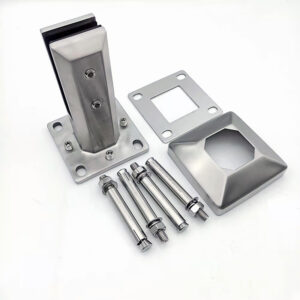
Proper installation is the first act of maintenance. At every point where stainless steel contacts aluminum, non-conductive nylon or polymer sleeves and washers must be used to break the galvanic circuit. Applying a stainless-steel-compatible anti-seize compound to all threads prevents galling and ensures future serviceability. Furthermore, ensuring all posts have clear, unobstructed drainage holes prevents the accumulation of stagnant saltwater, a primary driver of internal corrosion.
The methods and products used during installation set the long-term performance trajectory.
Key Protection Methods and Materials
| Protection Method | Key Feature/Product | Purpose |
|---|---|---|
| Aluminum Coating System | Multi-layer (E-coat + Powder) | Protects cut edges & crevices |
| Stainless Steel Finish | Electropolished Surface | Reduces contaminant adhesion |
| Galvanic Isolation | Non-conductive Polymer Isolators | Breaks electrochemical circuit |
| Thread Protection | Anti-seize Compound | Prevents galling & seizing |
Source: NACE SP0108 Standard Practice: Corrosion Control of Offshore Structures. This practice provides authoritative guidance on coating system selection and the critical importance of isolation techniques to prevent corrosion in marine environments.
Priority 3: A Proactive Coastal Maintenance Schedule
The Mandate of Frequent Rinsing
In coastal zones, maintenance shifts from cosmetic to structural. The cornerstone is frequent rinsing with fresh water to dissolve and remove salt deposits before they can etch the surface and break down the passive layer. This is especially critical after storm events, which deposit heavy salt loads. A quarterly wash with a mild, pH-neutral soap and water should be the scheduled standard to remove accumulated grime without damaging the metal.
Chemical Cleaning and Professional Protocols
When tea stains or early rust spots appear, chemical cleaning requires metal-specific protocols. Use a phosphoric or citric acid-based cleaner formulated for stainless steel, followed by thorough rinsing. Avoid chlorine-based cleaners (bleach) and abrasive pads or powders, which permanently scar the protective oxide layer. The complexity of this regimen means professional maintenance services are a logical evolution. Installers can develop recurring revenue streams by offering certified maintenance contracts, ensuring procedures are followed correctly and system performance is documented.
A disciplined schedule is non-negotiable for preserving the installation.
Essential Maintenance Activities
| Task | Frequency | Key Agent/Protocol |
|---|---|---|
| Fresh Water Rinse | Frequent (Post-Storm) | Removes salt deposits |
| Full Wash | Quarterly | pH-neutral soap & water |
| Stain Removal | As Needed | Phosphoric/citric acid cleaner |
| Professional Service | Annual/Bi-annual | Certified maintenance contracts |
Source: Technical documentation and industry specifications.
Advanced Protection: The Role of Passivation
Enhancing the Inherent Defense
Passivation is a strategic chemical process that enhances stainless steel’s innate corrosion resistance. It involves applying a citric or nitric acid gel to the surface, which removes free iron particles left from machining or fabrication. These particles are potential initiation sites for rust. The process promotes the formation of a more robust, uniform, and chromium-rich oxide layer. It is a recommended procedure for new installations or following any repair or deep cleaning that may have disturbed the metal surface.
A Performance Multiplier, Not a Substitute
It is critical to understand that passivation is not a substitute for correct material selection. You cannot passivate 304 stainless to perform like 316. Instead, it acts as a performance multiplier, ensuring that specified marine-grade components achieve their maximum protective potential from the first day of exposure. For project teams demanding the highest assurance, specifying that all stainless components be passivated per ASTM A967 Standard Practice for Chemical Passivation Treatments is a definitive step toward longevity.
The process details and standards ensure a consistent, high-quality outcome.
Passivation Process Specifications
| Process Aspect | Detail | Standard/Outcome |
|---|---|---|
| Primary Agents | Citric or Nitric Acid | Removes free iron particles |
| Recommended Timing | Post-Installation or Cleaning | Ensures maximum Cr-oxide layer |
| Governing Standard | ASTM A967 Practice | Defines procedures & requirements |
Source: ASTM A967 Standard Practice for Chemical Passivation Treatments. This standard establishes the approved procedures for chemically passivating stainless steel to enhance its corrosion resistance by promoting a robust, uniform passive layer.
Addressing Galvanic Corrosion Between Dissimilar Metals
The Electrochemical Reality
Galvanic corrosion is an electrochemical inevitability when dissimilar metals are electrically connected in an electrolyte. In a coastal cable railing, salt spray or condensation provides the electrolyte. If stainless steel cables are in direct contact with aluminum posts, the aluminum will corrode sacrificially. The rate of attack depends on the relative surface area; a large cathode (long cable runs) connected to a small anode (post connection points) leads to rapid, concentrated corrosion of the aluminum.
Isolation as a Core Engineering Requirement
Prevention is entirely dependent on breaking the electrical circuit. This requires non-conductive isolators—sleeves, washers, or gaskets—at every hardware connection point between dissimilar metals. Furthermore, the aluminum posts must have a continuous, high-integrity coating that covers all surfaces, including pre-drilled holes and cut ends, to prevent the electrolyte from reaching any bare metal. Treating isolation not as an optional detail but as a fundamental design parameter is critical for preventing both aesthetic degradation and structural weakening of the post system.
Post-Installation: Inspection, Tensioning, and Storm Checks
The Annual Inspection Protocol
A static installation is not the finish line. An annual inspection is essential for early problem detection. Check for loose fittings, signs of corrosion at junctions (especially where isolators may be missing), and cable sag. Cables must be re-tensioned evenly according to the manufacturer’s specifications to maintain code-compliant deflection limits—typically preventing a 4-inch sphere from passing through—and to ensure loads are distributed properly across the posts.
The Imperative of Post-Storm Action
Post-storm checks are a critical structural requirement, not just cleanup. High winds impose dynamic loads that can loosen components or stress deck attachments. These events also deposit the heaviest salt loads of the year. An immediate fresh water rinse is imperative to remove this concentrated corrosive film. Formalizing these inspections within warranty and safety documentation transforms them from recommendations into accountable requirements for ongoing system integrity.
A structured post-installation regimen safeguards the investment.
Post-Installation Activity Framework
| Activity | Critical Action | Performance Standard |
|---|---|---|
| Annual Inspection | Check fittings & corrosion | Document system integrity |
| Cable Tensioning | Even re-tensioning | Maintain ≤4″ sphere deflection |
| Post-Storm Check | Immediate fresh water rinse | Remove heavy salt load |
| Load Inspection | Verify deck attachments | Ensure dynamic load capacity |
Source: Technical documentation and industry specifications.
Creating a Long-Term Corrosion Prevention Plan
Documentation and Calendaring
A sustainable plan synthesizes all priorities into a managed lifecycle strategy. It begins with documentation: retain material certificates confirming 316 grade, installation records noting isolation methods used, and initial tension settings. The maintenance schedule—frequent rinsing, quarterly washing, annual inspection—should be calendared and assigned responsibility. This systematic approach is essential for warranty compliance and provides a baseline for diagnosing any future issues.
Anticipating Regulatory Evolution
Proactive planning also anticipates that coastal building codes will evolve. They are likely to move beyond basic spacing requirements to mandate specific material grades and protection techniques for defined hazard zones, informed by standards like ISO 9224 Corrosion of metals and alloys which quantifies atmospheric corrosivity. Forward-thinking manufacturers and specifiers will develop pre-certified system packages for this eventuality, turning compliance into a competitive advantage.
Ultimately, preserving a coastal cable railing is an ongoing commitment where disciplined material choices, precise installation, and vigilant upkeep converge to ensure decades of performance. The decision framework is clear: specify marine-grade systems comprehensively, isolate dissimilar metals meticulously, and maintain proactively.
Need a professionally engineered cable railing system designed for coastal durability from the outset? Explore our marine-grade solutions and integrated specification support at Esang. For project-specific questions or technical documentation, you can also Contact Us.
Frequently Asked Questions
Q: Is 304 stainless steel acceptable for cable railings in coastal environments?
A: No, 304 stainless steel is insufficient for long-term coastal performance. You must specify marine-grade 316 stainless steel, which contains 2-3% molybdenum for superior chloride resistance. Its corrosion resistance is 2-4 times greater than 304 grade. This means any project within a marine atmosphere should mandate 316 for all cables, tensioners, and fasteners to meet durability expectations and avoid premature failure.
Q: What coating specification should we require for aluminum posts in a saltwater environment?
A: Specify a coating system that meets the AAMA 2605 voluntary specification for high-performance organic coatings. This standard requires rigorous testing for salt spray resistance and weathering. A superior system will combine an e-coat primer with a durable powder coat top layer to protect edges and internal surfaces. For coastal projects, this specification is the benchmark for ensuring the aluminum substrate remains isolated from the corrosive electrolyte.
Q: How do you prevent galvanic corrosion between stainless steel cables and aluminum posts?
A: Prevention relies entirely on electrical isolation using non-conductive materials. You must install nylon or polymer sleeves, washers, or gaskets at every point of contact between the dissimilar metals to break the galvanic circuit. This isolation is a core engineering requirement, not an optional detail. For any mixed-metal system, your installation plan must detail these isolators at all hardware connections to prevent accelerated corrosion of the aluminum.
Q: What is the purpose of passivating stainless steel cable railing components?
A: Passivation is a chemical process that enhances stainless steel’s natural corrosion resistance by removing free iron particles from the surface, promoting a more robust and uniform chromium oxide layer. It is recommended for new installations or after deep cleaning. Following procedures like those in ASTM A967 ensures maximum protective potential. This means for a coastal installation, passivation acts as a performance multiplier for your 316 stainless steel investment.
Q: What should a proactive maintenance schedule include for a coastal cable railing system?
A: A coastal maintenance schedule is a structural mandate centered on frequent freshwater rinsing to remove salt deposits, combined with quarterly washing using pH-neutral soap. For emerging tea stains, use a phosphoric or citric acid-based stainless steel cleaner, never chlorine or abrasives. This disciplined regimen translates to a commercial opportunity, as the complexity of proper care makes professional maintenance services a logical extension for installers and a wise investment for owners.
Q: Why is cable construction (like 1×19) a critical specification for coastal railings?
A: The 1×19 cable configuration provides an optimal balance between tension resistance and flexibility, which is crucial for maintaining safety spacing under load. In coastal environments, this superior resistance to stretching prevents undue stress on posts and maintains code-compliant deflection limits over time. This means your material specification must consider cable construction as a key performance factor, not just the alloy grade, to ensure long-term system integrity and safety.
Q: How should post-storm inspections differ from routine annual checks?
A: Post-storm checks are a critical, immediate structural requirement following high-wind events. They must assess for loosened components, stressed deck attachments, and heavy salt deposition that requires urgent rinsing. While annual inspections focus on tension and general wear, storm checks address dynamic load damage. This means your long-term maintenance plan must formalize these rapid-response inspections as documented requirements to preserve system integrity after severe weather.