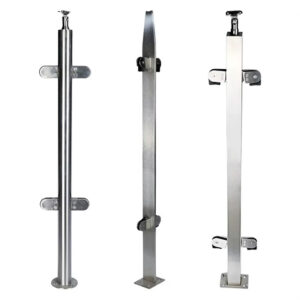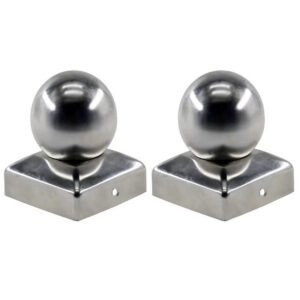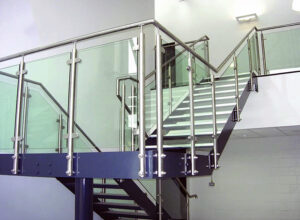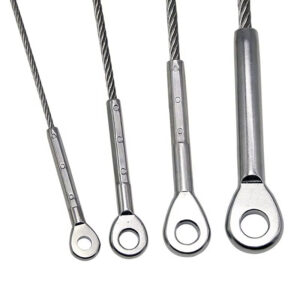
For architects, engineers, and facility managers specifying handrail systems in coastal environments, the primary challenge is not structural load but environmental degradation. The silent, pervasive threat of chloride-induced corrosion can transform a critical safety component into a liability, leading to premature failure, unsightly staining, and costly replacements. A common and costly misconception is that all “stainless steel” offers sufficient protection, an assumption that invites significant risk in saltwater applications.
Attention to precise material specification and validation is now a non-negotiable aspect of coastal project planning. With increasing asset lifecycle demands and liability concerns, relying on generic material grades or unverified supplier claims is a professional gamble. This article provides a technical framework for specifying handrail systems that will endure the specific corrosive severity of their installed environment, moving beyond code minimums to ensure long-term performance and safety.
How Molybdenum Content Defines Saltwater Corrosion Resistance
The Chemistry of the Passive Layer
Stainless steel’s corrosion resistance stems from a thin, stable chromium oxide film that forms on its surface. In benign environments, this “passive layer” self-repairs if damaged. However, chloride ions in saltwater are aggressively disruptive. They can locally penetrate this protective film, initiating concentrated pitting attacks that compromise structural integrity. The alloy’s ability to resist this mechanism dictates its suitability for marine service.
Molybdenum’s Role as a Performance Multiplier
Molybdenum is the critical alloying element that elevates performance in chloride-rich settings. It integrates into the passive oxide layer, significantly enhancing its stability and repassivation speed. This fortified film is more resistant to chloride penetration, directly increasing the material’s Critical Pitting Temperature (CPT). This creates a definitive, chemistry-based performance hierarchy. For procurement, this makes verified molybdenum content the first checkpoint; specifying without it is an invitation to premature failure.
Validating the Alloy Chemistry
Material grade cannot be confirmed by sight. The essential verification tool is the Mill Test Certificate (MTC), which provides spectrometer analysis of the chemical composition. This document is the legal proof that the delivered material meets the specified ASTM A240/A276 requirements for Grade 316L, including its 2-3% molybdenum content. Treating the MTC as a mandatory deliverable, not optional paperwork, closes the credibility gap in the supply chain and defensibly allocates responsibility.
| Alloying Element | Key Role | Impact on Saltwater Performance |
|---|---|---|
| Chromium | Forms passive oxide layer | Base corrosion resistance |
| Molybdenum | Fortifies passive layer | Enhances pitting resistance |
| Nickel | Stabilizes austenitic structure | Improves general durability |
| Carbon (in 316L) | Low-carbon variant | Prevents weld sensitization |
Source: Technical documentation and industry specifications.
Key ASTM Test Standards for Handrail Material Validation
Accelerated Laboratory Corrosion Testing
Building codes mandate structural safety but are silent on long-term environmental durability. Laboratory testing per ASTM standards provides the objective, accelerated data needed to validate material suitability before installation. These tests simulate years of exposure in a controlled setting, offering comparative performance metrics that inform specification. They move the conversation from subjective claims to quantifiable results.
Foundational and Specific Test Methods
The ASTM B117 Salt Spray (Fog) Test is a foundational benchmark. It subjects samples to a continuous 5% sodium chloride mist, with high-performance marine alloys rated for thousands of hours before failure. More specifically, ASTM G48 targets stainless steel’s vulnerability to localized corrosion. Method A determines the Critical Pitting Temperature (CPT) in ferric chloride, a value that correlates directly with molybdenum content. Methods B-F evaluate crevice corrosion resistance, a severe risk at welded joints and fastener points in handrail systems.
Integrating Test Criteria into Specifications
Savvy specifiers must explicitly require these test criteria to ensure asset integrity. A robust specification will mandate not just a material grade, but also performance benchmarks, such as “minimum 5,000 hours to first red rust in ASTM B117.” This requirement shifts the burden of proof to the manufacturer and provides a clear, defensible standard for material acceptance. In our experience, manufacturers who readily provide this data typically have greater control over their material sourcing and quality assurance processes.
| ASTM Standard | Test Method | Primary Performance Metric |
|---|---|---|
| ASTM B117 | Salt Spray (Fog) | Hours to failure (e.g., 5,000+) |
| ASTM G48 Method A | Ferric Chloride | Critical Pitting Temperature (CPT) |
| ASTM G48 Methods B-F | Crevice Corrosion | Crevice corrosion resistance rating |
Source: ASTM B117 Standard Practice for Operating Salt Spray (Fog) Apparatus. This standard defines the apparatus and procedure for the foundational salt spray test, providing accelerated comparative data on material corrosion resistance. ISO 9227 Corrosion tests in artificial atmospheres — Salt spray tests is the equivalent international standard for neutral, acetic acid, and copper-accelerated salt spray tests.
Comparing Stainless Steel Grades: 304 vs. 316/316L for Coastal Use
The Fundamental Cost vs. Durability Decision
The choice between 304 and 316/316L stainless steel represents a fundamental trade-off between initial cost and long-term durability in coastal applications. Type 304 is an excellent, cost-effective general-purpose alloy, but its lack of molybdenum makes it vulnerable in chloride environments. Within approximately five miles of the coast, it is prone to unsightly surface staining (“tea-staining”) and, more critically, structural pitting corrosion.
Why 316L is the Technical Minimum
Type 316/316L, with its 2-3% molybdenum addition, offers significantly enhanced resistance to both pitting and crevice corrosion. For handrails, the “L” (low-carbon) variant is particularly crucial. During welding, standard 316 can undergo “sensitization,” where chromium carbides form at grain boundaries, depleting local chromium and destroying corrosion resistance at the weld. 316L’s low carbon content prevents this, ensuring the heat-affected zone retains its protective properties. This makes 316L the technical minimum for welded handrail systems in saltwater environments.
Clarifying the “Marine-Grade” Ambiguity
The term “marine-grade” is commercially prevalent but technically unenforceable, lacking a standardized definition. It may face future regulatory clarification. For now, specifiers must move beyond this vague label. The definitive requirement is an explicit call for “ASTM A240/A276 Grade 316L,” backed by a Mill Test Certificate. This precision eliminates ambiguity and ensures all parties in the supply chain are aligned on the required material performance.
| Grade | Molybdenum Content | Recommended Coastal Use Zone |
|---|---|---|
| 304 | 0% (Molybdenum-free) | Unsuitable for continuous exposure |
| 316 / 316L | 2-3% | Baseline for marine service |
| Key Differentiator | Pitting Resistance | Weld Integrity |
| 304 | Prone to pitting & staining | Risk of sensitization at welds |
| 316L | Enhanced chloride resistance | Maintains corrosion resistance |
Source: Technical documentation and industry specifications.
Beyond the Alloy: Design and Fabrication Best Practices
Designing Out Corrosion Vulnerabilities
Corrosion is often a system failure, not solely a material problem. Even premium 316L can fail if design introduces vulnerabilities. Strategic design must minimize crevices where saltwater can concentrate and become trapped—common at connections between rails and posts, under fastener heads, and at welded joints. Designs should also eliminate areas where water can pool, promoting rapid drainage and drying. A holistic approach to handrail system design integrates these principles from the outset.
Fabrication Integrity and Surface Finish
Fabrication requires strict adherence to proper welding procedures for 316L to preserve the alloy’s corrosion resistance. Furthermore, surface finish is a critical, evidence-based factor often overlooked. A smooth, polished finish (mirror or satin) functionally reduces surface area and micro-roughness where chlorides can adhere, lowering the risk of pit initiation compared to a rough mill finish. For high-visibility applications, specifying a polished finish is a strategic investment in preventative maintenance and aesthetics.
The Value of Post-Fabrication Treatment
Post-fabrication processes like electropolishing provide a significant performance boost. This electrochemical process removes surface contaminants, micro-burrs, and free iron particles introduced during cutting and welding. It results in a microscopically smoother, more uniform surface with a enhanced, chromium-rich passive layer. Electropolishing not only improves corrosion resistance but also facilitates easier cleaning during the asset’s lifecycle.
Interpreting Material Test Certificates and Mill Reports
The Certificate as Legal Proof
As material grade cannot be visually confirmed post-installation, documented verification is the only reliable defense. The Material Test Certificate (MTC) or Mill Test Report is the legal proof of compliance. It bridges the credibility gap between supplier claims and project requirements. Savvy buyers must treat these certificates as mandatory contract deliverables. Their absence should halt material acceptance and installation.
Key Data Points on an MTC
The primary verification on an MTC is the chemical composition table, derived from spectrometer analysis. Confirm that molybdenum (Mo) content is between 2.0-3.0%, chromium (Cr) is at least 16.0%, and nickel (Ni) is at least 10.0%, per ASTM A240 for 316L. The certificate should also reference the heat or melt number, providing traceability back to the original steel production batch. This level of traceability is essential for liability management and any future failure analysis.
A Trend Toward Defensible Documentation
This emphasis on rigorous documentation reflects a broader industry trend toward liability-driven paper trails. In a dispute over premature corrosion, the party with the most complete, defensible documentation—from specification to MTC to installation records—holds a significant advantage. It allows for the clear allocation of responsibility across the fragmented supply chain.
Real-World Performance Factors and Environmental Severity
The Spectrum of Environmental Aggressiveness
Laboratory tests provide material rankings, but real-world performance is dictated by specific, often variable, site conditions. Environmental severity exists on a spectrum. A splash zone with constant wet/dry cycles, direct wave impact, and sunlight is exponentially more aggressive than an atmospheric location several meters above the waterline. Proximity to industrial pollution (sulfur compounds) can further exacerbate corrosion by creating acidic deposits.
Standardizing Severity with ISO 12944
The ambiguity of terms like “coastal” or “marine” underscores the need for standardized categorization. Forward-thinking specifications are adopting frameworks like ISO 12944 for corrosivity categories. A high-salinity coastal environment would typically be classified as C5-H (High). Using this standardized language aligns all stakeholders—designer, specifier, manufacturer, and installer—on the expected environmental challenge, setting clear performance expectations.
Hidden Risks: Installation Errors
Improper installation can create hidden galvanic cells that accelerate corrosion, an error often misdiagnosed as material failure. A common example is the incorrect electrical bonding of stainless steel pool handrails to dissimilar metals in the surrounding structure, or using carbon steel fasteners. These mistakes create a galvanic couple where the stainless steel can become the sacrificial anode, leading to rapid, localized corrosion.
| Environmental Factor | Severity Level | Corrosion Risk Impact |
|---|---|---|
| Splash Zone | Most Severe | Constant wet/dry cycles |
| Coastal Atmosphere | Moderate-High | Salt-laden air (<5 miles) |
| Industrial Coastal | High | Pollution exacerbates corrosion |
| ISO 12944 Category | C5-H (High Salinity) | Standardized corrosivity rating |
Source: Technical documentation and industry specifications.
Establishing a Proactive Inspection and Maintenance Regimen
Shifting from Cosmetic to Critical Maintenance
For 316L stainless steel in saltwater service, maintenance is not merely cosmetic; it is preservation-critical. The cornerstone of an effective regimen is the periodic rinsing of handrails with fresh water. This simple act removes accumulated chloride deposits before they can concentrate and locally break down the passive oxide layer. The frequency should increase with environmental severity and proximity to the splash zone.
Systematic Inspection Protocols
A proactive inspection regimen should include scheduled visual checks for early warning signs. Focus on high-risk areas: welded joints, fastener points, crevices where rails meet posts, and any locations where debris or salt can accumulate. Document all inspections with notes and photographs. This log serves multiple purposes: it informs maintenance scheduling, supports potential warranty claims, and provides a historical performance record for the asset.
Avoiding Damaging Practices
Equally important is prohibiting damaging maintenance practices. Harsh chemical cleaners containing chlorides or hydrochloric acid, abrasive pads, or steel brushes will destroy the passive layer and embed contaminant particles, accelerating corrosion. Specify and use only pH-neutral cleaners and soft cloths or sponges for cleaning. This holistic view of corrosion management reveals an opportunity for integrated service models that audit the entire chain from specification to long-term upkeep.
A Decision Framework for Specifying Marine-Grade Handrails
A Five-Pillar Specification Strategy
A robust specification framework ensures lifecycle performance by addressing the fragmentation of responsibility. It moves beyond a single line item for “316 stainless steel” to an integrated system of requirements. This strategy is built on five pillars: Material, Performance, Fabrication, Environment, and Owner Deliverables. Each pillar contains explicit, verifiable requirements.
Pillar Definitions and Verification
First, explicitly mandate ASTM A240/A276 Grade 316L and require MTCs verifying chemistry. Second, define performance testing benchmarks, such as minimum hours in ASTM B117. Third, specify fabrication details: weld procedures per applicable codes, a smooth surface finish, and post-fabrication electropolishing. Fourth, categorize the project’s environmental severity using ISO 12944 (e.g., C5-H) to align expectations. Finally, establish owner deliverables including detailed installation guidelines and a formal maintenance protocol.
The Integrated Outcome
This integrated approach transforms specification from a passive list into an active management tool. It ensures that every participant in the supply chain understands their role in delivering a handrail system that meets the promised long-term safety, durability, and aesthetic standards in demanding saltwater environments. It provides a clear roadmap for procurement, installation, and lifecycle management.
| Specification Pillar | Key Requirement | Verification Method |
|---|---|---|
| Material | ASTM A240/A276 Grade 316L | Mill Test Certificate (MTC) |
| Performance | Minimum hours in ASTM B117 | Independent lab test report |
| Fabrication | Smooth finish; Electropolishing | Visual & procedural audit |
| Environment | Severity categorization (e.g., splash zone) | Site condition assessment |
Source: Technical documentation and industry specifications.
The decision process for coastal handrails hinges on three non-negotiable priorities: verified molybdenum content in 316L, objective validation through ASTM testing, and design that eliminates crevice traps. Implementing a five-pillar specification framework that covers material, performance, fabrication, environment, and deliverables is the most effective method to ensure these priorities are met across the project lifecycle.
Need professional guidance specifying handrail systems engineered for harsh environments? The technical team at Esang provides material science expertise and fabrication oversight to translate these specifications into durable, code-compliant installations. Contact us to discuss your project’s specific corrosion challenges and performance requirements.
Frequently Asked Questions
Q: How does molybdenum content specifically improve stainless steel’s performance in saltwater?
A: Molybdenum fortifies the protective chromium oxide layer, increasing its stability and ability to self-repair in chloride-rich environments. This directly combats pitting corrosion, the primary failure mode for stainless steel in marine settings. This means specifying an alloy like 316/316L with 2-3% Mo is non-negotiable for coastal handrails, while molybdenum-free 304 invites premature failure and warranty issues.
Q: Which ASTM test standards are most critical for validating handrail material before installation?
A: The foundational test is the ASTM B117 Standard Practice for Operating Salt Spray (Fog) Apparatus, which provides a comparative rating of uniform corrosion resistance over thousands of hours. More specifically, ASTM G48 methods evaluate pitting and crevice corrosion resistance, the severe risks at welds and connections. For projects where long-term asset integrity is paramount, you must supplement building codes with explicit test criteria like a 5,000-hour B117 benchmark.
Q: What is the practical difference between using 304 and 316L stainless for a coastal boardwalk handrail?
A: Type 304, lacking molybdenum, is prone to unsightly tea-staining and structural pitting in salt-laden air, making it unsuitable for continuous exposure within ~5 miles of the coast. Type 316L, with its 2-3% Mo and low carbon content for weld integrity, provides the necessary resistance for structural safety and a maintenance-free appearance. This makes 316L the technical minimum for handrails, representing a fundamental cost-versus-durability decision.
Q: Beyond specifying 316L, what design and fabrication details prevent corrosion in handrail systems?
A: You must design to eliminate water pooling and crevices, specify proper welding procedures for 316L to preserve corrosion resistance, and require a smooth, polished surface finish to reduce chloride adherence. Post-fabrication electropolishing further enhances performance by removing micro-imperfections. If your project demands high visibility and low lifetime maintenance, plan to include these fabrication specifications alongside the base material grade.
Q: How can we verify that the stainless steel delivered to our site is actually marine-grade 316L?
A: You must mandate and review the supplier’s Material Test Certificate, which provides spectrometer-verified chemical composition proving compliance with ASTM A240/A276 for 316L. This independent certification of molybdenum, chromium, and nickel content is your legal proof against substandard substitution. Treat these certificates as mandatory deliverables to defensibly allocate responsibility and mitigate project risk.
Q: Why might a 316L handrail still corrode, and how should we assess site-specific environmental severity?
A: Real-world failure often stems from extreme micro-environments like direct splash zones, improper installation creating galvanic cells, or proximity to industrial pollution, not just material grade. To align expectations, categorize your site’s corrosivity using frameworks like ISO 12944 (e.g., C5-H for high-salinity coastal). For projects in highly aggressive zones like piers, you should plan for enhanced specifications and more frequent inspection intervals.
Q: What should a proactive maintenance regimen for marine stainless steel handrails include?
A: The cornerstone is periodic rinsing with fresh water to remove chloride deposits before they concentrate and degrade the protective oxide layer. Inspections should focus visually on welded joints, fastener points, and connections for early signs of pitting or crevice corrosion. This means facility managers should document all rinsing and inspection actions to support warranty claims and long-term liability management.