For architects, contractors, and facility managers, specifying ADA-compliant handrails is a non-negotiable requirement that carries significant liability. The challenge lies not in a single rule, but in the interconnected system of dimensional, material, and installation specifications that must work in concert. A single oversight, like an incorrect bracket or insufficient clearance, can render an entire installation non-compliant and unsafe.
This topic demands attention because accessibility standards are strictly enforced. Project approvals, occupancy permits, and legal safety depend on precise adherence. Understanding the full scope of ADA handrail requirements—from the core diameter to the supporting hardware—is essential for delivering code-compliant, durable installations that protect both users and project stakeholders.
ADA Handrail Standards: Core Diameter and Grip Explained
The Ergonomic Foundation of the Standard
The ADA’s handrail specifications are engineered for biomechanical efficiency, not arbitrary measurement. The required circular profile diameter between 1.25 and 2 inches facilitates a secure “power grip.” This full-hand encirclement provides maximum stability and force distribution, a critical factor in fall prevention. For non-circular profiles, the 4 to 6.25 inch perimeter requirement ensures an equivalent graspable surface. This ergonomic baseline creates a dual-material market where stainless steel and aluminum systems compete on secondary benefits like strength-to-weight ratio and corrosion resistance.
From Specification to Material Selection
Compliance with the diameter range is the entry ticket. The strategic decision follows: selecting the material that best suits the project’s environmental and load demands. The standard’s precise dimensions force manufacturers to innovate within a fixed framework, competing on durability, finish quality, and system design rather than altering the core safety specification. This turns product selection into an exercise in evaluating long-term performance and total cost of ownership.
The Compliance Landscape
Navigating this landscape requires understanding that the ADA standards provide the enforceable criteria, while referenced standards like ICC A117.1 offer the detailed technical specifications. These documents work together. In my experience, the most successful projects treat the handrail not as a standalone component but as an integrated safety system defined from the outset by these ergonomic and structural rules.
The following table summarizes the core dimensional requirements that form the basis of ADA handrail design.
| Profile Type | Diameter/Perimeter Range | Key Design Goal |
|---|---|---|
| Circular Profile | 1.25″ – 2″ (32-51 mm) | Enable secure power grip |
| Non-Circular Profile | 4″ – 6.25″ (100-160 mm) | Equivalent graspable perimeter |
| Material Market | Dual-material (steel/aluminum) | Compliance baseline competition |
Source: 2010 ADA Standards for Accessible Design. These standards establish the enforceable dimensional criteria for handrail profiles to ensure they are graspable for stability and fall prevention, forming the core ergonomic specification.
Key ADA Requirements for Stainless Steel Handrail Diameter
Precision Fabrication for Safety
For stainless steel handrails, the diameter specification is a critical intersection of safety and manufacturability. The 1.25-inch to 2-inch range accommodates the vast majority of hand sizes and strengths. Stainless steel’s high tensile strength allows it to be fabricated precisely within this narrow band while maintaining structural integrity under loads that often exceed 500 pounds. This performance is a key differentiator in heavy-use commercial, healthcare, and institutional settings.
The Risks of Deviation
Deviating from the specified diameter, even slightly, introduces immediate safety and compliance hazards. A diameter exceeding 2 inches prevents the fingers and thumb from overlapping, eliminating the power grip. A diameter below 1.25 inches fails to provide adequate surface area for support, making the grip precarious. These are not minor variances; they represent fundamental failures to meet the standard’s safety intent.
Validating Diameter in Practice
Verification is straightforward but essential. Use digital calipers to measure the finished product’s outer diameter at multiple points. Ensure consistency, as even a compliant diameter can be negated by welds or fittings that create bulges or constrictions. The material’s durability is irrelevant if the primary dimension is wrong.
The table below outlines the key parameters and risks associated with handrail diameter.
| Parameter | Specification | Functional Rationale |
|---|---|---|
| Diameter Range | 1.25″ – 2″ (32-51 mm) | Accommodates varying hand sizes |
| Structural Load | Exceeds 500 lbs | Ensures integrity under force |
| Safety Risk (Oversize) | Prevents proper grip | Non-compliance hazard |
| Safety Risk (Undersize) | Inadequate support | Non-compliance hazard |
Source: ICC A117.1 Accessible and Usable Buildings and Facilities. This standard provides the detailed technical criteria for handrail dimensions and graspability, which are critical for safety and are referenced by most building codes.
Specifications for a Continuous, Unobstructed Gripping Surface
The Clearance Imperative
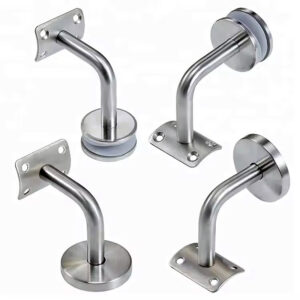
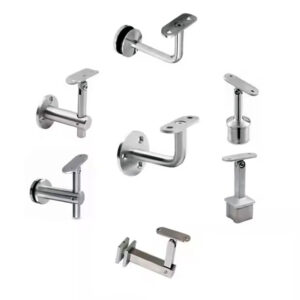
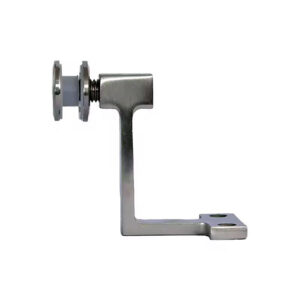
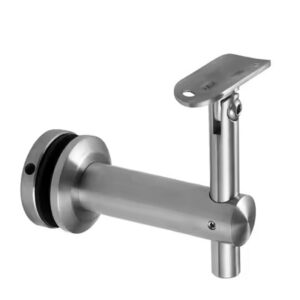
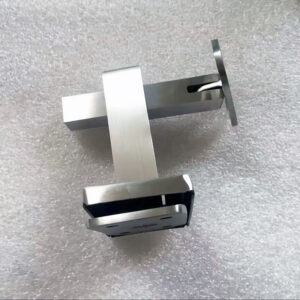
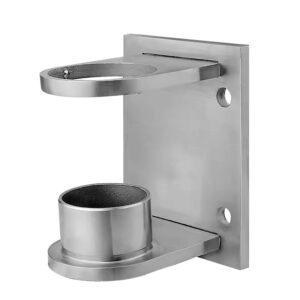
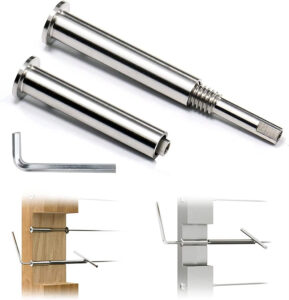
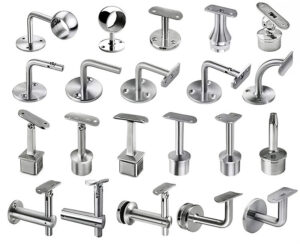
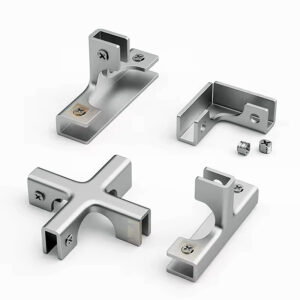
The requirement for a continuous gripping surface is multifaceted. The most frequently violated supporting rule is the mandatory 1.5-inch clearance between the gripping surface and any adjacent wall. This space is not a suggestion; it is the minimum volume required for knuckles to clear the wall during a full grip. Achieving this consistently demands specific hardware—offset or L-shaped brackets—designed to create this gap without compromising strength.
Hardware That Preserves Continuity
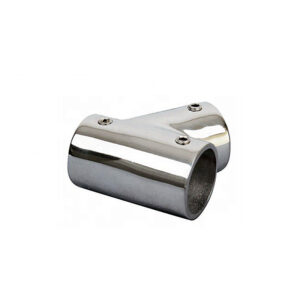
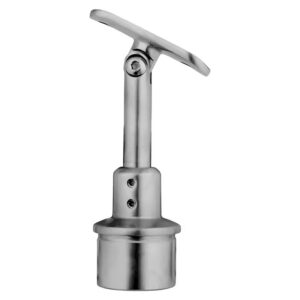
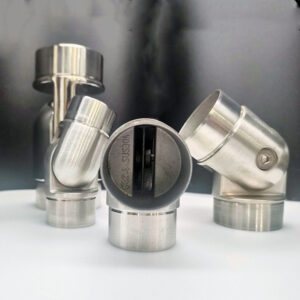
Fittings and brackets must not interrupt the smooth, uninterrupted path of the hand. Rotating or adjustable fittings that protrude into the gripping surface are non-compliant. The entire run, including transitions at turns and extensions, must maintain a consistent, smooth profile. This specification directly dictates the design of commercial handrail systems, favoring welded, ground, and polished connections or specialized, low-profile mechanical connectors.
A System-Wide View
Overlooking any single element—diameter, clearance, or surface smoothness—creates a point of failure. For example, a perfectly sized handrail mounted with standard wall-flange brackets that provide only 0.5 inches of clearance is non-compliant. The entire specification set must be satisfied simultaneously.
The technical requirements for the gripping surface have direct implications for hardware selection and installation.
| Requirement | Technical Specification | Impact on Hardware |
|---|---|---|
| Surface Quality | Smooth, no sharp edges | Mandates polished finishes |
| Wall Clearance | 1.5″ (38 mm) minimum | Requires offset/L-brackets |
| Fitting Rule | No rotating fittings | Ensures uninterrupted grip |
| Compliance Risk | High if single facet missed | Drives integrated system design |
Source: 2010 ADA Standards for Accessible Design. The standards mandate the clearances and surface conditions necessary for an unobstructed gripping surface, which directly dictates the design of supporting brackets and fittings.
Essential Height, Continuity, and Extension Rules
Consistent Height for Predictable Use
Handrails must be mounted at a consistent height of 34 to 38 inches above the walking surface, measured vertically from the stair nosing or ramp surface. This range ensures accessibility for both standing adults and wheelchair users. Inconsistency in height, especially on stairs where the walking surface elevation changes, is a common error. The rail must run parallel to the slope, maintaining the height range for its entire length.
The Critical Role of Extensions
Extensions are not optional terminations; they are integral safety components. At the top of a stair run, the handrail must extend horizontally for a minimum distance. At the bottom, it must extend at the stair slope for one tread depth before turning or terminating. These extensions provide critical stability when a user is initiating or completing their traverse, anchoring them to a stable surface before stepping onto or off of the stairs or ramp.
Managing Complex Layouts
Meeting these spatial rules in real-world conditions—around landings, changes in direction, or at doorways—requires forethought. This complexity is why modular, code-compliant handrail systems exist. They provide pre-engineered solutions for elbows, returns, and transitions, turning a fabrication challenge into an assembly task. The profitability for manufacturers often lies in these specialized, high-margin fittings that ensure compliance in complex layouts.
The rules for height, continuity, and extensions form a complete spatial system for handrail installation.
| Rule | Dimension / Requirement | Purpose |
|---|---|---|
| Mounting Height | 34″ – 38″ (865-965 mm) | Consistent user access |
| Bottom Extension (Stairs) | 1 tread depth + horizontal | Stability at stair end |
| Top Extension | Horizontal at slope end | Stability at ramp start |
| System Need | Modular design kits | Manages complex layouts |
Source: ICC A117.1 Accessible and Usable Buildings and Facilities. This standard specifies the required height, continuity, and extension details for handrails to form a complete safety system for starting and ending a traverse.
Why Stainless Steel Is Ideal for ADA-Compliant Handrails
Material Properties Align with Code Demands
Stainless steel, particularly grades 304 or 316, offers a material profile that inherently supports ADA compliance. Its high strength allows it to meet the diameter specifications without requiring thick walls, maintaining a sleek profile. It can be welded and polished to a seamless, continuous surface that meets the smoothness requirement. Its corrosion resistance ensures the surface remains safe and unblemished in humid, coastal, or high-traffic environments where other materials may degrade.
Lifecycle Value in Demanding Applications
While aluminum systems with advanced powder coatings compete effectively, stainless steel’s value proposition is its inherent, maintenance-free durability. It does not rely on a coating that can chip or scratch; its corrosion resistance is integral to the material. This translates to lower long-term lifecycle costs, a decisive factor for commercial, healthcare, and public infrastructure projects where longevity and minimal maintenance are paramount.
Navigating the Specification Decision
The choice between stainless steel and coated aluminum often comes down to environment and traffic. For interior, moderate-use applications, aluminum is a strong contender. For exterior facades, swimming pools, food processing plants, or heavy-traffic public transit stations, stainless steel’s performance under duress makes it the default specification. Its ability to withstand frequent cleaning with harsh chemicals is another operational advantage.
Common Installation and Compliance Mistakes to Avoid
Interconnected Rule Failures
Mistakes often stem from treating ADA requirements as a checklist rather than an integrated system. Installing a rail with compliant diameter but without the 1.5-inch clearance is a total failure. Using decorative brackets that protrude into the gripping surface negates the continuity requirement. These are not partial compliance issues; they are violations that can necessitate costly rework.
Material and Logistical Oversights
Specifying a non-compliant diameter or a finish that becomes slippery when wet are material selection errors with safety implications. On the logistics side, failing to account for freight costs on long tube lengths or overlooking the need for specific termination fittings transfers hidden costs and complexity to the installer. This undermines project budgets and timelines.
The Labor Cost Multiplier
Product design that simplifies installation—through pre-drilled holes, clear assembly sequences, and intuitive connector systems—provides tangible value. It reduces labor time, minimizes errors, and controls total project cost. Specifiers should evaluate handrail systems not just on component cost, but on the total installed cost, where labor efficiency is a major factor.
Common pitfalls in installation and logistics can derail project compliance and budget.
| Mistake Category | Specific Error | Consequence |
|---|---|---|
| Clearance | Less than 1.5″ wall gap | Obstructed grip, non-compliance |
| Hardware | Incorrect bracket type | Interrupts gripping surface |
| Material | Non-compliant diameter used | Safety hazard, project rejection |
| Logistics | Missing hardware, long freight | Hidden cost, complexity |
Source: Technical documentation and industry specifications.
Beyond Diameter: Other Critical ADA Handrail Considerations
Commercial vs. Residential Code Segmentation
The market is explicitly segmented by code jurisdiction. The 2010 ADA Standards for Accessible Design and the International Building Code (IBC) govern commercial and public spaces, typically requiring compliant handrails on both sides of stairs and ramps. Residential codes, like the International Residential Code (IRC), are often less stringent. This dictates product positioning, marketing channels, and specification language. However, the growing availability of commercial-grade products in consumer channels is raising homeowner expectations.
The Sustainability Specification
Environmental credentials are increasingly part of the procurement conversation. Carbon-neutral product certifications, recycled material content, and end-of-life recyclability are becoming differentiators. For public projects and corporations with sustainability mandates, this can be a deciding factor alongside traditional performance criteria.
The Future of Handrail Systems
Handrails are evolving from passive safety elements into active architectural systems. Integrated LED lighting for wayfinding and aesthetic appeal is already common. The emerging frontier includes embedded smart sensors for occupancy monitoring, fall detection, or touchless activation. These innovations require early integration into the design and specification process, as they impact power, data, and structural requirements.
How to Verify Your Handrail Project Meets All ADA Standards
The Physical Verification Checklist
Field verification requires a methodical approach. First, confirm all physical specs: diameter (1.25″-2″), height (34″-38″), clearance (1.5″), and proper extensions. Use a tape measure and calipers. Second, perform a visual and tactile inspection of the entire gripping surface for continuity, smoothness, and obstructions. Run your hand along the entire length to feel for interruptions.
Leveraging Manufacturer Systems and Tools
The most reliable path to compliance is selecting products designed as integrated systems from reputable manufacturers. Use their technical specification sheets and installation manuals as part of your verification. For complex projects, digital product configurators are invaluable. These tools visually guide users through creating compliant assemblies for specific layouts, virtually eliminating specification errors and reducing support costs.
Documenting Compliance
For your own liability protection, document the verification process. Note measurements, product model numbers, and installation details. This creates a record that can be invaluable if compliance is ever questioned. In future projects, consider the added value of integrated technologies like lighting, which can be specified through comprehensive modular handrail and railing systems designed to accommodate such features.
A structured verification process ensures every aspect of the installation meets code.
| Verification Step | Key Checkpoints | Supporting Tools |
|---|---|---|
| Physical Specs | Diameter, height, clearance, extensions | Tape measure, caliper |
| Gripping Surface | Continuity, smoothness, no obstructions | Visual/tactile inspection |
| Product Selection | Integrated systems from reputable makers | Manufacturer spec sheets |
| Future Trends | LED lighting, smart sensors | Digital product configurators |
Source: 2010 ADA Standards for Accessible Design. A final project verification should cross-check all physical installations against the definitive criteria laid out in the official ADA standards.
Prioritize the interconnected system of diameter, clearance, and continuity over checking items in isolation. A compliant diameter is useless without the mandated 1.5-inch wall gap. Next, treat extensions as critical safety components, not aesthetic terminations. Finally, select handrail systems designed as integrated kits from the outset; this reduces the risk of incompatible fittings and on-site fabrication errors that lead to non-compliance.
Need professional guidance on specifying and sourcing fully compliant handrail systems for your next project? The technical experts at Esang can provide detailed specifications, CAD drawings, and project support to ensure your installation meets all ADA and building code requirements from concept to completion.
Frequently Asked Questions
Q: What are the precise diameter and perimeter requirements for an ADA-compliant handrail?
A: The ADA mandates a circular handrail diameter between 1.25 inches (32 mm) minimum and 2 inches (51 mm) maximum to enable a secure power grip. For non-circular profiles, the perimeter must be 4 to 6.25 inches (100-160 mm). These dimensions are specified in the 2010 ADA Standards for Accessible Design and are critical for ergonomic support. This means specifying a rail outside this range, even if structurally sound, creates an immediate compliance and safety failure.
Q: How does the required 1.5-inch clearance impact handrail bracket selection and installation?
A: The ADA’s 1.5-inch (38 mm) clearance rule between the gripping surface and any wall dictates the use of specific offset or L-shaped brackets. Standard wall-mounted brackets that place the rail flush will violate this code. This requirement is detailed in accessibility standards like ICC A117.1 Accessible and Usable Buildings and Facilities. For projects with tight spatial constraints, you must plan for this protrusion and select hardware designed explicitly to create this gap.
Q: Why is stainless steel often specified for high-traffic or harsh environment handrail projects?
A: Stainless steel grades like 304 or 316 offer inherent strength and corrosion resistance, maintaining the required smooth, continuous gripping surface with minimal long-term maintenance. Its durability supports the structural loads while resisting degradation in humid, coastal, or high-use settings. For projects where lifecycle cost and longevity are priorities over initial material expense, stainless steel provides a compelling, low-maintenance value proposition compared to coated alternatives.
Q: What are the most common mistakes that lead to ADA handrail non-compliance during installation?
A: Frequent errors include neglecting the 1.5-inch clearance, using incorrect brackets that obstruct the grip, and failing to install the mandatory horizontal extensions at stair tops and bottoms. Another critical mistake is interrupting the continuous gripping surface with rotating fittings or joints. This means installers must treat ADA rules as an interconnected system, not a checklist, and use integrated product kits designed for compliance to avoid costly rework.
Q: How do handrail requirements differ between commercial and residential building codes?
A: Commercial spaces governed by the ADA require compliant handrails on both sides of stairs and ramps, adhering strictly to all dimensional and continuity rules. Residential codes, such as the International Residential Code (IRC), often have less stringent requirements, potentially allowing handrails on only one side or permitting alternative profiles. This dictates that product manufacturers segment their offerings and that specifiers must verify the governing code for each project type before selection.
Q: What is a practical method for verifying a handrail design meets all ADA standards before installation?
A: Use a holistic checklist confirming diameter (1.25″-2″), mounting height (34″-38″), 1.5-inch clearance, proper extensions, and an uninterrupted smooth surface. For complex layouts, leverage digital product configurators from reputable manufacturers that guide compliant assemblies. This means for large-scale or atypical projects, relying on integrated system design tools is essential to prevent specification errors that transfer risk and cost to the installer.
Q: For platform lifts and stairway chairlifts, which standard governs handrail specifications?
A: Handrails on this equipment must comply with the ASME A18.1 Safety Standard for Platform Lifts and Stairway Chairlifts. While it references similar graspability principles, A18.1 contains specific design and construction mandates for lift components. This means you cannot assume a standard ADA-compliant handrail automatically meets A18.1; you must specify products tested and certified for use on lifts.