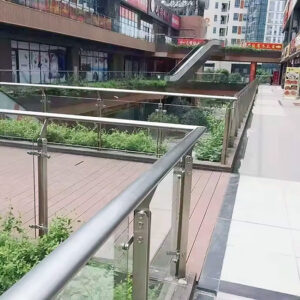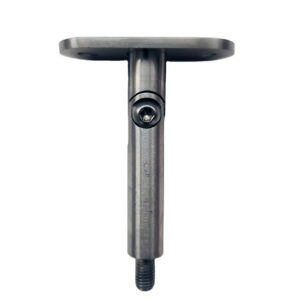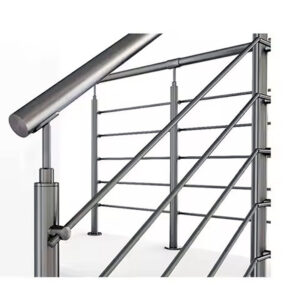
Specifying a 42-inch guardrail for a commercial outdoor stair seems straightforward. Yet, project managers and architects routinely face failed inspections and costly rework due to subtle misinterpretations of the International Building Code (IBC). The challenge isn’t just knowing the height requirement; it’s navigating the integrated system of structural, infill, and accessibility mandates that govern a single railing assembly.
Attention to precise compliance is non-negotiable now. Beyond avoiding delays, correct specification is a primary liability shield. A non-compliant guardrail shifts significant financial risk to the property owner in the event of a fall, making initial design decisions critical for long-term safety and risk management.
Defining Guardrail vs. Handrail: A Critical First Step
The Functional Distinction
A guardrail and a handrail serve fundamentally different safety purposes, a distinction that dictates separate code tracks. A guardrail is a protective barrier designed to prevent falls from elevated surfaces like the open side of a stair. Its function is life safety. A handrail provides guidance and support for persons using the stairs. On a single stair system, these elements are often integrated, but their specifications are governed by different sections of the code.
The Strategic Design Implication
Misapplication of these definitions is a leading cause of inspection failures. Treating a top rail as both the guardrail and the handrail often leads to non-compliance, as the height and graspability requirements conflict. Project planning must, from the outset, treat these as separate, code-defined components. This approach establishes a solid compliance foundation and mitigates liability by eliminating a common, costly error in the design phase.
The Liability Perspective
In the event of an incident, forensic analysis will first determine if the system was correctly classified. A rail that fails as a handrail because it wasn’t graspable, but was relied upon as one, creates unambiguous liability. Industry experts recommend starting every stair design by explicitly defining the guardrail and handrail components on the plans, forcing clarity for the entire project team.
Core IBC Section 1015 Height & Structural Requirements
The 42-Inch Minimum
The paramount requirement is a minimum height of 42 inches (1067 mm), measured vertically from the stair tread nosing. This dimension is calculated to prevent an average adult from toppling over the barrier. It is a non-negotiable baseline for commercial applications, distinct from the 36-inch standard common in residential codes. Installing a residential-specification rail is a predictable and serious compliance failure.
Structural Load Capacity
Height alone is insufficient. The guardrail system must be engineered to withstand specific structural loads. This requirement ensures the barrier performs under impact or sustained pressure, not just under static conditions.
The following table outlines the key structural parameters mandated by safety standards:
| Parameter | Requirement | Measurement Basis |
|---|---|---|
| Minimum Height | 42 inches (1067 mm) | Vertical from tread nosing |
| Concentrated Load | 200 pounds | Applied at top rail |
| Uniform Load | 50 lbs/ft | On infill components |
Source: OSHA 1910.29 Fall Protection Systems and Falling Object Protection. This regulation mandates the 42-inch minimum height and structural load capacity for guardrail systems in general industry workplaces, forming the enforceable safety standard for commercial outdoor stairs.
The Material Selection Link
The 200-pound concentrated load requirement creates a direct link to material selection and connection design. Opting for lower-cost, non-compliant materials or inadequate anchorage shifts immense liability to the owner. In my experience reviewing failed installations, insufficient anchoring to the stair structure is a frequent, hidden flaw that only reveals itself under stress or during a rigorous inspection.
Guardrail Infill & Opening Requirements: The 4-Inch Rule
Preventing Child Passage
To prevent a child from passing through or becoming entrapped, the IBC mandates that a 4-inch (102 mm) sphere cannot pass through any opening in the guardrail. This applies to spaces between vertical balusters, horizontal rails, or decorative elements. The code transforms subjective safety into an enforceable, measurable specification.
The Triangular Opening Exception
A specific exception is made for the triangular opening formed at the bottom of the stairs by the riser, tread, and bottom rail. This opening is tested with a 6-inch sphere. This nuanced detail is often overlooked in fabrication, leading to a compliant baluster spacing but a non-compliant base condition.
The infill requirements are precisely defined, as shown in the following compliance table:
| Opening Location | Maximum Sphere Size | Code Reference |
|---|---|---|
| Guardrail Infill | 4 inches (102 mm) | IBC Section 1015 |
| Triangular Opening (Stair Base) | 6 inches | IBC Section 1015 |
Source: IBC Section 1015 Guardrails. This section of the International Building Code establishes the technical infill requirements, specifically the 4-inch sphere rule to prevent child passage and the 6-inch rule for triangular openings at stair bases.
Forensic and Insurance Implications
These explicit metrics provide unambiguous standards for post-incident analysis. Insurers and courts use these specifications to assign liability. Documented adherence—through shop drawings, material cut sheets, and inspection reports—becomes a critical risk mitigation tool, offering a defensible position that goes beyond mere regulatory compliance.
Integrating Handrails Within a 42-Inch Guardrail System
Dual Compliance Challenge
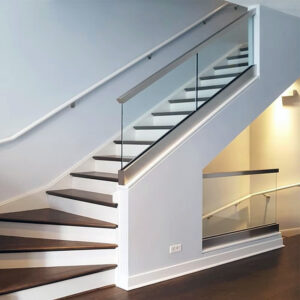
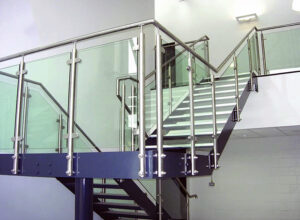
When a handrail is integrated into the guardrail system, it must separately comply with its own set of rules for graspability and height. The graspable portion of the handrail must be mounted between 34 and 38 inches above the stair nosing. Since the guardrail top is at 42 inches, this typically necessitates a second, lower rail specifically designed to be grasped.
Defining “Graspability”
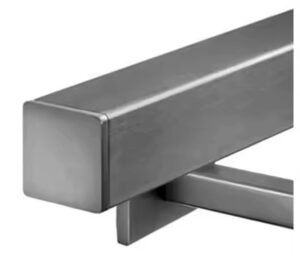
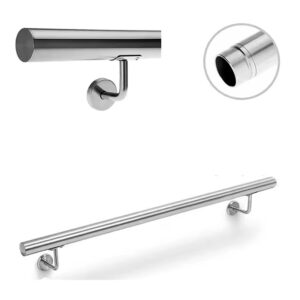
The code defines graspability with precise geometric metrics. It is not a subjective feel. For a circular profile, the diameter must be between 1.25 and 2 inches. For non-circular shapes, the perimeter must be between 4 and 6.25 inches with no cross-section dimension exceeding 2.25 inches. Additionally, a 1.5-inch clearance from the wall is required.
The specifications for an integrated handrail system are detailed below:
| Handrail Feature | Specification Range | Key Metric |
|---|---|---|
| Mounting Height | 34 to 38 inches | Above stair nosing |
| Clearance from Wall | 1.5 inches | Minimum required |
| Circular Diameter | 1.25 to 2 inches | For graspability |
| Non-Circular Perimeter | 4 to 6.25 inches | For graspability |
Source: ICC A117.1 Accessible and Usable Buildings and Facilities. This accessibility standard provides the detailed specifications for graspable handrail profiles, clearances, and mounting heights required for integrated systems to meet ADA-related guidelines.
Reconciling Aesthetics and Code
This mandate directly challenges minimalist designs. A common failure point is specifying a sleek, square-top rail at 42 inches that is not graspable, with no separate handrail provided. Architects must therefore integrate a separate, code-compliant handrail—impacting the visual design—or select alternative materials and profiles that can fulfill both functions, forcing an early and critical reconciliation of form and regulated function.
Material Selection & Construction for Outdoor Durability
The Environmental Load
Material choice is dictated by both structural loads and environmental exposure. An outdoor commercial stair faces moisture, UV radiation, thermal cycling, and corrosive de-icing chemicals. Suitable materials must maintain their structural integrity and finish under these conditions. Corrosion-resistant metals like aluminum or stainless steel, pressure-treated wood of appropriate grade, or engineered composites rated for structural outdoor use are typical choices.
The Connection and Fastener Imperative
The durability of the entire system depends on its weakest point, which is often the connections. All fasteners, brackets, and anchors must match or exceed the corrosion resistance of the primary materials. Using standard steel fasteners with a stainless steel rail, for example, guarantees premature failure at the connection points. This complexity creates a significant barrier for general contractors, positioning specialized fabricators who provide turnkey, engineered outdoor railing systems as essential partners for reducing project risk.
The Turnkey Advantage
Specialized fabricators reduce overall risk by guaranteeing that material specifications, fabrication techniques, and connection details are designed as a unified, compliant system. This approach eliminates the liability gaps that occur when components are sourced separately and assembled on-site without engineered oversight. For a durable, compliant outcome, specifying a pre-engineered system is often the most reliable path.
Common Compliance Failures and How to Avoid Them
Predictable Points of Failure
Compliance failures are highly repetitive. The most common include: installing a 36-inch residential rail, spacing balusters over 4 inches apart, using a non-graspable top rail as the handrail, and inadequate structural anchorage to the stair framing. These are not obscure issues; they are known, frequent field errors.
The Pre-Inspection Checklist Strategy
The predictability of these failures makes them preventable. Implementing a pre-inspection checklist that targets these specific items during the design, fabrication, and installation phases can dramatically reduce rework costs and delays. This proactive audit is a cost-effective risk management strategy.
A focused checklist based on common failures is an invaluable tool:
| Failure Point | Common Error | Preventive Action |
|---|---|---|
| Guardrail Height | 36-inch residential rail | Specify 42-inch minimum |
| Baluster Spacing | Exceeds 4 inches | Enforce 4-inch sphere test |
| Handrail Profile | Non-graspable design | Use compliant perimeter/diameter |
| Structural Anchorage | Inadequate for 200-lb load | Engineer connections for loads |
Source: ANSI/ASSP A1264.1 Safety Requirements for Workplace Floor and Wall Openings, Stairs and Railing Systems. This industry consensus standard outlines performance requirements for guardrail construction and highlights common failure points related to height, strength, and infill, providing a basis for a pre-inspection checklist.
The Role of Shop Drawings
Requiring detailed shop drawings for approval before fabrication is critical. These drawings should explicitly call out critical dimensions: 42-inch height, 4-inch baluster spacing, handrail height and profile, and connection details. This step formalizes compliance intent and provides a benchmark for inspecting the delivered product.
Navigating Local Amendments and ADA Interactions
The Patchwork of Local Codes
The IBC is a model code. Compliance requires verifying state and local amendments, which can be stricter. California, for example, often has more stringent requirements. Assuming a “national standard” is a high-risk strategy. Every project requires a localized verification process for the specific jurisdiction.
The Layer of Accessibility Standards
For facilities that are public accommodations, the Americans with Disabilities Act (ADA) applies. The IBC is harmonized with the ADA, but accessibility rules layer additional requirements onto the structural safety code. The ADA mandates continuous handrails on both sides of stairs, specific top and bottom extensions, and prohibits protruding objects. The handrail specifications in ICC A117.1 directly address these ADA-related details.
Simultaneous Solution Design
Successful project design must solve for both IBC structural safety and ADA accessibility concurrently. Often, the ADA governs the more stringent handrail details. The design process must integrate these parallel tracks from the beginning, ensuring the final system—like a commercial-grade aluminum railing with a integrated, graspable handrail—meets all applicable codes as a unified assembly.
Implementing Your Compliance Checklist: Next Steps
Systematic Verification
Move from theory to practice with a systematic approach. Use the checklist derived from the common failures table to verify every project phase: design height and loads, fabrication infill spacing, and installation anchorage and handrail integration. This disciplined process transforms code knowledge into actionable quality control.
Investing in Digital Code Access
The regulatory landscape is not static. The shift from static PDFs to dynamic, subscription-based digital code platforms signals that continuous learning is part of the professional workflow. Firms must invest in digital access to the latest IBC, state amendments, and referenced standards like ANSI/ASSP A1264.1. Real-time compliance awareness is a competitive advantage and an essential risk shield.
Partnering for Guaranteed Compliance
For many firms, managing this complexity in-house is not efficient. Partnering with a specialist who provides pre-engineered, code-documented systems offloads significant risk. It ensures the primary safety component of your outdoor stair is a guaranteed compliant element, allowing the project team to focus on broader execution.
Prioritize three core actions: First, mandate shop drawings that explicitly annotate all critical code dimensions. Second, conduct a pre-installation audit using a targeted checklist focused on height, infill, and handrail graspability. Third, verify local jurisdiction amendments before finalizing design. These steps create a defensible compliance trail.
Need professional guidance on specifying a guaranteed-compliant outdoor railing system? The experts at Esang specialize in engineered solutions that meet IBC, OSHA, and ADA requirements for commercial applications, turning complex code mandates into reliable, installed reality. For a direct consultation on your project specifications, you can also Contact Us.
Frequently Asked Questions
Q: What is the fundamental difference between a guardrail and a handrail in a commercial stair system?
A: A guardrail is a protective barrier to prevent falls from heights, governed by structural and height codes. A handrail is a graspable support for guidance, with separate dimensional rules. On stairs, these elements are often combined but have distinct specifications. This means your design process must treat them as two separate, code-defined components from the start to avoid inspection failures and liability exposure.
Q: What are the exact height and structural load requirements for an outdoor commercial stair guardrail?
A: The minimum height is 42 inches, measured vertically from the stair nosing. Structurally, the top rail must resist a 200-pound point load in any direction, and infill must handle 50 pounds per linear foot, as specified by OSHA 1910.29. This load rating directly links to material choice. For projects prioritizing long-term integrity and risk mitigation, initial specifications must use materials certified to meet these loads, not just aesthetic preferences.
Q: How strictly are the opening sizes in a guardrail infill regulated, and why does it matter beyond code?
A: The IBC mandates that a 4-inch sphere cannot pass through any guardrail opening, with a 6-inch rule for the triangular space at a stair’s base. These precise metrics remove design ambiguity. In a liability investigation, these clear specs become the definitive standard for determining fault. This makes documented compliance with IBC Section 1015 Guardrails a core financial risk management tool, not just a box to check.
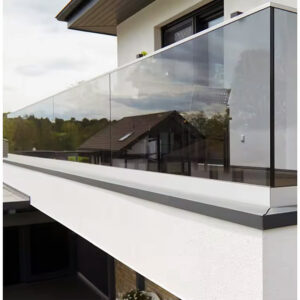
Q: How do you integrate a compliant handrail within a 42-inch guardrail, especially with modern designs like glass balustrades?
A: You must install a separate, graspable rail at 34-38 inches above the nosing, as the top guardrail rail rarely meets handrail profile rules. Graspability requires specific perimeters or diameters and a 1.5-inch wall clearance, per ICC A117.1. This forces an early design decision: either integrate a second rail that impacts aesthetics or select alternative materials that can function as both. For minimalist projects, plan to reconcile form with this regulated function during schematic design.
Q: What are the most common compliance failures for outdoor stair guardrails, and how can we avoid them proactively?
A: Typical failures include using 36-inch residential rail height, baluster spacing over 4 inches, insufficient structural anchorage, and non-graspable handrail profiles. These are predictable, high-frequency field errors. Implementing a pre-installation checklist targeting these specific items is a strategic move. For general contractors, this proactive audit during design and fabrication phases is a cost-effective way to prevent expensive rework and project delays.
Q: How do ADA requirements interact with IBC guardrail rules for a commercial outdoor stair?
A: The ADA layers accessibility rules onto IBC structural safety, governing handrail continuity, extensions, and prohibitions on protruding objects. While the IBC sets the 42-inch guardrail baseline, the ADA often dictates more stringent handrail details for public accommodations. This means your project requires a design that solves for both sets of rules simultaneously. Always conduct localized verification, as state amendments can further modify these baselines.