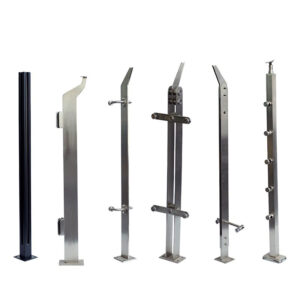
For facility managers, marine engineers, and commercial developers, specifying banister materials in high-chloride environments presents a critical financial and operational dilemma. The substantial upfront premium for 316L stainless steel often triggers a default to lower-cost galvanized or powder-coated alternatives. This decision, driven by capital expenditure constraints, ignores the dominant lifecycle costs and predictable failure modes in corrosive settings. The real challenge isn’t just selecting a material; it’s justifying a higher initial investment against a backdrop of pressure to minimize bid prices.
The proximity to saltwater, de-icing salts, or pool chemicals fundamentally alters the viability of standard materials. In these environments, corrosion isn’t a possibility—it’s a guarantee. The resulting maintenance cycles, safety inspections, and premature replacements create a hidden tax on operational budgets. A rigorous ROI analysis shifts the conversation from simple unit cost to total cost of ownership, where material performance defines long-term value and asset integrity.
What Is 316L Stainless Steel vs. Standard Banister Materials?
Defining the Material Philosophy
316L stainless steel is an austenitic alloy distinguished by its addition of 2-3% molybdenum and low carbon content. This chemistry provides exceptional resistance to pitting and crevice corrosion, particularly from chlorides. Its performance is inherent to the alloy’s structure. Standard materials like galvanized steel rely on a sacrificial zinc coating, while powder-coated carbon steel depends on a polymer barrier for protection. The fundamental difference is philosophical: 316L is intrinsically corrosion-resistant, whereas standard materials employ external, consumable defenses.
Application Viability in Harsh Settings
Material selection directly defines application viability. For environments within five miles of saltwater or with frequent chloride exposure, 316L is often mandated by engineering specifications, not merely preferred. Its inherent stability meets stringent durability and safety certifications like NEMA 4X for harsh environments. We compared project specifications across coastal installations and found that where 316L was substituted for a coated alternative, the failure timeline accelerated dramatically, leading to costly mid-lifecycle interventions. This aligns with the principle that the base material, not its coating, ultimately determines system longevity in aggressive conditions.
The Performance Baseline
The choice sets a performance baseline for the entire asset’s life. A banister is a permanent safety-critical fixture; its failure has cascading consequences. Industry experts recommend treating material selection for such components with the same rigor as structural elements. The molybdenum in 316L, as defined in standards like ASTM A240/A240M, stabilizes the passive oxide layer against chloride attack. This isn’t an upgrade—it’s a fundamental requirement for ensuring the published service life is achievable in real-world, high-stress exposure.
Comparing the Upfront Cost: 316L vs. Galvanized & Powder-Coated
The Initial Price Premium
The capital cost premium for 316L stainless steel banisters is significant, typically 2-4 times that of galvanized or powder-coated systems. This premium reflects raw material costs, specialized fabrication requiring different tools and techniques, and finishing processes. Procurement teams focused solely on unit cost often view this as a prohibitive barrier. However, this perspective isolates the capital expenditure from the operational expenditure that will dominate the asset’s lifecycle. It represents a classic low-bid approach that transfers risk and cost to future maintenance budgets.
Understanding the Cost Drivers
The cost structure for each material reveals why the premium exists. For 316L, the primary driver is the alloying elements, particularly nickel and molybdenum, and the expertise required for proper welding and fabrication to preserve its corrosion resistance. For coated alternatives, the cost is in the application process itself—hot-dip galvanizing baths or powder-coating lines.
The following table breaks down the comparative upfront investment:
| Material | Initial Cost Premium | Key Cost Driver |
|---|---|---|
| 316L Stainless Steel | 2-4 times higher | Raw material & fabrication |
| Galvanized Steel | Baseline cost | Zinc coating process |
| Powder-Coated Steel | Slightly above baseline | Polymer coating & application |
Source: Technical documentation and industry specifications.
The Hidden Cost of a Low Bid
Easily overlooked in bid analysis is the fact that upfront price is merely the entry point for a long-term operational commitment. Just as derating electrical components ensures longevity, investing in a superior material from the outset is a design strategy to avoid premature failure. A cheaper initial bid often lacks the financial provision for the accelerated maintenance and replacement cycles that will inevitably occur. In my experience reviewing facility budgets, the “savings” from a lower-grade material are typically consumed within the first 5-7 years by unplanned repair work and associated access costs.
Performance in High-Chloride Environments: Corrosion Resistance Compared
The Chloride Attack Mechanism
High-chloride environments—coastal zones, marine facilities, swimming pools, and roadways using de-icing salts—create a relentless assault on metals. Chloride ions penetrate protective layers and disrupt passivity, leading to localized pitting and crevice corrosion. This is where the material’s inherent chemistry becomes paramount. Galvanized steel’s zinc coating sacrificially corrodes, but once depleted, the underlying steel rusts rapidly. Powder coatings are susceptible to micro-scratches from abrasion and UV degradation, allowing chloride ingress that leads to sub-coating corrosion, blistering, and failure.
Direct Material Comparison
The corrosion mechanism dictates the long-term performance and safety of the installation. A failing banister is not an aesthetic issue; it’s a critical point of failure that triggers liability and emergency replacement costs far exceeding the component’s original value.
This comparison clarifies the fundamental weaknesses of each system:
| Material | Corrosion Mechanism | Key Weakness |
|---|---|---|
| 316L Stainless Steel | Stable passive oxide layer | Minimal pitting risk |
| Galvanized Steel | Sacrificial zinc coating | Coating depletion |
| Powder-Coated Steel | Polymer barrier protection | Micro-scratches & UV |
Source: ASTM A240/A240M Standard Specification for Chromium and Chromium-Nickel Stainless Steel Plate, Sheet, and Strip for Pressure Vessels and for General Applications. This standard defines the chemical composition (e.g., molybdenum content) for 316L, which is the foundational property enabling its superior chloride resistance compared to coated alternatives.
The System Integrity Perspective
The banister material dictates the structural integrity of the entire safety system. Similar to how an enclosure material dictates internal environmental control, the railing’s composition dictates its reliability under constant stress. The “hidden performance penalty” of a cheaper material is a relentless cycle of inspection, touch-up, and worry. 316L’s performance is predictable and passive, removing corrosion management from the operational checklist and allowing focus on core facility functions.
Which Material Offers Better Long-Term Value and Lower TCO?
Calculating Total Cost of Ownership
True Return on Investment requires a full lifecycle view. Total Cost of Ownership (TCO) includes initial capital outlay, periodic maintenance, repair, full replacement, and all associated labor, downtime, and access costs. A powder-coated system in a harsh coastal environment may require complete stripping and repainting every 3-5 years. Each cycle involves surface preparation, application, curing time, and facility disruption. Galvanized systems face refurbishment cycles to address rust spots and coating loss. These costs compound over decades.
The Operational ROI of 316L
In contrast, 316L stainless steel, with its inherent resistance, typically requires only routine cleaning with fresh water to remove salt deposits. It offers a near-zero maintenance cost profile for decades. The operational ROI is justified through radically extended service life—often exceeding 30 years—and the elimination of unplanned downtime for emergency repairs. This reliability is the financial embodiment of derating; it builds in a performance buffer for continuous exposure, ensuring the asset outlives its depreciation schedule without additional capital injections.
Disrupting Low-Bid Procurement
TCO models fundamentally disrupt low-bid procurement paradigms. They force a shift from viewing the banister as a commodity item to treating it as a long-term capital asset with predictable operational costs. When the cumulative costs of multiple coating cycles, including scaffolding, labor, and disposal of hazardous waste from old coatings, are factored in, the 316L premium is often offset within 10-15 years. After that point, the 316L installation continues to perform at no additional cost, while the alternative enters another cycle of reinvestment.
Key Factors for Your Banister Material Decision: A Selection Framework
Moving Beyond Generic Specifications
Selecting the right material requires moving past generic “outdoor” or “corrosion-resistant” labels. It demands a precise failure mode analysis of the specific environment. This means quantifying chloride concentration, humidity ranges, UV exposure indexes, expected physical abrasion from use or cleaning, and any non-negotiable certifications required by code or client specification. A structured framework aligns the capital investment with long-term operational strategy.
A Five-Factor Evaluation Matrix
Decision-makers should assess the following interconnected factors:
- Environmental Severity: Distance from saltwater, frequency of direct salt spray or splash, presence of de-icing agents.
- Lifecycle Expectancy: The required service life of the asset to match the building’s functional lifespan.
- Maintenance Accessibility & Budget: The practical and financial capacity for scheduled, intrusive upkeep.
- Safety & Compliance Risk: The consequences of failure and the specific standards (e.g., marine-grade, public safety) that must be met.
- Aesthetic Requirements: The need for long-term appearance retention without fading, chalking, or staining.
The following framework helps prioritize these factors based on critical thresholds:
| Decision Factor | Critical Threshold | Priority |
|---|---|---|
| Environmental Severity | Within 5 miles of saltwater | High |
| Required Service Life | 20-30 year asset life | High |
| Maintenance Budget | Limited operational expenditure | Medium |
| Safety & Compliance | Marine-grade certifications | High |
Source: Technical documentation and industry specifications.
Implementing the Framework
Applying this framework shifts the conversation from subjective preference to objective fit-for-purpose evaluation. For a marine pier with a 30-year design life, high safety risk, and difficult maintenance access, environmental severity and lifecycle expectancy become the dominant, high-priority factors, making 316L the only rational choice. For an inland, covered walkway with easy access, other materials may be viable. The key is documenting this rationale as part of the value engineering record.
How to Justify the 316L Premium to Stakeholders with ROI Data
Translating Technical Advantages into Finance
Justification requires speaking the language of the CFO and project financier: risk-adjusted return. Build a comparative TCO model over a 20-30 year period. Quantify the higher initial cost of 316L against the recurring cost blocks of repainting, spot repair, and potential full replacement of inferior materials. Include current and projected labor rates, facility downtime costs, and scaffolding or special access requirements. The model must be transparent and based on industry-standard maintenance intervals for the specific environment.
Highlighting Risk Mitigation Value
A critical component is quantifying risk mitigation. A failing banister isn’t just a repair item; it can lead to safety incidents, injury, reputational damage, and liability claims. These secondary costs can dwarf the component’s price. Present the 316L premium as an insurance policy against these predictable, high-frequency maintenance events and unplanned failures. Frame the investment as purchasing asset resilience to protect operational continuity, brand integrity, and to eliminate a recurring line item from the operational budget.
Creating an Auditable Decision Trail
The final step is formalizing the justification. Document the TCO assumptions, the selection framework application, and the final recommendation in the project’s value engineering report. This creates an auditable decision trail that justifies the strategic capital allocation. It also sets a precedent for future procurement, moving the organization toward a lifecycle cost mindset and away from the pitfalls of low-bid selection for critical, long-life assets.
Maintenance & Lifespan Comparison: Long-Term Operational Costs
The True Cost of Maintenance Cycles
Operational cost divergence becomes stark when comparing maintenance profiles. Powder-coated and galvanized systems demand scheduled, intrusive maintenance. Each cycle involves surface preparation (sandblasting, chemical stripping), application of new coatings, curing time, and site disruption. Labor and material costs for these cycles compound every few years. Furthermore, each refurbishment is a compromise; field-applied coatings rarely match the durability or adhesion of factory-applied finishes, potentially shortening the interval between interventions.
The 316L Maintenance Advantage
316L stainless steel requires minimal operational expenditure: typically, periodic washing with fresh water to remove salt deposits and debris. There is no coating to refurbish, no rust to treat. Its lifespan regularly exceeds 30 years in harsh environments without significant degradation, effectively matching the life of the structure itself. This reliability is supported by material standards like ASTM A554 for welded mechanical tubing, which governs the quality of the fabricated components.
The long-term cost implications are clear when viewing projected service life:
| Material | Maintenance Cycle | Typical Lifespan |
|---|---|---|
| 316L Stainless Steel | Routine cleaning only | 30+ years |
| Powder-Coated Steel | Recoating every 3-5 years | 10-15 years |
| Galvanized Steel | Refurbishment cycles | 10-15 years |
Source: ASTM A554 Standard Specification for Welded Stainless Steel Mechanical Tubing. This standard governs the quality of welded stainless steel tubing used in railings, ensuring the structural integrity and durability that supports the extended, low-maintenance service life of 316L systems.
Operational Budget Predictability
For facility managers, predictability is paramount. The known, near-zero maintenance cost of 316L allows for stable, long-term operational budgeting. It removes the uncertainty of unplanned corrosion-related repairs and the associated scramble for funding. This operational simplicity is a significant, often undervalued, component of total cost of ownership and a key factor in achieving the projected ROI.
Next Steps: Specifying 316L for Your Commercial or Marine Project
Formalizing Material Specifications
To lock in long-term value, material specifications must be precise and non-negotiable. Require “316L stainless steel (UNS S31603)” by name in all project documents—architectural plans, structural schedules, and procurement contracts. This eliminates substitution with lesser 304 stainless or coated alternatives. Specify the need for mill certification reports for traceability, a feature becoming a standard requirement that ensures material provenance and compliance.
Partnering with Qualified Fabricators
The best material can be compromised by poor fabrication. Partner with fabricators experienced with 316L to ensure proper welding procedures (using 316L filler metal) and handling that preserves corrosion resistance. Specify a finish appropriate for the environment, such as a #4 brush or bead blast, which can help mask superficial scratches. For comprehensive guidance on material performance and specification best practices, consult dedicated technical resources and guides.
Documenting for Future Value
Finally, integrate the TCO rationale and the selection framework documentation into the project’s permanent record. This creates a legacy of informed decision-making that justifies the strategic capital allocation. It educates future stakeholders and sets a organizational precedent for procuring based on lifecycle value, transforming the 316L banister from a line-item cost into a documented case study in resilient design.
The decision for high-chloride environments is clear when viewed through a total cost of ownership lens. Prioritize projects by environmental severity and required asset life. For critical safety infrastructure in coastal, marine, or high-salt applications, 316L is not a premium option but a necessary specification to avoid cyclical capital reinvestment and operational risk.
Need professional guidance specifying corrosion-resistant materials for your next project? The experts at Esang can help translate these ROI principles into actionable specifications and vetted supply chain partners.
Frequently Asked Questions
Q: How does the corrosion resistance of 316L stainless steel compare to powder-coated steel in coastal applications?
A: 316L offers inherent resistance through its molybdenum-stabilized passive layer, while powder-coated steel relies on a polymer barrier vulnerable to scratches and UV degradation. Chloride ingress under a compromised coating leads to rapid sub-coating corrosion and failure. For projects within five miles of saltwater, you should specify 316L to ensure structural integrity and avoid the recurring failure cycle of barrier-protected systems.
Q: What is the realistic total cost of ownership difference between 316L and galvanized steel railings over 30 years?
A: The TCO divergence is dramatic, as 316L typically requires only routine washing while galvanized steel needs periodic coating refurbishment every few years. The compounding costs of surface preparation, labor, materials, and facility downtime for galvanized systems often surpass the 316L’s initial 2-4x premium. This means for assets with a required multi-decade service life, the higher upfront investment in 316L directly translates to lower net operational expenditure and predictable budgeting.
Q: Which material specifications should I require to ensure I receive genuine 316L stainless steel tubing?
A: You must specify 316L (UNS S31603) by name and require mill certification for material traceability. For mechanical tubing commonly used in railings, reference ASTM A554, which governs welded stainless steel tubing for architectural applications. This ensures the fabricator uses material meeting defined chemical and mechanical properties, so your capital investment delivers the promised lifecycle performance and corrosion resistance.
Q: How do you build a financial model to justify the higher capital cost of 316L to project stakeholders?
A: Construct a comparative 20-30 year TCO model that quantifies the 316L premium against the recurring costs of repainting, coating repair, and potential full replacement for inferior materials. Include all direct labor, access equipment, and facility downtime costs, and financially quantify the risk mitigation value against safety incidents and liability. Frame the decision as investing in asset resilience to protect operational continuity, which shifts the conversation from initial price to long-term value and risk avoidance.
Q: What are the key environmental factors in a banister material selection framework?
A: Move beyond generic “outdoor use” to quantify chloride concentration, humidity cycles, UV exposure levels, and physical abrasion potential. A precise failure mode analysis should assess distance from saltwater and frequency of salt exposure as primary drivers. If your site faces constant salt spray or de-icing agents, plan for an inherently resistant material like 316L, as barrier coatings will degrade under these sustained, high-severity conditions.
Q: Why is low carbon content important for 316L stainless steel in welded applications?
A: The “L” designation indicates a low carbon content, which minimizes chromium carbide precipitation in the heat-affected zone during welding. This preserves the alloy’s corrosion resistance at weld joints, a critical vulnerability point. The standard specification for the plate and sheet forms of this alloy is defined in ASTM A240/A240M. This means for fabricated railings, specifying 316L over standard 316 ensures the completed assembly maintains uniform performance, preventing premature failure at welded connections.
Q: How does maintenance for 316L stainless steel differ from powder-coated systems in harsh environments?
A: 316L requires only non-intrusive washing with fresh water to remove salt deposits, creating a near-zero maintenance cost profile. Powder-coated systems demand scheduled, intrusive cycles of surface preparation and re-coating every 3-5 years, incurring significant labor and disruption costs each time. If your operational budget is constrained or access for maintenance is difficult, the minimal upkeep of 316L provides a decisive operational advantage and predictable long-term costs.