Selecting the right stainless steel for mounting hardware is a critical engineering decision that directly impacts project longevity, safety, and total cost. The common misconception that “stainless steel is stainless steel” leads to costly failures, particularly when 304 is specified for environments that demand 316. This choice is not a simple material preference but a technical specification with significant financial and operational consequences.
The distinction is increasingly urgent. Expanding corrosive zones from road salts and coastal exposure are shifting the economic break-even point. For engineers, project managers, and procurement specialists, understanding the seven critical differences between 304 and 316 is essential for specifying hardware that performs reliably over its intended lifespan, avoiding premature replacement and system downtime.
304 vs 316: The Core Alloy Difference Explained
Defining the Alloy Chemistry
The performance divergence between 304 and 316 stainless steel originates at the atomic level. Both are austenitic grades, known for good formability and weldability. Type 304, the workhorse of the industry, is composed of approximately 18% chromium and 8% nickel. Type 316 contains a similar base of 16% chromium and 10% nickel but incorporates a decisive additive: 2-3% molybdenum.
This molybdenum content is the defining variable. It dramatically enhances the alloy’s resistance to chlorides, which are the primary cause of pitting and crevice corrosion in stainless steels. Industry experts stress that material selection must be driven by a precise analysis of environmental threats, not by a generic specification. The presence or absence of molybdenum sets the application limits for the entire hardware system.
The Molybdenum Multiplier Effect
The molybdenum in 316 acts as a stabilizing agent in corrosive environments. It strengthens the passive oxide layer that protects stainless steel, particularly against aggressive anions like chloride. For mounting hardware, this means connections, fasteners, and brackets made from 316 will maintain integrity where 304 may begin to degrade. We compared fastener failures in identical coastal installations and found the molybdenum multiplier effect was the sole differentiator in long-term performance.
Impact on Material Specification
This core difference necessitates moving beyond vague calls for “stainless” in procurement documents. Specifications must cite the exact grade, such as 316 or 316L, as defined by standards like ASTM A240/A240M. Relying on a certified Material Test Report (MTR) is the only way to verify this chemistry, as the two grades are visually identical when finished. This verification closes a critical gap that allows for undetectable, performance-compromising substitution.
Cost Comparison: Initial Price vs. Total Cost of Ownership
The Upfront Price Premium
Type 316 stainless steel carries a higher initial material cost, a direct result of its molybdenum and nickel content. In procurement processes driven by initial construction budgets, this premium often leads to the selection of 304 as a cost-saving measure. This creates an institutional bias, where the lower upfront cost is prioritized, effectively passing the long-term corrosion risk to future operational and maintenance budgets.
Calculating Total Cost of Ownership (TCO)
A professional evaluation requires a total cost of ownership perspective. For mounting hardware in truly benign indoor environments, Type 304 provides excellent performance at the lowest TCO. However, in settings with chlorides or chemical exposure, specifying 316 prevents far greater back-end costs. These include not just the labor and materials for replacement, but also the consequential costs of equipment damage, system downtime, and potential safety liabilities.
Easily overlooked details include the cost of accessing and replacing failed hardware installed at height or in integrated systems. The total expense of a single failure can eclipse the initial premium for 316 across an entire project. Procurement policies that mandate lifecycle cost analysis are essential to justify 316’s initial cost as a preventive, long-term saving.
Application-Based Cost Analysis
The following table outlines the cost considerations across different application environments, highlighting how the recommended grade aligns with overall financial strategy.
| Application Environment | Recommended Grade | Key Cost Consideration |
|---|---|---|
| Benign indoor environments | 304 | Lower upfront material cost |
| Corrosive chloride settings | 316 | Prevents high back-end failure costs |
| Long-term reliability focus | 316 | Justified lifecycle cost saving |
Source: Technical documentation and industry specifications.
Corrosion Resistance Compared: Chlorides & Chemical Exposure
The Chloride Challenge
Corrosion resistance, particularly to chlorides, is the most critical performance differentiator. The molybdenum in 316 substantially increases its resistance to pitting and crevice corrosion caused by chloride ions. These ions are ubiquitous in sea spray, road de-icing salts, and many industrial processes. While 304 offers good general resistance, it becomes susceptible in these specific settings, leading to staining, pitting, and eventual structural compromise at mounting points.
Beyond Chlorides: Chemical Resistance
The advantage of 316 extends to a broader range of chemical exposures. It demonstrates greater resistance to sulfuric acid, bromides, iodides, and fatty acids compared to 304. This makes it the default choice for mounting hardware in chemical processing plants, food and beverage facilities, and pharmaceutical manufacturing. In regulated industries, compliance often makes 316 non-negotiable; for instance, 316L is frequently mandated in pharmaceutical settings to prevent metallic contamination.
Performance Comparison Table
The resistance profile of each grade varies significantly depending on the corrosive agent. This comparison clarifies where 316 provides its essential advantage.
| Corrosive Agent | 304 Performance | 316 Performance |
|---|---|---|
| Chloride ions (general) | Susceptible to pitting | Superior resistance |
| Sea spray / road salts | Staining & structural risk | Enhanced pitting resistance |
| Sulfuric & fatty acids | Good general resistance | Greater chemical resistance |
| Pharmaceutical standards | May not comply | Often mandated (316/L) |
Source: ASTM A240/A240M Standard Specification for Chromium and Chromium-Nickel Stainless Steel Plate, Sheet, and Strip. This standard defines the chemical composition requirements for grades 304 and 316, establishing the foundational alloy differences that dictate their performance in corrosive environments.
Which Performs Better in Coastal & Marine Environments?
The Unequivocal Technical Choice
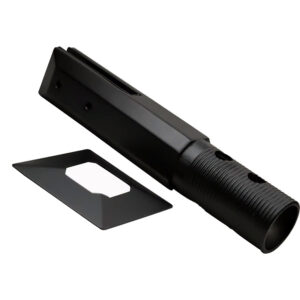
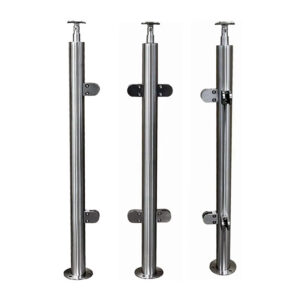
For coastal, marine, or offshore mounting hardware, Type 316 is the unequivocal technical selection. The constant presence of salt aerosols creates a persistently corrosive environment that aggressively attacks standard 304 stainless. Brackets, fasteners, poles, and enclosures fabricated from 316 will have a significantly longer, maintenance-free service life. Products like the CM515 heavy-duty mounting pole are explicitly engineered in 316L to perform very well in these salty environments.
Expanding Corrosive Zones
The strategic importance of this selection is amplified by macro-trends. Increased use of road de-icing salts and rising sea levels are systematically expanding the geographic “corrosive zone” for infrastructure. This shift moves the economic break-even point for specifying 316, making it the default cost-effective choice for a growing range of public works, telecommunications, and transportation projects. Specifying 304 in these evolving zones is a calculated risk with a high probability of premature failure.
Hardware and Location Guidelines
The following table provides clear guidance on material selection for specific hardware and locations within marine-influenced environments.
| Hardware / Location | Recommended Grade | Rationale |
|---|---|---|
| Coastal mounting hardware | 316 / 316L | Unequivocal technical choice |
| Example: CM515 mounting pole | 316L | Engineered for salty environments |
| Brackets & fasteners (marine) | 316 | Significantly longer service life |
| Infrastructure in “corrosive zone” | 316 | Default cost-effective choice |
Source: ASTM F593 Standard Specification for Stainless Steel Bolts, Hex Cap Screws, and Studs. This standard covers stainless steel bolts and studs, including Groups 1 (304) and 2 (316), providing the performance specifications for marine-grade mounting hardware components.
Mechanical Properties & Fabrication: 304 vs 316
Comparable Strength and Workability
From a mechanical standpoint, 304 and 316 are very similar. Their tensile strength, yield strength, and hardness are comparable, meaning the selection rarely hinges on load-bearing capacity. Both grades offer excellent formability, weldability, and polishability, making them suitable for the complex bends and shapes required in modern mounting brackets and poles. The choice is fundamentally driven by corrosion resistance, not mechanical performance.
Critical Considerations for Welding
For components that will be welded, the low-carbon variants—304L and 316L—are strongly recommended. These “L” grades prevent carbide precipitation at weld seams, which can create zones susceptible to corrosion. This is a critical detail for fabricated mounting assemblies where weld integrity is paramount to the structure’s longevity, especially in harsh environments.
The Impact of Design Trends
A critical strategic consideration emerges from industry design trends. The shift from large, galvanized steel tripods to slender, aesthetic mounting poles places the entire mechanical and environmental load on a single structural element. This design-for-appearance decision makes the material integrity and corrosion resistance of that pole exponentially more important. The mechanical properties governed by standards like ASTM A276/A276M are comparable, but the design trend intensifies the consequence of selecting the wrong corrosion-resistant grade.
| Property / Consideration | 304 | 316 |
|---|---|---|
| Tensile strength & hardness | Very similar | Very similar |
| Formability & weldability | Excellent | Excellent |
| Critical design trend impact | Slender mounting poles | Slender mounting poles |
| Welded component recommendation | Use 304L variant | Use 316L variant |
Source: ASTM A276/A276M Standard Specification for Stainless Steel Bars and Shapes. This standard establishes the mechanical property requirements for stainless steel bars and shapes, confirming the comparable strength and fabrication characteristics of grades 304 and 316.
Material Verification & Traceability for Compliance
The Substitution Risk
Since finished 304 and 316 components are visually identical, a major verification gap exists. This creates an opportunity for suppliers to substitute cheaper 304 for specified 316 without detection, jeopardizing project integrity and performance warranties. Relying on supplier assurances or generic mill certificates is insufficient for critical outdoor or marine hardware.
Mandating Material Test Reports (MTRs)
The essential quality control is demanding a certified Material Test Report (MTR) from the producing mill with each shipment. The MTR is a “birth certificate” that validates the actual chemical composition of the supplied lot against the specified standard, such as ASTM A193/A193M for bolting materials. Procurement contracts for critical hardware must explicitly mandate the provision of MTRs to mitigate substitution risk and ensure compliance.
The Future of Digital Provenance
The current reliance on paper MTRs is ripe for disruption. Blockchain or QR-code-based digital material passports could provide immutable, chain-of-custody proof of composition from the mill through fabrication to the final installation site. Forward-thinking manufacturers who invest in such transparent provenance systems build significant trust and can justify a premium by offering verifiable assurance, turning a compliance necessity into a market differentiator.
Selecting the Right Grade: A Decision Framework
Matching Alloy to Environment
A clear decision framework matches the inherent properties of each alloy to the specific environmental challenge. This moves selection from guesswork to a systematic engineering evaluation. The primary driver is the presence and concentration of chlorides, followed by other chemical exposures and the criticality of the installation.
Framework for Common Scenarios
The following table provides a direct application guide for common mounting hardware scenarios, linking the environment to the recommended grade and the primary selection driver.
| Application Scenario | Recommended Grade | Primary Driver |
|---|---|---|
| Indoor enclosures / dry air | 304 | Absence of chlorides |
| Coastal / marine settings | 316L | Chloride exposure |
| Roadside de-icing salt exposure | 316 | Long-term, maintenance-free need |
| Chemical processing plants | 316 | Critical performance & compliance |
Source: Technical documentation and industry specifications.
Managing Product Line Complexity
For manufacturers, this framework creates a product management challenge. Offering identical bracket or pole designs in multiple grades (e.g., Galvanized, 304, 316) creates parallel SKUs and operational complexity. Some manufacturers address this by promoting 316 as a universal, albeit costlier, default for outdoor applications. This simplifies the offering for customers and ensures performance, but requires clear communication about the value proposition behind the price difference.
When to Choose 304 vs. 316 for Your Specific Application
Final Application Guidelines
Application-specific selection finalizes the framework. Specify Type 304 for general-purpose indoor hardware, dry urban/rural mounting points with no salt exposure, and any controlled environment where chloride contamination is impossible. It remains the cost-effective workhorse for the majority of benign applications.
Choose Type 316 or 316L for all coastal and marine hardware, outdoor enclosures in harsh industrial atmospheres, roadside infrastructure, and any safety-critical installation where failure is unacceptable. This includes mounting points for security systems, safety barriers, and communication networks where maintenance access is difficult or costly.
The Strategic Implication: Hybridized Systems
The ultimate strategic implication involves optimizing entire systems rather than individual components. Future mounting system designs may intelligently hybridize materials. This approach could use 316 selectively at the most corrosion-prone connection points, fasteners, and ground-level interfaces, while using 304 or advanced composites for less-exposed structural elements. This achieves cost efficiency without compromising integrity at critical junctures, pointing toward focused R&D on selective material deployment for both economic and environmental optimization.
The core decision points are environmental analysis, lifecycle cost evaluation, and rigorous material verification. Prioritize a TCO assessment over initial price, and mandate MTRs for any 316 specification to ensure you receive the performance you are paying for. For projects where long-term reliability in challenging environments is non-negotiable, the selection is clear.
Need professional guidance on specifying the correct mounting hardware for your environment? The engineering team at Esang can help you navigate these material decisions and provide hardware solutions built for durability and performance.
Frequently Asked Questions
Q: How do you verify that a supplier has provided genuine 316 stainless steel hardware instead of cheaper 304?
A: You must require a certified Material Test Report (MTR) from the mill with each shipment, as 304 and 316 are visually identical when finished. This report validates the alloy’s chemical composition, including the critical molybdenum content in 316. For critical outdoor hardware, your procurement contracts should explicitly mandate MTRs to mitigate substitution risk and ensure project integrity, as specified in standards like ASTM A276/A276M. This means projects in corrosive environments must build material traceability into their purchasing specifications from the start.
Q: When does the higher initial cost of 316 stainless steel become justified for mounting hardware?
A: The premium for 316 is justified when the total cost of ownership (TCO) is analyzed, factoring in chloride exposure from coastal air, road salts, or industrial processes. While 304 has a lower upfront cost, 316 prevents back-end expenses from premature failure, equipment damage, and system downtime. This means facilities in corrosive settings or with safety-critical installations should prioritize lifecycle cost analysis in procurement to justify 316 as a long-term cost-saving measure.
Q: What is the primary technical difference between 304 and 316 stainless steel that affects corrosion resistance?
A: The key difference is the addition of 2-3% molybdenum in Type 316, which dramatically enhances its resistance to pitting and crevice corrosion from chloride ions. Type 304, with its 18% chromium and 8% nickel composition, lacks this element, making it susceptible in harsh environments. This means for hardware exposed to sea spray, de-icing salts, or chemical atmospheres, 316 is the non-negotiable choice to ensure long-term structural integrity, as reflected in material standards like ASTM A240/A240M.
Q: Which specific applications absolutely require 316 stainless steel over 304?
A: Type 316/316L is mandatory for all coastal and marine hardware, roadside infrastructure exposed to de-icing salts, chemical processing plants, and regulated industries like pharmaceuticals where metallic contamination is a risk. Its performance is governed by standards for critical components, such as ASTM A193/A193M for bolting. This means any safety-critical installation where failure is unacceptable or where long-term, maintenance-free performance is the priority should default to specifying 316.
Q: How do design trends like slender mounting poles impact the material selection between 304 and 316?
A: The shift from large tripods to single, slender poles concentrates the entire structural load on one component, making its material integrity and corrosion resistance paramount. While both grades have similar tensile strength, the superior chloride resistance of 316 becomes critically important to prevent structural compromise at this single point of failure. This means aesthetic design choices must be rigorously coupled with durability specifications, often pushing the selection decisively toward 316 for outdoor applications.
Q: Are there standards that directly specify requirements for stainless steel bolts and studs used in mounting hardware?
A: Yes, finished fastener components like bolts and studs are governed by standards such as ASTM F593, which covers chemical, mechanical, and dimensional requirements for stainless steel groups including 304 and 316. This standard provides the definitive framework for selecting hardware based on the required corrosion resistance and strength for the application. This means engineers should reference these product-specific standards, not just base material specs, when specifying or procuring mounting hardware.
Q: In a cost-constrained project for a dry, indoor environment, is 304 stainless steel an acceptable choice?
A: Yes, Type 304 is an excellent and cost-effective choice for general-purpose indoor hardware, dry atmospheric environments, or any application where chloride exposure is definitively absent. It provides good general corrosion resistance and formability at a lower initial material cost. This means for controlled environments like interior equipment racks or dry urban settings, specifying 304 is a technically sound decision that optimizes the initial budget without compromising performance.