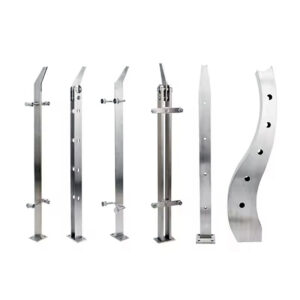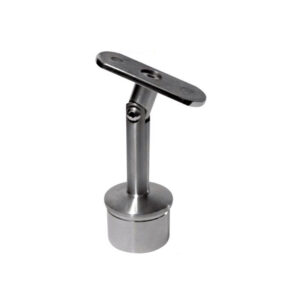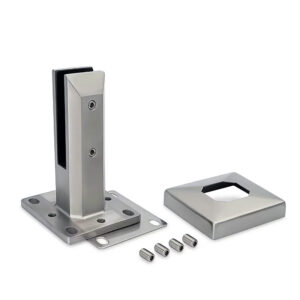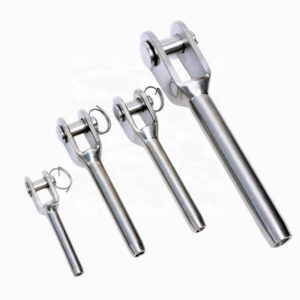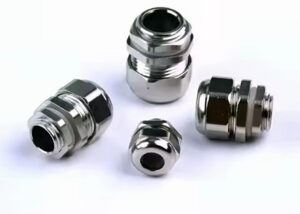
For commercial interior projects, the specification of glass railing systems presents a critical cost-performance equation. The common misconception is that higher-grade materials universally equate to better value, leading to unnecessary budget allocation. In reality, the strategic selection of 304 stainless steel over 316 for interior hardware establishes a foundational cost-saving decision without compromising performance or aesthetics in controlled environments.
This material choice is not a minor line-item adjustment but a significant capital reallocation strategy. In large-scale applications like office atriums, hotel lobbies, and retail spaces, the aggregate savings on structural posts and connectors enable investment in premium glass or complex design details. Precise specification aligned with actual environmental demands is essential for achieving both architectural intent and financial discipline.
304 vs. 316 Stainless Steel for Interior Railings
Defining the Application Boundary
The core decision hinges on environmental analysis. 304 stainless steel provides excellent corrosion resistance for interior commercial spaces, where exposure to chlorides and harsh chemicals is minimal. Its alloy composition, with lower nickel content and no molybdenum, meets the structural and aesthetic demands of these settings. The addition of molybdenum in 316 stainless steel, critical for coastal or chemically aggressive environments, represents an unnecessary cost premium for standard interiors.
The Cost Impact of Alloy Content
The price differential between 304 and 316 stems directly from raw material costs. Molybdenum is a more expensive alloying element. For a commercial project requiring hundreds of linear feet of railing with multiple posts and standoffs, specifying 304 generates substantial direct savings. Industry experts recommend auditing hardware grade with the same rigor as primary components. This disciplined approach prevents budget waste on over-specification.
Validating the 304 Selection
The validation is clear for most interior applications. Standards like ASTM A240/A240M define the chemical and mechanical properties for these grades, establishing the technical basis for selection. In my experience, projects that blindly specify 316 for all stainless components often discover a 15-25% unnecessary premium on metal hardware, capital better spent elsewhere. The following table clarifies the application-based selection criteria.
| Application | Recommended Grade | Primary Cost Driver |
|---|---|---|
| Interior Commercial Spaces | 304 Stainless Steel | Lower nickel/alloy content |
| Coastal/Chemical Settings | 316 Stainless Steel | Molybdenum addition |
| Office Atriums, Hotel Lobbies | 304 Stainless Steel | Significant material cost savings |
Source: ASTM A240/A240M Standard Specification for Chromium and Chromium-Nickel Stainless Steel Plate, Sheet, and Strip for Pressure Vessels and for General Applications. This standard defines the chemical composition and mechanical properties for grades like 304 and 316, establishing the material basis for the cost and performance comparison in architectural applications.
How 304 Stainless Steel Reduces Project Costs
Direct Material Savings
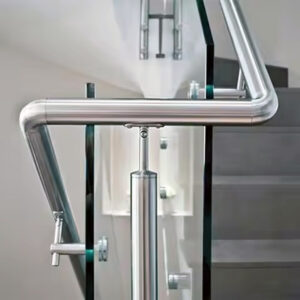
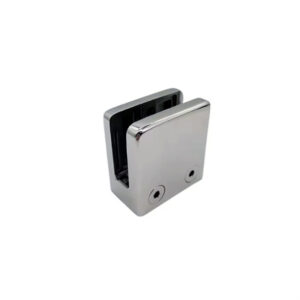
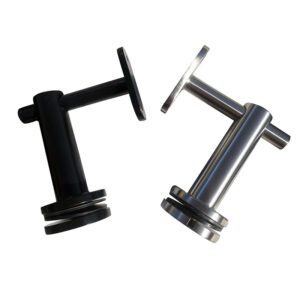
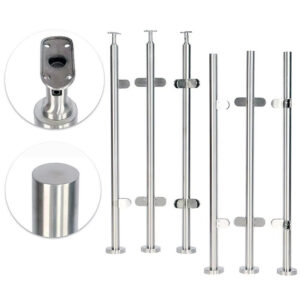
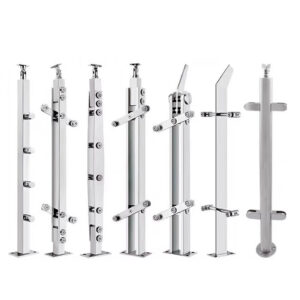
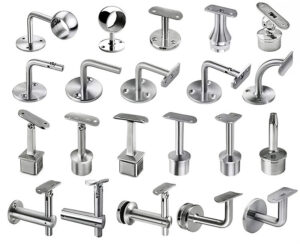
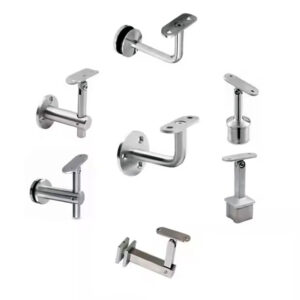
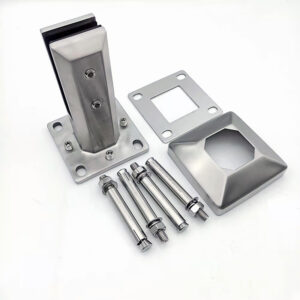
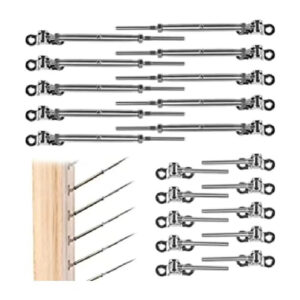
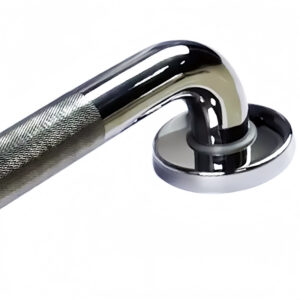
The most immediate financial benefit is the reduced cost per unit of hardware. Structural components—base shoes, standoff connectors, handrails, and posts—fabricated from 304 stainless steel cost less than their 316 counterparts. On commercial-scale orders, this difference compounds. These are not marginal savings but strategic capital reallocation. The value proposition balances required durability and premium aesthetics with fiscal responsibility.
Enabling Budget Reallocation
Savings on structural metalwork enable investments in other high-impact areas. The preserved budget can be directed toward premium glass types, such as low-iron glass for superior clarity, or custom finishes like black PVD coating. It can also accommodate more complex architectural designs, like curved runs or custom post caps. This approach achieves a high-end result through intelligent value engineering, not simply cost-cutting.
The Balanced Value Proposition
The goal is achieving specification parity for the environment. 304 stainless steel meets all relevant mechanical strength and corrosion resistance requirements for interior use. Choosing it avoids the false economy of under-specifying on safety-critical elements like glass, which is a primary safety and cost driver. The system’s integrity remains intact while optimizing the total project budget for maximum aesthetic and functional return.
Technical Specifications for Commercial Railing Systems
Hardware Specifications and Standards
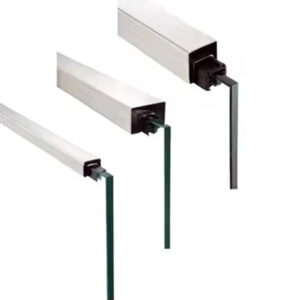
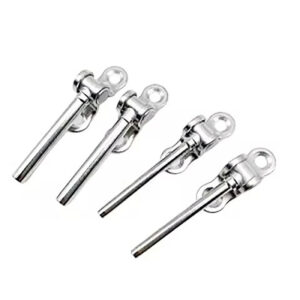
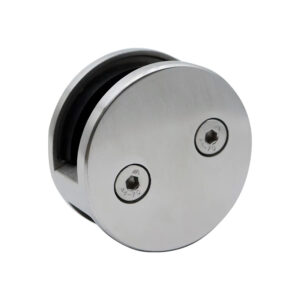
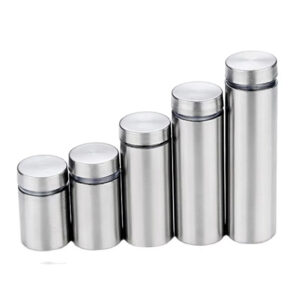
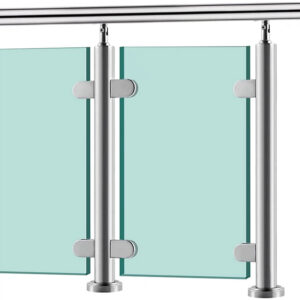
Commercial railing hardware must comply with stringent load and safety standards. Structural components are typically fabricated from 304 stainless steel, with finishes like brushed satin or polished meeting architectural specifications. The technical delivery conditions for these materials are governed by standards such as EN 10088-2, which ensures consistent quality and performance. Connector type selection—lever spigots versus set-screw—directly impacts installation ease and long-term maintenance access, a detail often overlooked in initial specs.
Glass as a Safety and Cost Driver
Glass specification is non-negotiable for safety and liability. For standard interior applications, 1/2-inch (12mm) fully tempered monolithic glass is common. In high-traffic areas or where enhanced safety is paramount, 9/16-inch laminated glass (e.g., in an 8-8-4 configuration) provides essential “fail-safe” performance. The choice here affects both initial cost and long-term risk management. Laminated glass, while a higher upfront investment, mitigates potential injury and liability if glass is impacted.
System Integration Requirements
A successful installation depends on the compatibility and precision of all components. The table below outlines key specifications that form the basis of a reliable commercial system.
| Component | Common Specification | Key Performance Trait |
|---|---|---|
| Structural Hardware | 304 Stainless Steel | Brushed satin/polished finish |
| Glass (Standard) | 1/2″ (12mm) Tempered | Monolithic, tempered safety |
| Glass (High-Traffic) | 9/16″ Laminated (8-8-4) | “Fail-safe” laminated performance |
| Connector Types | Lever spigots, Set-screw | Impact installation ease, integrity |
Source: EN 10088-2 Stainless steels — Part 2: Technical delivery conditions for sheet/plate and strip of corrosion resisting steels for general purposes. This European standard provides the technical delivery conditions for stainless steel sheet/plate, governing the material quality and specifications for components like 304-grade railing hardware.
Design Options and Their Impact on Budget
The Spectrum of “Frameless” Implementations
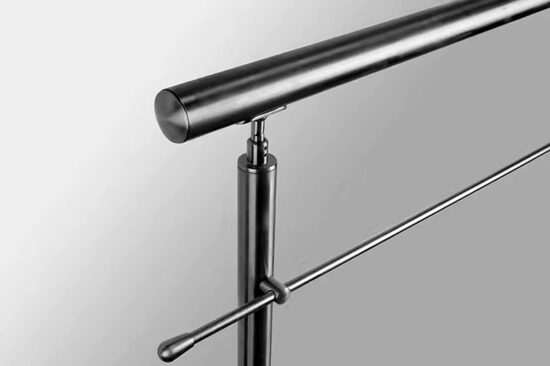
Design choices exist on a continuum of visual lightness and structural complexity. True point-supported standoff systems offer seamless minimalism but demand expert fabrication and perfect substrate conditions. Side-mounted base shoe systems create a frameless appearance with slightly more visible hardware, offering moderate complexity. Post-mounted systems provide a traditional framed look with greater installation tolerance. Each step toward minimalism increases cost through precision manufacturing and labor.
Cost Drivers in Aesthetic Pursuits
The pursuit of a flawless, invisible connection increases dependency on specialized labor and tolerances. This raises costs significantly. The market has matured to segment into value-engineering tiers focused on functional performance and luxury aesthetic tiers prioritizing visual purity. Furthermore, glass railings are leveraged as tools for sustainable design, enhancing daylight penetration and contributing to LEED credits through material recyclability. This added value can justify the investment in certain projects.
Selecting for Project Context
The optimal design balances aesthetic goals with practical constraints. A high-end corporate lobby may warrant the cost of a point-supported system, while a functional office corridor may be better served by a cost-effective post-mounted design. The table below summarizes how different system types influence project budget and complexity.
| System Type | Visual Characteristic | Relative Cost & Complexity |
|---|---|---|
| Point-Supported Standoffs | Seamless minimalism | High cost, expert fabrication |
| Side-Mounted Base Shoes | Frameless appearance | Moderate complexity |
| Post-Mounted Systems | Traditional framed look | More installation tolerance |
| Value-Engineered Tier | Functional performance | Lower budget option |
Source: Technical documentation and industry specifications.
Installation Planning to Maximize Cost Efficiency
The Necessity of Advanced Planning
Complex, minimal systems cannot be installed successfully with traditional field-measure-and-fit methods. Advanced planning services, including detailed shop drawings and 3D visualization, are now industry standard for de-risking commercial projects. These tools prevent the single greatest cost overrun: field modifications and refabrication. Accurate measurement is paramount, especially for non-linear applications like curved staircases or multi-level atriums.
Leveraging Pre-Engineered and Modular Systems
Utilizing pre-engineered railing systems with modular 304 stainless steel components streamlines installation. These systems are designed for efficient assembly, reducing on-site labor time and cost. The co-evolution of product design for both professional installer and contractor channels underscores the importance of selecting a system aligned with the project team’s specific capabilities. A system designed for ease of installation protects the budget from labor inefficiencies.
Tools for Risk Mitigation
Effective planning employs specific tools to lock in cost estimates. The following table outlines key planning elements and their role in safeguarding the project budget.
| Planning Tool | Primary Purpose | Cost Risk Mitigation |
|---|---|---|
| Pre-Engineered Systems | Standardized components | Reduces field modifications |
| Detailed Shop Drawings | Precise fabrication guide | Prevents measurement errors |
| 3D Visualization | Clarity for complex geometries | Essential for curved staircases |
| Modular 304 Components | Efficient assembly | Reduces labor time/cost |
Source: Technical documentation and industry specifications.
Long-Term Value and Maintenance Considerations
The Low-Maintenance Advantage of 304 Stainless
Lifecycle cost analysis favors 304 stainless steel for interior applications. Its durability ensures the finish remains intact for decades with only occasional cleaning using non-abrasive, pH-neutral agents. This eliminates the recurring costs associated with refinishing painted steel or powder-coated aluminum. The material’s inherent corrosion resistance in interior environments means it will not degrade, pit, or stain under normal conditions, preserving the asset’s value.
Glass Selection and Liability Mitigation
The long-term value of the system is also protected by glass choice. Specifying laminated glass for high-traffic or safety-critical areas, while a higher initial investment, mitigates long-term liability risk. In a fail-safe scenario, the interlayer holds broken glass in place, preventing injury and containing cleanup. This proactive specification is a form of risk management that protects the owner’s investment over the lifespan of the building.
Quantifying the Lifecycle Profile
The total cost of ownership extends far beyond the invoice. When evaluating materials, consider the full maintenance and replacement cycle. The table below contrasts the long-term profile of a properly specified 304 stainless steel system with alternatives.
| Factor | 304 Stainless Steel Profile | Comparative Long-Term Impact |
|---|---|---|
| Maintenance Routine | Occasional non-abrasive cleaning | Low upkeep cost |
| Finish Longevity | Exceptional durability | Avoids frequent refinishing |
| Material Lifespan | High longevity | Durable asset retention |
| Glass Safety Choice | Laminated glass specification | Mitigates liability risk |
Source: EN 10088-2 Stainless steels — Part 2: Technical delivery conditions for sheet/plate and strip of corrosion resisting steels for general purposes. The standard’s specifications for corrosion-resisting steels like 1.4301/304 underpin the material’s durability and low-maintenance profile, which are central to long-term value calculations.
Choosing the Right System for Your Commercial Space
Aligning Specification with Operational Context
Selection begins with a candid assessment of the space’s function and traffic. A bustling hotel lobby has different durability and safety requirements than a private executive corridor. The core value proposition of glass railings is enabling architectural goals of openness and light. Therefore, the system must balance the desired aesthetic—informed by the spectrum of frameless options—with practical demands for safety, crowd flow, and maintenance access. We compared post-mounted and standoff systems and found the former often better suits high-impact zones.
Establishing a Decision Framework
A structured decision framework prevents oversight. First, validate the environmental suitability of 304 stainless steel. Second, define the non-negotiable safety and load requirements based on building code and use case. Third, determine the aesthetic priority within the project’s budget reality. This process ensures the selected system, from its structural glass railing components to its finish, supports both the design vision and functional reality. Easily overlooked details include provisions for future cleaning and the compatibility of glass coatings with mounting hardware.
Finalizing the Performance Brief
The outcome of this phase is a clear performance brief. This document should specify the required hardware grade, glass type and thickness, support methodology, finish, and any special details for transitions or terminations. It serves as the objective basis for soliciting accurate bids and ensures all suppliers are proposing solutions that meet the same fundamental requirements, allowing for a true comparison of value.
Finalizing Your Project Specifications and Budget
Consolidating Strategic Decisions
This phase transforms analysis into executable construction documents. All prior choices—304 stainless steel hardware, laminated or tempered glass, point-supported or post-mounted design—are consolidated into precise drawings and specifications. The budget must reflect the integrated value of supplier-provided design support and planning services, which prevent costly errors. Locking in savings from disciplined material selection ensures the final installation delivers on aesthetic, safety, and financial goals.
The Importance of Comprehensive Documentation
Detailed shop drawings, approved by the design team and contractor, are critical. They should call out every component, its material grade, finish, and installation method. This level of detail eliminates ambiguity during fabrication and installation, the primary sources of change orders and cost overruns. It also ensures the specified long-term value and maintenance profile of the 304 stainless steel system is achieved.
Executing with Confidence
With finalized specs and a budget built on strategic value engineering, stakeholders can proceed confidently. The project is protected from the volatility of field adjustments and unnecessary material premiums. The result is a commercial glass railing system that provides transparency, safety, and durability as a permanent asset to the space, realized through financially responsible and technically sound decision-making.
Need professional guidance to specify and source the right 304 stainless steel glass railing system for your commercial project? The experts at Esang provide integrated design support and precision-engineered solutions to translate your architectural vision into a built reality that respects your budget. Review detailed specifications and project support options to begin planning.
For direct consultation on your specific application requirements, you can also Contact Us.
Frequently Asked Questions
Q: How do you determine if 304 stainless steel is suitable for an interior commercial railing project?
A: Validate the choice by analyzing the indoor environment’s exposure to moisture and chemicals. For standard commercial interiors like offices or retail spaces, 304 stainless steel offers sufficient corrosion resistance and structural integrity at a lower cost than marine-grade 316. This material selection is governed by standards like ASTM A240/A240M for general applications. This means facilities without coastal or high-chemical exposure should specify 304 to allocate budget toward premium glass or complex designs.
Q: What are the key technical specifications for glass in a commercial railing system?
A: The primary specifications are glass type and thickness, which are critical for safety and cost. Common commercial specs are 1/2-inch (12mm) monolithic tempered glass or 9/16-inch laminated glass in an 8-8-4 configuration. Laminated glass provides essential fail-safe performance in high-traffic zones. For projects where occupant safety and liability are paramount, plan for the higher initial cost of laminated glass to mitigate long-term risk and potential replacement expenses.
Q: How does the choice between frameless and post-mounted systems impact budget and installation?
A: The design spectrum directly dictates cost and complexity. Visually minimal, point-supported frameless systems demand expert fabrication and precise installation, raising costs. Post-mounted systems offer more installation tolerance and are typically more budget-friendly. This segmentation reflects a market catering to both value-engineering and luxury tiers. If your project prioritizes a seamless aesthetic, expect to invest in advanced planning services and skilled labor to avoid costly field modifications.
Q: What long-term maintenance should we plan for with a 304 stainless steel and glass railing?
A: 304 stainless steel requires only occasional cleaning with non-abrasive agents to maintain its finish in interior settings, offering a low-maintenance profile. The strategic choice of laminated glass further protects the long-term investment by enhancing safety. This means facilities managers can anticipate minimal upkeep costs compared to materials needing refinishing, ensuring the system remains a durable asset with a favorable lifecycle cost.
Q: How can installation planning maximize cost efficiency for a glass railing project?
A: Realize projected savings through meticulous pre-construction planning. Utilize supplier-provided shop drawings, 3D visualization, and pre-engineered 304 stainless steel components to de-risk installation and prevent expensive field changes. Accurate measurement is critical for complex geometries. For projects with tight budgets or standard layouts, selecting modular systems designed for efficient installation will reduce labor time and control overall project costs.
Q: Which standards define the material quality for stainless steel railing components in Europe?
A: In the European market, the technical delivery conditions for stainless steel sheet, plate, and strip used in architectural components are defined by EN 10088-2. This standard governs grades like 1.4301 (304), specifying dimensions, tolerances, and surface quality. When sourcing materials or fabricated hardware for EU projects, ensure supplier certifications reference this standard to guarantee material performance and compliance.