Bulk railing orders that fail specification typically fail before the first container is loaded — not because of a production error, but because the evaluation that preceded the order never asked the right questions. Contractors who discover inconsistent mirror finishes on a commercial handrail delivery, or structural connections that don’t meet the dimensional tolerances specified in their drawings, often trace the problem back to a supplier selection process that relied on catalog images and a price sheet. The cost of catching those defects on a job site rather than at source can run three to five times what a single pre-shipment inspection would have cost. What follows is a structured framework for identifying the supplier signals that predict reliable performance under commercial volume — before any purchase order is placed.
What to confirm about your order requirements before approaching potential railing suppliers
The most common mistake buyers make at this stage is treating order requirements as something a supplier will help them define. In practice, an incomplete specification going into supplier conversations produces quotes that are incomparable, samples that miss the mark, and lead times that don’t account for material constraints the buyer introduced late.
The single most consequential planning input is site environment. A coastal or marine-exposed project is not simply a preference note — it is a decision gate that determines whether 316 or 316L stainless steel is required before any supplier conversation begins. If this isn’t resolved upstream, a supplier may quote against 304 material, which is appropriate for interior or sheltered applications but will show surface corrosion on a waterfront installation within months. Framing this as a preference allows a supplier to offer a lower price on unsuitable material; framing it as a specification requirement forces the conversation to the right grade immediately.
Beyond environment, buyers should confirm tube diameter range and finish type before requesting quotes. These two inputs determine whether a supplier’s standard product range covers the project or whether custom fabrication is involved — which changes lead time, minimum order quantity, and QC documentation requirements. Minimum qualifying order thresholds in this category typically range from 500 to 2,000 linear meters, and suppliers with tight standard-range inventory may not be viable partners for smaller commercial projects that fall below that floor.
Surface finish specification carries its own downstream implication. Buyers specifying a mirror finish or brushed finish for a high-visibility commercial application should confirm that finish consistency is achievable across multi-batch production — not just on a single sample run. This matters because it changes which supplier types are appropriate: a factory running mirror finish as a volume production item behaves differently under commercial load than one treating it as a bespoke finishing step.
Material documentation signals that distinguish a reliable supplier from a grade-substitution risk
Grade substitution is the highest-probability material risk in imported stainless steel railing procurement, and it rarely announces itself. Components made from lower-grade or non-certified steel may look identical to 316L under surface inspection and will pass casual visual checks at delivery. The failure appears later — through surface rust on a coastal installation, through pit corrosion on an exposed structural connection, or through a compliance audit that requests material certification the buyer cannot produce.
The primary verification lever is the Mill Test Report (MTR). An MTR documents the chemical composition and mechanical properties of the steel stock used to manufacture the components, traceable to a specific heat or batch. A supplier who cannot produce two verified MTRs for their 316L stock within 48 hours of a formal request is not experiencing an administrative delay — that pattern predicts a documentation gap that tends to be systemic rather than isolated. Experienced importers treat this threshold as binary: either the documentation exists and is retrievable, or it doesn’t and the supplier’s grade-integrity claims rest on assertions that cannot be audited.
For context on why chemical composition verification matters in practice, ISO 9227:2022 defines the salt spray test framework used to evaluate corrosion performance in artificial atmospheres — a methodology that directly reflects the real-world exposure conditions that differentiate 304 from 316L in coastal applications. Grade verification against the MTR is what ensures the material entering a salt spray test is actually the alloy it is claimed to be.
Each documentation request also reveals something about the supplier’s internal traceability system. A supplier with a functioning QC chain can link a finished component back to its source material quickly. One without that linkage may deliver acceptable first samples while substituting material quietly at volume.
| What to Request | Risk if Unclear | Why It Matters |
|---|---|---|
| Verification of material grade (304 vs 316L) and provision of MTRs (Mill Test Reports) | Risk of material substitution with lower-grade or non-compliant stainless steel, leading to premature corrosion or failure. | This is the foundational, verifiable specification for durability and corrosion resistance; inability to provide MTRs quickly is a disqualifying risk indicator. |
For projects where corrosion resistance is a specification requirement rather than a preference, reviewing MTR documentation before placing a sample order — not after — is the verification posture that contains risk. Additional detail on what compliant MTR documentation should contain is covered in the Stainless Steel Hardware Material Test Report (MTR) Requirements for Compliance Documentation resource.
Weld quality verification: what to request beyond surface photographs and product samples
Surface photographs of finished welds are not a weld quality verification method. They confirm appearance under favorable lighting and camera angles; they cannot confirm penetration depth, heat-affected zone integrity, or the absence of internal porosity. Buyers who rely on product images or a single polished sample for weld approval are approving aesthetics, not structural performance.
For custom railings, post assemblies, or any structural connection where load-bearing capacity is a design consideration, weld quality verification should involve three requests beyond imagery. First, ask for documentation of the welding process specification — this establishes which welding method is used (TIG welding is standard for stainless steel railing applications), the filler material, and the parameters governing weld execution. Second, request evidence of welder qualification or inspection records for the specific joint types involved in the order. Third, where the order involves structural or safety-critical connections, ask whether the supplier can provide destructive test results or third-party inspection reports from a comparable production run.
The threshold that changes this recommendation is whether the railing components are modular assembly items or custom-fabricated structural elements. For standard pre-engineered systems using bolted or mechanical connections, weld quality requirements are embedded in the product design and less variable between units. For custom fabrications — non-standard angles, custom post bases, or field-adapted connection points — weld consistency becomes a production variable that should be verified at the sample stage against the same parameters that will govern full production. ASTM E935-21 provides a reference framework for permanent metal railing system performance testing, which establishes the performance context within which weld integrity contributes to overall system behavior.
The downstream consequence of skipping this step is not hypothetical: structural connections that pass visual inspection at delivery can fail under dynamic load conditions, particularly in high-traffic commercial stairways or where the railing system is load-rated for accessibility compliance. Identifying that failure during a post-installation load test is a significantly more expensive resolution than requesting a process specification document before the order is placed.
How sample-to-production consistency reveals whether a factory’s QC system holds under commercial volume
A well-produced sample is a marketing asset. A well-produced sample that accurately represents what arrives in a commercial-volume container is a QC system. These are not the same thing, and the difference between them is what makes sample-to-production consistency one of the most informative supplier signals available before commitment.
The clearest indicator to probe is how the supplier handles premium or specification finishes in their production process. A supplier who offers mirror finish or a premium powder coat as a standard, continuously produced item is operating those finishes within a repeatable process. A supplier who can produce the finish on a sample but treats it as a special-order item requiring separate setup is telling you something about where that finish sits in their operational workflow. This doesn’t automatically disqualify them, but it is a pattern worth investigating: special-order production under commercial volume often competes with standard runs for finishing line capacity, which is where batch-to-batch inconsistency enters.
At minimum, one paid sample set with documented surface finish verification should precede any bulk order in this category. Buyers who skip this step and proceed directly to volume based on catalog specifications or prior samples from unrelated orders regularly encounter inconsistent finish quality across batches — particularly on mirror-finish specifications where the polishing process is sensitive to abrasive media consistency, operator technique, and substrate preparation. Re-polishing or rejecting components on a specification-sensitive commercial project runs at a multiple of what the sample evaluation would have cost.
The follow-on verification step that catches production drift at scale is a third-party pre-shipment inspection. At $300–$500 per container, this cost looks discretionary during procurement. After a delivery with dimensional non-conformances or finish inconsistency reaches a job site, it becomes the cheapest decision that wasn’t made. The practical scope of that inspection should specify the surface finish tolerance, dimensional checks against the original sample, and packaging integrity — not simply a general cargo condition check.
Communication and response-time benchmarks that predict operational reliability during production
The pattern that most reliably predicts production-phase communication breakdown is response time during quotation. Suppliers who turn around detailed technical quotes within 12 hours during the evaluation period often do so because they are competing for the order. After the purchase order is confirmed, the competitive incentive shifts, and response cycles commonly expand to 48–72 hours for production-stage queries. This isn’t a character problem; it reflects normal workload prioritization in a factory environment. The mistake is assuming that pre-order responsiveness is a durable indicator of production-phase support without negotiating it explicitly.
One observable signal during evaluation is whether the supplier provides accessible pre-order technical support — estimators or project support contacts who are reachable and engaged before any purchase commitment is made. This is not a contractual performance metric, but it is a reasonable proxy: a supplier who invests resources in pre-order engagement tends to have more structured internal communication processes than one who is difficult to reach until the order is placed.
The clarification to make before the order is placed is the escalation path for production-phase queries. Specifically: who is the production contact, what is the expected response window during active manufacturing, and what mechanism exists for milestone reporting against lead time. Without these agreements documented before confirmation, production tracking defaults to informal follow-up — which is unreliable when production delays are most likely to occur.
| Observed Signal | Potential Indicator | What to Clarify Before Ordering |
|---|---|---|
| On-call professional estimators providing free quotes and support from conception. | A commitment to accessible pre-order communication. | Confirm availability for ongoing project support and clarify escalation paths for post-order queries. |
Milestone check-in agreements negotiated pre-order are not an unusual demand; most experienced importers treat them as standard terms for orders above a threshold volume. The practical content of those agreements should include: confirmation of material sourcing at order commencement, inspection sign-off at production completion, and shipping documentation timing before vessel departure. These three checkpoints create a minimum viable tracking structure without requiring daily contact.
Pre-order supplier evaluation checklist: 8 signals to confirm before committing to a bulk railing order
No individual signal in a supplier evaluation is sufficient on its own. A supplier with excellent MTR documentation but no installation documentation may introduce downstream field problems. A supplier with responsive pre-order communication but no ISO certification may have informal QC processes that perform well until volume increases. The value of a composite checklist is that it shifts the evaluation from impression-based to evidence-based — each item is a verifiable confirmation, not a subjective assessment.
The three checklist items below represent process-maturity signals that are often overlooked in favor of price and lead time comparisons.
| What to Confirm | Why It Matters |
|---|---|
| Certification to international standards (e.g., ISO) | A signal of formal quality management and compliance systems. |
| Comprehensive, product-specific installation manuals | Reflects systematic processes and reduces installation risk. |
| Component size compatibility with specific tube diameters | Critical for system integration and prevents fit issues during installation. |
ISO certification is worth clarifying in scope: an ISO 9001-certified supplier has a documented quality management system that has been externally audited, but certification alone does not guarantee product-specific performance. What it does indicate is that corrective action processes, documentation practices, and production controls exist in a structured form — which is relevant when you need to escalate a non-conformance during production and need a supplier with a functioning QC response mechanism.
Installation documentation reveals something different: the quality and specificity of product-level manuals reflects whether the supplier has systematized their product knowledge or relies on informal installer expertise. For distributed commercial projects where your installation teams are working across multiple sites simultaneously, a supplier whose documentation is unclear or generic creates a support burden that compounds across the project.
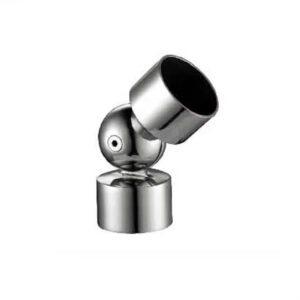
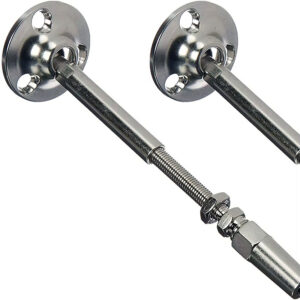
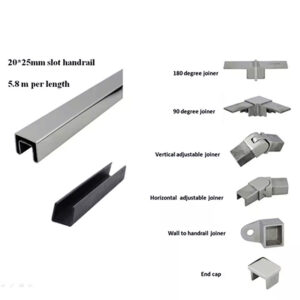
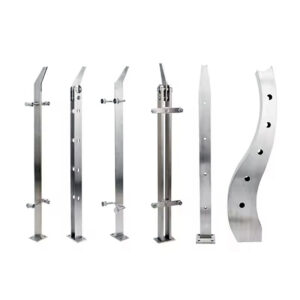
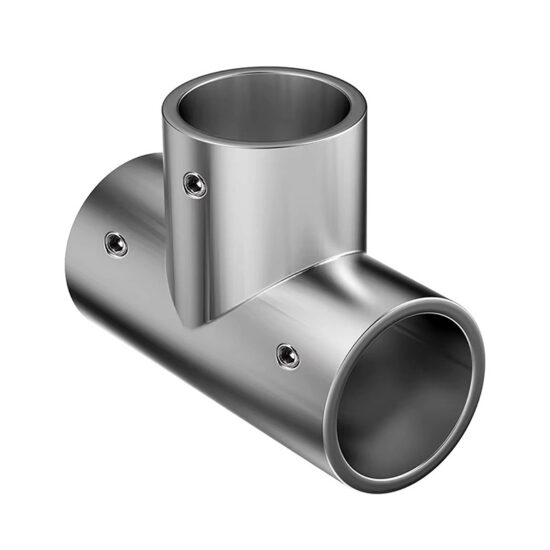
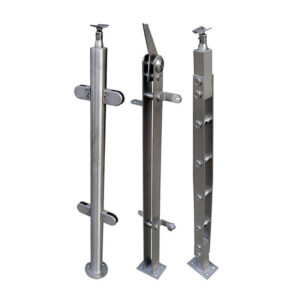
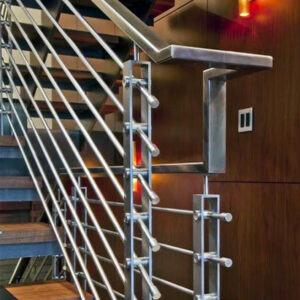
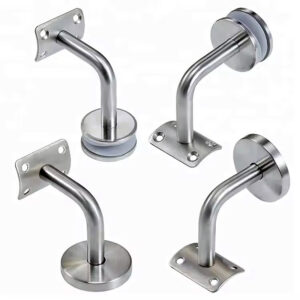
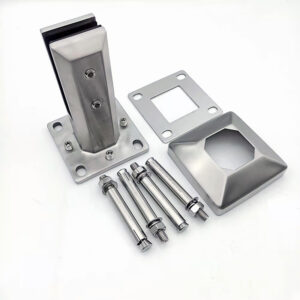
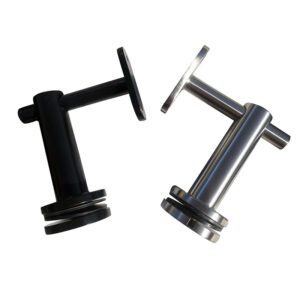
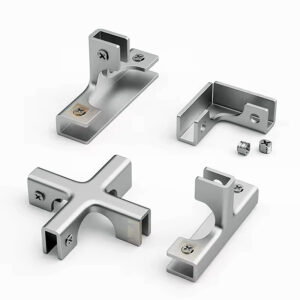
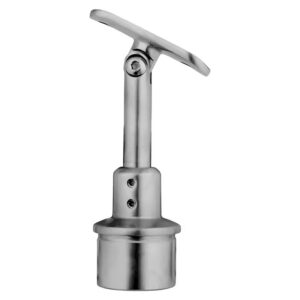
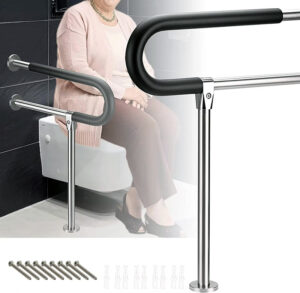
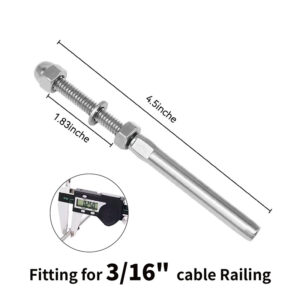
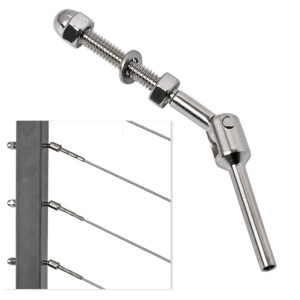
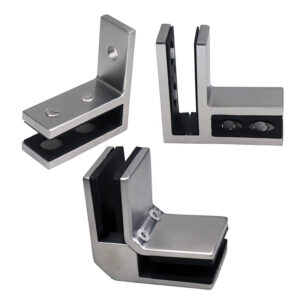
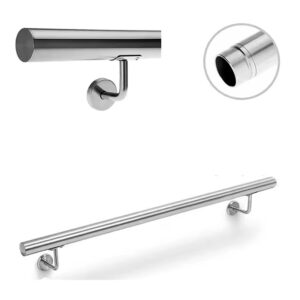
Component size compatibility with specific tube diameters is a technical fit check that becomes a serious problem if discovered during installation rather than procurement. Railing systems involve multiple hardware components — brackets, connectors, end caps, and intermediate supports — that are dimensionally coupled to the tube OD and wall thickness. A supplier whose hardware range is optimized for a different standard tube dimension than your specified sections will create field modification requirements that are expensive under time pressure. For projects specifying stainless steel wall handrails or heavy duty wall handrails, confirming this compatibility during evaluation prevents what would otherwise surface as a procurement problem at the worst possible stage.
Together, these signals — material documentation, weld process transparency, sample verification, communication structure, and process-maturity indicators — constitute a supplier picture that is either coherent or has identifiable gaps. The gaps are what to price and negotiate before commitment, not after.
The most expensive supplier evaluation is the one that produces a confident purchase order and a problematic delivery. The evaluation framework above is designed to surface the signals that predict production-phase behavior before any financial commitment is made — because the cost of asking hard questions before the order is a fraction of the cost of resolving non-conformances after it.
Before approaching any supplier for a bulk quote, confirm your own specification first: environment, grade requirement, finish tolerance, minimum order quantity, and lead time constraints. Those inputs determine which supplier types are viable candidates and which aren’t. From there, MTR response time and sample evaluation with documented surface finish testing are the two checkpoints that most reliably separate suppliers whose quality claims hold at volume from those whose claims hold only under evaluation conditions. Everything else in the checklist above adds resolution to that picture — but those two verifications are where the decision is most often made or lost.
Frequently Asked Questions
Q: What happens if our project falls below the 500–2,000 linear meter minimum order threshold most suppliers require?
A: Falling below the qualifying threshold typically means the supplier is not a viable partner for that order — not that the threshold is negotiable. Suppliers with tight standard-range inventory may decline, offer unfavorable per-unit pricing, or deprioritize your production run against higher-volume orders. The practical alternative is to either consolidate project phases into a single order that meets the minimum, source from a distributor holding stock inventory, or identify suppliers whose minimum qualifying quantity aligns with smaller commercial projects before investing time in evaluation.
Q: If a supplier passes every documentation check during evaluation, what should be confirmed immediately after placing the purchase order?
A: The first post-order confirmation should be the production milestone agreement — specifically: who the production contact is, what response window applies during active manufacturing, and what triggers each scheduled check-in. This needs to be documented at order confirmation, not requested later. The three minimum checkpoints to establish are material sourcing confirmation at commencement, inspection sign-off at production completion, and shipping documentation timing before vessel departure. Waiting until production is underway to establish these terms means negotiating them under time pressure, when leverage is lowest.
Q: Does the 48-hour MTR response threshold still apply if a supplier is manufacturing custom components rather than drawing from existing steel stock?
A: Yes — the threshold applies more strictly in that context, not less. A supplier producing custom components should have traceable material intake records for the steel stock they are actively machining. If anything, custom fabrication increases the importance of rapid MTR access because there is no finished-product testing history to fall back on. A custom manufacturer who cannot link their incoming material to documentation within 48 hours is indicating that traceability breaks at the point of material intake, which is precisely where grade substitution risk is highest.
Q: Is a third-party pre-shipment inspection worth commissioning even when the supplier holds ISO 9001 certification?
A: Yes — ISO 9001 certification confirms that a quality management system exists and has been externally audited; it does not verify that a specific production run met your dimensional tolerances or finish specification. The pre-shipment inspection performs a different function: it checks the actual delivered units against your sample and specification at source, before the container is loaded. At $300–$500 per container, it addresses the gap between a supplier’s documented process capability and the actual output of the specific batch you are receiving. Certification and inspection are complementary checks, not substitutes.
Q: How should a buyer weigh a lower-priced supplier who cannot produce weld process documentation against a higher-priced supplier who can?
A: The price difference should be evaluated against remediation cost, not against face-value unit cost. A supplier unable to produce welding process specifications or welder qualification records for structural connections is presenting an unquantified risk — and for load-bearing or accessibility-rated railing systems, that risk has a real remediation value if connections fail post-installation. If the application involves modular, pre-engineered systems with mechanical connections, the risk profile is lower and the trade-off is more negotiable. If the order involves custom post bases, non-standard angles, or connections that are load-rated by design, the absence of weld documentation is a genuine gap — one that belongs in price negotiation rather than silent acceptance.