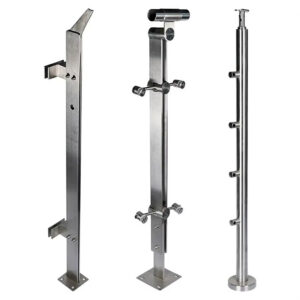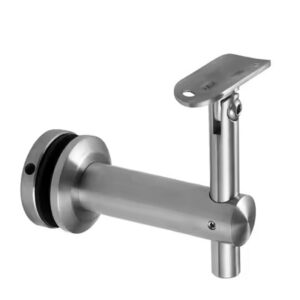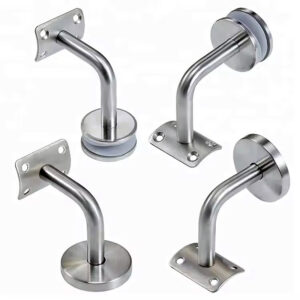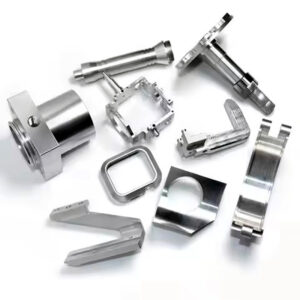
Sourcing the wrong railing supplier rarely announces itself at the quotation stage. The failure surfaces later — at installation, when surface finish on delivered components doesn’t match the approved sample, or at re-order, when material that tested as 316 stainless on the first batch arrives with the corrosion resistance of 304. For projects near coastal or high-chloride environments, that substitution can trigger rework costs and liability exposure that dwarf any savings on unit price. The seven signals below give procurement teams, contractors, and distributors a structured way to distinguish suppliers whose operations can sustain reliable quality across multiple orders from those whose quality is only reliable enough to win the first one.
Response time under 24 hours to technical questions — and what slower responses signal about factory operations
A supplier’s response time to technical questions is a proxy for how the factory is organized, not just how attentive the sales team is. When a technical question — about weld joint configuration, surface finish tolerance, or grade-specific mechanical properties — requires a coordinated answer, the speed of that answer reflects whether the supplier has accessible in-house engineering capacity or is routing queries through a communication chain that adds days to every decision loop.
The 24-hour threshold is a practical benchmark drawn from supplier evaluation practice, not a contractual standard. What makes it useful is the failure it exposes: a supplier who consistently takes 48–72 hours to answer technical questions before the order is placed will almost certainly be slower to communicate delays, inspection findings, or material discrepancies once production is underway. Operational disorganization at the communication level tends to compound at the execution level, which is where it becomes expensive.
The risk worth flagging is not a slow reply on a single occasion. It is a pattern across multiple technical questions — on materials, tolerances, finish specifications, or compliance documentation — where answers arrive without traceable internal sourcing. If a sales contact cannot quickly connect a buyer to someone with direct production knowledge, that gap signals a factory structure where QC and sales operate without meaningful integration. For a buyer managing a multi-phase commercial installation project, that structure creates consistent information delays at every milestone where a fast, documented answer would have reduced risk.
Proactive documentation: suppliers who send mill certificates and weld records without being asked
The distinction between a supplier who provides mill certificates when asked and one who sends them without prompting is not merely procedural. It reflects whether the supplier treats documentation as a quality control mechanism or as a compliance courtesy extended to demanding buyers.
A mill certificate traceable to the specific heat number of the stainless steel used allows a buyer to verify material grade compliance for an entire production batch without commissioning independent testing on every shipment. For buyers managing multiple re-orders across a project lifecycle, this traceability is a structural safeguard: it means any downstream deviation — a corrosion issue in the field, a question raised during inspection — can be traced back to a documented production record rather than left as an unresolved material dispute. For a detailed look at what compliant documentation should contain, the requirements for stainless steel hardware material test reports cover what to look for and how to confirm traceability across supply chains.
Weld records carry a separate but equally important function. Under frameworks like ASTM A554-21, welded stainless steel mechanical tubing is subject to defined testing and inspection standards; a supplier who maintains weld records demonstrates that their process controls extend beyond material sourcing to fabrication quality. The absence of weld records does not prove poor welding, but it removes the buyer’s ability to assess consistency across production runs — and in a railing system, weld integrity under load is not a secondary specification.
The practical test is simple: before committing to a production order, ask whether the supplier will include heat-number-traceable mill certificates and weld inspection records with every shipment as standard practice. A supplier who treats this as unusual rather than routine is signaling that documentation is reactive, not embedded in their process.
Consistent material grade across samples, production runs, and re-orders — verified through SGS or third-party testing
A sample that passes third-party testing as 316 stainless steel provides no assurance about subsequent production batches unless the supplier issues traceable documentation for every run. This is the most consequential material risk in repeat ordering, and it is the one most often underestimated at the vendor selection stage.
For coastal or high-chloride environments, the stakes are specific: 316 stainless contains molybdenum, which provides the additional chloride resistance that 304 does not. A product that arrives as 304 — either through deliberate substitution or inconsistent raw material sourcing — will show visible corrosion in environments where 316 was specified, sometimes within a single maintenance cycle. GB/T 20878-2024, which establishes chemical composition and grade designation standards for stainless steels, provides the reference framework for confirming that a supplier’s stated grade aligns with documented composition. Understanding the practical field difference between these grades is also worth reviewing before specifying, particularly for outdoor and marine-adjacent applications — 304 vs. 316 stainless steel handrails covers the corrosion resistance and selection logic in detail.
The downstream consequence of grade inconsistency is rarely visible until installation is complete, at which point rework costs — replacement hardware, labor, project delay — are already locked in. Third-party testing through SGS or equivalent on a production batch provides a verification point that supplier-issued documentation alone cannot replicate, particularly for first-time orders or when switching to a new production facility.
| What to Verify | Risk if Unclear | What to Confirm with Supplier |
|---|---|---|
| Material Grade (e.g., 316 vs 304) | Premature corrosion in coastal/high-chloride environments | Use of 316 stainless steel with molybdenum content for extra corrosion resistance |
| Testing Documentation | Inability to verify grade compliance without costly independent testing | Availability of third-party test reports (e.g., SGS) for the specific production batch |
| Traceability to Heat Number | Material substitution or inconsistency across orders | Mill certificates traceable to the specific heat number of stainless steel used |
What the table above organizes at the verification level, the procurement decision requires at the structural level: build third-party batch testing into the first two production runs with any new supplier, and require heat-number-traceable mill certificates as a condition of subsequent orders rather than a request made after a quality dispute arises.
Clear production scheduling and lead time communication, including delays disclosed before shipment
Suppliers who market around “fast, reliable service” without backing that claim with a defined delay communication protocol represent one of the more consistent failure patterns in railing procurement. The problem is not that delays occur — they occur across every manufacturing context — but that uncommunicated delays reaching buyers after shipment confirmation compress every downstream project activity: installation scheduling, site coordination, contractor handoffs, and sometimes permit or inspection deadlines.
The operational distinction worth probing before placing an order is not whether the supplier offers a lead time estimate, but how they handle the gap between a stated timeline and a production reality. A supplier with a structured communication protocol will disclose production delays before shipment, provide revised milestone dates, and give the buyer the option to adjust logistics accordingly. A supplier without that structure tends to default to silence until the delay is unavoidable to report, at which point the buyer’s scheduling options are already narrowed.
| Supplier’s Stated Emphasis | Potential Risk if Unclear | What to Clarify Before Ordering |
|---|---|---|
| “Fast, reliable service” | Uncommunicated delays disrupting project timelines | Clear protocol for how and when delays are communicated (e.g., before shipment) |
| Clear lead time estimates | Mismatch between promised and actual production schedules | Detailed production schedule with defined milestones and update points |
| Proactive updates | Unreliable project management leading to last-minute surprises | Expectation that delays are disclosed proactively, not after the fact |
The clarification questions in the table above are most productive before a first order, not after a delay has already occurred. Asking a supplier to describe their process for communicating a schedule change is a low-friction way to distinguish structured operations from those that manage delays reactively. A vague or defensive response to that question is itself a scheduling risk.
Post-shipment follow-up: suppliers who ask about installation fit and field conditions after delivery
A supplier who reaches out after delivery to confirm installation fit, field dimensions, and field performance is demonstrating that their interest in the product does not end at the loading dock. This may seem like a minor commercial courtesy, but it carries a functional implication: suppliers who engage after the sale are in a position to catch systemic issues — dimensional tolerances that consistently create installation difficulty, surface treatments that degrade faster than expected in specific environments — before those issues accumulate across multiple orders.
The absence of post-shipment follow-up is not definitive evidence of poor product quality. It is, however, a reliable indicator that the supplier has not structured their operation around long-term field performance. For contractors managing installations across multiple project sites, or distributors who will be fielding installer questions about fit and compliance, a supplier with no post-delivery engagement channel puts the full burden of field troubleshooting on the buyer’s team.
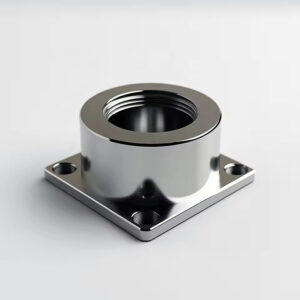
Post-shipment follow-up also surfaces the kind of installation-specific feedback that improves future orders. A supplier who learns that a glass base shoe channel required shimming adjustments on a particular substrate, or that a surface mount spigot dimension created alignment difficulty in a specific application, can carry that information into production documentation and technical notes. A supplier with no post-sale contact loop has no mechanism for that improvement cycle, which tends to mean the same fit issues recur across re-orders rather than being resolved.
Willingness to accept third-party factory audit or video walkthrough before deposit
A supplier who accepts a factory audit or video walkthrough before deposit is providing verifiable information about production capability. A supplier who declines without a coherent operational explanation is withholding it. The willingness to accept an audit is itself a trust signal, independent of what the audit finds.
In practice, buyers often accept supplier-provided factory photos and capability listings without verification, particularly when distance or budget constraints make a physical audit impractical. The risk in that shortcut is structural: a supplier profile that lists CNC machining, waterjet cutting, and 3D CAD design capabilities tells a buyer almost nothing about the consistency of those operations, the maintenance state of the equipment, or whether the work described as in-house is actually being outsourced. An in-house QC department and an ad-hoc production-line check can look identical on a written profile but produce meaningfully different defect rates on repeat orders — a gap that practitioners have observed to range from 30–50% on long-term supply relationships.
| Capability to Verify | Risk if Not Present | What to Confirm via Audit/Walkthrough |
|---|---|---|
| In-house CNC Machining | Reliance on outsourced, less precise parts | Direct observation of CNC equipment and operation |
| Waterjet/Laser Cutting | Inconsistent component fit and finish | Evidence of precision cutting technology in use |
| 3D CAD Design Capabilities | Design errors and poor customization support | Demonstration of CAD software and design process |
| Overall Factory Discipline | Ad-hoc production and higher defect rates | General organization, workflow, and housekeeping standards |
A video walkthrough is a lower-cost alternative to a physical audit that still carries meaningful verification value. Asking to see the CNC floor, the waterjet or laser cutting area, and the QC inspection station during live production — not a prepared showroom visit — gives a buyer direct evidence of operational discipline. Suppliers who offer polished facility videos on demand but resist live walkthroughs during production hours are often managing a gap between their presentation and their operations.
References from active re-order buyers — not just first-purchase testimonials
First-purchase testimonials reflect one data point: whether the supplier could manage a single order well enough to satisfy a first-time buyer. That is a low bar. A supplier who executes reliably on a first order — often with elevated attention, tighter QC focus, and stronger communication — may deliver significantly different results on a third or fourth order when the novelty of the relationship has worn off and production priority has normalized.
References from buyers who have completed at least three separate orders carry a different category of information. They reflect whether quality and on-time delivery have held up across variable production conditions, different batch sizes, and the routine friction of a long-term supplier relationship. Experienced distributors typically require at least three confirmed on-time orders across a 90-day window before treating a supplier as reliable for contract purchasing commitments — a threshold that positions re-order references not as a courtesy check but as a minimum qualification criterion.
| Reference Type | Indicator Strength | What to Ask the Reference |
|---|---|---|
| First-Purchase Testimonial | Low – May only reflect initial sales experience | General satisfaction with the first order and communication |
| Active Re-Order Buyer (3+ orders) | High – Indicates reliable long-term performance | Consistency of quality, on-time delivery, and problem resolution across multiple orders |
| Reference Provided by Supplier | Medium – Requires verification | Confirm the reference’s identity and order history independently if possible |
When contacting a reference, the most useful questions are specific: Has quality been consistent across batches? Has the supplier communicated delays before or after the fact? Has any grade or specification discrepancy appeared on a re-order, and how was it resolved? A reference who can answer those questions from direct experience provides far more procurement value than a testimonial that confirms the supplier was pleasant to work with on the first order. Where possible, verify the reference’s order history independently — a reference provided directly by the supplier has an obvious selection bias that reduces its reliability as a neutral signal.
Identifying a reliable railing supplier before a project commitment requires moving past the signals that are easiest to present: clean product imagery, flexible payment terms on a first order, and positive testimonials from buyers who only ordered once. Each of these can reflect operational capability, or it can reflect a sales function operating ahead of production reality. The more durable signals are structural — proactive documentation habits, audit acceptance, grade-traceable mill certificates, and references from buyers whose satisfaction has survived multiple re-order cycles.
The practical sequence most buyers skip is treating supplier evaluation as a phased threshold rather than a one-time checklist. A supplier who clears the first four signals in this article — responsive communication, proactive documentation, third-party grade verification, and clear scheduling protocols — has demonstrated enough operational discipline to justify a first order. Whether they qualify for ongoing contract purchasing depends on what happens across the first 90 days and three completed deliveries, not on what their profile promises in advance.
Frequently Asked Questions
Q: What should a procurement team do immediately after a supplier passes all seven evaluation signals?
A: Treat the supplier as qualified for a first order only, not for long-term contract purchasing. The article’s own framework makes this distinction explicit: clearing the seven signals demonstrates enough operational discipline to justify placing an initial order, but contract purchasing eligibility requires verifying that quality, grade consistency, and on-time delivery hold across at least three completed deliveries within a 90-day window. Use the first order as a structured data-collection period rather than a final approval event.
Q: Does flexible payment terms on a first order indicate a trustworthy supplier?
A: Not reliably — and for newer suppliers, it can indicate the opposite. Highly flexible terms offered upfront by a supplier under five years old can reflect cash flow pressure rather than buyer-friendly positioning. Payment terms alone carry no signal about production discipline, documentation habits, or material grade consistency, which are the factors that determine whether quality holds across re-orders. Evaluate terms in context rather than treating them as a proxy for supplier reliability.
Q: At what point does third-party grade testing become less necessary for repeat orders?
A: It does not become unnecessary, but the threshold for how frequently to commission it can shift once a supplier has provided heat-number-traceable mill certificates across at least three consecutive production batches with no grade discrepancy. Even then, third-party testing through SGS or equivalent remains the only verification method that cannot be influenced by the supplier’s own documentation practices. For projects in coastal or high-chloride environments where 316 grade is specified, the cost of a single failed verification is high enough that periodic batch testing remains worth maintaining regardless of supplier history.
Q: Is a supplier who declines a factory audit still worth pursuing if their samples and documentation look strong?
A: The refusal itself is a disqualifying signal in most cases. Strong samples and documentation can be produced specifically for the evaluation stage without reflecting routine production conditions. A supplier who declines an audit or live video walkthrough during active production is removing the buyer’s only independent mechanism for verifying that stated capabilities — in-house CNC machining, dedicated QC inspection, waterjet cutting — are actually operational at the described scale. An unexplained refusal means the buyer is accepting the supplier’s self-description without any structural check against it.
Q: How should a distributor weigh sourcing from a well-documented but newer supplier against a longer-established supplier with weaker documentation habits?
A: For contract purchasing commitments, the established supplier’s track record only has value if it includes grade-traceable documentation and re-order references that confirm consistency over time — not just longevity. A newer supplier with structured documentation, audit acceptance, and proactive mill certificates is operationally closer to the standard that experienced distributors use to qualify suppliers for long-term contracts than an established supplier whose quality controls are ad hoc. Tenure without documented process discipline carries significant re-order risk, particularly for grade-sensitive specifications like 316 stainless in high-chloride environments.