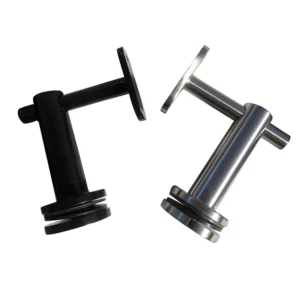
A railing anchor RFQ that goes out without coordinated drawings, substrate data, and material requirements invites quotations that cannot be compared against each other. Bidders will fill the gaps with their own assumptions about post locations, base conditions, and installation access, and those assumptions rarely match. The question the buyer has to answer before issuing the RFQ is not just what the railing looks like, but what information every bidder needs in hand to price the same anchorage scope.
Inputs suppliers need to quote the same anchorage scope
A railing anchor is only one part of a load path that runs from the handrail or guard through the post, into the base connection, and finally into the structure. Suppliers pricing anchor hardware need to see enough of that path to select or configure a compatible anchor system, but they are not positioned to invent the missing parts of it. Where the RFQ states post spacing and mount type without also stating the substrate the posts will anchor into, bidders are left guessing whether the anchor needs to resist a concrete embedment condition, a steel baseplate connection, or a wood-framed attachment, and each of those implies different hardware.
The practical issue is that an anchor system is not a generic commodity item matched by appearance. Its suitability depends on the base-plate configuration it pairs with, the substrate it engages, and the exposure it will see once installed. A buyer who issues an RFQ with only a product name or finish description is asking bidders to quote blind on the parts of the scope that actually drive hardware selection. Where the project has already resolved post spacing and mount type questions, that output becomes a direct RFQ input; where those questions remain open, the RFQ should say so rather than letting each bidder resolve them independently and silently.
This matters because anchorage quoting is comparative by nature. The buyer is not evaluating one supplier’s judgment in isolation but comparing multiple quotations meant to price the same job. If one bidder assumes a surface-mounted base plate on existing concrete and another assumes a core-drilled embedment, the two numbers are not describing the same scope, even if both are labeled “railing anchors” for the same project. The RFQ’s job is to remove that interpretive latitude before it reaches the pricing stage, which is why the drawing package, substrate information, and criteria need to travel together as one request rather than as separate, looser communications.
Where the buyer already has a documented load path from prior project work, referencing it directly in the RFQ keeps every bidder anchored to the same assumptions. Where that documentation does not yet exist, the RFQ should request it as a bidder deliverable rather than treating its absence as a minor omission.
Drawings and site data covering posts, bases, and substrates
| RFQ input | Information to include | حدود القرار |
|---|---|---|
| المخططات والواجهات | Coordinated plans and elevations for the railing scope | Use them as the common quotation basis |
| Post layout | Post locations tied to the drawings | Confirm the quoted anchorage scope follows the intended locations |
| Base connection | Base-plate details for the proposed mounting arrangement | Keep project connection design and approval with the project designer |
| الركيزة | Substrate information at each anchorage condition | Require bidders to state the site conditions assumed in their quotation |
| Existing-condition uncertainty | The field-verification step for any uncertain substrate condition | Close the verification step before production release |
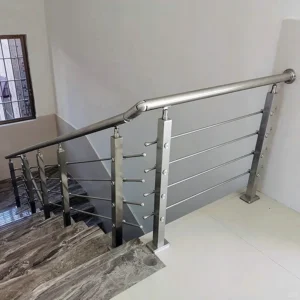
The drawings and site data a railing anchor RFQ carries are not generic project documentation; they are the specific inputs that let a bidder match hardware to a mounting condition rather than to a general railing type. Plans and elevations establish where the railing run sits and how it steps or turns, which affects how anchors at corners, ends, and transitions differ from anchors along a straight run. Post locations tied to those drawings let a bidder confirm that the anchorage scope they are pricing follows the intended layout rather than an assumed or generic spacing pattern.
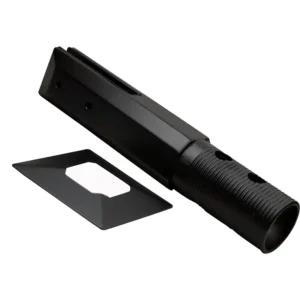
Base-plate details carry a separate kind of information: they describe the proposed mounting arrangement between post and structure, which is the detail that determines which anchor hardware physically interfaces with the base. A supplier can manufacture and supply correctly sized anchor hardware for a stated base-plate configuration, but the connection design and its approval remain the project designer’s responsibility; a hardware quotation does not substitute for that engineering sign-off.
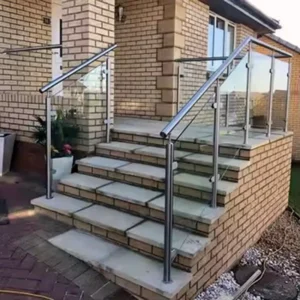
Substrate information is where RFQs most often fall short, because the same base-plate detail performs differently depending on what it anchors into. Concrete, steel, and wood substrates each interact with anchor hardware through different mechanisms, as covered in the context of post anchoring across concrete, steel, and wood structures, and a bidder who is not told which substrate applies at each location has to assume one. Where substrate conditions are confirmed by inspection or as-built information, the RFQ can state them directly. Where existing conditions are uncertain, for example in a retrofit where the original structure is not fully documented, the RFQ should define the field-verification step that must close that uncertainty before the bidder’s quotation can be converted into a production order. Skipping this step does not remove the uncertainty; it just transfers it, undocumented, into the manufacturing release.
Material, finish, exposure, and corrosion-interface requirements
Material and finish decisions for railing anchors are inseparable from the exposure the installed assembly will experience, and the RFQ needs to state that exposure explicitly rather than leaving it to be inferred from the building type. Stainless steel grade and finish govern corrosion performance, but they do so differently depending on what the anchor is in contact with and what environment surrounds the installed connection. An anchor embedded in concrete faces a different chemical environment than one through-bolted to a coated steel base plate, and a project near a marine or chemically aggressive environment changes the corrosion-resistance requirement in ways that a purely aesthetic finish specification does not capture.
This is why visual finish and material grade have to be treated as separate RFQ inputs rather than one combined line item. Two anchors can share an identical surface appearance while differing in the underlying alloy and its resistance to the specific exposure the project presents. A buyer who specifies only a finish name risks receiving a quotation that matches the look but not the corrosion performance the site actually requires, and that mismatch will not surface until the installed hardware has been in service under real exposure conditions.
Corrosion-interface requirements add another layer: where dissimilar metals meet at the anchor-to-substrate or anchor-to-base-plate connection, galvanic interaction becomes a relevant condition, and the RFQ should identify where such interfaces occur so bidders can address them rather than default to a generic hardware set. Where the project sits in a controlled interior environment, this requirement may be minimal; where it sits in an exterior, coastal, or otherwise corrosive setting, it becomes a primary driver of material selection and should be stated as plainly as the dimensional requirements. Stating exposure conditions alongside material and finish requirements lets bidders propose anchor systems suited to the actual service environment rather than one suited only to the drawing’s dimensions.
Installation, inspection, and documentation responsibilities
| Responsibility or deliverable | RFQ assignment | Boundary to state |
|---|---|---|
| Connection design and approval | Project designer | A supplier hardware quotation does not transfer this responsibility |
| Hardware and manufacturing scope | المورد | Identify the hardware and manufacturing work included in the quotation |
| Installation basis | Bidder | State the assumed anchor system, required site conditions, installation procedure, and exclusions |
| Inspection and field verification | Project-specific responsible party to be identified | Define the field-verification step for uncertain existing substrates and close it before production release |
| Quality records and evidence | Bidder | Identify the evidence package and required quality records included with the offer |
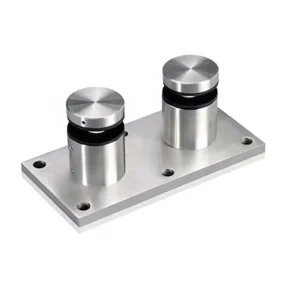
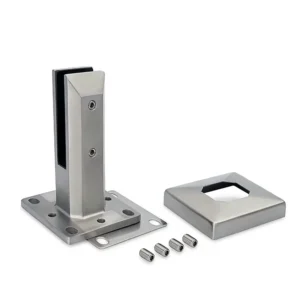
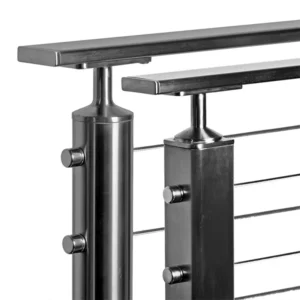
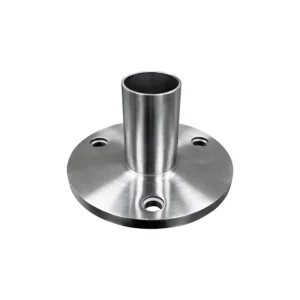
A railing anchor RFQ has to separate what the supplier is pricing from what the project team is responsible for deciding, because the two are easy to blur once a quotation arrives with hardware recommendations attached. The supplier’s scope covers the hardware and manufacturing work included in the quotation: producing anchors and related components to the stated material, finish, and dimensional requirements. Connection design and its approval belong to the project designer, and a supplier’s ability to manufacture and supply project-matched anchoring hardware, including أنظمة التثبيت و surface-mount base plates suited to the stated mounting conditions, does not by itself establish engineering responsibility for the completed connection or confirm that a given configuration is structurally appropriate for the project’s loads.
Each bidder should state the installation basis their quotation relies on: the anchor system assumed, the site conditions required for that system to perform as quoted, the installation procedure anticipated, and any exclusions. This matters because an anchor system’s suitability is conditional on the installation method matching the site’s actual access and sequencing. Where access is constrained, for example by an occupied building or a restricted work area, an installation procedure that assumes open access may not be executable as quoted, and the quotation’s pricing and schedule assumptions would no longer hold.
Inspection and field verification need an assigned owner specific to the project, particularly where existing substrate conditions are uncertain. Defining this step and closing it before production release prevents a mismatch between the substrate a bidder assumed and the substrate actually present from surfacing only after hardware has been manufactured to the wrong configuration. Quality records and evidence are a separate deliverable from design approval: a bidder’s evidence package demonstrates what was supplied and how, but it does not substitute for the project designer’s connection approval, and the RFQ should request this evidence as a distinct item rather than assume it is implied by product literature or general supplier reputation.
Bid qualifications to resolve before supplier selection
| Bid qualification | Statement required from each bidder | Resolution before selection or release |
|---|---|---|
| Assumed anchor system | Identify the anchor system included in the quotation | Compare offers on the same anchorage basis |
| Required site conditions | State the conditions the offer assumes | Resolve differences against the project site information |
| Installation procedure | Describe the procedure on which the quotation relies | Confirm its applicability to the stated access and site conditions |
| الاستثناءات | List work, conditions, or deliverables excluded from the offer | Resolve scope gaps before supplier selection |
| Evidence package | List the proposed quality records and supporting evidence | Check the package against the RFQ request without treating it as project approval |
| Uncertain existing substrate | State the field verification needed to close the uncertainty | Complete the defined verification before production release |
Once quotations are in hand, the buyer’s task shifts from gathering information to reconciling it across bidders who may have made different assumptions even when responding to the same RFQ. The qualifications each bidder states are what make that reconciliation possible, because the dollar figure alone does not reveal what anchor system, site conditions, or installation procedure it reflects. Comparing offers on the same anchorage basis means confirming that each bidder’s assumed anchor system addresses the same substrate and base-plate condition, not simply that each bidder quoted a product described with similar language.
Differences in stated site conditions are where quotations most often diverge without the buyer noticing, because a bidder who assumes favorable access or confirmed substrate conditions can quote differently from one who assumes verification work is still needed. Resolving these differences against the project’s actual site information, rather than accepting the lowest-stated assumption by default, keeps the comparison honest. The same applies to installation procedure: a procedure that depends on a particular access condition or sequencing assumption needs to be checked against the project’s stated access and site conditions before it can be treated as comparable to a competing bidder’s procedure.
Exclusions and evidence packages close out the comparison. A list of excluded work, conditions, or deliverables tells the buyer what is not covered by the quoted price, and scope gaps between bidders need resolution before selection, not after award. An evidence package of quality records should be checked against what the RFQ requested, but it functions as documentation of what was supplied, not as a substitute for the project designer’s connection approval described earlier. Where the project still carries an uncertain existing substrate condition, the bidder’s stated field-verification step becomes a precondition rather than a formality: it must be completed and its results incorporated before any quotation is converted into a production release, since production proceeding on an unverified substrate assumption reintroduces the same mismatch risk the RFQ’s drawing and site-data requirements were meant to close.
الأسئلة الشائعة
س: Can the anchor supplier finalize the railing connection design as part of the quotation?
A: No. The quotation should identify the assumed anchor system and the supplier’s hardware and manufacturing scope, while connection design and approval remain with the project designer.
س: How should quotations be compared when bidders assume different anchor systems or site conditions?
A: Compare each bidder’s stated anchor system, required site conditions, installation procedure, exclusions, and evidence package against the same RFQ basis. Resolve any differences that change the quoted scope before selecting a supplier.
س: What should the RFQ do when an existing substrate condition is uncertain?
A: Define the field verification needed to close the uncertainty and require each bidder to state the condition assumed in its offer. Complete that verification before production release.
س: How should installation access be addressed in an anchor RFQ?
A: Describe the known access limits and require bidders to explain the installation procedure and site conditions behind their quotation. Any access condition that conflicts with that basis should be resolved before release.
س: Does a bidder’s evidence package constitute project approval of the proposed anchorage?
A: No. Use the listed quality records and supporting evidence to check what the offer includes, while keeping project-specific connection approval with the project designer.