Buy a controlled set of angles, not unlimited movement
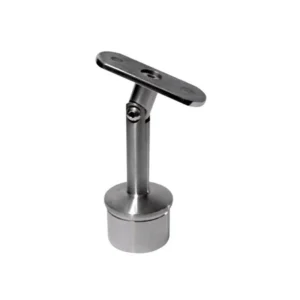
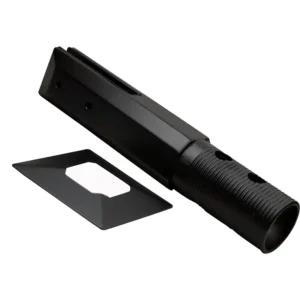
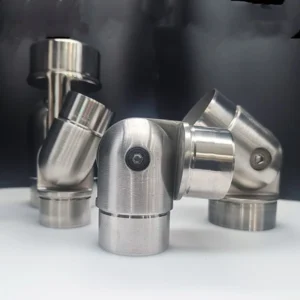
Variable angle brackets are selected when one hardware concept must be set to different intentional route angles across a project or product programme. “Variable” does not mean any angle, multi-axis movement or a joint that stays free under service load. The buying decision is the usable angular envelope, pivot plane, setpoint method, final lock, interface geometry and which angle is set at the factory or on site.
Send the route drawing or a few marked sections, the smallest and largest required angles, the support and carried-member profiles, and an estimated quantity per angle. ESANG can use that schedule to clarify whether a variable bracket, several fixed brackets or a custom transition is the better request.
Request a variable angle bracket quote on WhatsApp
Map every intended setpoint
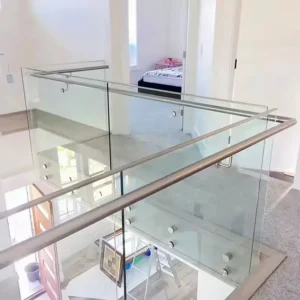
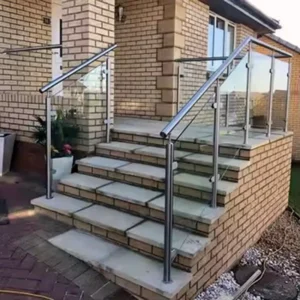
List the real project conditions—level run, stair/ramp slope, landing transition, corner or another route—and assign a target angle to each. Use one angle reference throughout. A range that contains every setpoint may still be unsuitable if a required position sits at an end stop, loses tool access or causes the saddle or bracket body to interfere with adjacent construction.
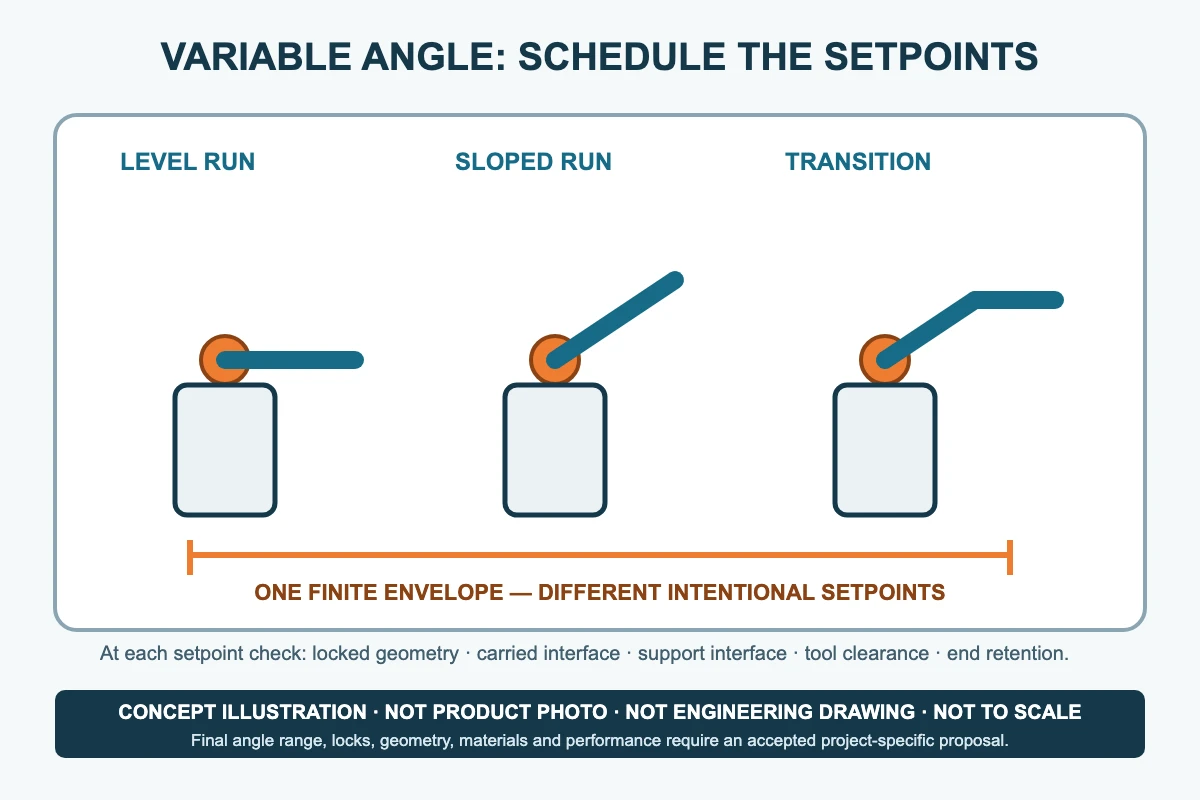
Choose how the angle is produced and held
| Configuration question | What to freeze | Trade-off or failure mode |
|---|---|---|
| Angular envelope | Minimum, maximum, target setpoints and measurement reference | A headline range may include the angle but not the necessary clearance or locked geometry. |
| Pivot plane and axes | Rotation plane, pivot-axis direction and whether any second axis is requested | One-axis hardware cannot follow a compound route merely because it has a wide range. |
| Setpoint control | Continuous setting, indexed positions or factory preset request | A continuous arc may be flexible but requires an accurate field datum; indexed positions may not match the design angle. |
| Lock and end retention | Locking parts, tightening order, end stops, anti-rotation and tool access | The angle may drift during tightening or be set beyond the intended working window. |
| Carried interface | Saddle/plate/receiver form, profile, dimensions and fastening | The selected angle does not cure poor rail contact or inaccessible fasteners. |
| Support interface | Post/wall/plate geometry, fixing face, hole pattern and backing | The adjustable head can work while the lower connection is incompatible. |
| Position at each angle | Height, projection and collision envelope at every scheduled setpoint | Rotation can shift the carried-member centreline even when the angle itself is correct. |
Decide between variable, fixed and multi-axis hardware
Several repeatable project angles
A variable bracket can reduce the number of unique parts when all scheduled setpoints fit one reviewed envelope and share the same interfaces. The quote should still identify quantity by setpoint and whether parts arrive preset or are adjusted on site.
One repeated angle with controlled factory work
A fixed or factory-set bracket may remove a field decision and simplify inspection when the route angle is already stable. Compare that benefit with the need to absorb real construction tolerance.
A compound transition
If the route turns in more than one plane, a single pivot may be insufficient. A two-axis joint or custom connector is a separate request and must show both movement limits, locks and interference zones.
Variable angle is also not self-aligning. The former holds an intentional route angle; the latter provides limited compensation toward a datum or contact. Do not combine those responsibilities unless the proposed assembly explicitly contains and controls both.
Keep adjustment, structure and interfaces separate
The variable mechanism sets orientation. The completed connection still includes the carried rail or component, saddle/plate, pivot pin or joint, locks, bracket body, support interface, anchors/fasteners and substrate. Bracket angle cannot replace structural location, adequate backing or engineering confirmation of the complete load path.
- State whether rail fixing, support anchors, pivot hardware, covers and installation tools are included.
- Record tool clearance and visible fastener requirements at every scheduled angle.
- Keep field welding, drilling, adapters, backing, shims and final alignment survey as explicit scope lines.
Assign factory and site responsibilities
The factory proposal should return the angular envelope, target setpoints, pivot plane, setpoint control, lock, end retention, geometry at each requested angle, mating interfaces, material/finish and supplied hardware. If parts are preset, the marking and angle schedule should be defined.
The site team verifies the built geometry, support and anchor conditions, identifies bracket locations, sets any field-adjusted angle, tightens and locks the mechanism, and checks the finished route. A field-adjustable product does not authorize the installer to depart from the accepted route or use the movement to conceal location errors.
Request a quotation that exposes the limits
Compare offers using the same schedule: angle convention; minimum/maximum and target setpoints; quantity per setpoint; pivot plane and axes; factory preset or site set; continuous/indexed control; lock and anti-rotation; geometry and clearance at each angle; support and carried interfaces; material/finish; hardware inclusions; drawing revision; packaging labels; and project-specific evidence needed for acceptance.
Frequently asked procurement questions
Does variable angle mean 0–180°?
No. The usable envelope belongs to the exact proposed configuration and may be reduced by end stops, geometry or clearance.
Can the joint stay movable after installation?
Do not assume so. Most procurement should distinguish installation adjustment from an intentionally serviceable joint. The latter requires its own retention, access, inspection and maintenance basis.
Can one part replace every fixed-angle bracket in inventory?
Only for the subset that shares the accepted angular envelope, mating interfaces, locked geometry and project conditions. A “variable” label is not an inventory compatibility guarantee.
Should parts be preset at the factory?
Factory preset can reduce site decisions when the angle schedule is stable. Site setting can absorb verified fit-up variation but requires a clear datum, accessible lock and inspection sequence.
What if the route changes in two planes?
Show both axes on the drawing. A single-plane pivot is insufficient; request a reviewed multi-axis or custom transition rather than forcing one joint.
Send the angle schedule, not only a range
Share each intended setpoint, quantity, reference line, route section, support and carried interfaces, environment and preference for preset or field setting. Ask the response to return the working envelope, lock, geometry and inclusions at those angles.