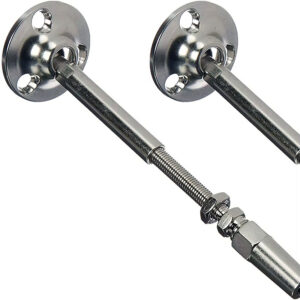
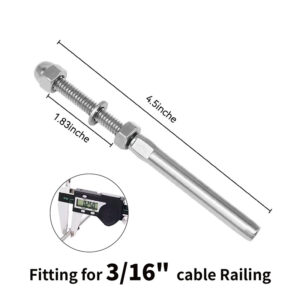
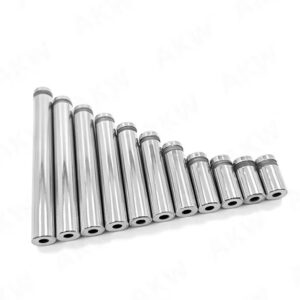
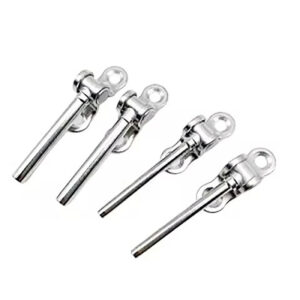
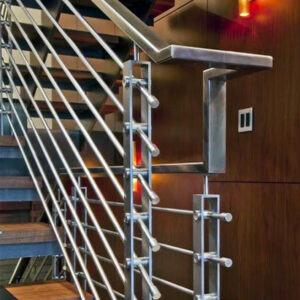
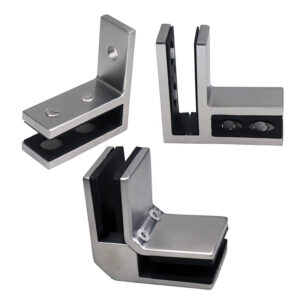
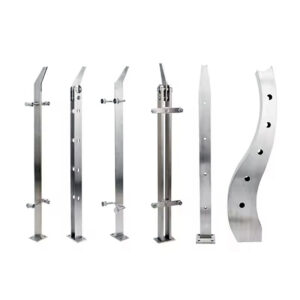
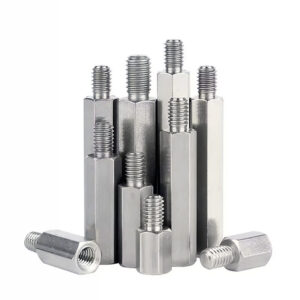
Specifying the right tensioner grade is only half the decision. The more common failure pattern on coastal decks isn’t the tensioner itself oxidizing—it’s the assembly corroding at the interfaces: where the cable terminal seats against the tensioner body, where the fastener threads into the post fitting, where a lower-grade component bleeds rust onto an adjacent 316 surface months after handover. That kind of callback is expensive to diagnose and nearly impossible to remedy without disassembly, and it often originates in a specification that looked complete on paper but treated grade selection as a finish line rather than a starting point. The sections below are structured to help you evaluate tensioner material choice, assembly compatibility, crevice geometry, and cleaning access as a single integrated decision rather than four separate line items.
Coastal Exposure Conditions That Affect Tensioners
Chloride-laden air doesn’t attack hardware uniformly. The relevant variables are proximity to the waterline, prevailing wind direction that drives salt spray onto horizontal and angled surfaces, and whether the deck geometry creates sheltered zones where moisture dwells rather than drains. Tensioners on an exposed ocean-facing balcony rail sit in a different corrosion environment than tensioners on a protected courtyard deck two blocks inland, even if both projects are described as “coastal.”
ISO 9223:2012 provides a classification framework for atmospheric corrosivity based on factors including chloride deposition rate and temperature-humidity cycling. Its value for specifiers is that it gives a language for distinguishing exposure severity—it can inform which material tier is appropriate for a given site condition—but it does not predict how long a specific tensioner will last or guarantee performance once installed. Use it as a planning tool that justifies your material and maintenance schedule decisions, not as a compliance threshold that a tensioner either passes or fails.
The practical implication is that “coastal” should prompt a site-specific exposure assessment before material grade is locked. A tensioner specified for moderate coastal exposure based on ISO 9223 corrosivity categories is a more defensible decision than one selected because a manufacturer describes it as “marine grade” without reference to the actual environment. Grade selection that isn’t tied to a characterised exposure condition is a specification risk, because it can lead to either over-specification that inflates cost or under-specification that generates corrosion callbacks.
Compatibility Across Cable Fasteners and Terminals
A tensioner’s corrosion resistance is only as effective as the resistance of every component it contacts. This is where the specification most often breaks down in practice: a 316 tensioner body is specified, but the swage terminal or lag-end fitting is sourced separately at a lower alloy grade, or the fasteners used to anchor the assembly to the post are a commodity 304 product. The result is a galvanic couple that concentrates corrosion at the interface—often at the thread engagement or the socket face—precisely where structural load is transferred.
Compatibility in this context means two things that must be verified separately. Material grade compatibility requires that all components in contact share a corrosion strategy suited to the same exposure category—mixing alloy grades without accounting for electrochemical potential difference is a design risk. Dimensional and thread-form compatibility requires that tensioner threads, cable terminal threads, and any inline fittings are matched in thread standard, pitch, and engagement length. Grade alone does not confirm fit. A 316 tensioner threaded to a mismatched terminal pitch will bind, strip, or seat improperly regardless of the alloy, creating a crevice at the joint that traps moisture and accelerates localised pitting.
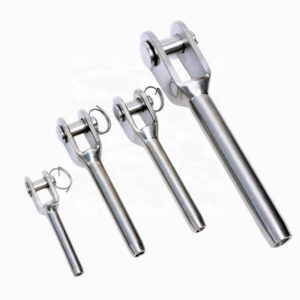
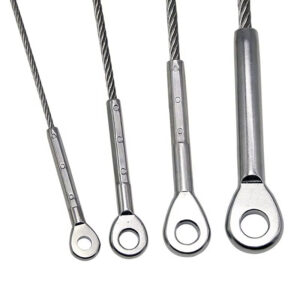
Before approving a hardware schedule, verify both checks explicitly: confirm alloy grade across tensioner body, cable terminals, swage fittings, and post fasteners; then confirm thread form and dimensional compatibility per the system manufacturer’s specification. Treating these as one check rather than two is how incompatibilities reach installation. Esang’s stainless steel cable fittings in 316 marine grade are designed around this matched-assembly logic, but the principle applies regardless of source: a consistent material schedule must be verified at procurement, not assumed from a single-grade specification.
Grade Choice Versus Finish and Crevice Design
316 stainless improves chloride resistance over common interior grades—principally 304—through its molybdenum addition, which raises the alloy’s resistance to pitting initiation in halide environments. That improvement is real and meaningful for moderate coastal exposure. It is not, however, a blanket solution for severe exposure conditions or for hardware geometries that trap moisture regardless of alloy grade.
The distinction that specifiers underestimate is that grade selection and crevice design are separate variables. A 316 tensioner with a tight hex socket or a deeply recessed thread root creates a geometry where chloride-laden moisture accumulates and oxygen is depleted—the conditions under which crevice corrosion initiates even in higher-alloy materials. Pitting and crevice corrosion are driven by local chemistry at the metal surface, not by bulk exposure alone. ISO 3506-1:2020 classifies corrosion-resistant stainless fasteners by mechanical properties and alloy grade, which makes it a relevant framework for understanding what grade designation means in structural terms—but it does not govern crevice geometry or surface finish, and it cannot be read as a crevice corrosion performance guarantee.
Surface finish adds a third variable. Polished or electropolished surfaces reduce surface roughness, which lowers the number of initiation sites for pitting and makes the surface easier to clean. Brushed or mechanical finishes are common for architectural reasons but retain micro-scratches where chlorides can concentrate. The trade-off is real: a coarser finish may be preferred for appearance or to match adjacent elements, but it carries higher maintenance frequency requirements in coastal exposure. For severe environments—direct surf exposure, high chloride deposition zones classified at the upper end of ISO 9223 corrosivity categories—a higher-alloy option such as 2205 duplex or 316L with enhanced surface treatment may be a more defensible specification than standard 316 alone. Framing 316 as always sufficient for “coastal” use, without reference to exposure severity or crevice geometry, is a specification assumption that can produce failures at the connections that matter most structurally.
Cleaning Access Around Threads and Post Faces
The geometry of a tensioner installation often determines whether maintenance can actually reach the surfaces where corrosion initiates. A tensioner mounted flush to a post face or recessed into a channel profile creates a narrow clearance behind the body where salt deposits accumulate after each spray event and are not removed by rain or surface rinsing. Thread roots—whether on the tensioner shaft or at the post fitting interface—are the most difficult zones to reach with any cleaning tool once the hardware is tensioned and the cable is loaded.
This matters because cleaning removes chloride deposits that would otherwise concentrate and initiate pitting or crevice corrosion over time. Accessible hardware can be maintained with periodic freshwater flushing and appropriate cleaning agents; inaccessible hardware cannot be maintained effectively regardless of how good the cleaning protocol is on paper. Treating cleaning access as a design criterion at the specification stage—considering tensioner orientation, clearance to adjacent structure, and post face geometry—is more effective than scheduling aggressive maintenance that the geometry prevents from working.
The practical check during hardware selection is to assess each tensioner position against two questions: can the thread engagement zone be reached with a brush or cloth when the system is under tension, and does water shed away from the post face rather than pooling against it? If the answer to either is no, the maintenance schedule should reflect that, and the material and finish specification should be upgraded accordingly. Designing for cleanability is not a code requirement—it is a maintenance planning decision that directly affects long-term pitting resistance and the likelihood of fastener seizure on a system that may need adjustment or replacement years after installation.
Assembly-Level Corrosion Approval Criteria
Approving a coastal cable railing assembly for material corrosion performance requires a review at the assembly level, not just at the level of individual components. The most common gap in a hardware schedule is consistency: one supplier’s 316 tensioner paired with another supplier’s terminal fittings and a third supplier’s post fasteners, each technically described as “316 stainless,” but without a verified check that alloy composition, surface condition, and crevice geometry are compatible across the full assembly.
Some manufacturers address this by building closed hardware systems where all components share a single material specification and are designed to interface at verified dimensions. A system built entirely from 316L marine-grade stainless across tensioner, cable terminal, and fitting components eliminates the most common source of incompatibility—mixed alloy grades at contact interfaces—and simplifies the approval review. That is a genuine procurement advantage where it is available, though it should be treated as a manufacturer-specific process detail rather than an industry-wide standard. It does not remove the need to verify thread-form compatibility or to confirm that the surface finish across the assembly is appropriate for the specific exposure classification.
Where ISO 3506-1:2020 is relevant to assembly approval is in understanding what a fastener’s grade designation means in mechanical and alloy terms—it provides a testing framework for classifying corrosion-resistant fasteners, which can anchor the evaluation of fasteners used in post connections and terminal anchoring. It does not govern the assembly’s overall corrosion performance or define an approval threshold for the assembled system. Assembly-level approval is a verification check—confirming material consistency, dimensional fit, surface condition, and cleaning access across all exposed components—not a codified test protocol. Completing it before installation, rather than after the first maintenance inspection, is what separates a defensible coastal specification from a system that looks correct on the hardware schedule and corrodes at the joints.
For a closer look at how 316 performs against 304 across the specific conditions relevant to coastal hardware, Кабельные перила из нержавеющей стали 316 и 304: 7 критических различий для прибрежных и высококоррозионных сред provides a useful reference for the grade decision in context.
The decision that determines long-term performance on a coastal tensioner specification isn’t which grade to call out—it’s whether the full assembly holds together as a consistent corrosion strategy. That means verifying alloy grade and surface finish across every component in contact, confirming that thread interfaces are dimensionally matched, and assessing whether the installed geometry will allow the maintenance access the specification assumes. A tensioner that scores well on grade and poorly on crevice geometry or cleaning access is still a liability.
Before finalising a hardware schedule for a coastal project, the review should confirm three things independently: that all components share a compatible alloy grade suited to the site’s exposure classification, that dimensional and thread-form compatibility has been verified rather than assumed, and that the specified maintenance protocol is actually achievable given the as-installed geometry of each tensioner position. Those three checks together are what make a 316 specification for coastal use a real decision rather than a material callout that defers the risk to handover.
Часто задаваемые вопросы
Q: Does the guidance on 316 tensioner assemblies apply to non-coastal corrosive environments like pool decks or areas with de-icing salts?
A: Yes, the principles transfer directly. Chlorides from pool chemicals or road salt create similar crevice corrosion and galvanic coupling risks to marine exposure, even when the air isn’t salt-laden. The same checks apply—match alloy grades across all components, verify thread compatibility, and assess cleaning access—but you should classify the exposure severity using a framework like ISO 9223 rather than assuming “coastal” thresholds. An indoor pool enclosure with high humidity and chlorine can be more aggressive than a shielded coastal balcony, so treat the environment as the deciding factor, not the label.
Q: Once I’ve specified 316 throughout, how do I verify that the delivered components actually match the grade and thread requirements before installation?
A: Request mill test certificates for every batch of stainless components and compare the alloy composition against the specification called out in the hardware schedule—don’t accept a verbal “316” designation. For thread compatibility, obtain the manufacturer’s dimensional data sheets showing thread standard, pitch, and tolerances, and confirm they align between tensioner, terminal, and post fitting. If multiple suppliers are involved, cross-check these documents yourself rather than relying on a single supplier’s assurance. This verification step turns the specification into a traceable procurement decision and catches mismatches before they reach the jobsite.
Q: At what point does a coastal location become severe enough that 316 stainless tensioners are no longer sufficient?
A: When the site falls into ISO 9223 corrosivity category C4 or higher—characterised by direct salt spray, persistent moisture, or chloride deposition rates above roughly 60 mg/m²·day—standard 316 alone often becomes insufficient, especially for components with tight crevices or coarse finishes. In those settings, upgrade to a higher-alloy option like 2205 duplex or 316L with an electropolished surface to resist pitting initiation. Distance from the waterline is a rough proxy, but the deciding factor is the actual chloride load and drying pattern at the installation point, so delegate the final call to a site-specific exposure assessment rather than a simple distance rule.
Q: Is it less risky to source all cable railing hardware from a single manufacturer rather than mixing compatible brands?
A: A single-manufacturer system that ships a unified material specification removes the most common incompatibility—mismatched alloy grades at contact interfaces—but it doesn’t eliminate the need to verify thread-form compatibility and surface finish. Mixing brands can work if you rigorously check material certs, dimensional fit, and electrochemical compatibility across every interface; the risk is that those checks become harder to enforce and easier to overlook during procurement. The safer path, particularly for complex or high-exposure projects, is to start with a closed-source assembly where the manufacturer has already done the interface engineering, then still verify the deliverables.
Q: For a second-row beach property where direct salt spray is rare, does the cost premium of 316 tensioners still pay off?
A: In sheltered coastal conditions—setbacks of several hundred metres, no prevailing onshore wind, and good natural drainage—the performance gap between 304 and 316 narrows, and the premium may be harder to justify. However, “rare” salt spray is not the same as absent; chloride can still concentrate in crevices and behind flush-mounted hardware over multiple seasons. If the project budget is tight, you might reserve 316 for the most exposed elevations and use 304 with a polished finish and rigorous cleaning access elsewhere, but this requires a detailed, position-specific exposure assessment and a maintenance commitment that the owner is willing to follow—otherwise, the consistency of a full 316 assembly often returns the premium through fewer callbacks.