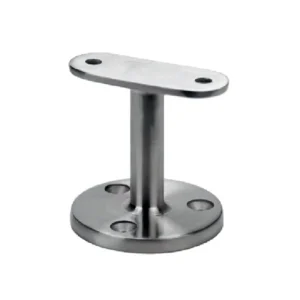
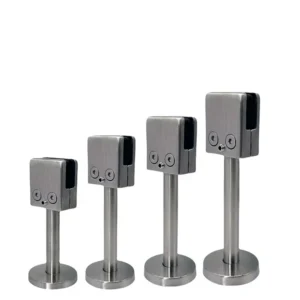
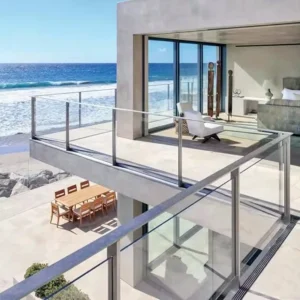
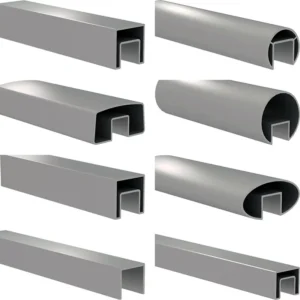
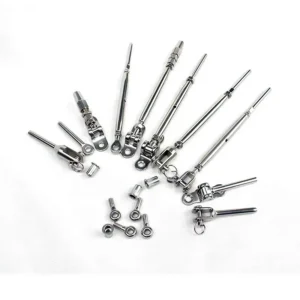
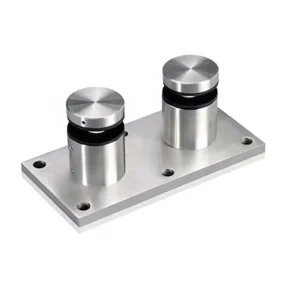
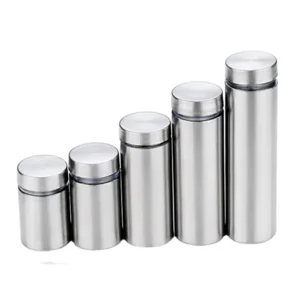
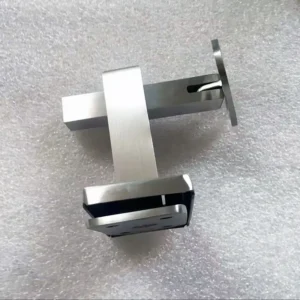
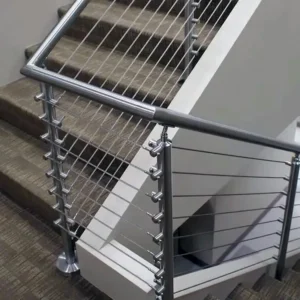
Glass mounting adapters create a defined point interface between prepared glass and a wall, frame, plate or other receiving member. The visible cap is only one part of the decision. The body depth, glass hole, protective pad stack, thread or anchor, receiving structure and tightening access must work together.
This page is for selecting a point or stand-off adapter. If the primary issue is an angle fixed directly to a wall, use a wall-to-glass connector decision; if the receiving member is a railing post, the post section and access belong in a post-to-glass adapter request. Send ESANG a photo or sketch, glass build-up, required stand-off and estimated quantity to begin.
Discuss glass mounting adapters on WhatsApp
Define what the adapter must adapt
A useful adapter specification names both sides of the interface. “For 12 mm glass” is incomplete without the glass make-up, hole detail, mounting body and receiving thread or anchor. Start with these choices:
- Glass side: point-fixed hole, countersunk detail if required, or another prepared interface.
- Stand-off: the required distance from the receiving face to the glass centreline or glass face.
- Receiving side: machine thread, stud, screw, anchor or plate interface to be confirmed for the actual support.
- Adjustment: whether alignment must be set before the glass is placed or remain accessible after placement.
- Visible form: round or square face, body proportions and requested surface appearance.
A longer body is not automatically a stronger or more adjustable solution. It changes the stand-off and the lever arm applied to the receiving connection. The project design must account for the complete geometry and actions.

Coordinate the glass before heat treatment
Point-mounted glass normally needs a prepared hole. Freeze the hole diameter, centre position, edge distance, countersink or recess if any, and the surrounding clearances with the glass processor. Heat-strengthened or tempered glass should not be subjected to cutting, drilling or notching after heat treatment.
For laminated glass, state the individual plies, interlayer and total build-up. A nominal total thickness alone may not define the correct sleeve, gasket or cap engagement. Also state whether coatings, frit or other surface layers occur near the fixing so the project team can confirm the permitted detail with the glass supplier.
The protective stack is part of the adapter
Pads, bushings and sleeves separate the metal parts from the glass and keep the fastener centred in the prepared opening. Ask for the proposed glass-contact set to be listed with its intended build-up. Missing or substituted pieces can allow hard contact, uneven pressure or a loose face cap.
The tightening method matters too. Confirm which part rotates during assembly and which face must be held. Turning a component against the glass or gasket when the detail expects it to remain stationary can damage the protective layer or mark a visible surface.

Match the thread and receiving structure
The back of an adapter may present a male thread, female thread, screw form, stud or another connection. Do not match by diameter or appearance alone. The proposed thread designation, engagement, mating part and locking method should be written in the quotation or approval drawing.
The receiving structure may be concrete, steel, timber, a fabricated plate or a framed assembly. Its design, thickness, edge distance and anchor capacity remain separate checks. A mounting adapter does not make a finish layer, thin sheet or hollow section suitable without appropriate backing.
Questions that prevent thread mismatch
- Is the receiving interface already fabricated, or can it be designed around the adapter?
- Is the thread metric or imperial, and what engagement is available?
- Can the rear side be reached for a nut, backing plate or holding tool?
- Must the adapter be removable after adjacent finishes are installed?
- Will a waterproofing or isolation detail surround the penetration?
Lay out point fixings as a system
Panel size, adapter spacing, glass make-up and edge distances must be decided together. The correct number and location of points comes from the project design, not from a generic product photograph. Mislocated points can make fabricated glass unusable; uneven stand-offs can twist the pane or leave one fixing carrying load before the others engage.
Provide a numbered point layout. It should distinguish fixed points, adjustable points and any movement allowance if those roles exist in the engineered design. Coordinate corners, joints, cap rails and adjoining panels so visible caps do not collide and the installer can reach every final connection.
Exposure, appearance and adjacent materials
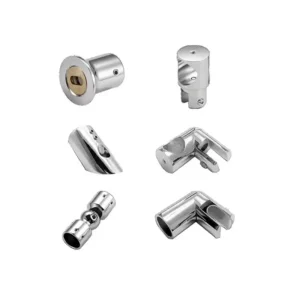
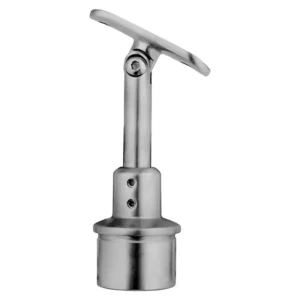
State whether the installation is indoors, outdoors, coastal, near a pool or exposed to industrial contaminants or aggressive cleaners. Identify adjacent metals and trapped-water conditions. Request the proposed base material, finish, glass-contact materials and maintenance assumptions in writing. The available photos show visible colour and surface appearance only; they do not prove a material grade, coating process or environmental rating.
Supply boundary
Compare offers by itemising the complete point-fixing stack:
- visible cap and spacer or adapter body;
- glass sleeves, washers, pads and gaskets;
- threaded stud, screw or mating insert, if included;
- anchors, backing plates or receiving hardware, only when explicitly listed;
- glass drilling, glass supply and installation, only when explicitly listed;
- project calculations, test reports or approval support, only for the defined configuration and scope.
If the adapter is only one component in the quotation, the project designer remains responsible for verifying the glass, point layout, fastener, substrate and completed assembly. Do not extend a component material certificate or dimensional drawing into a claim about the whole guard or glazing system.
Information for a useful quotation
You can begin with a photo and approximate quantity. Before production, close these fields:
- application and whether the glass is a guard, screen, partition, cladding or another use;
- panel dimensions, glass type, laminated build-up and finished edge condition;
- complete hole drawing, including diameter, centres, edge distances and any countersink;
- required glass-to-structure gap or centreline stand-off;
- receiving material, available thickness, thread or proposed anchor route;
- point layout, adjustment need and access from each side;
- environment, adjacent metals, water exposure and finish preference;
- quantity, packaging and required product or project documents.
The quotation should state the proposed cap and body geometry, stand-off, thread interface, matched glass range or exact build-up, included protective parts and fasteners, proposed material/finish, and all exclusions. Those fields allow an adapter offer to be checked before the glass and receiving structure are committed.