Selecting the wrong balustrade material for a balcony project rarely announces itself at the point of purchase. The failure surfaces later — during a load deflection check, when facade staining appears after the first wet season, or when a retrofit engineer flags that the slab cannot carry the cumulative dead load of the system originally specified. These are not hypothetical edge cases; they are the downstream cost of skipping a structured comparison between exposure condition, finish expectation, and repair strategy before committing to a material. Understanding where aluminium genuinely performs, where it creates risk, and where stainless steel components deliver something aluminium cannot replicate regardless of coating quality will change which questions you ask before the order is placed.
Exposure levels that change aluminium suitability
Aluminium’s performance envelope is not fixed — it shifts depending on where the railing is mounted, how the connection is made into the slab, and what finish system the profile carries into the field. Each of those variables can either extend or shorten service life independently of the alloy grade chosen.
One underappreciated advantage is aluminium’s low coefficient of thermal expansion, which reduces the risk of warping or buckling in climates with significant temperature swings. For long balcony runs, this characteristic contributes to maintaining alignment and visual continuity over time without requiring the same expansion gap management that heavier steel profiles sometimes demand. That said, thermal behaviour alone does not define exposure suitability — what matters equally is how the system connects to the building fabric.
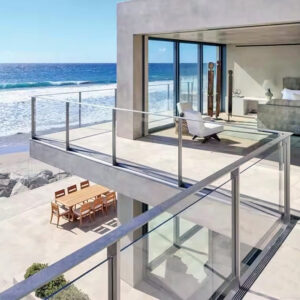
Point mounting of railing posts directly into the balcony slab is the connection method most likely to introduce moisture risk. Penetrating the waterproofing layer without adequate resin-based sealing creates a pathway for water ingress that can compromise the slab insulation over time. A more conservative approach — attaching the railing to the bottom or front face of the slab — eliminates that penetration entirely, preserving both the waterproofing membrane and the thermal continuity of the building envelope. Neither outcome is guaranteed by the mounting method alone; the specific execution and sealing quality determine whether risk is realised, but the planning decision about where the post meets the slab is the moment when that risk is either introduced or avoided.
Surface finish specification is the third exposure variable that deserves scrutiny before acceptance. A Qualicoat-certified powder coating process, typically involving a 7-stage pre-treatment system, is a quality marker that indicates the coating was prepared to resist weathering and corrosion under demanding conditions. Buyers should confirm this specification on a per-project basis rather than assuming it as standard — not because it represents a regulatory threshold in every jurisdiction, but because the gap between a properly prepared coating and a basic polyester finish becomes visible as chalking, adhesion failure, or pitting within a few years in coastal or industrial environments.
Each of these exposure variables interacts with the others. A well-coated aluminium profile mounted through an unsealed slab penetration is still an exposure risk. A poorly specified coating on a correctly mounted profile will degrade regardless of mounting quality. Reviewing all four factors together is the practical discipline that separates an informed exposure assessment from a material assumption.
| Fator de exposição | What to Review | Por que é importante |
|---|---|---|
| Expansão térmica | Aluminium’s low coefficient of thermal expansion; confirm profile design accounts for temperature fluctuations. | Reduces risk of warping or buckling, maintaining visual and structural integrity. |
| Point mounting of posts | Point mounting can damage slab insulation; sealing with resin-based suspension is required. | Prevents water ingress and long-term moisture damage behind the facade. |
| Alternative mounting position | Attaching railing to the bottom or front of the slab avoids penetrating the waterproofing layer. | Eliminates leakages and thermal bridges, preserving the building envelope. |
| Surface coating system | Qualicoat powder coating with 7-stage pre-treatment; confirm specification. | Delivers durable finish that resists weathering and corrosion in harsh exposures. |
Connection stiffness issues hidden by early price comparisons
Price comparisons at the specification stage almost always compare aluminium and stainless steel at the profile or component level. What they rarely capture is how connection design, profile wall thickness, and anchor configuration determine whether the installed system meets the stiffness thresholds that structural review or local building requirements demand.
Aluminium railing systems can be designed to meet meaningful load performance criteria. For context, some systems are load-tested under frameworks like BS 6180:2011, with horizontal line load ratings of 0.74 kN/m and 1.5 kN/m available depending on design intent and occupancy category. These are design figures from a named testing framework, not universal regulatory minimums that apply in every jurisdiction — but they illustrate the range of structural demand a balcony railing can face, and they make clear that “aluminium” as a category covers a wide range of actual stiffness outcomes depending on how the system is engineered.
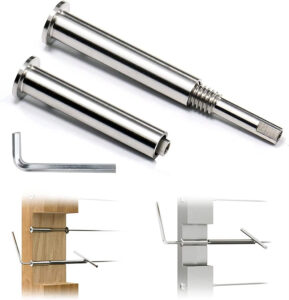
The failure mode that early price comparisons obscure is anchor distance. Following the attachment system supplier’s guidance on anchor spacing and embedment depth is not a bureaucratic formality — it is the mechanism that transfers lateral load from the post into the structure. When those guidelines are skipped or approximated, deflection under load can exceed acceptable limits even if the profile itself is adequately thick. The stiffness problem does not appear on the invoice; it appears during commissioning when the installed rail exhibits movement under hand pressure, or during a structural sign-off when deflection measurements fail to meet project documentation.
The practical implication is that a lower aluminium system price can mask a higher installed cost if the connection design was treated as secondary during specification. Reviewing connection detail and anchor requirements alongside material price — rather than after — is the check that prevents this gap from compounding into rework or a redesign late in the project programme. Buyers comparing balaustrada de varanda options across material types should treat connection stiffness documentation as a required deliverable from suppliers at the quotation stage, not a detail to be resolved during installation.
Aluminium versus stainless tradeoffs in premium projects
The surface-level comparison — aluminium is lighter and cheaper, stainless is heavier and more expensive — misses the dimension that matters most in premium residential or high-specification commercial work: finish feel and dent resistance in service.
Stainless steel profiles and posts carry a tactile robustness that powder-coated aluminium does not replicate regardless of coating quality. A brushed or mirror-polished stainless surface has a solidity and depth that reads differently in high-end exterior applications — a distinction that becomes apparent not at the point of installation but in how the balustrade reads against adjacent architectural finishes over time. Aluminium can dent under localised impact loading in ways that stainless steel of equivalent visual profile resists, and those dents are difficult to repair without replacing the affected component, since re-coating a damaged aluminium extrusion to match adjacent powder coat rarely achieves an invisible result.
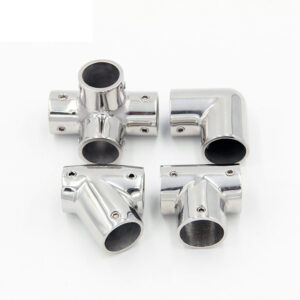
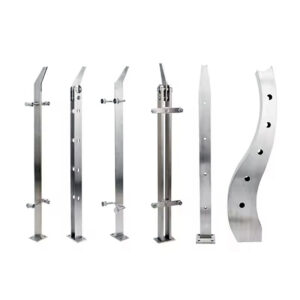
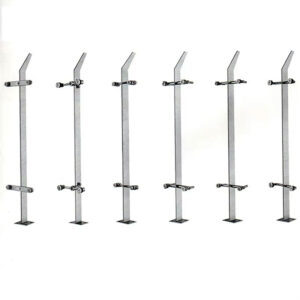
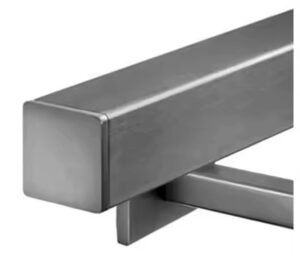
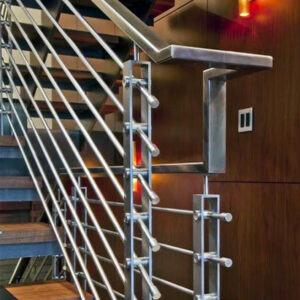
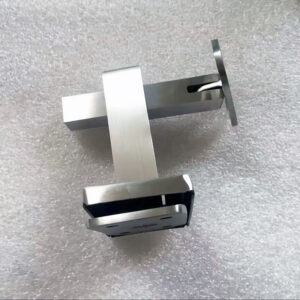
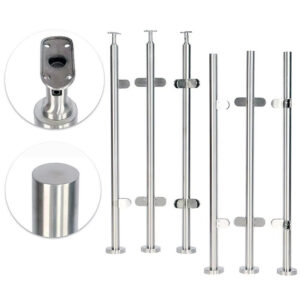
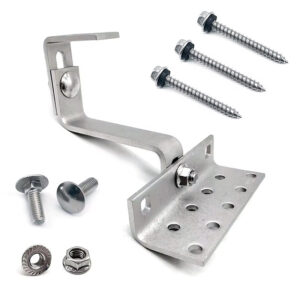
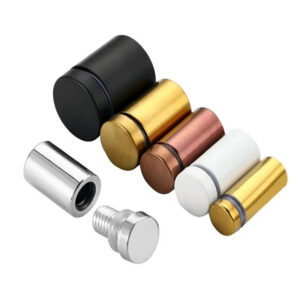
Some manufacturers navigate this tradeoff by combining aluminium structural profiles with stainless steel hardware or post caps — using square stainless steel posts where premium appearance is critical while retaining aluminium elsewhere for weight management. This strategy can balance performance across the system, but it introduces dissimilar material interfaces that require careful coordination, which is covered directly in the section below. The point here is that treating this combination as an automatic best-of-both-worlds solution understates the coordination burden.
For genuinely premium projects, the honest question is whether the finish expectation is compatible with aluminium’s material properties at all — rather than whether a better coating can close the gap. When the answer is that surface tactility, dent resistance, and long-term finish consistency are primary criteria, stainless steel components often justify the cost difference before the weight and price comparison is even completed.
Mixed-material interfaces that create finish problems
When aluminium and stainless steel components are sourced from different suppliers and assembled in the field, two distinct failure patterns can emerge that are often conflated but originate from different mechanisms.
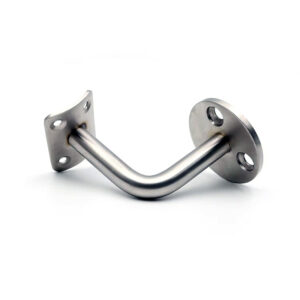
The first is rust staining from inadequately protected ferrous inserts. Some aluminium railing systems incorporate steel structural elements — reinforcing inserts, anchor channels, or connection brackets — that are not the same alloy as the outer aluminium profile. If those steel elements are insufficiently protected against moisture, they can leach rust that migrates through joints and weeps onto the facade surface as dark brown streaks. This is not galvanic corrosion in the electrochemical sense; it is surface contamination from oxidised ferrous material finding a moisture pathway. The staining it produces is difficult to reverse and, in facade-sensitive applications, may require professional remediation or panel replacement.
The second failure pattern is galvanic corrosion at dissimilar metal interfaces. When aluminium and stainless steel (grades 304 or 316) are in direct contact in the presence of an electrolyte — typically moisture in coastal or wet environments — the potential difference between the two metals can drive preferential corrosion of the aluminium. ISO 9223, which addresses atmospheric corrosivity classification, provides a useful framework for understanding how environment severity affects the rate at which this mechanism operates. In low-corrosivity environments, the risk may remain manageable with basic isolation measures. In C4 or C5 classified atmospheres — marine exposure, industrial pollution — the interface demands more deliberate engineering: dielectric separation, compatible sealants, or material substitution.
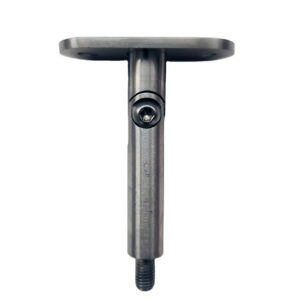
The procurement implication is that mixed-material packages assembled from components with different supply chains introduce coordination gaps that are not visible on a drawings comparison. Brackets and anchors specified separately from the primary profile system, or trims sourced to match visual appearance without checking electrochemical compatibility, are common origins of both failure types. Confirming that all contact surfaces between dissimilar metals are specified with isolation detail — and that the supplier has tested or documented the interface — is the check that prevents a finish problem from becoming a warranty dispute eighteen months into service.
Weight savings that justify the aluminium choice
Not every project context treats weight as a secondary criterion. On cantilever balconies where the structural slab is engineered to a specific dead-load limit, or in retrofit situations where adding railing to an existing structure cannot exceed a defined load increment, the weight differential between aluminium and stainless steel systems becomes a substantive engineering input rather than a convenience.
Aluminium’s lower density can meaningfully reduce cumulative load on the supporting structure in these conditions. For a long balcony perimeter or a multi-storey retrofit where railing weight accumulates across many levels, that reduction can be the factor that makes a system viable without structural reinforcement — a cost that often exceeds the material price difference many times over. This is the context in which aluminium’s weight advantage shifts from a general selling point to a specific technical justification.
Handling and installation ease is a secondary benefit that can partially offset aluminium’s sometimes higher per-unit material cost, depending on project scale and site access conditions. Lighter profiles reduce crane requirements, simplify manual positioning in confined balcony spaces, and can reduce the labour hours associated with setting and fixing posts — particularly where round stainless steel posts of equivalent structural rating would require more handling infrastructure. Whether this labour saving is material depends on the project’s specific logistics; it is a factor to price in, not a guaranteed cost reduction applicable in all conditions.
The planning discipline is to define the structural weight constraint before comparing material options — not to assume weight reduction is desirable and then confirm it post-selection. Where no meaningful load constraint exists and finish quality is the primary criterion, the weight advantage does not independently justify the material choice. Where a documented load limit is in play, aluminium’s lighter profile may resolve the constraint in a way that stainless steel simply cannot, regardless of how the finish or stiffness comparison resolves elsewhere.
The core judgment this comparison requires is sequential rather than simultaneous. Exposure condition and mounting strategy should be confirmed first, because they determine whether the material’s surface treatment will hold and whether the connection design introduces moisture risk. Finish expectation and dent resistance come second, because they determine whether aluminium can deliver what the project specification actually demands or whether stainless steel components are necessary to meet that standard. Repair strategy — how visible damage or corrosion is addressed in service — comes third, because it changes the total cost picture in ways that per-unit pricing cannot capture.
Buyers who compress that sequence into a single price comparison are left managing the consequences at commissioning or during the first maintenance cycle. The questions to bring to any supplier at the quotation stage are: what is the stiffness test basis for this connection design, what isolation detail governs dissimilar metal interfaces in the package, and what does remediation of a surface failure look like under your specification? The answers to those three questions will do more to clarify real project fit than any material-level comparison made in isolation.
Perguntas frequentes
Q: What happens if the balcony slab has an existing waterproofing membrane that cannot be penetrated — does that rule out aluminium posts entirely?
A: No, it shifts the mounting strategy rather than eliminating aluminium as an option. Attaching the railing system to the front or bottom face of the slab avoids penetrating the membrane altogether, which is actually the more conservative approach regardless of material. The material choice and the mounting method are independent decisions; aluminium posts can be used with face or soffit mounting just as stainless steel posts can. What changes is that this mounting geometry needs to be confirmed with the structural engineer before specification, because it affects how lateral load is transferred and what anchor embedment detail is required.
Q: After finalising the material and connection design, what should a buyer request from the supplier before the order is placed?
A: Three specific deliverables should be confirmed in writing at the quotation stage: the stiffness test basis for the proposed connection design, the isolation or separation detail governing any dissimilar metal interfaces in the package, and the supplier’s documented remediation path if a surface or corrosion failure occurs within the warranty period. These are not administrative formalities — they are the points where specification gaps most commonly surface during commissioning or the first maintenance cycle. Receiving vague answers to any of these three questions is a signal that the specification is incomplete.
Q: Does the weight advantage of aluminium still justify the choice when the project is new construction rather than a retrofit?
A: Generally no, unless a documented dead-load constraint exists in the structural design. In new construction, the engineer sets load parameters before material selection, so there is rarely an inherited weight limit that aluminium uniquely resolves. The weight benefit becomes a genuine technical justification only when a specific load ceiling — set by the structural slab design or a multi-storey cumulative load calculation — cannot be met with stainless steel components without triggering structural reinforcement. Where no such constraint exists, weight reduction is a convenience rather than a decision driver, and finish quality, stiffness performance, and long-term corrosion resistance should carry more weight in the comparison.
Q: Is a mixed aluminium and stainless steel system genuinely worth the coordination complexity, or is it better to stay with a single material throughout?
A: It depends on whether the project has a clearly separated zone where premium finish is critical and a separate zone where weight or budget governs. If those zones are distinct and the interface between them can be fully specified with documented isolation detail, the mixed approach can deliver real value. If the two materials meet repeatedly across brackets, anchors, and trims from different supply chains, the coordination burden tends to exceed the benefit — particularly because galvanic corrosion at poorly managed interfaces is difficult to detect early and expensive to remediate once facade staining or aluminium pitting has progressed. A single-material system with a clearly matched component set is lower risk whenever the project does not have a structural or finish reason that specifically requires both.
Q: At what corrosivity level does a standard Qualicoat powder coat on aluminium become insufficient, and what should be specified instead?
A: The article does not set a single universal threshold, and the right answer depends on the ISO 9223 corrosivity classification for the specific site. What the article does establish is that the gap between a properly pre-treated Qualicoat coating and a basic polyester finish becomes visible as chalking, adhesion failure, or pitting within a few years in coastal or industrial environments — categories that correspond roughly to ISO 9223 C4 and C5 classifications. In those atmospheres, the surface finish specification warrants confirmation on a per-project basis, and buyers in C4 or C5 environments should ask suppliers specifically how the coating system was validated for that corrosivity class rather than accepting Qualicoat certification alone as sufficient.