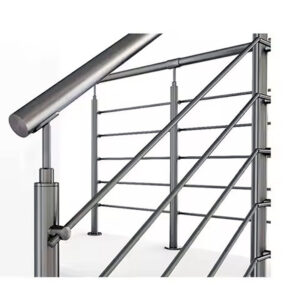
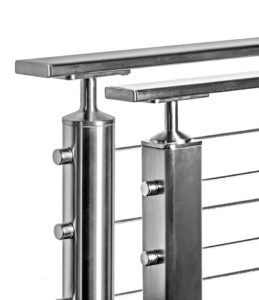
Rust claims on coastal handrail projects rarely surface during procurement. They surface during commissioning, or after the first maintenance inspection, when the installed system is already anchored to a substrate and the contract dispute is about who specified what. The failure point is usually not the rail itself but the combination of grade, fastener material, surface finish, and documented evidence — and the gap between what a supplier labeled “marine grade” and what the site exposure actually required. Closing that gap depends on matching corrosion documentation to exposure conditions before the order is placed, not after the first sign of staining appears. By the end of this piece, buyers and specifiers will be better equipped to evaluate what a coastal handrail quote actually covers, what it leaves unaddressed, and which gaps carry real downstream liability.
Coastal exposure as a corrosion planning input
Coastal proximity is not a binary condition. A project located a half mile from the waterfront carries a different chloride load than one located five or ten miles inland, and that difference should influence grade selection, finish specification, and the maintenance protocol written into the project documentation. Some suppliers use a 10-mile threshold as a planning reference — meaning handrails installed within that distance from a marine environment are typically recommended to receive passivation treatment and periodic rust-inhibiting maintenance as standard practice. That threshold is a supplier-sourced planning input, not a regulatory requirement, but it provides a useful starting structure for framing scope conversations with installers and clients.
The more important implication is directional: the closer the installation to open water, the higher the chloride concentration in the air, and the more aggressive the demand on both the base material and any coating or passivation treatment applied during or after installation. Projects in spray zones — docks, piers, waterfront stairways — operate at a different exposure level than projects in residential coastal neighborhoods. That exposure gradient should drive the specification, not a blanket “marine grade” label applied uniformly across a product catalog.
Where the distance or exposure intensity is unclear, buyers and specifiers should treat the uncertainty as a reason to over-specify rather than to default to the minimum. Retroactively upgrading installed hardware is expensive. Passivation and rust-inhibiting treatment can be specified as installation requirements upfront, but their effectiveness depends on the base material already being appropriate for the environment — treatment does not compensate for an undersized grade selection.
316 stainless requirements for outdoor stair railing packages
The chemical distinction between 304 and 316L matters most in chloride-rich environments, and it comes down to molybdenum. Standard 304 stainless steel does not carry a deliberate molybdenum addition, which limits its ability to resist pitting when chloride ions attack the passive oxide layer on the steel surface. 316L adds 2–3% molybdenum, which stabilizes that passive layer under salt exposure conditions and significantly improves pitting resistance in coastal and marine-exposed installations.
| Grau | Conteúdo de molibdênio (Mo) | Coastal Corrosion Performance |
|---|---|---|
| Aço inoxidável 304 | No deliberate molybdenum addition | Prone to staining and pitting near salt; generally not recommended for unmaintained coastal handrails |
| Aço inoxidável 316L | 2–3% molybdenum | Designed for improved pitting resistance; suitable for coastal and marine-exposed stair railing packages |
For outdoor stair railing packages specifically, this distinction carries a practical procurement implication. A package specified as 316L should include confirmation that the molybdenum content falls within the 2–3% range — and that confirmation should come from a mill certificate, not from product marketing language. A handrail listed as “316” without a supporting material report could be off-spec material, could be a 316-coated 304 tube, or could simply be a mislabeled product that will pit and stain under the same conditions 316L is supposed to resist. The grade designation on a product listing is a starting point for verification, not a substitute for it.
For coastal stair railing applications where the package is exposed year-round, the lower carbon content of 316L (versus standard 316) also reduces sensitization risk at weld zones — a relevant detail for fabricated assemblies with welded joints, end caps, or welded post connections. Buyers sourcing fabricated packages rather than raw tube should confirm that the weld zone material and filler specification are consistent with the 316L base material, not just that the handrail tube itself is 316L.
Salt spray and material report evidence buyers should request
A “marine grade” label on a product listing does not confirm corrosion performance. It confirms only that a marketing designation was applied. The gap between the label and actual evidence becomes a liability problem the moment rust appears and a buyer needs to demonstrate that the specified material was appropriate for the site conditions.
Salt spray testing — conducted under protocols such as ISO 9227:2022 ou ASTM B117-19 — exposes a material or treated surface to a controlled salt fog environment over a defined test duration and records the onset and degree of corrosion. A report from this testing provides a comparative basis for evaluating surface treatments, passivation quality, and coating durability that a grade designation alone cannot supply. Requesting this report at the procurement stage gives buyers a documented corrosion baseline that can be referenced if performance disputes arise later.
| Evidence to Request | O que isso confirma | Risk if Not Provided |
|---|---|---|
| Salt spray test report | Corrosion resistance under salt fog conditions; backs up the ‘Marine Grade’ label with measurable results | Rust claims or maintenance disputes become difficult to defend; no way to verify coastal suitability |
| Material test certificate (mill cert) | Chemical composition, confirming molybdenum content (2–3% Mo in true 316L) and grade identity | Risk of receiving 304-grade material or off-spec stainless that will stain and pit prematurely in coastal exposure |
Once a buyer has both documents in hand — the salt spray test report and the mill certificate — the evaluation question shifts from “is this labeled correctly?” to “do the test conditions and material composition align with the site exposure we’re specifying for?” That is a more defensible position than accepting a label, and it also allows meaningful comparison between suppliers rather than a price-only procurement decision. Salt spray results should be read with the test duration and exposure conditions visible; a short-duration test result on a low-salinity protocol does not speak to the same performance as a longer, higher-concentration test.
Buyers who skip this documentation often discover the gap when a rust claim surfaces during the defect liability period and the supplier’s response is that no specific performance was guaranteed — only a grade designation was provided. By that point, the cost of retrofit, surface restoration, or hardware replacement is already a project expense.
Crevice and maintenance risks near fasteners and joints
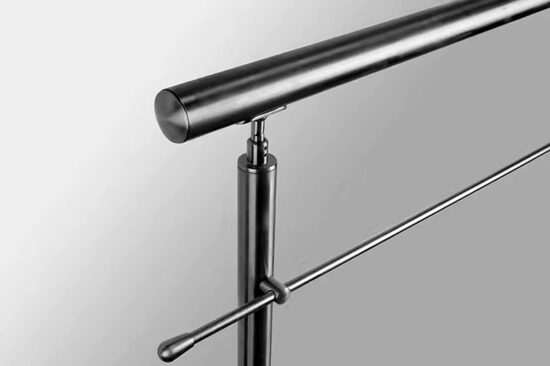
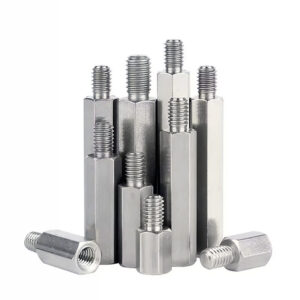
The grade of the handrail tube is not the grade of every component in the installation. This is where a common failure pattern enters: handrail kits sold as 316 stainless steel frequently include fasteners — screws, bolts, set screws — manufactured from 410 stainless steel, a martensitic grade with significantly lower corrosion resistance than 316L. Every attachment point in the installation becomes a potential crevice corrosion site where dissimilar materials, trapped moisture, and salt exposure interact.
Crevice corrosion initiates at confined spaces where oxygenation is reduced — under screw heads, inside socket-set connections, at the interface between a post base plate and a substrate. Even in a well-specified 316L rail system, a single 410 stainless fastener in a coastal environment can begin pitting before the handrail shows any visible degradation. The failure is localized, it may not be visible during routine inspections, and it often progresses structurally before it becomes cosmetically apparent.
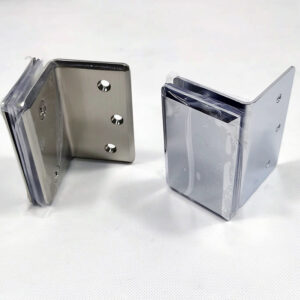
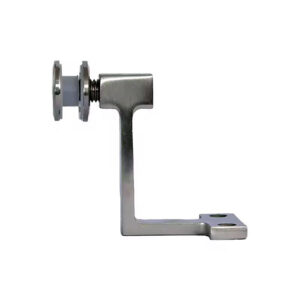
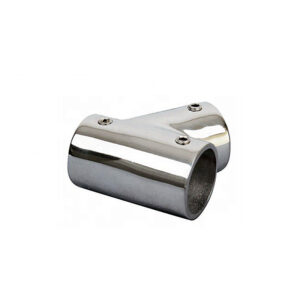
The procurement inspection point is straightforward: request confirmation of fastener grade before the order is finalized. If the supplier cannot confirm that screws and mounting hardware included in the kit are 316 stainless, treat that as a specification gap and either source fasteners separately or make the fastener grade a condition of the supply agreement. This is not a marginal risk management step — at joints and brackets under sustained chloride exposure, fastener material is where coastal installations typically fail first. For buyers evaluating complete coastal railing packages, hardware-level grade confirmation should carry the same weight as rail tube grade confirmation.
Maintenance protocol intersects here as well. Passivation and rust-inhibiting treatment applied to a 316L handrail surface will not protect an exposed 410 steel fastener head. If the maintenance plan does not address fastener inspection and treatment as a separate item, the joint is the system’s weakest point regardless of how well the rail is maintained.
Supplier choice after corrosion evidence matches site exposure
Once the evidence base is established — salt spray report, mill certificate, fastener grade confirmation — supplier evaluation becomes a process of alignment rather than a pass/fail compliance check. The question is whether what the supplier can document matches what the site exposure requires. A supplier who can discuss molybdenum content, passivation process, finish specification, and hardware grade in concrete terms is operating at a different level than one who defaults to “marine grade” language without supporting documentation.
Quality system certifications are a relevant but limited signal. A supplier holding a manufacturing quality certification — such as TS 16949, which governs production process consistency — provides evidence that the production environment is controlled and traceable. That matters for repeatability across a large project order or a repeat supply program. It does not, however, substitute for corrosion-specific documentation. Process quality and corrosion performance documentation address different questions, and a buyer who accepts a manufacturing quality certification as a proxy for salt spray evidence has still left the corrosion performance dimension unconfirmed.
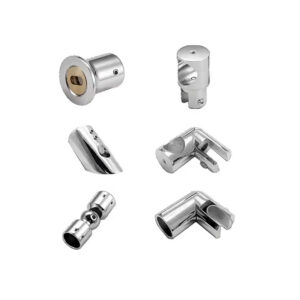
The practical evaluation frame for coastal projects is this: a quote should be treated as coastal-ready only when grade, finish, fastener material, and supporting documentation are all aligned. If any of those four elements is unspecified or relies on label language rather than documented evidence, the quote carries an unresolved corrosion risk regardless of the supplier’s other qualifications. Buyers sourcing for coastal applications can use Esang’s marine-grade railing systems in 316L as a reference point for what a fully specified package should include, and the coastal installation hardware section covers the component-level specification that complements the rail selection.
Procurement friction on coastal projects often comes from a mismatch between the simplified question buyers ask — “can you provide a marine-grade certificate?” — and the multi-variable answer the project actually requires. No single certificate resolves the combined risk of grade, finish, fastener material, and site exposure. The buyer who understands that the answer requires four aligned elements, not one document, is in a much stronger position to evaluate quotes and defend against claims later.
Coastal handrail procurement goes wrong at a predictable stage: the grade designation is accepted without a material report, the fastener material is not confirmed, and the corrosion documentation review is deferred until it is no longer meaningful. By the time rust appears at a bracket or joint, the question shifts from “what should we have specified?” to “who is responsible for the rework?” — a significantly more expensive problem.
Before finalizing any coastal stair or structural handrail order, confirm the mill certificate against the molybdenum threshold, request a salt spray test report that reflects the intended surface treatment, and verify that fasteners included in the package are 316 stainless, not a lower-grade alloy bundled for cost reasons. If those three confirmation points are clear, the corrosion argument for the site can be made with evidence. If any are unresolved, the exposure risk belongs to whoever accepted the gap.
Perguntas frequentes
Q: Does the 10-mile coastal threshold apply if the project is inland but exposed to salt air from prevailing winds or tidal channels?
A: The 10-mile figure is a supplier planning reference, not a regulatory boundary, so it should be treated as a starting point rather than a hard cutoff. Projects where prevailing onshore winds, tidal channels, or low-lying topography concentrate salt air — even at greater distances from open water — can carry chloride loads comparable to closer coastal sites. When exposure intensity is genuinely uncertain, the safer procurement position is to specify as though the threshold applies and document that reasoning, rather than assume distance alone determines risk.
Q: After confirming grade, finish, fastener material, and salt spray documentation, what is the immediate next step before placing the order?
A: Verify that the maintenance protocol written into the project documentation addresses fasteners and joints as separate inspection items, not just the handrail surface. Salt spray reports and mill certificates confirm material specification at procurement, but passivation and rust-inhibiting treatments applied to the 316L rail do not extend to exposed 410 stainless fastener heads. If the maintenance plan treats the system as a single surface rather than distinguishing between rail and hardware, the joints remain unprotected regardless of how complete the documentation is.
Q: At what point does a salt spray test result stop being a reliable predictor of real coastal performance?
A: A salt spray report loses predictive value when the test duration or salinity concentration used in the protocol does not reflect the site’s actual exposure intensity. A short-duration test conducted at a low-concentration fog setting establishes a comparative baseline between treatments but does not speak to sustained performance in a high-chloride spray zone such as a dock or pier. Buyers should read the test conditions alongside the results — not just the hours-to-rust-onset figure — and flag any report where the test parameters appear under-specified relative to the project’s exposure environment.
Q: Is 316L always worth the cost premium over 304 for outdoor railing projects, or are there site conditions where 304 is adequate?
A: For genuinely coastal sites — within the 10-mile planning threshold, in spray zones, or where chloride concentration in the air is measurable — 316L’s molybdenum content provides a material advantage that 304 cannot replicate, making the upgrade commercially defensible. For fully inland projects with no marine or industrial chloride exposure, 304 performs adequately and the cost premium for 316L is harder to justify on corrosion grounds alone. The decision point is site-specific chloride load: where that load is low and stable, 304 is sufficient; where it is elevated or uncertain, defaulting to 316L reduces the risk of a costly retrofit conversation later.
Q: If a supplier holds a manufacturing quality certification such as TS 16949, can that be used as supporting evidence in a rust claim dispute?
A: No — a manufacturing quality certification confirms production process consistency and traceability, but it does not establish corrosion performance for a specific environment. In a rust claim dispute, the relevant evidence is the mill certificate confirming molybdenum content within the 316L specification and a salt spray test report showing treatment performance under defined conditions. A TS 16949 certification may support a broader argument about supplier reliability, but it cannot substitute for corrosion-specific documentation when the dispute centers on whether the material was appropriate for the site exposure.