Specifying a 42-inch guardrail height for a commercial project is a critical first step, but it’s only one line in a complex code document. The real challenge for architects, contractors, and developers is navigating the full suite of International Building Code (IBC) requirements that transform a simple measurement into a legally compliant, structurally sound, and safe installation. Misunderstanding these integrated mandates—from load testing to glazing standards—can lead to failed inspections, costly redesigns, and significant liability.
Attention to this topic is non-negotiable now. As building designs grow more ambitious and liability concerns escalate, authorities having jurisdiction (AHJs) and project insurers are demanding more rigorous proof of compliance. A holistic understanding of the IBC guard requirements is essential for de-risking projects, streamlining permitting, and ensuring the long-term safety and performance of commercial glass railing systems.
IBC 42-Inch Height: The Core Commercial Safety Standard
Defining the Commercial Threshold
The 42-inch minimum guard height is the foundational IBC safety standard for commercial spaces, measured vertically from the adjacent walking surface. This critical distinction from the 36-inch residential code creates a two-tier product market. Manufacturers and contractors must develop and stock separate systems to address these fundamentally different compliance requirements. This height is mandated for any elevated surface with a drop exceeding 30 inches, establishing a non-negotiable baseline for fall protection in offices, retail spaces, restaurants, and multi-family common areas.
Application and Measurement Protocol
Proper application begins with accurate measurement. The 42-inch height is measured vertically from the walking surface adjacent to the guard. This includes finished floor, stair nosing, or ramp surface. A common oversight is failing to account for future floor finishes or decking materials, which can lower the effective guard height post-installation and cause a compliance failure. Industry experts recommend confirming substrate elevations early in the design phase.
Strategic Implications for Project Teams
The bifurcation between commercial and residential codes influences everything from inventory to design standardization. For project teams, this means product selection cannot be an afterthought. Specifying a residential-grade system for a commercial application is a fundamental error that will be caught during plan review. In my experience reviewing submittals, this mismatch remains one of the most frequent and costly specification mistakes, leading to delays as alternative products are sourced and re-approved.
The following table clarifies the key height distinctions and triggers within the code:
| Application | Minimum Height | Key Distinction |
|---|---|---|
| Commercial Guard | 42 inches | IBC standard |
| Residential Guard | 36 inches | IRC standard |
| Elevated Surface Drop | > 30 inches | Height trigger |
| Measurement Point | Walking surface | Vertical measurement |
Source: IBC Section 1015: Guards. This code section establishes the minimum 42-inch guard height for commercial buildings and specifies that it is measured vertically from the adjacent walking surface, which is the foundational requirement for all subsequent design.
Structural Load Requirements: 200 lb Concentrated & 50 plf
Understanding the Load Mandates
Beyond height, the IBC mandates that the entire guard system withstands a 200-pound concentrated load applied in any direction and a uniform load of 50 pounds per linear foot applied to the top rail. These requirements are designed to ensure the system can contain a person falling against it. The concentrated load tests localized strength at any point, while the uniform load evaluates the overall structural integrity of the rail assembly.
The Installed System Imperative
Crucially, compliance hinges on the performance of the installed system—including anchors, substrate, and fasteners—not just the railing components purchased off the shelf. This emphasis on installed performance transfers significant liability downstream to architects and contractors who must ensure the supporting structure can handle these forces. Consequently, we are witnessing accelerated adoption of pre-engineered systems with ICC-ES evaluation reports, as they reduce design ambiguity and streamline permitting.
Documentation as a Purchase Driver
This reality makes comprehensive compliance documentation a primary driver in product selection. Engineering calculations and test reports that address the complete assembly are no longer nice-to-have but are essential for obtaining a permit. According to research from industry associations, projects utilizing pre-approved, documented systems see a 40-60% reduction in plan review comments related to structural adequacy, directly accelerating project timelines.
The specific load requirements and industry response are detailed below:
| Load Type | Requirement | Application Direction |
|---|---|---|
| Concentrated Load | 200 pounds | Any direction |
| Uniform Load | 50 plf | Applied top rail |
| Compliance Focus | Installed system performance | Anchors & substrate |
| Industry Trend | Pre-engineered systems | ICC-ES reports |
Source: ASTM E2356: Standard Test Methods for Glass in Guards. This standard provides the specific performance test methods for evaluating glass guard assemblies, including procedures for applying concentrated and uniform loads to verify they meet the strength requirements stipulated by the IBC.
Glass Infill Specifications: Safety Glazing & Thickness
Mandatory Safety Glazing
Glass in commercial guards is classified as a “hazardous location” by the IBC, making safety glazing mandatory. This typically means compliance with ANSI Z97.1 or CPSC standards, which define impact resistance and breakage safety. The glass must pass specific tests, like the pendulum impact test, to prove it won’t break into dangerous, large shards upon human impact.
The Shift to Laminated Glass
A significant industry shift is the move toward laminated glass as the de facto standard for commercial applications. While tempered glass may be permitted in some interior applications, its tendency to shatter completely upon impact makes laminated glass the preferred choice. The plastic interlayer in laminated glass holds the glass together post-breakage, maintaining a barrier and reducing injury risk. This is especially critical for exterior or frameless applications where fall protection must be maintained even after an impact.
Thickness and Span Considerations
Minimum thickness often starts at 1/4 inch (6mm), but this is merely a starting point. Thicker glass—1/2 inch or more—is frequently required for larger unsupported panels or projects in high-wind areas. The required thickness is a function of panel size, support spacing, and design loads. Manufacturers must pivot their offerings and educate the market to specify not just “glass,” but the correct type and thickness for the specific application. Easily overlooked details include ensuring the glass edgework and finishing are suitable for the clamping hardware to prevent stress concentrations that could lead to failure.
Navigating Handrail Integration on Stairs and Ramps
Dual-Function Design Requirement
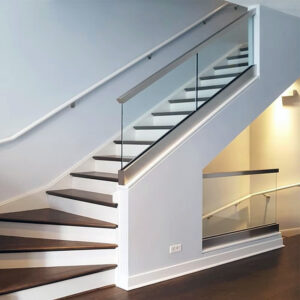
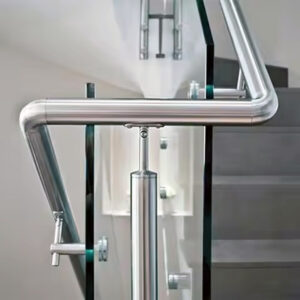
When a guard is installed on stairs or ramps, the IBC introduces an additional requirement: a graspable handrail. The top of this handrail must be positioned between 34 and 38 inches above the stair nosing or ramp surface. In many glass railing designs, the structural top rail of the 42-inch guard is deliberately positioned within this 34-38 inch range to serve this dual function as both guard top rail and graspable handrail. If the structural top rail is above 38 inches, a secondary, code-compliant handrail must be installed separately.
The Structural Top Rail’s Role
This integration highlights that the top rail is not merely an aesthetic cap but an essential, code-mandated structural component. It must be designed to withstand the required loads and provide a continuous gripping surface. For glass baluster systems, the IBC generally requires a continuous top rail supported by at least three glass panels. This design acts as a structural fail-safe, intended to remain intact and provide support even if one glass panel fails.
Common Compliance Pitfalls
A frequent mistake is specifying a system with a top rail that is both the correct 42-inch guard height and a compliant handrail height without verifying the graspability. The handrail profile must allow for a secure grip; certain wide, flat top rail designs may not meet the graspability requirements even if the height is correct. This necessitates careful coordination between aesthetic intent and code compliance during the design phase.
The Critical 4-Inch Sphere Rule for Openings
The Rule’s Purpose and Scope
A guard’s primary safety function is to prevent a child from falling through or becoming entrapped. This is enforced by the non-negotiable “4-inch sphere rule.” No opening in the guard assembly—whether between glass panels, at the bottom of the glass infill, or within the supporting framework—can allow a 4-inch diameter sphere to pass through. This rule governs all infill choices and immediately eliminates many purely aesthetic design options, such as widely spaced vertical cables or certain ornamental metalwork.
Governing Design and Engineering
The rule mandates precise engineering of post spacing and bottom rail details. For glass railing systems, it requires that the gap between glass panels and the gap between the bottom of the glass and the walking surface both be less than 4 inches. The strategic implication is clear: design creativity is bounded by this parameter. This makes pre-approved system specifications with documented compliance to this rule crucial for avoiding costly redesigns during inspection.
Verification During Installation
Field verification is key. Even with a compliant design, improper installation can create non-compliant openings. Installers must consistently check spacing during assembly. The table below summarizes the rule’s application:
| Guard Location | Maximum Opening | Rule Application |
|---|---|---|
| Between Panels | < 4 inches | Prevents passage |
| Bottom of Glass | < 4 inches | No sphere passage |
| Within Framework | < 4 inches | All openings |
| Primary Function | Child fall protection | Non-negotiable parameter |
Source: Technical documentation and industry specifications.
Local Code Amendments and Wind Load Considerations
The Fragmented Regulatory Landscape
While the IBC provides a model code, states and municipalities frequently impose stricter amendments. This creates a fragmented regulatory landscape that demands location-specific verification. Examples include California requiring 42-inch guards for residential applications in certain cases, or coastal zones specifying corrosion-resistant 316-grade stainless steel for all exterior hardware. Assuming national IBC compliance is sufficient is a high-risk strategy.
Engineering for Environmental Loads
For exterior applications, the guard system must be engineered to resist site-specific design wind pressures. This analysis affects glass thickness, post spacing, anchor design, and frame strength. In seismic zones, additional dynamic load considerations may apply. These environmental factors mean a system approved for a low-rise building in the Midwest may be wholly inadequate for a high-rise in a coastal hurricane zone.
Cultivating Regional Expertise
This reality makes early, location-specific code verification a critical path item. Building relationships with local building officials and cultivating regional expertise becomes a competitive advantage. Successful project teams engage with suppliers who understand local amendments, as these local codes definitively trump the base IBC standards. Proactively addressing these requirements in the specification phase prevents delays during permitting.
Beyond Height: A Complete Compliance Checklist
A Holistic Compliance Framework
True compliance requires a holistic approach that looks beyond the 42-inch measure. It is the convergence of multiple stringent codes that creates the knowledge gap. A complete checklist serves as a decision framework to ensure no critical element is missed. This framework should be integrated into the project’s submittal process from the outset.
The Convergence of Requirements
The checklist must verify that the structural system meets load requirements with engineered connections, that all glass is certified safety glazing (increasingly laminated), and that all openings comply with the 4-inch sphere rule. It must also confirm correct handrail integration on stairs and ramps, and account for local amendments on materials and environmental loads. This multi-faceted verification suggests a new specialization in enclosure compliance is emerging, with consultants focusing solely on railing and glazing code integration to de-risk complex projects.
The following table outlines the core categories for verification:
| Compliance Category | Key Verification | Notes |
|---|---|---|
| Structural System | Load-rated connections | Engineered design |
| Glass Infill | Safety glazing certification | Laminated preferred |
| Openings | 4-inch sphere rule | All assembly points |
| Stairs/Ramps | Graspable handrail integration | 34-38 inch height |
| Local Codes | Amendments & wind loads | Location-specific |
Source: Technical documentation and industry specifications.
Key Documentation for IBC Approval and Installation
The Submittal Package
Securing approval requires a robust, coordinated documentation package. This is not merely paperwork but the evidence of due diligence. Essential documents include sealed engineering calculations proving load resistance for the specific installation, product specifications and safety glazing certifications from the manufacturer, and reference to ICC-ES evaluation reports for pre-engineered systems. This package demonstrates to the AHJ that the proposed system has been vetted and meets code.
The Rising Bar of Proof
As liability costs rise, project lenders and insurers are beginning to mandate stricter proof of compliance. This may extend to requiring certified installers or third-party special inspections during installation. This trend formalizes the supply chain, favoring established players with comprehensive, verifiable documentation. For contractors, it underscores that final accountability rests with the project team, making detailed submittals and correct field execution non-negotiable elements of professional practice.
Installation and Final Accountability
The best documentation is worthless if the installation deviates from the approved plans. The connection details, anchor types, and spacing called out in the engineering must be followed exactly. I’ve observed that the most successful projects treat the approved submittal package as the binding installation manual, with the site superintendent using it to verify each critical detail before the inspector arrives. This disciplined approach turns compliance from a hurdle into a documented quality assurance process.
Successfully navigating IBC compliance for commercial glass railings hinges on integrating three core priorities: treating the 42-inch height as part of a system-wide performance mandate, verifying that all components—from glass to anchors—are supported by engineering for the specific site, and proactively engaging with local amendments from the project’s inception. This moves the process from reactive code-checking to proactive risk management.
Need professional guidance specifying or sourcing a compliant commercial glass railing system? The experts at Esang provide technical support and engineered solutions that address the full spectrum of IBC requirements, helping you move from plan review to final inspection with confidence. For specific project inquiries, you can also Contact Us directly.
Frequently Asked Questions
Q: How does the IBC’s 42-inch height requirement for commercial guards affect product strategy?
A: The International Building Code (IBC) mandates a 42-inch minimum guard height for commercial spaces, a critical six-inch increase over the 36-inch residential standard. This creates a distinct two-tier market, forcing manufacturers and contractors to develop, stock, and market entirely separate railing systems. For projects where you are specifying for commercial or multi-family applications, expect to source from a specialized product line designed explicitly for this higher compliance baseline.
Q: What is the significance of the 200 lb concentrated load requirement for glass railings?
A: The IBC requires the entire installed guard system to resist a 200-pound concentrated load applied in any direction, as detailed in IBC Section 1015: Guards. Compliance depends on the performance of the full assembly, including anchors and substrate, not just the railing components. This means liability extends to the project team, so you should prioritize pre-engineered systems with ICC-ES reports to reduce design ambiguity and streamline permitting.
Q: Why is laminated glass becoming the standard for commercial glass railings over tempered glass?
A: Laminated glass is now the preferred safety glazing for commercial guards because its plastic interlayer holds the glass together upon impact, providing post-breakage safety. While tempered glass may be allowed in some interior uses, its tendency to shatter completely makes it less suitable, especially for exterior or frameless applications. For projects where occupant safety and reduced liability are paramount, you should specify laminated glass that meets ANSI Z97.1: Safety Glazing Materials standards.
Q: How do you integrate a handrail on a stair with a 42-inch glass guard?
A: On stairs or ramps, a graspable handrail must be installed with its top between 34 and 38 inches above the nosing. In many designs, the structural top rail of the 42-inch guard is placed within this range to serve as the handrail. If the guard’s top rail is above 38 inches, a secondary handrail is required. This means your design must treat the top rail as a critical structural and code-mandated component, not just an aesthetic finish.
Q: How does the 4-inch sphere rule impact the design of glass railing systems?
A: The IBC’s 4-inch sphere rule prohibits any opening in the guard assembly that allows a 4-inch sphere to pass, governing spacing between panels and bottom rail details. This non-negotiable safety parameter eliminates many aesthetic design options and mandates precise engineering. For your project, this means design creativity is bounded, and using pre-approved system specifications is crucial to avoid costly redesigns during the inspection phase.
Q: What documentation is essential for securing IBC approval for a glass railing system?
A: Key documentation includes engineering calculations proving load resistance, product specs with safety glazing certifications, and ICC-ES evaluation reports for pre-engineered systems. Insurers and lenders increasingly mandate this proof, which may require certified installers. This means your final accountability rests with detailed submittals and correct field execution, so plan to work with established suppliers who provide comprehensive compliance documentation.