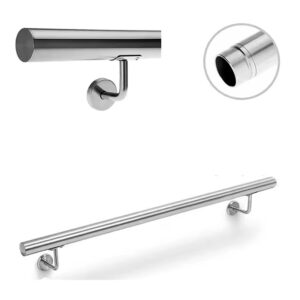
In food processing facilities, the handrail system is a critical safety component. Its fabrication, however, presents a unique technical challenge. The welds that join these stainless steel tubes must be structurally sound and hygienically perfect. Common misconceptions treat these welds like any other structural joint, overlooking the specific protocols required to prevent corrosion and bacterial harborage in wash-down environments. This oversight directly impacts long-term facility integrity and safety.
The distinction is non-negotiable. A handrail weld that meets only structural codes can still fail as a sanitary barrier. Chloride-rich cleaning agents, thermal cycling, and constant moisture create a corrosive environment that exploits any weakness in the weld zone. Specifying and executing TIG welding for 316 stainless steel handrails requires a deliberate focus on parameters, materials, and finishes designed for this exacting application. The cost of non-compliance is measured in premature failure, contamination risk, and costly replacements.
Key TIG Welding Parameters for 316 Stainless Steel Handrails
Defining the Process Goal
The objective is a fully penetrated, smooth weld with a minimal heat-affected zone (HAZ). A wide HAZ degrades the material’s corrosion resistance, creating a future failure point. This demands precise control over every aspect of the Tungsten Inert Gas (GTAW) process. Industry experts consistently emphasize that technique is as critical as equipment settings for achieving a consistent, high-integrity bead profile.
Critical Parameter Specifications
Achieving the target weld requires adherence to a strict set of parameters. A DCEN power source provides stable arc conditions for deep penetration. The tungsten electrode must be pointed, typically 2% thoriated or ceriated, to maintain a focused arc. High-purity argon (99.995%+) is mandatory for primary shielding. According to research from sanitary welding standards, the most common mistake is neglecting back purging for tubular sections, which leads to internal oxidation or “sugaring.”
The following table outlines the essential parameters and their purpose:
| Parameter | Specification / Value | Purpose / Note |
|---|---|---|
| Power Source | DCEN (Direct Current Electrode Negative) | Stable arc, deep penetration |
| Tungsten Electrode | 2% Thoriated or Ceriated | Pointed tip, stable arc |
| Shielding Gas | Argon, 99.995%+ purity | Prevents oxidation, sugaring |
| Filler Metal | ER316L | Matches base metal corrosion resistance |
| Back Purging | Mandatory for tubing | Prevents internal sugaring |
| Welding Technique | “Walking the cup”, stringer bead | Consistent travel, minimal heat input |
Source: Technical documentation and industry specifications.
Impact of Technique on Outcome
The welder’s technique directly influences heat input and bead consistency. The “walking the cup” method ensures a steady travel speed and consistent arc length. A stringer bead is preferred over a weave pattern to minimize total heat input. In my experience reviewing fabrication shops, the difference between a qualified and an average welder is visible in the uniformity of the HAZ and the smoothness of the cap profile—both critical for subsequent finishing.
Material Selection: 316 vs. 316L for Corrosion Resistance
The Problem of Sensitization
The choice between 316 and 316L stainless steel hinges on a metallurgical phenomenon called sensitization. When standard 316 is heated within a specific range during welding, carbon atoms migrate to grain boundaries and bond with chromium. This forms chromium carbides, depleting the local chromium content that provides corrosion resistance. The result is a narrow zone along the weld that is highly susceptible to attack.
The Low-Carbon Solution
316L is the engineered solution. Its “L” designation denotes a low carbon content, capped at a maximum of 0.03%. This specification drastically reduces the available carbon to form harmful carbides during welding. For handrails in food plants, 316L is not a premium upgrade; it is the de facto standard for any welded assembly. It provides a necessary safety margin against intergranular corrosion, especially for multi-pass welds or sections near heat sources.
It is vital to pair the correct base metal with the right filler. The following comparison clarifies the critical differences:
| Criteria | 316 Stainless Steel | 316L Stainless Steel |
|---|---|---|
| Max Carbon Content | ~0.08% | 0.03% maximum |
| Key Risk | Sensitization in HAZ | Low sensitization risk |
| Corrosion Resistance | Good | Excellent for welded joints |
| Primary Application | General corrosion resistance | Critical welds, chloride environments |
| Tubing Standard | ASTM A554 (typical) | ASTM A554 (recommended) |
Source: Technical documentation and industry specifications.
The Decision Framework for Tubing
Handrail tubing should conform to ASTM A554, which covers welded stainless steel mechanical tubing. This standard ensures structural soundness. However, a critical distinction must be made: ASTM A554 prioritizes weld strength and dimensional tolerances, not the leak-tightness required for process piping. This highlights that material selection for handrails is a hybrid decision—structural performance governed by one standard, with corrosion resistance dictated by the 316L chemistry for the sanitary environment.
Pre-Welding Preparation and Joint Design Best Practices
Surface and Joint Requirements
Meticulous preparation is non-negotiable. All surfaces within an inch of the weld zone must be chemically cleaned with a dedicated stainless steel cleaner to remove oils, oxides, and contaminants. For typical handrail wall thicknesses, a square butt joint is standard. The fit-up must be precise, with a minimal and consistent gap. Poor fit-up forces the welder to use excessive filler metal and heat to bridge the gap, compromising the weld’s integrity and corrosion resistance.
Validating the Purge Environment
The single most critical procedural step is establishing a controlled purge environment. High-quality TIG welding demands inert gas shielding on both sides of the weld puddle. For hollow handrail tubing, this means sealing the ends and purging the interior volume with argon to displace all oxygen before striking the arc. Techniques like using purge dams or inflatable seals are essential. This step prevents sugaring on the internal bead. An internally sugared weld has a rough, oxidized surface that traps moisture and bacteria, creating a direct violation of hygienic design principles like those outlined in ISO 14159 Safety of machinery — Hygiene requirements for the design of machinery.
Post-Weld Finishing for Hygiene and Cleanability
Restoring Corrosion Resistance
The heat from welding alters the stainless steel’s surface, creating a heat tint—a spectrum of discoloration from straw to blue. This tint is a visible indicator of a chromium-depleted oxide layer that is more susceptible to corrosion. Removing this layer is the first step in post-weld finishing. Mechanical polishing with dedicated, non-ferrous tools or chemical passivation (using nitric or citric acid baths) restores the protective passive oxide layer.
Achieving Cleanable Surfaces
For high-hygiene zones, electropolishing offers a superior finish. It microscopically smooths the surface by removing a thin layer of material. The key specification is surface roughness, typically measured as Ra (Roughness Average). A smooth, crevice-free profile with an Ra ≤ 0.8 µm is a common specification for cleanability. This is not a cosmetic requirement; it is a functional one to prevent bacterial adhesion and harborage, as supported by guidelines like EHEDG Doc. 8 Hygienic equipment design criteria.
The weld must be visually continuous and blended seamlessly with the parent metal. The table below details the processes and outcomes for post-weld finishing:
| Process | Key Metric / Specification | Primary Outcome |
|---|---|---|
| Mechanical Polishing | Dedicated stainless tools | Removes heat tint, smooths |
| Chemical Passivation | Nitric/Citric acid bath | Restores passive oxide layer |
| Electropolishing | Superior micro-smooth finish | Best cleanability, high hygiene |
| Surface Roughness (Ra) | ≤ 0.8 µm (common spec) | Prevents bacterial harborage |
| Final Requirement | Crevice-free, seamless blend | Visual continuity, cleanable |
Source: EHEDG Doc. 8 Hygienic equipment design criteria. This guideline establishes the critical need for smooth, crevice-free surfaces and suitable materials to ensure cleanability and prevent microbial contamination in food processing environments, directly informing post-weld finish specifications.
Compliance with Food Processing Industry Standards
Navigating the Standard Landscape
Compliance is governed by principles, not a single prescriptive handrail welding standard. Hygienic design dictates that all welds be continuous, smooth, and free of crevices. The assembly must also meet structural safety codes like OSHA. A significant strategic challenge is the inconsistency in global standards. Facilities may need to comply with AS 1528 (Australia), 3-A Sanitary Standards (U.S.), EN standards (Europe), or ASME BPE (Bioprocessing). This creates supply chain complexity for multinational operators.
The Shift to Process Validation
Regulatory and audit scrutiny is increasingly shifting from just checking material certificates to validating the fabrication process itself. Auditors now demand documented Welding Procedure Specifications (WPS), welder qualification records, purge procedure logs, and surface finish verification reports. This makes auditable records a competitive advantage for fabricators and a critical risk management tool for facility owners. Your documentation proves compliance.
Cost Considerations and Long-Term Value Analysis
Initial Cost Drivers
A proper cost analysis evaluates three primary factors: material grade (316L), fabrication complexity (including purge protocols), and finish specifications (mechanical polish vs. electropolish). While 316L and premium finishes carry higher upfront costs, they are investments in longevity. The greatest financial risk is not the initial investment but premature failure due to improper welding or material selection, leading to unplanned downtime and replacement costs.
Strategic Value Decisions
Brushed finishes, such as a #4 finish, offer a strategic balance. They reduce the visibility of scratches and fingerprints in high-traffic areas while maintaining cleanability, thereby lowering perceived maintenance costs and preserving aesthetics over time. The long-term value of a compliant handrail system is decades of reliable service with minimal intervention.
The following analysis breaks down the cost-value relationship:
| Factor | Initial Cost Impact | Long-Term Value / Risk |
|---|---|---|
| Material Grade (316L) | Higher | Maximizes corrosion resistance |
| Electropolishing Finish | High | Superior cleanability, low maintenance |
| Brushed Finish (#4) | Moderate | Hides scratches, good cleanability |
| Improper Welding/Material | Potentially lower | High risk of premature failure |
| Compliance Investment | Higher upfront | Mitigates downtime, replacement costs |
Source: Technical documentation and industry specifications.
Selecting a Qualified Fabricator: Key Evaluation Criteria
Moving Beyond Price
Selecting a fabricator is a critical risk management decision. A price-based selection often leads to costly rework or premature failure. The evaluation must shift to a technical audit of the fabricator’s specific experience with sanitary stainless steel protocols. Do they understand the difference between a structural weld and a hygienic weld? Their expertise directly correlates to your facility’s contamination risk profile.
Requesting Concrete Evidence
Evaluate potential fabricators by requesting specific evidence. Ask for documented WPS, welder qualification certificates, and examples of their back purging methods. Physically inspect sample welds, examining both the external cap and, if possible, the internal bead profile. A qualified partner will enforce strict material traceability from mill to shop floor.
Use the following framework to structure your evaluation:
| Evaluation Area | Specific Evidence to Request | Risk Mitigated |
|---|---|---|
| Sanitary Experience | Sample welds, purge methods | Poor technique, contamination |
| Procedure Documentation | WPS, welder qualifications | Inconsistent, non-compliant work |
| Material Traceability | ASTM A554 316L certifications | Material substitution, failure |
| Finishing Capability | Passivation/electropolishing proof | Non-hygienic surface, harborage |
| Quality Control Plan | Inspection methods, roughness checks | Undetected defects, rework |
Source: ISO 14159 Safety of machinery — Hygiene requirements for the design of machinery. This standard mandates hygiene requirements in design to prevent contamination, implying the need for fabricators with validated processes and documentation to ensure equipment like handrails meets essential cleanability and safety principles.
Next Steps: Requesting a Quote and Project Specifications
Providing Detailed Specifications
To ensure accurate and comparable bids, provide detailed project specifications. This filters out unqualified vendors and ensures the project is bid on a compliant basis. Mandate the use of ASTM A554 316L tubing and ER316L filler metal. Specify the required surface finish (e.g., #4 brush) and the post-weld treatment method. Require that the WPS includes detailed back purging protocols.
Securing Documentation and Value
Ask for material certifications (mill test reports) and the fabricator’s quality control plan. This plan should outline their inspection methods for weld integrity and surface roughness verification. For facilities requiring fully compliant systems, exploring specialized stainless steel handrail fabrication ensures all these specifications are met by default. This level of detail secures long-term value and safety, transforming a procurement activity into a strategic investment in facility integrity.
The decision points are clear: specify 316L material, mandate full purging protocols, and define a measurable surface finish. The implementation priority is selecting a fabricator through technical evaluation, not price comparison. Their documented procedures and proven samples are your best indicators of a successful, long-lasting installation.
Need professional guidance to specify or source compliant handrail systems for your facility? The team at Esang specializes in fabricating stainless steel systems that meet stringent hygienic and structural requirements. We can help translate these specifications into a durable, code-compliant solution.
Frequently Asked Questions
Q: Why is 316L stainless steel the standard for welded handrails in food plants instead of standard 316?
A: 316L is the required grade for welded components due to its low carbon content, which prevents sensitization. This phenomenon, where chromium carbides form in the weld’s heat-affected zone, creates localized corrosion points. In chloride-rich washdown environments, 316L provides a critical safety margin against this failure mode. This means any project involving multi-pass welds should mandate 316L material and ER316L filler metal to ensure decades of corrosion resistance.
Q: What is the most critical step in the TIG welding process to ensure a sanitary handrail weld?
A: Implementing a controlled back purge is the non-negotiable step. You must seal the tubular handrail and displace oxygen inside with high-purity argon before and during welding. This prevents internal sugaring—a rough, oxidized bead that harbors bacteria and violates hygienic design. For projects where cleanability is paramount, your welding procedure specification must detail purge methods, as this is a core requirement of standards like EHEDG Doc. 8.
Q: How do post-weld finishing requirements for handrails differ from cosmetic surface treatment?
A: Post-weld finishing is a functional necessity, not a cosmetic choice. You must remove the heat tint from the weld zone via passivation or mechanical polishing to restore corrosion resistance. The final surface must achieve a defined smoothness, typically Ra ≤ 0.8 µm, to meet cleanability standards and prevent microbial adhesion. This means your project specs must define the finish as a performance parameter, with electropolishing often specified for the highest hygiene zones.
Q: What should we look for when evaluating a fabricator’s qualification for sanitary stainless steel work?
A: Move beyond price to conduct a technical audit. Require documented Welding Procedure Specifications that include back purging protocols and evidence of welder qualifications. Inspect sample welds for internal bead profile and surface blend, and verify their capability in passivation or electropolishing. A qualified partner will enforce strict material traceability and understand hygienic design principles outlined in ISO 14159. This directly reduces your facility’s long-term contamination risk profile.
Q: How can we manage cost without compromising the longevity of stainless steel handrails?
A: Prioritize value over initial price by specifying compliant materials and fabrication. Using 316L and proper welding mitigates the high cost of premature failure from corrosion. For finishes, a #4 brushed finish offers a strategic balance, maintaining cleanability while better hiding scratches in high-traffic areas. This means your quote request should detail ASTM A554 316L tubing and a specific finish, ensuring vendors bid on identical, durable specifications.
Q: What documentation should we require in a quote to ensure compliance and comparable bids?
A: Your request for quote must mandate specific technical documents to filter unqualified vendors. Require material certifications for ASTM A554 316L tubing, a WPS with back purging details, and the quality control plan for inspecting weld integrity and surface roughness. This level of detail ensures bids are based on the same compliant scope. For multinational operations, also clarify which hygienic design standard (e.g., 3-A, EHEDG) governs the project to avoid supply chain confusion.