Specifying a glass railing system that meets code is a foundational requirement, but true project success hinges on verifying the performance of the complete, integrated assembly. Many professionals rely on component ratings or theoretical calculations, which fail to capture the real-world behavior of glass, posts, framing, and anchors working together under load. This gap between specification and proven performance introduces significant liability and approval risk.
The mandatory load tests—50 pounds per linear foot and a 200-pound concentrated load—are not arbitrary. They are the legal minimum to simulate occupant pressure. Today, with the 2015+ IBC mandating laminated glass and a safety factor of four, the technical and compliance landscape has intensified. A certified load test report is no longer a luxury; it is the critical document that shifts liability from assumption to evidence, streamlining approvals and enabling premium design features.
Understanding the 50 lb/ft and 200 lb Load Test Requirements
The Code Mandate for Holistic Safety
The International Building Code (IBC) and International Residential Code (IRC) establish two non-negotiable load criteria for guards and railings. These are a uniform load of 50 pounds per linear foot applied horizontally along the top rail and a concentrated load of 200 pounds applied at any point. These forces simulate real-world scenarios like crowding or leaning. Crucially, the requirement applies to the entire assembly—glass, posts, framing, and anchors must resist these loads without failure. This shifts liability beyond the glass manufacturer to include the engineer and installer responsible for the integrated design and correct field implementation.
From Specification to Verified Performance
Compliance cannot be assumed from individual component data sheets. The interaction between a glass panel’s stiffness, a post’s moment resistance, and an anchor’s pull-out strength is complex. A system that appears sufficient on paper may fail at a connection point or exhibit excessive deflection. The code’s holistic scope means that specifying a “tested system” is the only way to obtain documented proof that the specific configuration you are installing will perform as required. In my experience, projects that submit a certified test report during permitting encounter far fewer requests for additional engineering justification.
Interpreting the Load Requirements Table
The following table clarifies the fundamental code requirements that every railing assembly must be designed to withstand.
| Load Type | Code Requirement | Application Method |
|---|---|---|
| Uniform Load | 50 lb/ft (plf) | Horizontally along top rail |
| Concentrated Load | 200 lbs | Horizontally at any point |
| System Scope | Entire assembly | Glass, posts, framing, anchors |
| Performance Goal | No failure | Under applied loads |
Source: IBC 2024 International Building Code. The IBC mandates these fundamental load criteria for all guards and railings to simulate occupant pressure, requiring the complete assembly to resist these forces.
How ASTM E2353 Testing Validates Your Railing System
The Definitive Performance Standard
Formal verification of code compliance is achieved through ASTM E2353, “Standard Test Methods for Performance of Glass in Permanent Glass Railing Systems, Guards, and Balustrades.” This standard provides the procedure for evaluating a complete assembly’s static strength and impact resistance. It proves the integration of all components under calibrated loads. The test is overseen by a structural engineer, and the resulting report includes deflection data, photographs, and a certification of compliance, serving as the essential document for Authority Having Jurisdiction (AHJ) approval.
The Strategic Value of a Top Rail Exception
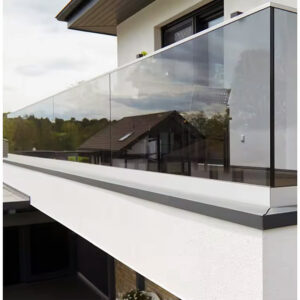
A key outcome of successful ASTM E2353 testing is the potential for a top rail exception. The IBC allows the omission of a top handrail if a laminated glass balustrade system is tested per this standard and proven to remain as an effective barrier after impact. This exception is not merely aesthetic; it transforms a tested system into a premium, liability-managed product. It allows for the clean, minimalist “frameless” look that commands higher margins and meets strong market demand, but it is exclusively available to systems with the empirical validation to back it up.
The Critical Role of Laminated Glass and Safety Factors
Mandated Material for Fall and Breakage Safety
Material selection is governed by stringent, evolving codes. The 2015 IBC introduced a pivotal rule, maintained in subsequent editions, that all glass used in guards must be laminated. This addresses dual safety objectives: preventing falls through the barrier and mitigating the hazard of falling glass shards. The laminated glass must use piles of fully tempered or heat-strengthened glass bonded with an interlayer, meeting impact safety standards like ANSI Z97.1. This requirement fundamentally changes the risk profile of a glass railing system.
The Non-Negotiable Safety Factor of Four
Beyond the material type, the IBC (Section 2407.1.1) imposes a critical design requirement: glass in guards must be designed with a safety factor of four. This means the glass itself must be four times stronger than the minimum 50 plf/200 lb code loads. This high factor accounts for the brittle nature of glass and creates a vital design interface. The glass supplier must certify that their product meets this 4x requirement, which is a separate calculation from the engineering of the metal supports and anchors.
Code Requirements for Glass in Guards
The table below summarizes the specific code mandates for glass used in railing applications, highlighting both material and strength requirements.
| Component | Code Requirement | Key Specification |
|---|---|---|
| Glass Type | Laminated glass | Mandatory per IBC 2015+ |
| Glass Treatment | Fully tempered | Or heat-strengthened |
| Safety Factor | 4x minimum load | IBC Section 2407.1.1 |
| Design Load Basis | 50 plf / 200 lb | Minimum code loads |
Source: IBC 2024 International Building Code. The code mandates laminated glass for safety and requires a safety factor of four for glass in guards, meaning it must be four times stronger than the minimum design loads.
Key Components in a Load Testing Procedure and Report
The Rigorous Test Setup and Execution
A certified load test involves anchoring a representative railing section to a rigid test frame that simulates the building structure. Using hydraulic rams and calibrated load cells, engineers apply the 50 plf uniform load along the top rail and the 200 lb concentrated load at the most vulnerable point, typically mid-span. Deflection is measured with dial gauges to ensure it remains within allowable limits—often not exceeding the railing’s thickness. The system must support these loads for a specified duration without fastener failure, permanent deformation, or glass breakage.
Deciphering the Certified Test Report
The final report is the deliverable that matters. It should include the tested configuration details (glass type, thickness, hardware, spacing), deflection data at each load stage, photographs of the setup, and a clear certification statement signed by a licensed engineer. This report is project-specific evidence. It proves the assembled product’s performance, but only if installed exactly as tested. Any deviation in anchorage, component, or spacing voids the certification.
Metrics of a Valid Load Test
The following table outlines the key components measured during a standard load testing procedure and the criteria for a passing result.
| Test Component | Equipment / Metric | Pass/Fail Criteria |
|---|---|---|
| Load Application | Hydraulic rams | Apply 50 plf & 200 lb |
| Force Measurement | Load cells | Calibrated force reading |
| Deflection Measurement | Dial gauges | ≤ railing thickness |
| System Integrity | Visual inspection | No failure or deformation |
Source: Technical documentation and industry specifications.
Beyond Code: Why Anchorage and Deflection Limits Matter
The Weakest Link: Anchorage to Structure
The strength of the glass and framing is irrelevant if the system is not properly anchored. Anchorage must be designed to transfer all imposed loads into the building’s primary structure (floor, deck, or beam). This often requires specific embedment depths, bolt types, and substrate reinforcement. The test report is only valid if the field anchorage matches the tested method. This is a frequent point of failure in value-engineered projects where installers substitute anchors without engineering approval.
Serviceability and User Perception
While preventing collapse is the primary code goal, controlling deflection is critical for serviceability and perceived safety. Excessive flex can alarm users and may indicate underlying compliance issues. Engineering standards often limit deflection to L/120 or the thickness of the railing. In high-wind coastal regions, these considerations expand. In Hurricane-Vulnerable High-Velocity Hurricane Zones (HVHZ), codes impose layered mandates requiring laminated glass and, if a top rail is attached, demanding the entire assembly pass stringent windborne debris missile impact testing.
Performance Considerations Beyond Minimum Code
The table below contrasts the basic code objectives with the enhanced performance factors that define a high-quality, reliable railing system.
| Consideration | Code Minimum | Enhanced Performance Focus |
|---|---|---|
| Primary Goal | Prevent collapse | Serviceability & perception |
| Critical Link | Anchorage to structure | Load transfer verification |
| Deflection Limit | Often L/120 or similar | Minimize user-alarming flex |
| High-Wind (HVHZ) | Laminated glass required | + Missile impact testing |
Source: Technical documentation and industry specifications.
Note: In High-Velocity Hurricane Zones (HVHZ), codes impose additional mandates like missile impact testing on the entire assembly if a top rail is attached.
Comparing Load Tested vs. Non-Tested Railing Systems
Risk Profile and Approval Pathway
The distinction between tested and non-tested systems defines the project’s risk profile. A non-tested system relies on component ratings and theoretical calculations, which may not predict field-assembled performance. It offers no proof of post-breakage retention, mandating a top rail. The AHJ approval process is more complex, often requiring separate engineering review. A system with a certified ASTM E2353 test report provides empirical validation, can potentially eliminate the top rail, and dramatically simplifies approval by providing the AHJ with a pre-approved, documented solution.
Market Differentiation and Liability
This verification is a key market differentiator. It accelerates a shift toward prefabricated, pre-certified system bundles that mitigate field errors. For architects and contractors, specifying a tested system is a liability management strategy. It transfers the performance burden to the manufacturer who holds the test report. The premium for a tested system is not just for the document; it is for reduced risk, faster permitting, and access to superior design options like frameless balustrades.
A Side-by-Side Comparison
The following table clearly outlines the operational and commercial differences between relying on theoretical compliance versus certified test data.
| Feature | Non-Tested System | ASTM E2353 Tested System |
|---|---|---|
| Compliance Proof | Theoretical calculations | Certified empirical report |
| Top Rail Requirement | Mandatory | Potential exception |
| AHJ Approval Process | Complex, variable | Streamlined, documented |
| Post-Breakage Validation | None provided | Proven retention capability |
| Market Position | Standard component | Premium, liability-managed |
Source: ASTM E2353 Standard Test Methods. Testing per this standard validates the integrated performance of the complete assembly and can provide the basis for a code-compliant top rail exception.
How to Verify and Specify a Code-Compliant System
Engage Early with the Authority Having Jurisdiction
Verification starts with understanding that the model code (IBC/IRC) is only the baseline. The local AHJ—your city or county building department—has final authority and often enforces amendments. California’s 42-inch residential guard height or specific hurricane zone protocols in Florida are examples. Early engagement with the local building department is a critical strategic step to confirm any local modifications that will affect your specification.
Demand Exact Configuration Documentation
When specifying, demand a current test report for the exact system configuration. This includes glass type, thickness, interlayer, post spacing, hardware model, and anchorage details. Ensure the report is signed by a licensed engineer and is not generic. Crucially, the project specifications must state that installation must follow the tested method precisely. Deviation in the field, such as using different anchors or wider post spacing, voids the certification and transfers liability back to the project team. For complex applications, reviewing detailed engineered glass railing hardware specifications is a necessary step in this due diligence process.
Next Steps: Requesting a Certified Test Report for Your Project
To secure your project, request the manufacturer’s certified ASTM E2353 test report and engineered installation drawings for your specific application. Scrutinize the report’s date, the match between the tested configuration and your design, and the engineer’s stamp. For exterior applications in wind-prone regions, also request evidence of compliance with additional local mandates, such as a Miami-Dade NOA for HVHZ. Provide these documents to your AHJ during the permit application phase for pre-approval.
This proactive approach, focusing on the performance of the complete system as installed, is the most effective strategy to ensure safety, achieve compliance, and avoid costly delays. It solidifies the industry trend toward turn-key, liability-managed system solutions. Need professional, code-verified glass railing solutions for your next project? Explore the engineered systems and certified support available at Esang.
Frequently Asked Questions
Q: What are the specific load requirements for a code-compliant glass railing system?
A: The International Building Code mandates that all guardrails must withstand two simultaneous horizontal load tests: a uniform load of 50 pounds per linear foot along the top rail and a concentrated load of 200 pounds applied at any point. The entire assembly, including glass, posts, and anchors, must resist these forces without failure. For projects requiring AHJ approval, you must verify that the system’s certified test report validates performance against both criteria, not just individual component strength.
Q: How does ASTM E2353 testing create a business advantage for a frameless glass railing design?
A: Testing a complete railing assembly per ASTM E2353 can qualify it for a top rail exception under the IBC. This exception is granted if the laminated glass balustrade is proven to remain an effective barrier after impact during the test. This means manufacturers and specifiers can offer a premium, minimalist “frameless” product, which typically commands higher margins and meets strong market demand for clean architectural aesthetics.
Q: Why is laminated glass specifically required for glass railings, and what is the mandated safety factor?
A: Since the 2015 IBC, all glass used in guards must be laminated to prevent falls and mitigate the hazard of falling glass shards. Furthermore, the code requires the glass itself to be designed with a safety factor of four, meaning it must be four times stronger than the minimum 50 plf/200 lb loads. This creates a critical design interface, so you must ensure both the glass specification and the structural framing engineering independently meet this high threshold.
Q: What should a certified load test report include to be useful for permit approval?
A: A valid report documents the performance of a representative, fully anchored assembly under calibrated loads, overseen by a licensed engineer. It must include measured deflection data, photographs of the test setup, and a clear certification of compliance with the relevant codes and standards like ASTM E2353. For your permit application, scrutinize that the tested configuration exactly matches your project’s glass type, thickness, hardware, and anchorage details, as any deviation voids the certification.
Q: How do compliance requirements change for railings in coastal high-wind zones?
A: In Hurricane-Vulnerable High-Velocity Hurricane Zones (HVHZ), codes impose layered mandates beyond standard load testing. These require laminated glass and, if a top rail is attached, often demand the entire assembly pass stringent windborne debris missile impact testing. This means projects in regions like South Florida must budget for specialized, regionally certified system solutions and obtain documentation like a Miami-Dade NOA to satisfy the local Authority Having Jurisdiction.
Q: What is the key difference between specifying a load-tested system versus a non-tested one?
A: A non-tested system relies on theoretical calculations for individual components, offers no proof of post-breakage retention, and always requires a top rail. A system with a certified ASTM E2353 report provides empirical validation of integrated performance, can eliminate the top rail, and dramatically streamlines AHJ approval. For complex projects, this shifts liability management toward turn-key, pre-certified system bundles that mitigate field installation errors.
Q: What are the first steps to verify a railing system will meet local code before specifying it?
A: First, engage with your local building department early to understand any amendments to the model IBC, such as increased height requirements or hurricane protocols. Then, demand a current, engineer-stamped test report for the exact system configuration you plan to use. This means you must specify that on-site installation must follow the tested method precisely, as field deviations are a primary cause of certification invalidation and project delays.