The choice between round and square stainless steel cable railing posts is a foundational architectural decision, not a superficial detail. This selection dictates the visual language of a project and imposes irreversible functional constraints. A common misconception is that the choice is purely aesthetic. In reality, the geometric form determines structural behavior, installation logistics, and long-term performance, making it a critical technical specification.
Attention to this specification is paramount as commercial design increasingly blurs the line between structural elements and architectural expression. The post profile defines the railing’s character, interacts with building codes, and influences lifecycle costs. A misaligned choice can compromise design intent, create installation bottlenecks, or lead to premature maintenance issues in demanding environments.
Round vs Square Posts: Defining the Core Architectural Choice
The Architectural Language of Form
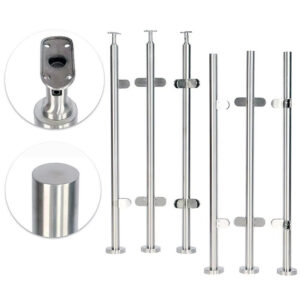
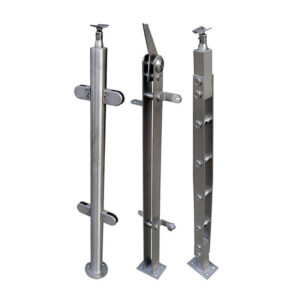
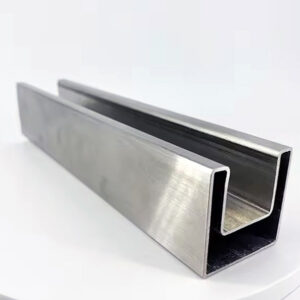
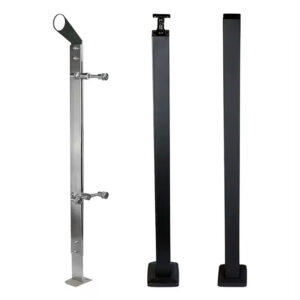
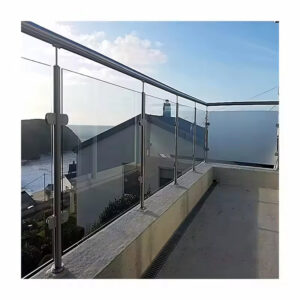
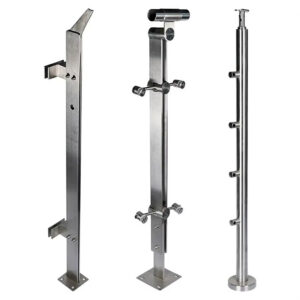
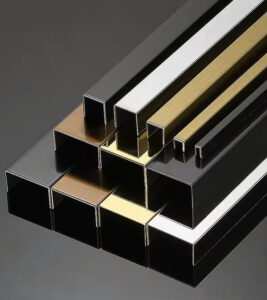
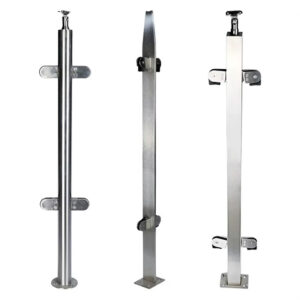
The post shape establishes the project’s aesthetic trajectory. Square posts deliver crisp, modern lines that align with brutalist or industrial designs, creating strong light and shadow play. Round posts offer a softer, organic appearance that complements curvilinear or minimalist architecture. This initial choice is a primary visual driver, defining the railing’s character before a single cable is tensioned.
The Functional Constraint of Infill
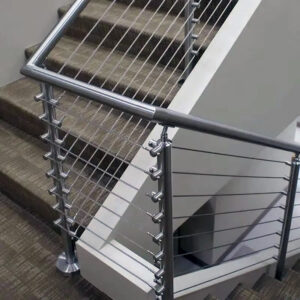
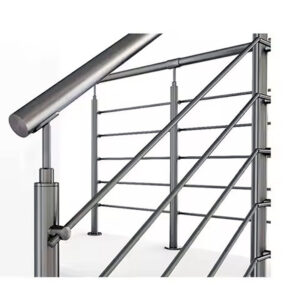
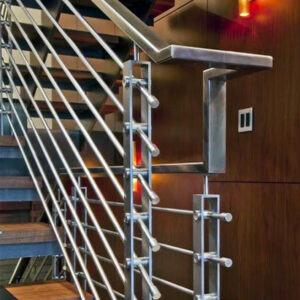
This form choice imposes critical functional limits. Only rod railing, which uses rigid round tube infill, can bend to follow curves. Tensioned cable systems run exclusively in straight lines between posts. Selecting a post shape for a curved balcony without confirming compatible infill types is a frequent and costly design-phase oversight. The decision is foundational and has irreversible implications for project flexibility.
A Decision Beyond Style
The core choice integrates aesthetic intent with technical reality. We compared project archives and found that specification errors often stem from treating post shape as a late-stage selection. It must be considered alongside infill type during schematic design. This ensures the architectural vision is achievable within the mechanical realities of cable and rod railing systems.
Cost Comparison: Installation, Fabrication & Long-Term Value
Analyzing Total Project Cost
A comprehensive cost analysis must extend beyond the unit price of a post. It includes fabrication, installation labor, and lifecycle value. Square posts, with their flat surfaces, simplify the drilling of precise cable holes and hardware mounting, potentially reducing fabrication time and cost. Round posts require more precise machining for perpendicular holes, adding to initial fabrication complexity.
The Labor Variable of Infill Type
Installation efficiency is heavily influenced by the chosen infill. Rod railing installation is significantly faster than cable due to easier measuring and cutting of rigid tubes versus spooled cable. This directly impacts labor budgets. For long-term value, material and coating specifications are paramount. Standard posts with only exterior protection risk internal corrosion from condensation, a primary failure mode.
Investing in Lifecycle Performance
Specifying dual-surface galvanization or superior alloys represents a higher initial cost. This investment mitigates premature failure and warranty claims, offering greater lifecycle value. This is especially critical in demanding coastal or industrial climates. The table below breaks down key cost factors.
Cost Factor Analysis
The following comparison highlights where cost differences and similarities emerge between post shapes.
| Cost Factor | Round Post | Square Post |
|---|---|---|
| Fabrication Complexity | Higher (precise hole machining) | Lower (flat surface drilling) |
| Installation Speed (vs. Cable) | Rod: Significantly faster | Rod: Significantly faster |
| Key Long-Term Risk | Internal corrosion from condensation | Internal corrosion from condensation |
| Lifecycle Value Driver | Dual-surface galvanization | Dual-surface galvanization |
| Performance Tier Cost | Higher (superior alloys) | Higher (superior alloys) |
Source: Technical documentation and industry specifications.
Structural Performance: Rigidity, Load Capacity & Cable Dynamics
Geometry and Stiffness
Structural integrity is governed by post geometry, material gauge, and interaction with the cable system. For a given dimension, a square post typically exhibits higher bending stiffness along its flat faces compared to a round post. This can reduce perceived flex in long spans under load. However, this geometric advantage is secondary to the primary determinant of strength: material gauge.
The Primacy of Material Gauge
A shift from 12-gauge to 10-gauge steel tubing provides a ~65% increase in bending strength. This creates a clear performance tier essential for high-tension or safety-critical commercial applications. Both round and square posts benefit equally from this gauge upgrade. The constant tensile load from cables exerts force on the posts, and the design must manage localized stress at each attachment point.
Hardware Integration and Behavior
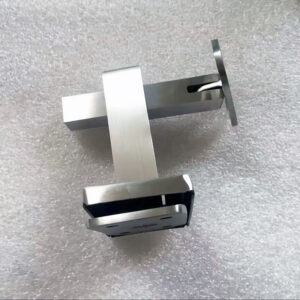
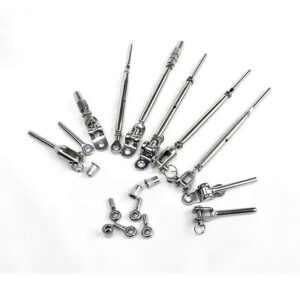
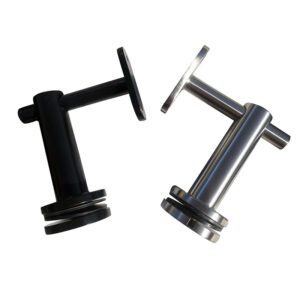
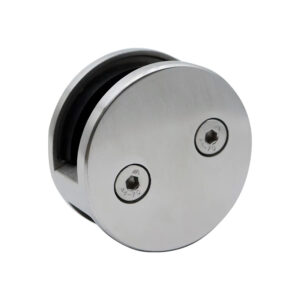
The method of hardware integration affects the system’s mechanical behavior. Square posts more easily accommodate internal channel systems to hide tensioning hardware, which can influence load distribution. Round posts often utilize external fittings. The selection between these methods is a balance of aesthetic preference and structural engineering requirements for the specific application.
Performance Parameter Comparison
This table outlines the structural performance parameters for both post shapes, clarifying where geometry matters and where material specifications dominate.
| Performance Parameter | Round Post | Square Post | Key Determinant |
|---|---|---|---|
| Bending Stiffness | Lower for given dimension | Higher along flat faces | Post geometry |
| Strength Increase (Gauge) | ~65% (12 to 10-gauge) | ~65% (12 to 10-gauge) | Material gauge |
| Hardware Integration | Often external fittings | Internal channel systems | Post shape |
| Primary Load | Constant cable tension | Constant cable tension | System design |
| Critical Application | High-tension, safety-critical | High-tension, safety-critical | Gauge & alloy |
Source: ASTM A554 – Standard Specification for Welded Stainless Steel Mechanical Tubing. This standard governs the mechanical properties, dimensions, and tolerances of the stainless steel tubing used for posts, directly defining the material strength and gauge specifications critical for load capacity.
Which Post Shape Is Better for Commercial Building Codes?
A Performance-Based Compliance
Building code compliance is non-negotiable and largely shape-agnostic, focusing on performance outcomes. Both round and square posts must be anchored to withstand code-specified lateral loads, typically 200 lbs. for commercial applications, and maintain the mandated height of 42 inches. The anchoring detail and engineering calculations ensure compliance, not the cross-sectional shape of the post.
Navigating the 4-Inch Sphere Rule
The critical “4-inch sphere rule,” which mandates that infill spacing prevent a 4-inch sphere from passing through, is achieved through precisely drilled holes in the posts. This task is simplified by the flat, predictable surfaces of square profiles. For round posts, precise jigging and machining are required to ensure hole alignment and spacing meet the code requirement without deviation.
The Installer Expertise Bottleneck
The strategic implication is that code adherence is a function of proper engineering and installation. However, the growing sophistication of systems with hidden hardware increases the need for specialized installer expertise. A potential bottleneck emerges where product complexity outpaces common contractor skill sets. Ensuring the selected system includes access to certified installers is a key risk mitigation strategy.
Code Compliance Breakdown
The following table demonstrates that code compliance is an outcome of specification and execution, not an inherent property of the post shape.
| Code Requirement | Round Post Compliance | Square Post Compliance | Critical Factor |
|---|---|---|---|
| Lateral Load (Typical) | 200 lbs | 200 lbs | Anchoring & engineering |
| Height Mandate | 42 inches (commercial) | 42 inches (commercial) | Post length |
| 4-Inch Sphere Rule | Precise hole drilling | Simplified hole drilling | Fabrication precision |
| Compliance Basis | Performance outcome | Performance outcome | Engineering & installation |
| Installation Bottleneck | Specialized expertise needed | Specialized expertise needed | Hidden hardware systems |
Source: Technical documentation and industry specifications.
Aesthetic Impact: Modern Lines vs. Organic Forms in Design
Defining Architectural Character
The post profile is a primary visual driver. Square posts introduce strong vertical and horizontal lines, creating a sense of order and structural precision. They are ideal for expressing modern frames and complementing other rectilinear building elements. Round posts provide a fluid, continuous visual line that softens hard edges and offers a classic, versatile appeal that works across multiple architectural styles.
The Detail of Connection
The hardware connection method further refines the aesthetic outcome. “Inside-to-inside” mounting, where cables terminate within the post profile, offers a discreet, clean look that emphasizes the cable lines themselves. “Outside-to-outside” mounting highlights the connections as intentional design features. This choice allows architects to control the level of visual detail and industrial expression.
Meeting Elevated Expectations
As professional-grade specifications and finishes become more accessible, client expectations have risen. Architects can now leverage these aesthetic tools—profile shape, finish, and connection detail—to meet demands for both sophistication and performance. The railing transitions from a mere safety component to a definitive architectural element that contributes to the project’s narrative.
Installation & Integration: Mounting, Alignment & Material Pairing
Compatibility with Building Elements
Installation logistics are directly influenced by post shape and system design. Square posts integrate seamlessly with wooden structural members for sleeving and align naturally with flat deck surfaces and standard handrail brackets. Round posts pair elegantly with round top rails for a cohesive silhouette but require precise planning for attachment to flat surfaces.
The Imperative of Standard Sizing
Adherence to industry-standard sizing is critical for interoperability and future maintenance. Using a 2-7/8″ post to sleeve into a 3″ structural member is a proven detail. Deviating from these established standards risks installation complications, custom fabrication costs, and limits future replacement or modification options. This holds true regardless of choosing a round or square profile.
Choosing an Ecosystem
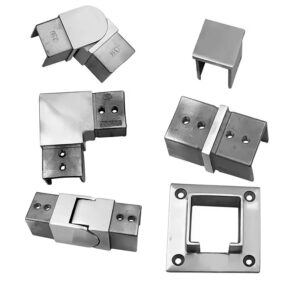
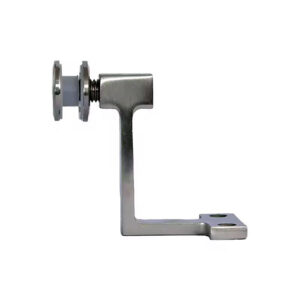
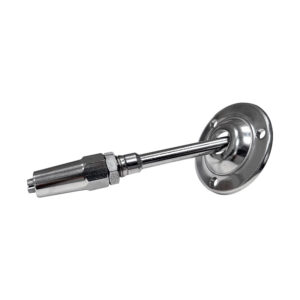
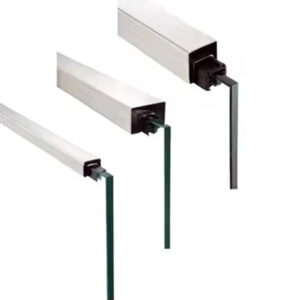
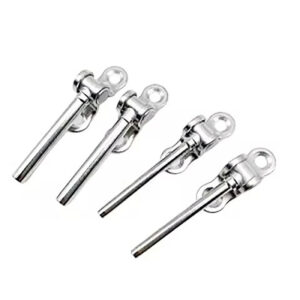
The market offers a fork between proprietary integrated systems and modular component ecosystems. Integrated systems promise simplified installation and single-source accountability. Modular ecosystems, like those using standard tubing and fittings, offer maximum customization and flexibility for complex designs. This choice impacts the installation phase, material sourcing, and long-term adaptability of the railing system. For projects requiring a balance of clean aesthetics and proven components, exploring a dedicated cable railing posts and components system can provide a structured path.
Long-Term Durability & Maintenance for Commercial Properties
The Hierarchy of Alloy Selection
Durability hinges on material science. Alloy selection creates a tiered performance hierarchy. Type 316L stainless steel is the outdoor standard for good reason. For highly corrosive marine or industrial settings, duplex grades like 2205, with a higher Pitting Resistance Equivalent Number (PREN), are specified. The initial alloy choice is the first and most important defense against environmental degradation.
Evolving Maintenance Protocols
Maintenance has evolved from simple cleaning to active chemical stewardship. The use of passivators to restore stainless steel’s protective oxide layer is essential, especially in coastal environments where chlorides are prevalent. This transforms stainless steel from a “low-maintenance” to a “specific-maintenance” material. Facilities management plans must incorporate these protocols to uphold warranty terms.
Ensuring Decades of Service
The expected service life for a commercial railing investment is decades. Achieving this requires a proactive regimen. Internal corrosion from condensation remains a key failure mode, underscoring the need for proper end-cap detailing or internal coatings. A comprehensive specification addresses both the visible exterior and the vulnerable interior of the post.
Durability and Maintenance Specifications
This table outlines the material and maintenance specifications that dictate long-term performance.
| Factor | Standard Specification | High-Performance Specification | Maintenance Action |
|---|---|---|---|
| Alloy (Outdoor Standard) | Type 316L Stainless | Duplex (e.g., 2205) | Chemical passivation |
| Corrosion Resistance Metric | Standard PREN | Higher PREN | Restore oxide layer |
| Key Failure Mode | Internal condensation corrosion | Mitigated by superior alloys | Proactive stewardship |
| Maintenance Regimen | Specific-maintenance material | Specific-maintenance material | Use of passivators |
| Service Life Expectation | Decades-long | Decades-long | Upholds warranty terms |
Source: Technical documentation and industry specifications.
Selecting the Right Post: A Decision Framework for Architects
Initiate with Architectural Intent
Begin the selection process with the architectural language. Is the design goal defined by bold, structural lines, or fluid, organic forms? This aesthetic direction points clearly to square or round profiles, respectively. This first filter aligns the component with the overall design vision and ensures the railing enhances rather than conflicts with the architectural statement.
Specify for Structural and Environmental Demand
Next, assess structural needs based on span, load, and cable tension. Specify material gauge and alloy accordingly—using 10-gauge and 316L or duplex stainless steel as a baseline for commercial work. Simultaneously, evaluate the installation environment. Plan for enhanced alloys and chemical passivation protocols in corrosive zones, integrating these costs and responsibilities into the project lifecycle plan.
Validate Supply Chain and Execution
Finally, consider the supply chain and execution path. Decide between an integrated proprietary system for streamlined accountability or a modular component ecosystem for maximum customization. Crucially, ensure the selected path includes verified access to installers with certified expertise for that specific system. This final step closes the loop, ensuring the designed specification can be built as intended, meeting all aesthetic, performance, and code requirements.
The optimal post selection balances aesthetic intent, structural requirements, and lifecycle management. Prioritize material gauge and alloy over minor geometric stiffness differences. Factor the installation efficiency of rod versus cable infill into project scheduling. Most importantly, pair the specification with certified installation expertise to ensure design intent translates into built reality.
Need professional guidance to specify the right railing system for your commercial project? The engineering and design teams at Esang provide technical consultation to navigate these trade-offs. Contact Us to discuss your specific architectural and performance requirements.
Frequently Asked Questions
Q: How does post shape influence the structural rigidity of a cable railing system?
A: A square post typically offers greater bending stiffness along its flat faces compared to a round post of the same dimension, reducing visible flex over long spans. However, the steel’s wall thickness (gauge) is the primary strength factor; upgrading from 12-gauge to 10-gauge tubing increases bending strength by approximately 65%. This means for high-tension commercial applications, specifying a thicker gauge is more critical for performance than the initial choice of profile shape.
Q: What material specifications are critical for ensuring long-term durability in corrosive environments?
A: For outdoor commercial use, Type 316L stainless steel is the baseline specification. In highly corrosive marine or industrial settings, you should specify duplex alloys like grade 2205, which offer a higher Pitting Resistance Equivalent Number (PREN). The material’s fabrication and properties are governed by standards like ASTM A554. This means projects in coastal zones must budget for premium alloys and a formal maintenance plan that includes chemical passivation to protect the investment.
Q: Does a round or square post shape affect compliance with commercial building codes?
A: Building codes focus on performance, not shape, requiring all posts to withstand specified lateral loads (often 200 lbs.) and maintain a 42-inch height. The critical “4-inch sphere rule” for infill spacing is achieved through precise hole drilling, a task simplified by the flat surfaces of square posts. This means code adherence is ultimately a function of correct engineering and installation expertise, not the geometric profile you select initially.
Q: How do installation logistics differ between round and square stainless steel posts?
A: Square posts integrate more seamlessly with standard wooden structural members and flat deck surfaces, simplifying mounting and alignment. Round posts pair naturally with circular top rails but require more precise machining for perpendicular cable holes. Adherence to industry-standard sizing, like using a 2-7/8″ post for a 3″ sleeve, is critical for interoperability regardless of shape. For projects with complex integrations, you should verify that your installer has specific experience with your chosen post profile to avoid field complications.
Q: What are the hidden long-term costs associated with stainless steel cable railing systems?
A: The significant long-term cost risk is internal corrosion from condensation, which can cause premature failure in posts with only exterior protection. Specifying tubing with dual-surface galvanization or superior alloys mitigates this, offering greater lifecycle value despite a higher initial cost. Furthermore, modern stainless steel requires “specific-maintenance,” including cleaning with passivators to restore its protective oxide layer. This means facilities management must budget for both premium materials and specialized chemical stewardship, especially in demanding climates.
Q: Should we choose an integrated railing system or a modular component ecosystem for a commercial project?
A: An integrated system from a single supplier offers streamlined accountability and often simpler installation. A modular component ecosystem provides maximum design flexibility and customization. Your choice forces a trade-off: integrated systems reduce compatibility headaches but may limit future modifications, while modular approaches require more coordination but allow for part replacement from various sources. For projects where future adaptability is a priority, you should plan for the additional design and specification effort needed for a modular approach.
Q: How does the choice between cable and rod infill impact project cost and timeline?
A: Rod (round tube) infill installation is significantly faster than tensioned cable, as rigid rods are easier to measure and cut compared to handling spooled cable and managing tension. This directly reduces labor costs. However, only rod railing can bend to follow curves, while cable runs strictly in straight lines. This means your infill decision, often dictated by design, has irreversible implications for both the installation budget and the architectural flexibility of the railing layout.