A contractor who receives a stack of anchorage shop drawings and product cut sheets still has to answer one question before stamping them for release: does this paperwork describe a single, coordinated assembly, or a set of parts that happen to share a submittal cover sheet? The distinction matters because approval releases fabrication and installation, and any disconnect between what was reviewed and what gets built surfaces later, at the point where correction is hardest. A working review checklist exists to catch that disconnect before release rather than after.
Documents that establish the proposed anchorage assembly
| Submittal component | Assembly question it should answer | Review boundary |
|---|---|---|
| Coordinated drawings | How project criteria and post reactions connect to the proposed base plate, anchor system, substrate, and site condition | The drawing set should describe one coherent assembly rather than disconnected components. |
| Anchor product or system data | Which proposed anchor product or system the drawings and assembly rely on | Read the data with the project criteria, substrate, and site condition. |
| Material records | What inspection documents accompany the steel-product delivery under the order requirements | The document type alone does not prove traceability, test validity, grade conformity, or certificate authenticity. |
| Installation instructions | How the proposed assembly is intended to be installed | The instructions should correspond to the same assembly shown in the drawings and product or system data. |
| Applicable evaluation evidence | What third-party basis is being used for anchorage subjects within the project scope | Metadata alone does not provide detailed requirements or establish project acceptance. |
| Field-verification responsibilities | Which site-condition checks must be assigned before approval and release | Project-specific responsibilities should be stated rather than inferred from supplier declarations. |
An anchorage submittal is not one document; it is a set of documents that only means something when read together. The starting point is the connection between project criteria and post reactions on one side and the proposed base plate, anchor system, substrate, and site condition on the other. Where that connection is missing or implicit, the reviewer is left guessing whether the anchor data on page twelve was actually selected to resist the loads described on page three, or whether it was dropped in because it was available.
Each document type in the set answers a different question, and conflating them erodes the review. Coordinated drawings should show how the pieces relate to one another as one assembly. Anchor product or system data identifies which specific product or system the drawings claim to rely on; read alone, without the project criteria and substrate conditions, it says nothing about suitability. Material records establish what inspection documentation accompanies the steel delivery under the stated order requirements, which is a narrower claim than it first appears. Installation instructions describe how that same assembly is meant to go together on site, so they need to match the configuration shown elsewhere in the set rather than describe a generic or alternate installation method. Applicable evaluation evidence brings in a third-party basis for subjects like anchor tension and shear or post-base testing, where that evidence is relevant to the project scope. Field-verification responsibilities state who checks which site condition before the assembly is accepted.
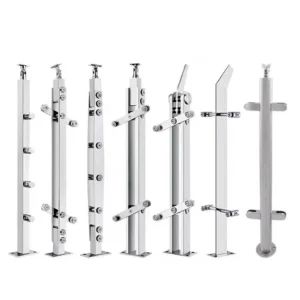
Where a submittal supplies some of these documents but not others, the reviewer’s task is not to infer the missing piece from what is present. A complete anchor product data sheet does not substitute for installation instructions, and installation instructions do not substitute for material records. If the project criteria change late, for example because a different post spacing or loading condition is introduced, every document tied to the original criteria needs to be checked again rather than assumed to still apply. A submittal reviewed as a connected set, following something close to the shop drawing checklist contractors use for stainless steel railing posts, surfaces that kind of gap before it reaches the field.
Drawing links among posts, base plates, anchors, and substrate
| Drawing link | Coordination check |
|---|---|
| Project criteria and post reactions to the proposed assembly | The drawings connect these design inputs to the proposed post, base plate, anchor system, substrate, and site condition. |
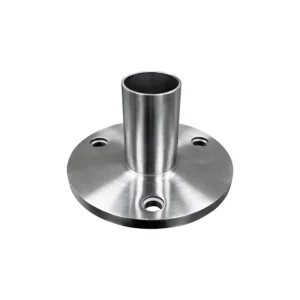
| Post to base plate | The post and proposed base plate appear as parts of the same assembly. |
| Base plate to anchor system | The proposed base plate and anchor system are coordinated rather than shown as unrelated components. |
| Anchor system to substrate | The drawings identify the substrate and site condition associated with the proposed anchor system. |
| Complete assembly across the submittal | The drawings, product or system data, and installation instructions describe the same proposed configuration. |
Drawings are where the assembly either holds together or falls apart on paper, because this is where the individual components are shown in their actual spatial and structural relationship. A drawing set can show a correct post, a correct base plate, and a correct anchor system and still fail review if the links between them are not demonstrated.
The first link to trace is upstream: do the drawings show project criteria and post reactions feeding into the proposed assembly, or are the post, base plate, and anchor system shown as if they were selected independently of those inputs? Where post reactions are not visibly connected to the base plate and anchor selection, the reviewer cannot confirm that the anchor system was sized for this project’s loading rather than for a generic or prior condition.
The next links run through the physical assembly itself. The post-to-base-plate connection needs to appear as part of one assembly, not as two details that happen to appear on the same sheet. The base plate to anchor system link is where plate thickness, bolt pattern, and anchor spacing need to correspond to the anchor product or system actually specified, not to a similar-looking alternative. The anchor system to substrate link is where the drawings need to state what substrate and site condition the anchors are designed for; an anchor system suitable for one substrate type carries different embedment, edge-distance, and installation requirements in another, and a drawing that omits the substrate identification leaves this unresolved.
The last link is horizontal rather than vertical: do the drawings, the anchor product or system data, and the installation instructions all describe the same configuration? A drawing showing one base plate detail paired with product data for a different model, or installation instructions written for a different mounting method, is a sign that the submittal was assembled from multiple sources without being reconciled into one assembly. Where anchoring systems or surface-mount base plates are involved, the mounting interface between the base plate and the anchor is exactly the kind of detail that needs this cross-check, because the plate geometry and the anchor layout are only compatible within specific combinations.
Product data and evaluation evidence within project scope
| Evidence category | Supported use in review | Limit to keep visible |
|---|---|---|
| Project criteria and post reactions | Provide design inputs to connect to the proposed base plate, anchor system, substrate, and site condition | These inputs are distinct from third-party evidence and supplier declarations. |
| Anchor product or system data | Identify the proposed anchor product or system used by the coordinated assembly | Review it in the context of the stated project criteria, substrate, and site condition. |
| Steel inspection documents or material records | Identify the inspection-document type supplied with steel-product deliveries according to order requirements | Document type alone does not prove traceability, test validity, grade conformity, or certificate authenticity. |
| Applicable third-party evaluation evidence | Address anchorage subjects such as anchor tension and shear, post-base testing, or mounting verification when they are within scope | Metadata alone is insufficient; detailed requirements and acceptance need the full source and project review. |
| Supplier declarations | Show what the supplier has declared about the proposed assembly | Keep them separate from design inputs and third-party evidence so the established basis remains clear. |
Not every document in a submittal carries the same evidentiary weight, and a reviewer who treats them as interchangeable will accept claims that the paperwork does not actually support. Separating project criteria, third-party evaluation evidence, and supplier declarations keeps visible what has actually been established versus what is being asserted.
Project criteria and post reactions are design inputs; they tell the reviewer what the assembly needs to achieve but say nothing on their own about whether the proposed base plate and anchor system achieve it. Anchor product or system data identifies the specific product or system in use, but it only becomes meaningful when read against those same criteria, the substrate, and the site condition — a data sheet in isolation does not confirm fit for a specific project.
Steel inspection documents or other material records identify what type of documentation accompanies a steel-product delivery under the order’s stated requirements. A document being present does not by itself prove traceability, confirm that testing was valid, confirm grade conformity, or confirm that the certificate is authentic; the document type and the order requirements behind it need to be read together, consistent with how inspection document types are defined in ISO 10474.
Applicable third-party evaluation evidence can address anchorage subjects — anchor tension and shear, post-base testing, mounting verification — when those subjects are within the project’s scope, an area ASTM E894 identifies as covering anchorage testing and mounting verification subjects. But metadata about what a standard covers is not the same as the standard’s detailed requirements or acceptance criteria; a reviewer citing a standard by name still needs the full source and a project-specific review to determine whether the proposed assembly meets it.
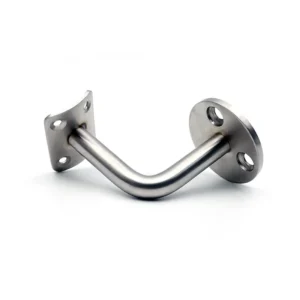
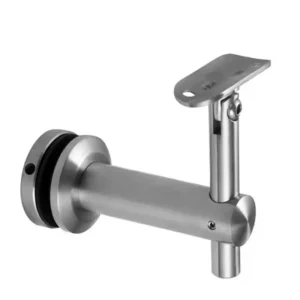
Supplier declarations sit in a different category again: they describe what the supplier states about the proposed assembly, and they are useful, but they are not a substitute for the design inputs or the third-party evidence above them. Where a submittal relies mainly on supplier declarations without connecting them to project criteria or applicable evaluation evidence, the reviewer has a statement of conformance without the underlying basis for it. The handrail anchorage reference covering base plates, wall brackets, and fasteners illustrates how many distinct components typically need their own supporting data within one anchorage package, which is part of why collapsing all of it into a single “supplier says it works” declaration leaves gaps a reviewer needs to close before relying on it.
Installation instructions, inspection points, and field responsibilities
Installation instructions describe how the reviewed assembly is meant to be built, and inspection points and field responsibilities describe how that build is confirmed. These are three related but distinct controls, and treating them as one blurs where responsibility actually sits.
Instructions need to match the assembly that was actually reviewed and approved, not a generic version of the same anchor type. Where the installation method depends on a specific substrate preparation, torque sequence, or fastening pattern, that detail needs to be present in the instructions rather than assumed to be standard practice, because anchor performance depends on installation being carried out as specified; a correctly selected anchor installed outside its specified method does not deliver the performance the selection was based on.
Inspection points follow from the same logic. A submittal’s field-verification section should identify which site conditions actually need checking before the installed anchorage is accepted — substrate condition at the time of installation, for example, differs from substrate condition documented during design, and a gap between the two is exactly the kind of thing inspection is meant to catch. Where the submittal defers inspection criteria to “standard practice” without specifying what that standard practice checks, the reviewer has an inspection point in name only.
Field-verification responsibility is the piece that determines who is accountable for closing that gap. Submittals vary in whether verification responsibility sits with the installer, a third party, or someone else entirely, and the submittal needs to state this explicitly rather than leave it to be inferred from trade custom or from how similar projects have been handled elsewhere. Where a submittal is silent on this point, the reviewer cannot confirm that any party has actually agreed to perform the verification, even if the document set otherwise appears complete.
This is also where discrepancies between the design-phase assembly and the as-built condition surface. If a substrate turns out to differ from what was documented, or if a field condition requires a different anchor spacing than drawn, the installation instructions and inspection points are what catch that difference before it is concealed by subsequent work. A reviewer checking this section is really asking whether the submittal makes it possible to verify, on site, that the approved assembly is what gets installed.
Review dispositions required before approval and release
Approval and release is the point where the review converts into a decision, and that decision needs a record of what was raised and how it was resolved, not just a final signature. Review comments, requests for information, substitutions, and site deviations each represent a point where the reviewed assembly could diverge from what gets built, and tracking them is what keeps that divergence visible instead of silent.
Review comments mark where the reviewer found something in the documents that needs correction or clarification before the assembly can be accepted; leaving a comment unresolved at release means the condition it flagged is also unresolved. Requests for information mark a gap in the submittal itself — a missing substrate detail, an unclear anchor spacing — that needs an answer from the design team or supplier before the reviewer can make a determination. A substitution introduces a different product or system than what was originally drawn and specified, which means every document connected to the original selection, from the anchor product data to the installation instructions, needs to be re-checked against the substituted item rather than assumed to still apply. A site deviation records where the as-built or as-found condition differs from what the drawings assumed, which is exactly the kind of gap the field-verification responsibilities are meant to catch.
Where a project’s priority is strict traceability between design intent and installed condition, every one of these four categories needs to be closed out and documented before release, because an open item at that stage is an open item in the installed assembly as well. Where a project allows later resolution of minor items through a punch-list or close-out process, the distinction that matters is which items affect the anchorage assembly’s basic connection to the substrate and loading, and which do not; only the project’s own criteria and the reviewer’s judgment on the documents in front of them can draw that line. What the review record needs to show, regardless of which path a project takes, is that each comment, request, substitution, and deviation was tracked to a stated resolution before the submittal was approved and released, rather than left open at the point the project moved forward.
Frequently Asked Questions
Q: What should a contractor do when the drawings, product data, and installation instructions describe different anchorage configurations?
A: Treat the assembly as unresolved and record the mismatch as a review comment or request for information before approval and release. The response should identify one coordinated configuration linking the post, base plate, anchor system, substrate, and site condition across all affected documents.
Q: Does the presence of a steel inspection document establish that the proposed anchorage materials conform to the project requirements?
A: No. The document type identifies the inspection record supplied under the order requirements, but it does not by itself prove traceability, test validity, grade conformity, or certificate authenticity; review those points against the proposed materials and project requirements.
Q: What should be checked before relying on anchor product data or third-party evaluation evidence?
A: Confirm that the identified product or system matches the assembly shown in the drawings and that its scope addresses the stated project criteria, post reactions, substrate, and site condition. Obtain and review the applicable detailed evidence because a citation or metadata entry alone does not establish project acceptance.
Q: How should field-verification responsibilities appear in an anchorage submittal?
A: State them explicitly rather than leaving them to be inferred from supplier declarations. Identify which site conditions must be verified before approval and release, who is responsible for each check, and how unresolved conditions will be returned for project review.
Q: What happens if an anchor substitution or site deviation appears after the initial review?
A: Recheck every affected interface before approval and release. Track the substitution or deviation, then confirm that the revised drawings, product or system data, material records, installation instructions, and applicable evaluation evidence still describe the same proposed assembly.