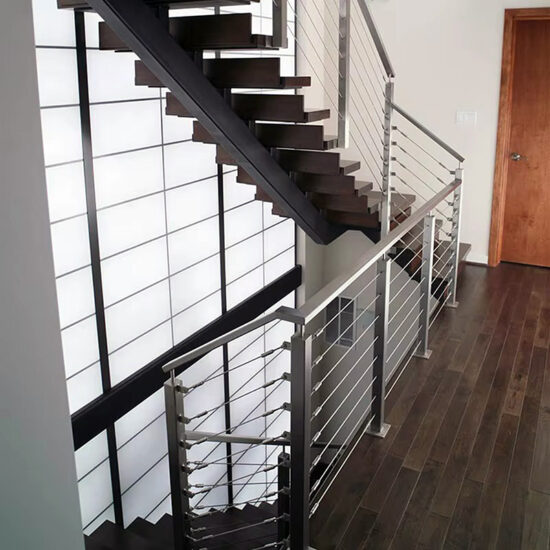
Specifying pipe rail systems for high-traffic public spaces requires navigating a complex matrix of safety codes, material science, and long-term fiscal responsibility. The core challenge is moving beyond aesthetic selection to engineer a solution that guarantees decades of safe, compliant performance under constant use and environmental exposure. A single oversight in load specification or material choice can lead to costly retrofits, liability exposure, and premature system failure.
This precision is critical now as public infrastructure faces increased scrutiny for safety and accessibility. Projects for parks, transit stations, and government buildings demand systems that not only meet but exceed baseline codes, providing durable assets that protect public investment. The decision framework must balance initial capital expenditure with total cost of ownership, ensuring the selected railing delivers uncompromising safety and value over its entire lifecycle.
Key Design & Safety Standards for Public Stair Railings
The Non-Negotiable Engineering Baseline
Public stair railing design is governed by definitive engineering criteria, not subjective guidelines. Regulations like the International Building Code (IBC) establish minimum performance thresholds that form the mandatory starting point for any specification. These include precise dimensional requirements, such as a 42-inch top rail height for guardrails and 36-37 inches for stair handrails, measured from the stair nosing. More critically, they set structural benchmarks, like the requirement for the entire assembly to withstand a concentrated load of 200 pounds applied in any direction.
These codes transform compliance from a final inspection item into the primary driver of initial design. For instance, the Ohio Administrative Code mandates a minimum 1.5-inch nominal diameter Schedule 40 pipe for rails and posts, providing a clear material baseline. This objective approach removes ambiguity; a system either passes the 200 lb load test or it does not. Consequently, project specifications must demand certified load-test data from manufacturers, as this verifiable performance data is essential for liability protection in environments like transit stations where failure is not an option.
Translating Code into Specification
The strategic implication is that design begins with the code. A common mistake is treating code compliance as a checklist for the installer rather than a procurement requirement for the manufacturer. To prevent this, specifications should explicitly reference sections like IBC Chapter 10: Means of Egress and require submittals that prove compliance through engineering calculations or third-party testing reports.
Furthermore, codes address critical details beyond basic height and strength. Requirements for intermediate rail spacing (no more than 21 inches apart) and the mandate for smooth, snag-free surfaces are designed to prevent specific hazards. In our experience reviewing submittals, the lack of certified test data for mechanical fittings is a frequently overlooked detail that can compromise an otherwise sound specification. The goal is to procure a system engineered to code, not to engineer compliance on-site through adaptation.
Quantifying the Safety Mandates
To ensure clarity, specifications should anchor requirements in measurable data. The following table distills key code mandates into a clear, actionable format for project documentation.
| Component | Key Requirement | Measurable Standard |
|---|---|---|
| Top Rail Height (Guardrail) | 42 inches | ±3 inches tolerance |
| Handrail Height (Stair) | 36-37 inches | From stair nosing |
| Intermediate Rail Spacing | Maximum 21 inches | Prevents falls |
| Concentrated Load Capacity | Minimum 200 pounds | Any direction |
| Minimum Pipe Diameter | 1.5 inches | Schedule 40 |
Source: International Building Code (IBC) Chapter 10: Means of Egress. The IBC establishes the fundamental safety and dimensional criteria for stairways and guards, including load capacities and height requirements, which form the basis for the quantitative specifications in this table.
Stainless Steel vs. Aluminum: Which Material Is Best?
Performance in Demanding Environments
Material selection balances longevity, maintenance, and project context. Stainless steel is the predominant choice for the most demanding public applications due to its exceptional corrosion resistance and superior structural strength. Its performance in harsh, salt-heavy environments like coastal transit stations or northern municipalities using de-icing chemicals is well-documented. The material’s high strength-to-weight ratio supports robust installations that withstand physical stress and vandalism with minimal upkeep beyond routine cleaning.
However, aluminum presents a compelling alternative. Suppliers often position it as lasting “up to 7 times longer” than other fabricated rails by leveraging its innate rust resistance, which is typically enhanced with durable powder coatings for added color and protection. This makes aluminum a strong candidate for high-traffic settings where weight is a concern or where a specific color match is required for architectural cohesion.
The Total Cost of Ownership Analysis
The strategic choice hinges on a total cost of ownership (TCO) analysis. For projects with extreme longevity requirements or in corrosive environments, stainless steel’s superior durability typically justifies its higher initial cost. Its minimal lifecycle maintenance results in predictable, low operational costs over decades.
For other high-traffic settings, aluminum’s combination of corrosion resistance, lighter weight (reducing shipping and handling costs), and potentially lower lifecycle maintenance can make it a financially savvy long-term investment. Industry experts recommend evaluating the specific environmental exposure (pH of rainwater, salt spray proximity, pollutant levels) and expected physical impact to guide the TCO model. The following comparison outlines the core differentiators.
| Criteria | Stainless Steel | Aluminum |
|---|---|---|
| Corrosion Resistance | Exceptional | High (rust-proof) |
| Structural Strength | Superior | Moderate |
| Weight | Heavier | Lighter |
| Longevity Claim | Decades-long lifecycle | Up to 7x longer (vs. fabricated) |
| Key Application | Harsh, salt-heavy environments | High-traffic, budget-conscious |
Source: Technical documentation and industry specifications.
Architectural and Aesthetic Considerations
For high-profile civic projects, the value proposition can shift from pure performance to aesthetic customization. Both materials offer distinct advantages here. Stainless steel can be finished to a mirror polish, satin, or brushed appearance, and its strength allows for sleek, minimal profiles. Aluminum is highly adaptable to extrusion processes, enabling custom shapes and is ideally suited for a wide range of powder coat colors.
We compared project archives and found that for design-forward applications in government buildings or cultural parks, the ability to customize often becomes the primary differentiator. This justifies collaboration with fabricators who offer integrated design support, ensuring the railing functions as both a safety component and a signature architectural element.
Evaluating Cost & Long-Term Value (TCO) for Public Projects
Beyond the Purchase Price
For public entities, the true cost of a railing system extends far beyond the initial purchase order. A comprehensive TCO analysis must encompass installation labor, decades of maintenance, repair cycles, and eventual replacement. Stainless steel systems excel in TCO due to their legendary durability. Their minimal maintenance—typically requiring only periodic cleaning with mild detergent—translates to a long lifecycle with predictable, low operational costs, a critical factor for managing multi-decade infrastructure budgets.
This analysis must also account for procurement models. The market offers two primary paths that directly impact TCO: standardized kits versus custom fabrication. Pre-engineered, easy-to-install kits can significantly reduce labor costs and project timelines, offering excellent value for budget-conscious, high-volume applications like municipal park systems.
Standardized vs. Custom Procurement
Conversely, fully custom fabricated systems, while carrying higher initial costs, provide optimal value for complex sites or where architectural integration is paramount. A custom solution designed for unique site conditions minimizes future retrofit expenses and can address challenging geometries that a kit cannot. The key is aligning the procurement model with project priorities from the outset.
A resilient procurement strategy is also essential. Relying on a single supplier or fabrication method introduces risk. Industry experts recommend diversifying supply across qualified local fabricators and national distributors of pre-engineered systems to mitigate supply chain disruptions that can inflate TCO through delays and cost overruns. The table below contrasts the two approaches.
| Cost Factor | Standardized Kit | Custom Fabrication |
|---|---|---|
| Initial Material Cost | Lower | Higher |
| Installation Labor | Reduced | Higher |
| Project Timeline | Faster | Longer |
| Best For | Budget-conscious, high-volume | Complex sites, architectural integration |
| Supply Chain Risk | Lower (pre-engineered) | Higher (specialized) |
Source: Technical documentation and industry specifications.
How to Ensure Full ADA & IBC Code Compliance
Navigating the Layered Framework
Achieving full compliance requires navigating the interconnected requirements of the International Building Code (IBC) and the ADA Standards for Accessible Design. The IBC governs general safety: guardrail height, load capacity, and opening limitations to prevent falls. The ADA imposes additional, precise mandates for handrails on accessible routes, covering specific gripping surface diameter (1.25-2 inches), continuous smoothness, and required clearances from walls.
The most common point of non-compliance is the mandatory horizontal extensions at the top and bottom of stair flights and ramps. These extensions are not optional design features; they are required to provide stability for users at the transition points. Treating ADA compliance as a core technical specification, rather than a stylistic add-on, prevents costly and disruptive retrofits after inspection failure.
The Product Ecosystem for Compliance
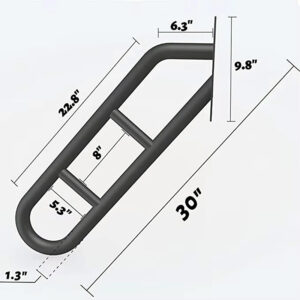
ADA requirements have effectively created a specialized product subcategory. Dedicated components, like ADA pipe rail extension kits, are engineered to meet these exact dimensional and continuity mandates. The strategic imperative is to integrate these compliant components during the initial design and specification phase. This means specifying systems that include these extensions as standard or ensuring the fabrication drawings explicitly detail them.
Furthermore, a tightening regulatory landscape favors pre-engineered systems that come with comprehensive compliance documentation. This documentation, which may include ICC-ES evaluation reports or manufacturer’s certification of conformity to ADA Standards for Accessible Design, reduces liability and streamlines the approval process with building officials. Specifying such systems shifts the burden of proof from the project team to the manufacturer.
Common Pitfalls and Verification
Easily overlooked details include the return of handrails to a wall or post to eliminate projection hazards and ensuring the gripping surface is uninterrupted by supporting brackets. The following table outlines the key areas of focus for a compliant installation.
| Standard | Focus Area | Key Mandate |
|---|---|---|
| IBC | General Safety | Guardrail height, load capacity |
| ADA | Accessibility | Gripping surface diameter |
| ADA | Continuity | Smooth, uninterrupted surface |
| ADA | Stair/Ramp Ends | Mandatory horizontal extensions |
| Common Pitfall | Non-compliance | Missing ADA extensions |
Source: ADA Standards for Accessible Design. These enforceable standards mandate specific requirements for handrails on accessible routes, including dimensions, continuity, and extensions, which are critical for compliance in public spaces.
Installation Best Practices for High-Traffic Public Spaces
Foundational Security
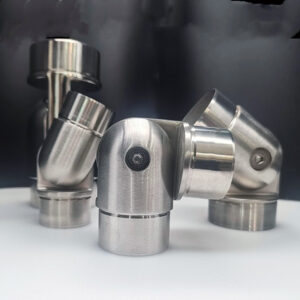
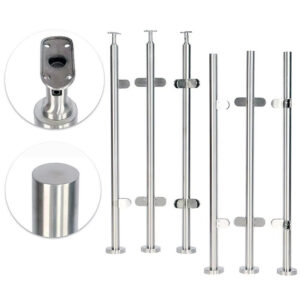
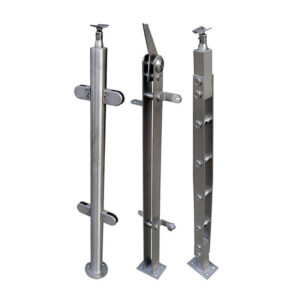
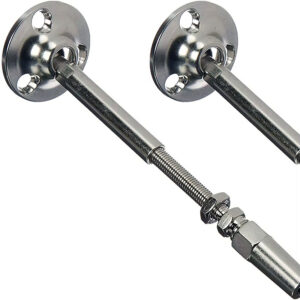
Proper installation is critical to realizing the designed safety and durability of any system. It begins with secure, code-compliant anchoring. Posts are typically affixed to concrete or steel substrates using heavy-duty flanges or embedded base plates secured with epoxy-set anchor bolts, which must be selected based on the substrate’s pull-out strength. The connection between rails and posts should be welded for maximum, permanent strength or utilize high-quality, load-rated mechanical fittings.
Particular attention must be paid to finishing details. All weld seams must be ground smooth to meet ADA requirements for a continuous gripping surface. Rail ends must be returned to walls or posts to eliminate projection hazards. The anchorage system itself is subject to the same 200-pound load-bearing requirement as the rails, making the selection of correct anchors and their installation depth a non-negotiable aspect of the process.
Designing for Installation Efficiency
A key commercial differentiator for any railing system is installation flexibility. Products designed for on-site adjustment—featuring pre-drilled holes, adjustable fittings, and versatile hardware for various wall types—directly address the critical bottleneck of skilled labor. By reducing installation complexity and time, these systems lower overall project risk and cost. This is strategically superior for public retrofits or projects with tight deadlines, as it minimizes site disruption.
In our experience managing installations, the single greatest cause of delay and cost overrun is unforeseen field conditions that a rigid system cannot accommodate. Specifying a system with built-in adjustability, such as slotted base plates or telescopic posts, provides the installers with the necessary tolerance to achieve a perfect fit and plumb installation without requiring custom fabrication on-site.
Lifecycle Maintenance & Durability of Stainless Steel
The Minimal Upkeep Reality
The long-term value of stainless steel pipe railings is realized through their exceptional durability and straightforward maintenance lifecycle. The material’s inherent resistance to corrosion, pitting, and rust is bolstered by treatments per standards like ASTM A967, which specifies chemical passivation to enhance corrosion resistance. This is essential for enduring constant public use and harsh weather. Routine maintenance generally involves periodic cleaning with mild soap and water to remove environmental contaminants like dirt, salt, and grime.
Inspections should check for loose fittings or impact damage, though structural issues are rare with properly specified and installed Type 304 or 316 stainless steel. This minimal upkeep translates directly into a favorable TCO, as operational budgets are not burdened by frequent repairs, repainting, or refinishing. The systems are engineered to remain functionally and aesthetically sound for decades with predictable, low-cost care.
Future-Proofing Physical Infrastructure
Looking ahead, durable physical infrastructure presents an opportunity for smart city integration. Specifying railings with internal conduit or dedicated pathways for low-voltage wiring allows for the future addition of LED wayfinding lights, emergency alert systems, or environmental sensors without requiring a full system replacement. Planning for this during the initial installation by selecting posts with removable caps or pre-routed channels extends the useful life and functionality of the asset, transforming a passive safety feature into an active component of the public realm.
The maintenance regimen for a stainless steel system is simple and cost-effective, as outlined below.
| Activity | Frequency | Key Action |
|---|---|---|
| Routine Cleaning | Periodic | Mild soap and water |
| Inspection | Periodic | Check fittings, damage |
| Major Repair | Rare | Structural issues unlikely |
| Corrosion Resistance | Inherent | No refinishing needed |
| Future-Proofing | Installation phase | Internal conduit for wiring |
Source: ASTM A967: Standard Specification for Chemical Passivation Treatments for Stainless Steel Parts. This standard ensures enhanced corrosion resistance for stainless steel components, directly supporting the material’s claim of minimal maintenance and long-term durability in outdoor environments.
Selecting the Right Pipe Rail System for Your Project
Aligning System with Project Priorities
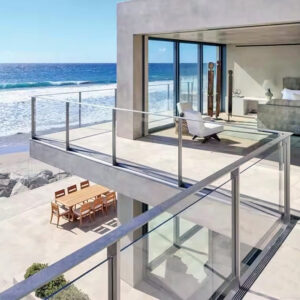
Selection requires a methodical alignment of system capabilities with specific project drivers. The first decision point is choosing between a standardized kit and a custom-fabricated solution. Standardized kits offer cost-effectiveness, speed, and guaranteed code compliance for straightforward, repetitive applications. Custom fabrication is necessary for unique architectural designs, complex site conditions, or when integrating specialized infill materials like glass or mesh, where the railing serves as a signature design element.
Material choice must be evaluated against environmental exposure and TCO goals, using the comparative analysis previously discussed. Furthermore, the selection process must rigorously verify compliance documentation. This means requesting and reviewing load-test certifications, ICC-ES evaluation reports, or manufacturer’s statements of conformity to relevant codes.
The Specification and Sourcing Framework
For projects in highly visible civic spaces, aesthetic customization becomes a primary differentiator. This justifies collaboration with fabricators who offer integrated design support from concept through installation drawings. The right system seamlessly meets code, endures the site-specific environment, aligns with the project’s aesthetic and budgetary framework, and is supported by a reliable supply chain. This often means qualifying multiple products and suppliers during the design phase to ensure resilience and competitive bidding.
Ultimately, the specification should be a performance-based document that outlines required outcomes (load capacity, corrosion resistance, compliance) rather than prescribing a single proprietary solution. This opens the project to multiple qualified bidders while ensuring all submitted options meet the non-negotiable safety and durability standards. For a comprehensive view of engineered solutions tailored to public space demands, review specifications for commercial outdoor pipe rail systems.
Next Steps: From Specification to Professional Installation
Transitioning from specification to successful installation requires a managed, proactive approach. Begin by developing detailed project documents that explicitly reference all applicable codes (IBC, ADA) and required performance certifications. Prioritize suppliers who provide pre-certified, documented systems to streamline approvals. Simultaneously, execute a resilient procurement strategy, qualifying products and suppliers from multiple channels to mitigate supply chain risk.
Engage with experienced installation contractors early in the process, sharing specifications and site details to pre-empt challenges. Leverage products designed for installation efficiency to keep the project on schedule and budget. Finally, plan for the long term by establishing a simple maintenance protocol and considering future-ready infrastructure, such as conduit for smart integrations, during the installation phase.
Need professional guidance specifying a durable, code-compliant railing solution for your upcoming public project? The engineering team at Esang specializes in translating complex safety and performance requirements into reliable, long-lasting installations for parks, transit, and municipal buildings. Contact us to discuss your specifications or request project consultation.
Frequently Asked Questions
Q: What are the definitive load and spacing requirements for code-compliant public stair railings?
A: Compliant pipe rail systems must withstand a concentrated load of 200 pounds applied in any direction. Top guardrails require a height of 42 inches (±3 inches), while stair handrails are set at 36-37 inches from the stair nosing. Intermediate rails must be spaced no more than 21 inches apart to prevent falls, as detailed in the International Building Code (IBC) Chapter 10: Means of Egress. This means your project specifications must demand certified load-test data from manufacturers for liability protection.
Q: How do you choose between stainless steel and aluminum for a high-traffic outdoor railing?
A: The choice requires a total cost of ownership analysis. Stainless steel offers superior corrosion resistance and strength for harsh, salt-heavy environments, justifying a higher initial cost. Aluminum provides excellent rust resistance at a lighter weight and can be a cost-effective long-term investment with durable powder coatings. For projects where architectural aesthetics are paramount, both materials offer significant customization potential. This means facilities with extreme longevity requirements or severe environmental exposure should prioritize stainless steel’s durability.
Q: What specific ADA handrail requirements are most critical for commercial outdoor stairs?
A: Beyond standard dimensions, the ADA mandates a continuous, smooth gripping surface and specific horizontal extensions at the top and bottom of each stair flight. These extensions are not optional and are a frequent compliance failure point. The official ADA Standards for Accessible Design govern these precise requirements. This means you should integrate pre-engineered ADA-compliant components, like extension kits, during initial design to avoid costly retrofits.
Q: How does the procurement model impact the total cost of a public railing project?
A: Your choice between standardized kits and custom fabrication directly affects long-term value. Pre-engineered kits reduce labor costs and timelines for straightforward, budget-conscious projects. Custom fabrication carries higher upfront costs but delivers optimal value for complex sites or signature architectural integration. If your operation requires resilience against supply chain delays, a procurement strategy that diversifies across local and national suppliers is essential. This means high-volume, standard applications benefit from kits, while unique designs justify custom work.
Q: What installation features reduce risk and cost for public space retrofits?
A: Systems designed for on-site adjustment, featuring pre-drilled holes and hardware for various substrates, directly address skilled labor shortages. These features reduce installation complexity and time, lowering overall project risk. However, this ease must never compromise the fundamental security of the anchorage, which must meet the same 200-pound load requirement. For projects where tight deadlines or existing structure complexities are a constraint, prioritizing these flexible installation products is a strategic advantage.
Q: Why is stainless steel considered a low-maintenance material for public infrastructure?
A: Stainless steel’s inherent resistance to corrosion, pitting, and rust ensures decades of service with minimal upkeep. Routine maintenance typically involves only periodic cleaning with mild detergent to remove environmental contaminants like salt and grime. This minimal lifecycle cost contributes directly to a favorable total cost of ownership. This means facilities managing long-term operational budgets should account for stainless steel’s predictable, low maintenance needs versus materials requiring frequent refinishing or repair.
Q: How can a pipe railing system be future-proofed for smart city integrations?
A: You can extend the asset’s functional life by specifying railings with internal conduit or pathways for low-voltage wiring during initial installation. This allows for the future addition of LED wayfinding lights, emergency alerts, or sensors without a full system replacement. Planning for this infrastructure upfront is far more cost-effective than retrofitting later. If your project is in a civic space likely to adopt IoT technology, you should factor this conduit specification into the design phase.