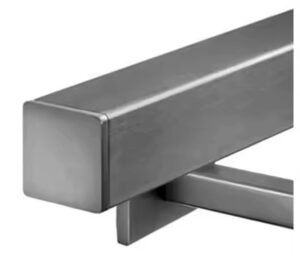
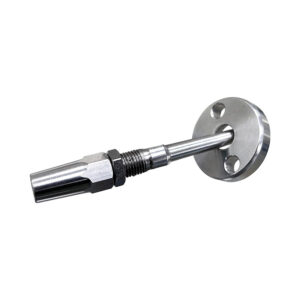
Corrosion of an installed 316 stainless steel railing system creates a contamination trap that no amount of cleaning can completely resolve once pitting starts. In a pharmaceutical suite or high-containment laboratory, that single rust spot translates into a material nonconformance during an audit, a surface roughness risk for cleanability, and a costly replacement that disrupts validated spaces. The trigger is often an absence of defensible passivation documentation—a generic certificate accepted at procurement that could not be connected to the components that corroded. The article that follows gives procurement, QA, and engineering teams a concrete filter for evaluating passivation evidence so that a paper record can withstand the same scrutiny as the installation itself.
What a Useful Passivation Record Identifies
A passivation record earns its space in a validation package only when it names the standard applied, controls the treatment parameters, and closes with an acceptance test result that was met. Without all three, the document slips into an administrative gesture—one that a biosafety officer or validation lead cannot rely on when corrosion appears. For 316 stainless steel, the most commonly referenced framework is ASTM A967, which covers citric or nitric acid passivation. A useful record therefore states which acid type was used, what bath temperature and concentration were maintained, and how long the parts remained in the solution. When a certificate simply prints “passivated per ASTM A967” and stops there, it is describing a spec number, not providing treatment evidence.
The second part of the record should link the processing conditions to a pass/fail determination. The two most frequently cited test methods appear in the comparison below, but the critical threshold is not which test was run; it is whether the record includes a specific pass criterion and states that it was achieved.
| Test Method | Duration | Pass Criterion |
|---|---|---|
| Water Immersion | 24 hours (alternating submersion) | No visible corrosion |
| Copper Sulfate | 6 minutes | No copper plating |
A record that lists a standard and a test method but omits the actual result—or marks “pass” without stating the visual acceptance criterion—carries the same verification weight as no record at all. In practice, this means a QA reviewer cannot confirm that the surface free iron was removed or that the chromium oxide layer is uniform. For components destined for a washdown zone or a VHP-exposed area inside a containment suite, that missing link between treatment and acceptance testing becomes a latent surface quality risk that no amount of installation care can erase.
Limits of Generic Treatment Certificates
A generic treatment certificate declares that a supplier regularly passivates its stainless steel components to a recognised standard and may even include a sample test report from an unrelated production run. It provides administrative comfort but no component-level evidence. The core problem is that the certificate lacks a binding identifier—a purchase order, a heat number, or a production lot—that ties the documented treatment to the specific railing parts now standing inside the facility.
When corrosion resistance is critical because the railing is installed in a salt-spray coastal environment or subjected to aggressive decontamination agents, reliance on a generic certificate is a failure-risk factor that QA and EHS teams should not accept lightly. A facility that must answer to an auditor or an owner’s validation protocol will find that a generic certificate cannot demonstrate that the delivered parts were actually processed under the claimed conditions. It may pass a procurement check, but it fails the later defensibility test. That distinction matters because premature rust stains rarely appear during the warranty walk-through; they surface after handover, when the original paperwork is all the owner has to press for remediation.
Lot Evidence Versus Administrative Simplicity
Demanding lot-specific passivation records adds a documentation step to incoming material review and contracts, so it raises procurement complexity. Generic declarations, by contrast, reduce administrative effort: one certificate covers a supplier’s typical process, and no one needs to match it to each shipment. For interior commercial millwork in a low-humidity environment, that trade-off may be incidental. The calculus shifts when the railing components are specified for a BSL-3 corridor, an offshore platform stair tower, or any location where surface integrity directly affects cleanability, decontamination cycle compatibility, or structural longevity.
Lot-specific documentation increases control because it creates a verifiable link between the treatment record and the exact production run that left the factory. If a corrosion incident triggers a root-cause investigation, the team can pull the passivation record for that lot number, review the process parameters, and either clear the finishing step or identify it as a contributor. Without that linkage, the investigation starts with a document that proves exactly nothing about the affected parts. The administrative simplicity of a generic certificate, therefore, becomes a liability the moment containment risk or material warranty enforcement becomes real. Project teams should treat lot-specific passivation evidence as a procurement requirement, not a paperwork preference, wherever the application carries corrosion risk.
Traceability Through an Outsourced Processor
Many architectural hardware suppliers outsource passivation to a third-party finishing house, and that handoff is where the documentary chain most often breaks. The supplier assigns its own batch numbers to components, while the passivation processor records its own internal job numbers. When the two numbering systems are not reconciled on the final certificate, the buyer receives a record that belongs to the processor but cannot be traced to the supplier’s shipment.
ISO 9001:2015 provides a useful reference framework here: it requires organisations to maintain the identification and traceability of outputs where necessary to ensure conformity. An outsourced passivation process that cannot reconnect the processor’s batch identifiers to the buyer’s component lots introduces a traceability gap that is indistinguishable from no record in a failure investigation. The safety officer or QA lead evaluating a submittal should check whether the certificate carries both a processor job reference and a supplier lot or part designation, and whether those two identifiers can be cross-referenced in the shipment paperwork. If the reconciliation is absent, the documentation cannot support a finding that the delivered parts underwent the stated treatment. Treat this gap not as a minor administrative oversight but as a failure risk that would become visible during regulator questioning or an owner’s post-installation audit.
Certificate Acceptance Against Delivered Components
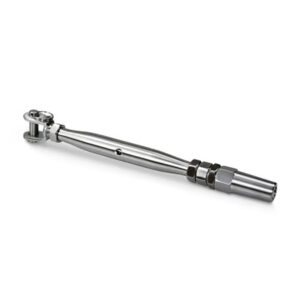
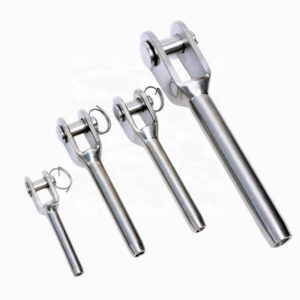
Accepting a passivation certificate should include a physical verification step at incoming inspection, not just a document review. The best-written certificate still needs to be confirmed against the hardware that arrived. Start by checking that the part numbers, lot identifiers, and production dates on the certificate map directly to the markings on the packaging or the components themselves. A certificate for 316 stainless steel cable fittings that describes a different diameter, finish designation, or date than the carton label is a red-flag review point that requires resolution before the parts are released for installation.
Visual inspection also plays a role. While passivation does not change the metallic appearance, signs of surface contamination such as flash rust, water stains, or discolouration along weld zones can indicate that passivation was either poorly performed or degraded during handling. These findings do not automatically invalidate the certificate, but they demand a documented discrepancy report and, in regulated environments, a decision on whether the parts can be conditionally accepted or must be rejected. The operative threshold is that the certificate is worthless unless the incoming goods confirm it; when certificate data and physical condition diverge, the project should treat that divergence as unresolved until the root cause is determined.
The most concrete implication running through these verification steps is that passivation evidence is only as strong as the chain that ties the treatment record to the installed part. A generic certificate, a lot number gap, or a batch reconciliation failure can all break that chain without anyone noticing until corrosion appears and the paper trail proves useless. Project teams that define, before a purchase order is issued, exactly how the passivation evidence must be structured—standard, parameters, test result, lot identifier, processor reconciliation, and certificate-to-part mapping—shift the discussion from paperwork acceptance to defensible quality assurance. That shift turns a potential audit finding into a closed loop, and it keeps a rust spot from becoming the first indication that the documentation was never enough.
Frequently Asked Answers
Q: My project is a residential balcony in a dry climate, not a laboratory or coastal installation. Do I still need lot-specific passivation records?
A: No, the strictest documentation requirements are designed for environments where corrosion creates a contamination or safety risk. In a benign indoor or dry outdoor setting, a generic certificate that confirms the components were passivated to ASTM A967 is usually sufficient. You should still verify that the material is actually 316 stainless steel and that the supplier’s warranty covers corrosion, but the administrative burden of lot-specific traceability adds little value when a rust spot would be cosmetic rather than a critical failure.
Q: What should I do if my supplier only provides a generic certificate and cannot deliver lot-specific passivation evidence before shipment?
A: First, evaluate the environmental exposure risk. If the railing will face salt spray, aggressive cleaning agents, or high humidity, press the supplier for a lot-linked record or arrange for a pre-shipment third-party passivation and test report. If the supplier cannot comply and the corrosion risk is high, consider rejecting the lot or requiring a written corrective action. For low-risk applications, document the gap in your receiving records, perform a careful visual inspection for surface contamination, and accept the generic certificate only with the understanding that it will not support a later root-cause investigation.
Q: At what point does demanding full lot-specific passivation evidence become unnecessary over-engineering?
A: When the railing components will operate in a controlled indoor environment with no exposure to chlorides, moisture, or decontamination cycles. The threshold is consequence: if a rust spot would be purely an aesthetic issue that can be addressed with a simple touch-up, a generic treatment certificate is a defensible choice. Once corrosion could trigger an audit finding, compromise cleanability, or require costly replacement in a validated space, lot-specific documentation becomes a practical necessity, not excess paperwork.
Q: The article mentions water immersion and copper sulfate tests. Is one better for verifying passivation on 316 stainless steel railing components?
A: Neither test is inherently better for architectural railing. Both are accepted under ASTM A967 and can confirm the removal of free iron when performed correctly. The important criterion is that the certificate states which method was used, the pass/fail acceptance standard, and that the parts passed. Water immersion is sometimes preferred because it leaves no chemical residue, but a properly executed copper sulfate test is equally valid. Focus on the completeness of the record, not the test choice.
Q: Is the extra effort of verifying passivation documentation really worth it for a small, one-time railing order?
A: Yes, if the installation environment carries any corrosion risk—such as proximity to the ocean, an indoor pool, or a facility that uses vaporized hydrogen peroxide decontamination. The cost of replacing a failed railing system and the administrative overhead of a quality investigation far exceed the few hours spent confirming documentation at incoming inspection. For a completely dry interior application with no foreseeable moisture exposure, the verification effort can be reduced to a document review and a visual check, but retaining whatever certificate you received is still prudent for future warranty claims.