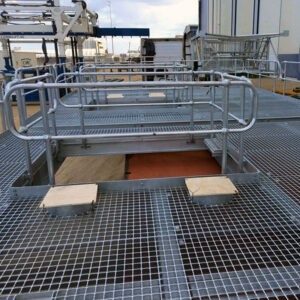
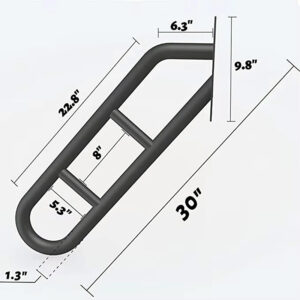
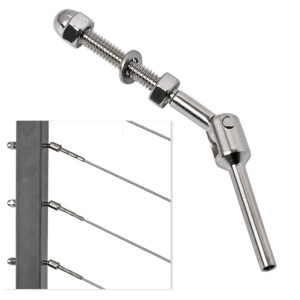
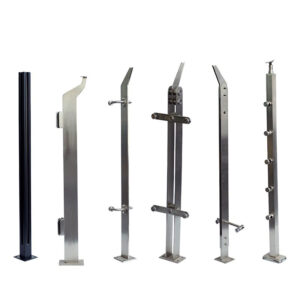
Most rework in stainless railing fabrication does not originate on the shop floor. It originates in a design meeting where someone adds a compound corner, requests a hidden joint at an awkward angle, or leaves the mounting orientation unresolved — and no one calculates what that decision costs in cutting time, weld passes, or polishing area until the fabrication drawings are already issued. By that stage, procurement is committed, the schedule has no slack, and the choice becomes either absorbing the cost or accepting a finish standard below what was specified. The decisions that matter most are made early: mounting type, vertical member spacing, joint geometry, and whether the project framework is modular or fully bespoke. Knowing which of those decisions multiplies shop workload — and which can be standardized without losing design intent — is what this article equips you to judge before fabrication begins.
Visible design moves that change shop workload
Every visible design choice in a stainless railing specification translates into a discrete shop operation. The relationship is direct and cumulative: a single unresolved decision about mounting orientation or bar spacing does not create one problem — it defers a cascade of machining, cutting, and finishing consequences to a later stage where they are harder and more expensive to absorb.
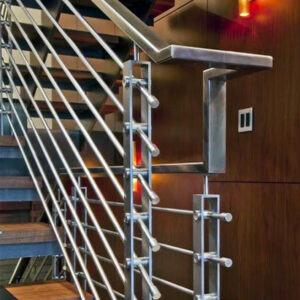
Height thresholds and vertical member spacing are two of the earliest decisions that drive downstream effort. Railing heights in the range of 1.05m or 1.10m — applicable depending on building height and the jurisdiction’s requirements — determine tube lengths, post spacing, and how material is cut and nested for efficient production. Specifying the wrong threshold forces a recut series or a bracket relocation that ripples through the drawing set. Vertical member spacing is similarly load-bearing on fabrication: when spacing is constrained to no more than 0.11m, the resulting bar count increases weld count at each connection point and expands the total polishing surface area proportionally. On a multi-balcony project, a few additional bars per run compounded across dozens of runs becomes a significant unplanned labor figure.
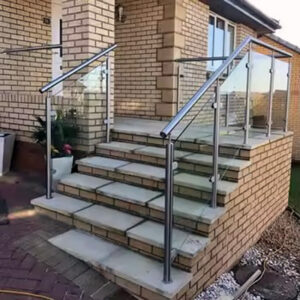
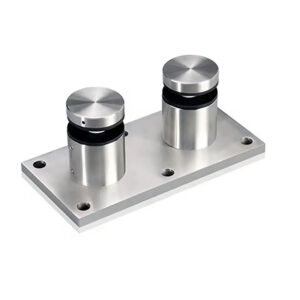
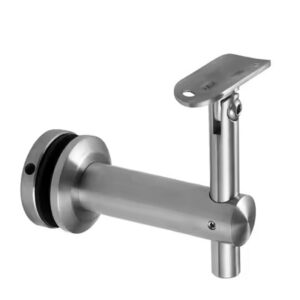
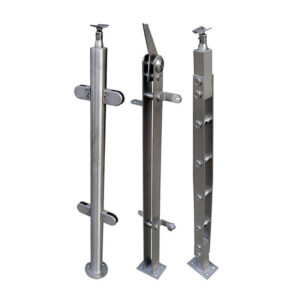
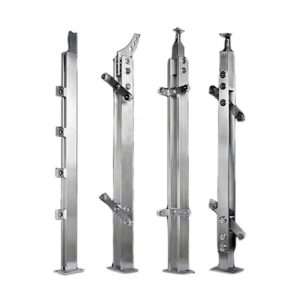
Mounting orientation — top mount versus side mount — changes the bracket design and machining requirements entirely, not incrementally. These are not interchangeable options that can be swapped late in the process. Each drives a different base plate geometry, a different drilling pattern, and a different load path into the substrate. Locking this choice before detailing begins is not a project management preference; it is a prerequisite for accurate fabrication drawings. Glass railing configurations add another layer: frameless, pressure bracket, and spigot systems each require specific hardware and drilling patterns that cannot be generalized across types.
Each of those decisions, left open past the concept stage, adds checking loops and revision cycles that compress the schedule at exactly the point when the shop needs confirmed drawings to start cutting.
| Design Move | Fabrication Consequence | What to Clarify |
|---|---|---|
| Railing height (1.05m or 1.10m threshold) | Determines tube length and post spacing | Which height limit applies to the building |
| Vertical member spacing ≤0.11m | Drives bar count, weld count, and polishing area | Confirm required spacing early |
| Top mount vs side mount | Alters bracket design and machining | Specify mounting orientation before detailing |
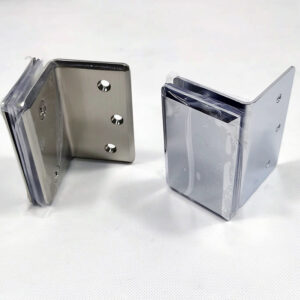
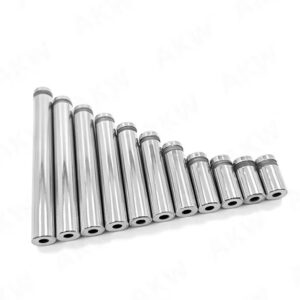
| Glass mounting type (frameless, pressure bracket, spigot) | Dictates specific hardware and drilling patterns | Select mounting system before production |
The table maps each design move to its fabrication consequence, but the more important implication is sequential: these decisions interact. A top-mount configuration chosen after bar spacing is already detailed may require bracket repositioning that invalidates the post spacing layout. Establishing a clear resolution sequence — height, spacing, mounting, glass type — before shop drawings are generated is the practical guard against that compounding.
Custom joints that add lead time without enough value
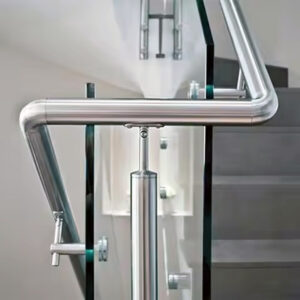
Arcs, decorative curves, and custom-angled joints are the category of design moves most likely to add lead time without delivering proportional value. Each requires additional bending operations, CNC cutting setup, or complex welding sequences that do not exist in straight-run fabrication. That is not an argument against them categorically — there are projects where a curved handrail or a compound corner is genuinely load-bearing on the design intent. The planning question is whether the added fabrication cost is justified by a measurable user or structural outcome, or whether it is serving an aesthetic preference that a simpler detail could satisfy.
The failure pattern here is specification at concept stage without a fabrication cost estimate. A designer specifies a continuous curved top rail and a series of mitred internal corners as part of an early design package. Those details are approved in a rendered image. By the time the fabrication team prices the bending jigs, the CNC programs, and the weld finishing on the curved sections, the cost delta is substantial — and the question of whether a straighter profile with a radius transition would have served the same purpose is no longer easy to answer without redesign.
Complex joints also create a quality control burden that straight-run details avoid. A mitred or compound-angle weld joint requires more passes, more grinding, and more polishing to reach a consistent surface finish. On a visible railing in a high-exposure location, any variation in those joints becomes a snagging issue at handover. The lead time addition is real; the user-facing benefit is often marginal. Treating custom joint geometry as a planning criterion — something that requires a fabrication consequence assessment before it is confirmed — is a more defensible position than treating it as a standard design move.
Modular layouts compared with bespoke corner solutions
The underlying tension between modular and bespoke railing approaches surfaces most sharply at corners and transitions. Standard off-the-shelf railing components are not designed for the dimensional variation present in most real balcony layouts: out-of-square corners, non-standard bay widths, and substrate irregularities mean that purely catalogue-based solutions often require custom rework to fit. That rework is not a minor adjustment — it frequently involves re-cutting, re-welding, and re-polishing, which adds both time and quality risk to components that were already assumed to be finished.
Fully bespoke corner details solve the fit problem but introduce a different risk: every non-standard joint requires individual checking, and every compound weld on a visible surface requires finishing effort that scales with complexity. On a project with multiple identical balcony runs, bespoke corners do not stay bespoke in a productive sense — each one becomes its own small fabrication problem, absorbing disproportionate polishing and checking time relative to the straight runs that precede and follow it.
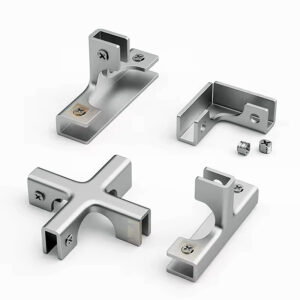
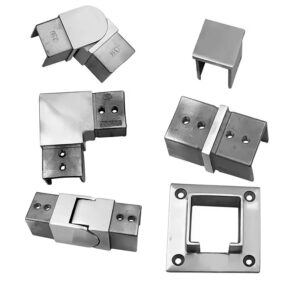
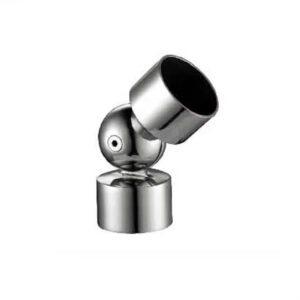
The more practical path for most commercial balcony projects is a prefabricated modular framework that retains the ability to accommodate dimensional variation without abandoning standardization. In this approach, straight runs are produced from a repeatable, confirmed module, and corner and transition details are addressed through a defined set of adjustable or purpose-fabricated connections that sit within the modular system rather than outside it. Fabrication risk stays lower because the core production loop is stable; checking and polishing effort is concentrated on a known set of junction types rather than distributed across unpredictable bespoke details.
| Approach | Fit to Complex Layouts | Fabrication Risk | Checking/Polishing Effort |
|---|---|---|---|
| Standard off-the-shelf | Often fails; forces custom rework | High mismatch risk | High when correcting mismatches |
| Fully bespoke corner details | Precise dimension matching | High due to complexity | Raises checking and polishing workload |
| Prefabricated modular with customization | Accommodates variations | Lower risk | Reduces overall effort |
The decision trigger for which approach to use is not aesthetic preference — it is run count and layout regularity. A single high-specification balcony with complex geometry can absorb bespoke detail cost. A project with eight or twelve identical or near-identical balcony runs cannot sustain that overhead without schedule and quality consequences. Identifying that condition before detailing begins — rather than after the first bespoke corner comes back from the shop — is where the modular vs. bespoke decision carries the most leverage. For projects exploring stainless steel balcony railing configurations that need to perform consistently across multiple runs, the modular-first framework is worth establishing in the briefing stage.
Mockups that expose seam and tolerance reality
Physical mockups are where the gap between design intent and fabrication reality becomes visible — often later than buyers expect, and at a point in the project timeline where procurement commitments and production schedules have already been set. The value of a mockup is precisely that it surfaces seam alignment, weld finish consistency, and tolerance behavior in real material before full production begins. The risk is treating it as a formality rather than a review check with decision authority.
Seam visibility is the detail most consistently underestimated at the specification stage. A weld seam on a stainless steel top rail or post that reads as invisible in a CAD rendering may be clearly visible under raking light on an installed balcony, depending on the surface finish specification, the grain direction, and the polishing sequence used. Welder qualification frameworks such as ISO 9606-1 establish the basis for evaluating welder competence, and that competence directly determines whether weld seams on exposed railing surfaces are consistently finished to the specified standard — but qualification alone does not guarantee that a given joint geometry and finish specification will produce the result the designer assumed. The mockup is the only check that confirms it.
Tolerance gaps are the second issue mockups reliably surface. Prefabricated components produced to drawing are dimensionally correct in isolation; the question is how they behave at assembly junctions — particularly at corners, at base plate interfaces, and where glass mounting hardware meets structural substrates. A gap or misalignment that is acceptable in isolation can compound across a run of panels and create a visible step or offset that requires correction. Identifying that behavior in a mockup, when one or two panels are involved, is a different problem from identifying it after a full run of twelve is installed.
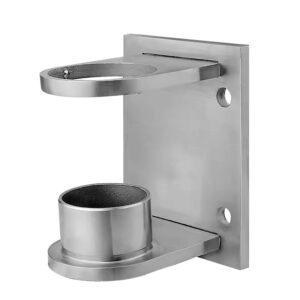
The practical implication is scheduling: mockup and finish sample approval should sit before production release in the project timeline, not after it. When mockup review is compressed or deferred because procurement has already moved, the project ends up making finish standard decisions under schedule pressure rather than design authority. For wall-mounted configurations, surface mount base plates are a common tolerance variable worth confirming in mockup before full-run production is committed.
Repeat production needs that favor standardization
When a project requires the same railing configuration across multiple balcony runs — multiple floors of an apartment building, a repeated bay width across a hotel facade, or a residential development with identical unit types — the fabrication economics shift decisively toward standardization. The reason is not cost per unit in isolation; it is the compounding effect of variability on checking, rework, and polishing effort across the full production run.
Using prefabricated stainless steel railing systems built around a consistent tube specification — such as that established under ASTM A554-21 for welded stainless mechanical tubing — reduces dimensional variability at the material level before fabrication begins. When tube dimensions, wall thickness, and surface finish are consistent across the supply, the shop can produce to a confirmed process rather than adjusting for material variation run to run. That consistency is the foundation that makes repeat production reliable rather than just repeated.
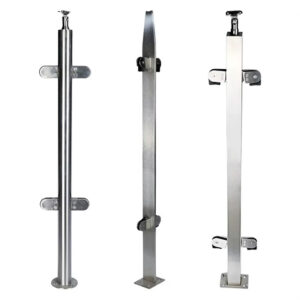
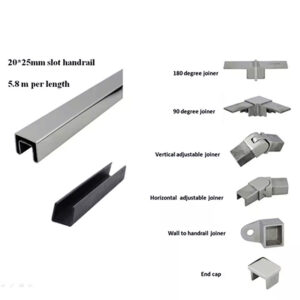
The design-side implication is that standardization needs to be locked before fabrication drawings are issued, not assumed after. A project that enters production with partially resolved corner details or interchangeable-but-different post spacing will absorb the full checking and adjustment cost on every run, not just the first. The overhead is invisible in unit pricing but visible in schedule. Specifying square top rail components from a consistent modular system, for example, stabilizes the top rail cutting and assembly sequence across all runs — a narrow decision with a disproportionate effect on throughput.
The standardization decision also protects handover quality. On a multi-run project, any bespoke detail that varies from run to run introduces a snagging category that does not exist in a fully standardized system. Snags on run one that are caused by bespoke corner geometry tend to reappear on runs two through eight unless the root cause is designed out — and designing it out after production has started costs more than standardizing before it begins.
The most useful pre-procurement action on a balcony railing project is tracing each visible design decision to its fabrication consequence before drawings are confirmed. Mounting type, bar spacing, joint geometry, and corner treatment are not stylistic choices made independently — they are inputs to a fabrication sequence that determines weld count, polishing area, and checking effort per unit. When those consequences are understood early, the choice between modular and bespoke, or between a custom joint and a standard transition, can be made on the basis of actual project value rather than design habit.
Before releasing for production, confirm that height and spacing parameters are resolved against the applicable building requirements, that mockup and finish sample approval is scheduled before production commitment — not during it — and that any bespoke corner or transition detail has been assessed against the number of times it will repeat across the project run. Projects that standardize these decisions before the first cut consistently deliver better schedule and finish outcomes than those that resolve them in sequence under production pressure.
Frequently Asked Questions
Q: Does the modular-first approach still work when the balcony layout has significant out-of-square corners or irregular bay widths?
A: Yes, but only if the modular system includes a defined set of purpose-fabricated transition connections rather than relying on straight-run components to absorb the variation. A modular framework handles irregular geometry through a controlled junction detail — one that is checked and polished once and then repeated — rather than through ad hoc rework on otherwise finished components. Where the approach breaks down is when irregular geometry is treated as an afterthought and corner details are resolved outside the modular system entirely, which effectively makes those junctions bespoke regardless of what the straight runs look like.
Q: At what point does a custom curved handrail or compound-angle joint become worth the added fabrication cost?
A: When the curved or compound detail is genuinely irreplaceable in delivering the design intent and the project has sufficient budget and schedule buffer to absorb bending operations, CNC setup, and extended weld finishing. The threshold test is whether a simpler profile with a radius transition would serve the same structural and visual purpose — if it would, the custom geometry is adding lead time without proportional value. On a single high-specification balcony the overhead may be justifiable; on a project with multiple identical runs, the same bespoke detail multiplied across every corner becomes a schedule and quality liability that is difficult to recover from once production has started.
Q: What should happen immediately after mockup approval before full production is released?
A: The approved mockup and finish sample should be formally documented as the production reference standard, with specific records of the surface finish grade, polishing direction, and acceptable seam visibility under raking light. That record becomes the acceptance benchmark at handover, not a remembered impression from a single review meeting. Without that documentation step, the mockup review loses its value as a decision checkpoint — disputes about finish consistency on later runs have no confirmed baseline to reference, and the checking effort that the mockup was meant to front-load shifts to snagging at installation.
Q: How does the choice between top mount and side mount affect the structural substrate preparation, and is that outside the railing fabricator’s scope?
A: The substrate preparation requirements differ substantially between the two — top mount drives a different drilling pattern and load path into the deck or slab, while side mount transfers load laterally into the fascia or edge beam — and in most commercial projects that preparation work sits with the main contractor or structural package rather than the railing fabricator. The risk is a coordination gap: if mounting orientation is not confirmed and communicated to both parties before substrate work begins, the railing fabricator may produce base plates to one configuration while the substrate has been prepared for the other. Locking mounting type before either package starts detailing is the only way to prevent that misalignment, which is costly to correct once the substrate is cast or fixed.
Q: If the project is a single balcony rather than a multi-run development, does the standardization advice still apply?
A: Partially. For a single balcony, the repeat-production economics that make standardization most compelling do not apply, so the tradeoff between bespoke detail and fabrication overhead is easier to absorb. However, the advice around resolving mounting type, bar spacing, and joint geometry before drawings are issued remains valid regardless of run count — those decisions drive checking loops and revision cycles on any project, not just large ones. Where a single-balcony project can reasonably diverge from the standardization guidance is in corner and transition treatment, where a genuinely bespoke solution carries no compounding risk across subsequent runs.