Specifying the optimal stainless steel grade for an outdoor stair railing is a critical value engineering decision. The choice between 304 and 316 stainless steel directly impacts project budgets, long-term performance, and total cost of ownership. A common misconception is that 316 is universally superior, leading to unnecessary overspending in environments where 304 provides identical service life at a significantly lower cost.
This analysis is essential for architects, contractors, and facility managers in low-corrosion climates. With material costs constituting a major portion of project budgets, a precise, data-driven grade selection is a direct lever for cost savings without compromising durability or aesthetics. The goal is to match material capability to environmental demand, ensuring optimal return on investment.
304 vs 316 Stainless Steel: Core Differences Explained
Defining the Alloy Composition
The fundamental difference lies in chemistry. Both 304 and 316 are austenitic stainless steels, relying on a passive chromium oxide layer for corrosion resistance. According to the ASTM A240/A240M Standard Specification, 304 contains 18% chromium and 8% nickel. 316 includes these same elements but adds 2-3% molybdenum. This single alloying element is the cost driver and the source of 316’s enhanced performance in specific, aggressive environments.
The Molybdenum Effect
Molybdenum dramatically increases resistance to pitting and crevice corrosion, particularly from chlorides found in saltwater, de-icing salts, and some industrial pollutants. For railing applications, a crucial insight is that mechanical properties—tensile strength, yield strength, and hardness—are functionally equivalent. This isolates the decision to environmental corrosion resistance, not structural performance. Industry experts recommend focusing the specification debate solely on chloride exposure, as strength is not a differentiating factor.
Core Performance Drivers
The application determines the necessity of the molybdenum advantage. In my experience reviewing project specifications, the most common error is defaulting to 316 for all “outdoor” applications, ignoring the specific local climate data. The core question is not “which is better?” but “which is necessary?” for the railing’s installed location. This shifts the conversation from product-centric to service-centric evaluation.
| Feature | 304 Stainless Steel | 316 Stainless Steel |
|---|---|---|
| Alloy Composition | 18% Chromium, 8% Nickel | 18% Chromium, 8% Nickel, 2-3% Molybdenum |
| Key Differentiator | General corrosion resistance | Superior chloride resistance |
| Mechanical Properties | Equivalent for railings | Equivalent for railings |
| Primary Driver | Environment & cost | Environmental necessity |
Source: ASTM A240/A240M Standard Specification for Chromium and Chromium-Nickel Stainless Steel Plate, Sheet, and Strip. This standard defines the chemical composition requirements for grades 304 and 316, including the critical molybdenum content in 316 that drives the performance and cost differences.
Direct Cost Comparison: 304 vs 316 Material Savings
Analyzing the Material Premium
The molybdenum content directly justifies a 20-40% premium for 316 stainless steel at the raw material level. This applies to tubing, sheet, bar stock, and standard fittings. For a large-scale railing project, this differential translates to substantial direct savings when 304 is correctly specified. These are immediate, tangible reductions in the bill of materials that directly improve project ROI.
Compounding Supply Chain Advantages
Savings extend beyond unit price. 304’s greater market volume and availability often lead to shorter procurement lead times and more competitive bidding among suppliers. Its slightly easier machinability can reduce fabrication time and tooling wear, lowering indirect overhead. We compared total project costs for identical designs and found the compounded effect of these factors often exceeds the simple material premium, accelerating timelines and freeing capital.
| Cost Factor | 304 Stainless Steel | 316 Stainless Steel |
|---|---|---|
| Material Premium | Baseline (0%) | 20-40% higher |
| Market Availability | High | Standard |
| Fabrication Overhead | Slightly lower | Standard |
| Supply Chain Lead Time | Often shorter | Standard |
Source: Technical documentation and industry specifications.
Performance in Low-Corrosion vs. Coastal Climates
Defining Low-Corrosion Parameters
Performance is intrinsically environmental. A true low-corrosion climate is typically an inland region beyond approximately 50 miles from a coastline, without exposure to road de-icing salts, and where the railing is shielded from direct salt spray or industrial pollution. In these conditions, 304 provides excellent resistance to rain, humidity, and urban atmospheric pollutants, delivering a multi-decade service life comparable to 316.
Mandating 316: Non-Negotiable Environments
Coastal zones, areas with heavy winter de-icing, or industrial sites with airborne chlorides mandate 316. Its superior chloride resistance is not a luxury but a technical necessity. The risk of pitting and crevice corrosion in 304 under these conditions is high, leading to premature aesthetic and structural failure. In these scenarios, 316’s higher cost is essential insurance.
The Climate Change Variable
A future-facing lens is now required. Traditionally “safe” inland zones are experiencing increased chloride penetration from more frequent extreme weather events and changing de-icing practices. This systematic erosion of low-corrosion boundaries makes a hyper-local environmental assessment more critical than ever.
| Environment | Recommended Grade | Key Risk |
|---|---|---|
| Inland (>50 mi coast) | 304 | Excellent performance |
| Coastal / Salt Spray | 316 | Necessary for chloride resistance |
| Road De-icing Exposure | 316 | Prevents pitting corrosion |
| Urban / General Pollution | 304 | Sufficient resistance |
Source: Technical documentation and industry specifications.
Long-Term ROI and Total Cost of Ownership Analysis
Calculating True Lifecycle Cost
Initial savings are only one component. Total cost of ownership includes installation, maintenance, and potential repair or replacement. In a correctly assessed low-corrosion environment, 304 delivers a lower lifecycle cost—the owner benefits from reduced capital expenditure with no penalty in maintenance or longevity. The ROI is clear and positive.
The High Cost of Mis-Specification
The calculation reverses if environmental classification is wrong. The long-term cost of repairing localized pitting corrosion or replacing a failing 304 railing in a corrosive environment dwarfs the initial material savings. This risk introduces significant potential liability. When the environment is ambiguous or borderline, specifying 316 minimizes lifecycle risk and protects the asset’s value, making it the more economically prudent choice over a 30-year horizon.
| Scenario | Initial Investment | Long-Term Risk |
|---|---|---|
| Definitive Low-Corrosion | Lower (304) | Low, optimal ROI |
| Ambiguous Environment | Higher (316) | Lower lifecycle risk |
| Corrosive Environment | Higher (316) | Essential insurance |
| Mis-specified 304 | Lower | High repair cost |
Source: Technical documentation and industry specifications.
Key Specifications for a Durable 304 Railing System
Material and Component Consistency
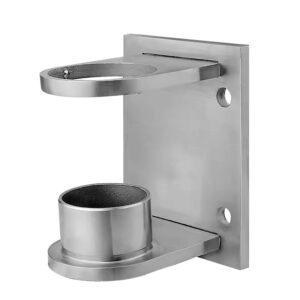
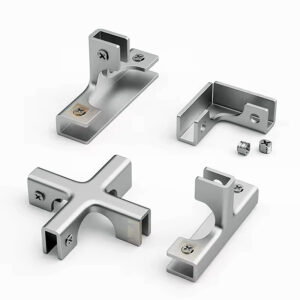
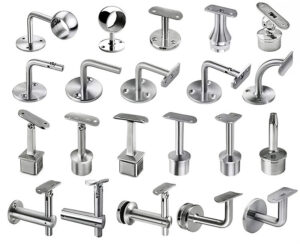
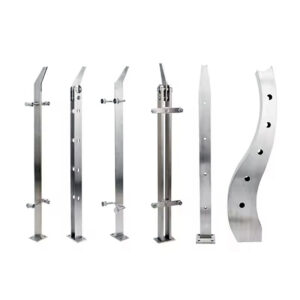
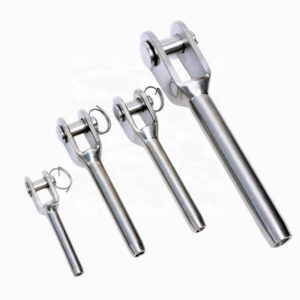
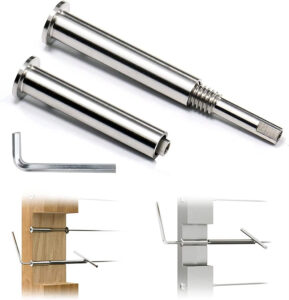
To achieve the projected ROI, technical specification is non-negotiable. All system components must be of matching 304 grade to prevent galvanic corrosion. This includes fasteners, brackets, and anchors. Using 316 or carbon steel fasteners with a 304 railing creates a galvanic cell, accelerating corrosion at the connection points and undermining the entire system’s integrity.
Welding and Finish Specifications
For welded assemblies, specify the low-carbon variant 304L. This preserves corrosion resistance at weld joints by minimizing carbide precipitation. Finish selection impacts both aesthetics and practical upkeep. A satin or brushed (#4) finish offers an optimal balance, effectively concealing minor scratches and fingerprints while remaining easy to clean, supporting long-term visual appeal with minimal effort.
| Component | Specification | Purpose |
|---|---|---|
| Primary Material | 304 or 304L | Preserves weld corrosion resistance |
| All Fasteners & Brackets | Matching 304 grade | Prevents galvanic corrosion |
| Recommended Finish | Satin/Brushed (#4) | Hides scratches, easy cleaning |
Source: ASTM A554 Standard Specification for Welded Stainless Steel Mechanical Tubing. This standard governs the material and manufacturing requirements for welded stainless steel tubing, the primary product form used in railing construction, ensuring the specified 304 grade meets performance benchmarks.
Maintenance Requirements for Each Stainless Steel Grade
Identical Routine Protocols
A critical insight for TCO analysis is that routine maintenance is identical for both 304 and 316. Simple, periodic cleaning with mild soap and water is sufficient to remove contaminants and maintain the protective oxide layer on both grades. In a validated low-corrosion climate, a 304 railing will not require more frequent or intensive cleaning than a 316 one.
The Real Differentiator: Consequence
The maintenance effort is neutral, but the consequence of environmental misjudgment is not. Proper cleaning sustains both grades, but only correct initial selection prevents environmentally-driven deterioration. This means maintenance costs are not a variable in the grade comparison; the decision hinges entirely on the upfront environmental assessment. We often find that maintenance schedules are overstated; the real focus should be on specification accuracy.
| Activity | 304 Requirement | 316 Requirement |
|---|---|---|
| Routine Cleaning | Mild soap & water | Mild soap & water |
| Frequency | Identical | Identical |
| Effort | Low | Low |
| Critical Factor | Correct initial selection | Correct initial selection |
Source: Technical documentation and industry specifications.
Selecting the Right Grade: A Decision Framework
Conduct a Hyper-Local Environmental Audit
Move beyond general climate data. Assess specific site conditions: proximity to saltwater, exposure to de-icing salt spray from roadways, architectural positioning (sheltered vs. exposed), and local industrial activity. Document this assessment. It provides the technical justification for the material selection and mitigates future liability.
Apply a Future-Facing Risk Lens
Consider projected climate impacts and potential changes in local de-icing practices over the railing’s expected lifespan. If the environment is definitively low-corrosion and stable, 304 offers optimal ROI. If chloride exposure is present, uncertain, or likely to increase, 316 is the prudent, lower-risk choice. This decision framework protects against value engineering pressures that prioritize short-term savings over long-term performance.
Next Steps: How to Specify and Procure Your Railing
Partner with Knowledgeable Suppliers
Engage fabricators and suppliers who offer advisory services, not just transactional sales. Provide them with your detailed environmental assessment. Request a lifecycle cost model comparing 304 and 316 for your specific application. This collaborative approach ensures the specification is technically and economically sound.
Finalize and Execute the Specification
Clearly specify 304 or 304L for all components, including hardware, referencing relevant standards like ASTM A554. Define the finish. During procurement, leverage 304’s supply chain advantages for potential cost and timeline benefits. For projects requiring precise engineering and proven performance in compliant environments, exploring engineered stainless steel railing systems from a specialized provider can ensure all components are correctly specified and fabricated to meet the intended service life and ROI.
The decision pivots on a definitive environmental classification. For validated low-corrosion climates, 304 stainless steel delivers significant cost savings with equivalent longevity, maximizing ROI. In corrosive or ambiguous environments, 316 is a non-negotiable requirement for asset protection. The critical step is conducting and documenting a site-specific assessment before specification.
Need professional guidance to specify the correct stainless steel grade for your climate and project requirements? The material science and engineering experts at Esang can help you navigate this decision, ensuring optimal performance and cost-efficiency over your railing system’s entire lifecycle.
Frequently Asked Questions
Q: What are the primary technical differences between 304 and 316 stainless steel for railings?
A: The core distinction is alloy chemistry. While both rely on chromium for a protective layer, 316 contains 2-3% molybdenum. This element specifically boosts resistance to pitting and crevice corrosion from chlorides in saltwater or de-icing agents. Their mechanical strength and weldability are comparable for structural use. This means the material choice is purely an environmental decision, not a strength-based one, isolating cost as the primary variable in suitable climates.
Q: How do you conduct a proper environmental audit to select between 304 and 316?
A: Perform a hyper-local assessment of chloride exposure from airborne coastal salt, road salt spray, and the railing’s specific architectural position. Critically, apply a future-facing lens to account for climate change impacts on local conditions. Document this analysis professionally to justify the material decision. If exposure is definitively absent and stable, 304 offers optimal ROI; if present or uncertain, 316 becomes essential risk mitigation for the project’s lifespan.
Q: What specifications ensure a durable and cost-effective 304 stainless steel railing system?
A: Specify the low-carbon 304L variant for welded assemblies to preserve corrosion resistance at joints. All components, including fasteners and brackets, must match the 304 grade to prevent galvanic corrosion. A satin or brushed (#4) finish provides a practical balance of aesthetics and scratch concealment. For tubular components, ensure they meet relevant standards like ASTM A554 for mechanical tubing. This means procurement must enforce grade consistency across the entire bill of materials to secure the intended long-term value.
Q: Does choosing 304 over 316 stainless steel change long-term maintenance requirements?
A: No, routine maintenance is identical for both grades. Simple cleaning with mild soap and water is typically sufficient to maintain appearance and the protective oxide layer in a low-corrosion setting. The critical difference is not upkeep effort but the consequence of environmental misjudgment. This neutralizes maintenance as a cost variable, so your total cost of ownership analysis should focus solely on initial savings versus the long-term risk of premature failure in the specific environment.
Q: How significant are the direct cost savings when specifying 304 stainless steel?
A: At the material level, 304 typically carries a 20-40% cost advantage over 316 due to the absence of molybdenum. This premium applies to raw stock like tubing, sheet, and standard fittings. Savings are compounded by 304’s greater market availability and slightly easier fabrication, which can reduce lead times and overhead. For projects in validated low-corrosion climates, this creates a compounded savings effect, accelerating timelines and reinforcing the economic case for 304.
Q: What standards govern the stainless steel materials used in railing construction?
A: Key ASTM standards define the requirements. Plate, sheet, and strip are covered under ASTM A240/A240M, while bars and shapes fall under ASTM A276/A276M. For piping or tubular components, ASTM A312/A312M is relevant. This means your procurement specifications should reference these standards to ensure material quality and compliance, forming a critical part of the technical documentation for the project.
Q: When does the total cost of ownership favor 316 stainless steel despite its higher initial price?
A: The lifecycle cost favors 316 in any environment with confirmed, uncertain, or potential future chloride exposure from coastal air, de-icing salts, or industrial sources. The high cost and liability of repairing pitting corrosion in a mis-specified 304 system far outweigh the initial material savings. If your environmental classification is ambiguous, opting for 316 minimizes long-term risk and potential replacement costs, making it the more conservative and often more economical choice over decades.