For architects, engineers, and developers specifying coastal structures, the choice of cable railing material is a critical durability calculation. The default selection of “marine-grade” 316 stainless steel often falls short in truly aggressive environments, leading to premature pitting, stress corrosion cracking, and costly remediation. This leaves professionals navigating a performance gap between standard alloys and the extreme corrosion resistance required for long-term asset integrity.
The specification of 2205 duplex stainless steel represents a targeted engineering solution for environments that exceed 316’s capabilities. This decision is not about premium for its own sake but about matching material science to quantifiable environmental threats. Understanding when 2205 is necessary—and when it is over-specified—protects project budgets, timelines, and long-term liability.
2205 vs. 316 Stainless Steel: Core Differences for Specifiers
Defining the Performance Hierarchy
The distinction between 2205 duplex and Type 316 is foundational, moving beyond generic “marine-grade” labels to a tiered performance spectrum. Type 316 provides good general resistance but remains vulnerable to localized pitting and stress corrosion cracking (SCC) in warm, chloride-rich conditions. Its austenitic microstructure offers toughness but lower strength. 2205, with its two-phase ferritic-austenitic structure, is engineered to resist these specific failure modes. The balanced chemistry—22% chromium, 5-6% nickel, 3% molybdenum, plus nitrogen—creates a synergistic defense against chlorides.
Quantifying the Mechanical and Corrosion Advantage
The performance gap is measurable. 2205 delivers approximately double the yield strength of 316, enabling more robust, high-load designs with potentially slimmer profiles. Its superior chloride resistance is quantified by the Pitting Resistance Equivalent (PRE) number, a calculation based on alloy content. According to research from materials standards, a 2205 alloy’s PRE typically exceeds 34, while 316 ranges from 26-28. This directly correlates to performance in standardized tests and real-world splash zones. Furthermore, 2205’s threshold for stress corrosion cracking extends to at least 302°F (150°C), compared to 316’s limit near 122°F (50°C).
The Strategic Implication for Specifiers
This tiered system reframes the specification process. It demands a shift from material labeling to environmental analysis. The question is no longer “Is it marine-grade?” but “How severe is the marine environment?” Specifiers must assess temperature, chloride concentration, and exposure profile (atmospheric, splash, immersion). This data-driven approach justifies material selection with defensible, certifiable metrics, moving the conversation from cost to value and long-term performance.
Cost-Benefit Analysis: Justifying the Investment in 2205
Understanding the True Cost Drivers
The initial material cost premium for 2205 duplex cable railing is significant, often exceeding double that of a Type 316 system. This upfront difference can dominate budget discussions. However, a true cost analysis must extend beyond the purchase order. The lifecycle cost includes installation, ongoing maintenance, potential early replacement, and the operational cost of access for repairs. In our experience, the largest hidden cost in extreme environments is not the material itself, but the scaffolding, labor, and business disruption required to replace a failing system.
Modeling the Lifecycle Return on Investment
Justifying 2205 requires modeling total cost of ownership. For a coastal high-rise balcony or an offshore platform walkway, maintenance access is complex, expensive, and poses safety risks. A 316 system in these settings may require significant intervention within 10-15 years. A 2205 system, by contrast, is engineered for decades of service with only routine washing. The higher initial investment acts as a capitalized maintenance budget, eliminating future unpredictable expenses. For projects with a 30+ year horizon or difficult access, the payback period for specifying 2205 can be surprisingly short.
When the Premium Becomes Insurance
The decision ultimately hinges on risk tolerance and project philosophy. Is the goal the lowest initial cost or the lowest long-term cost? For high-value assets, critical infrastructure, or projects where failure carries significant liability, 2205 is not an expense but a risk mitigation strategy. It provides documented, material-based performance that protects the specifier, owner, and contractor from the consequences of premature corrosion failure.
When is 2205 Duplex Cable Railing Absolutely Necessary?
Threshold Environmental Conditions
Specification of 2205 transitions from an option to a necessity when environmental conditions definitively exceed the capabilities of Type 316. Absolute necessity is dictated by direct, constant exposure to chlorides combined with factors that accelerate corrosion. This includes structures in permanent saltwater splash or immersion zones, such as piers, dock railings, and offshore platform handrails. Tropical marine climates, with consistently high temperatures and humidity, create a particularly aggressive atmosphere that can push 316 beyond its limits.
Critical Performance and Safety Mandates
Beyond environment, operational requirements dictate necessity. Applications demanding zero-failure performance over a long service life—such as on bridges, critical maritime infrastructure, or high-traffic public spaces—justify the engineered reliability of 2205. Similarly, in atmospheres contaminated by industrial pollutants or sulfides, which can synergistically increase corrosivity, the enhanced resistance of duplex stainless steel becomes non-negotiable. The framework for qualifying materials in such sour service environments is outlined in standards like NACE MR0175/ISO 15156.
The Consequences of Under-Specification
The cost of specifying 316 where 2205 is needed is not merely aesthetic. Stress corrosion cracking or severe pitting can compromise the structural integrity of the railing system, creating a safety hazard. The subsequent need for a full system replacement involves far greater cost and disruption than the initial premium for 2205. This segmentation reflects a maturing market where suppliers offer targeted solutions for specific, extreme failure modes, moving away from one-size-fits-all recommendations.
Key Technical Specifications and Performance Data
Decoding the Material Data Sheet
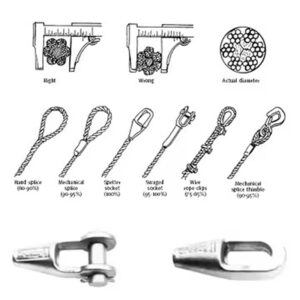
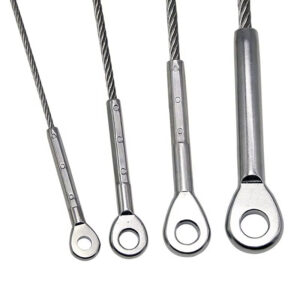
Key specifications for 2205 are not marketing points but verifiable engineering metrics. The minimum yield strength of 65 ksi (450 MPa) is a fundamental property defined by standards such as ASTM A276/A276M, which governs stainless steel bars and shapes. This strength allows for greater span lengths between posts or higher tensioning, contributing to a more rigid final assembly. For cable, 2205 is almost exclusively supplied in a 1×19 construction—19 wires twisted into a single strand. This creates a strong, smooth cable, but one that is significantly stiffer than the more common 7×7 or 7×19 constructions used with 316.
Corrosion Resistance as a Quantifiable Metric
The Pitting Resistance Equivalent (PRE) number is the critical quantitative measure for chloride environments. Calculated as %Cr + 3.3x%Mo + 16x%N, a PRE >34 for 2205 provides a clear, numerical advantage over 316. This translates directly to performance in standardized tests like ASTM G48, which measures pitting and crevice corrosion resistance. These certifiable metrics allow specifiers to validate material submittals and ensure the delivered product matches the specified performance tier.
The following table summarizes the core technical differentiators that inform the specification process:
| Property | 2205 Duplex | Type 316 |
|---|---|---|
| Yield Strength (min) | 65 ksi (450 MPa) | 30 ksi (205 MPa) |
| Pitting Resistance (PRE) | > 34 | 26-28 |
| Stress Corrosion Cracking Limit | Up to 302°F (150°C) | Above 122°F (50°C) |
| Microstructure | Two-phase (austenite-ferrite) | Austenitic |
| Key Alloying Elements | 22% Cr, 5-6% Ni, 3% Mo | 16-18% Cr, 10-14% Ni, 2-3% Mo |
Source: ASTM A276/A276M Standard Specification for Stainless Steel Bars and Shapes. This standard defines the chemical composition and mechanical property requirements for stainless steel grades, providing the basis for the quantitative yield strength and alloy comparisons between 2205 and 316.
Installation & Maintenance: Critical Considerations for 2205
Installation Demands Scale with Performance
The superior properties of 2205 introduce specific installation requirements. Its high strength and the stiffness of the 1×19 cable construction demand precision. Misaligned fittings or posts will not be “pulled into line” during tensioning as they might be with a more flexible cable; instead, they create point stresses that can damage components. Cutting 2205 cable requires heavy-duty, purpose-made cable cutters. Using inadequate tools will fray the ends, making it impossible to thread through terminals and swages. Tensioning may also require higher torque. These factors make professional installation by crews familiar with high-performance alloys highly recommended.
A Simplified, Predictable Maintenance Regime
While installation is more demanding, long-term maintenance is remarkably straightforward. The primary requirement is routine rinsing with fresh water to remove salt deposits and contaminants. This simple practice preserves the passive oxide layer that provides 2205’s corrosion resistance. Unlike a 316 system that may develop pits requiring polishing or patching, a correctly specified and installed 2205 system should not exhibit any corrosive degradation, making its maintenance predictable and low-cost over decades.
The Cost of Compromise
Attempting to save on installation costs by using untrained crews or improper tools risks compromising the entire system. A poorly installed 2205 railing will not perform to its theoretical potential. This creates a paradox where an investment in a premium material is wasted by inferior execution. Specifiers should ensure installation guidelines are part of the project documentation and consider specifying certified installers for these high-performance systems.
System Compatibility: Posts, Fittings, and Hardware Selection
The Non-Negotiable Principle of Alloy Consistency
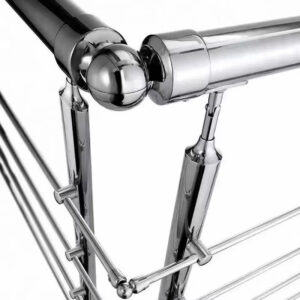
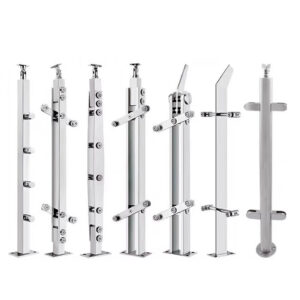
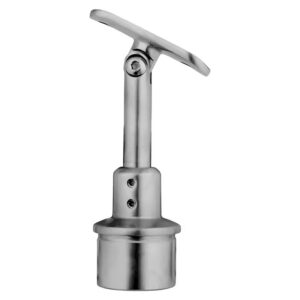
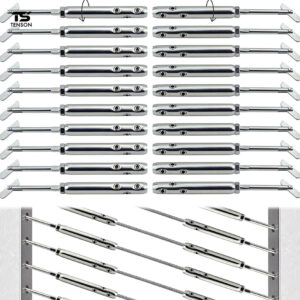
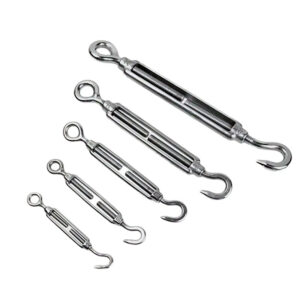
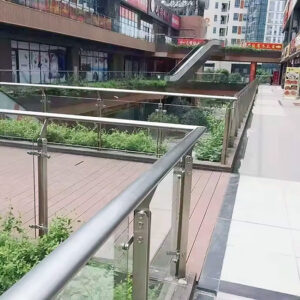
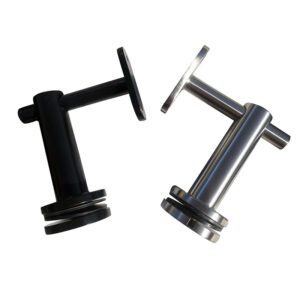
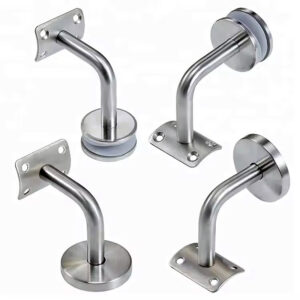
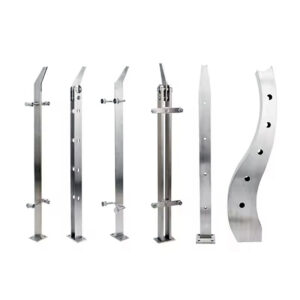
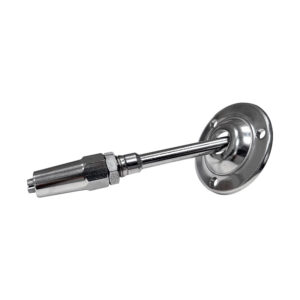
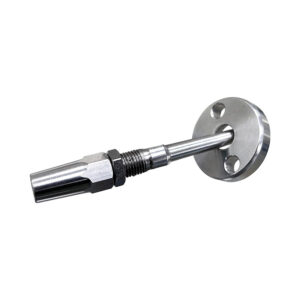
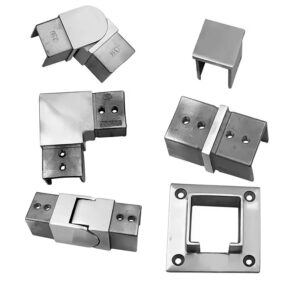
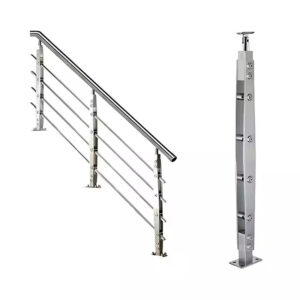
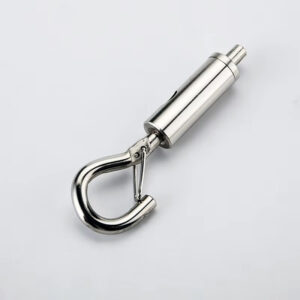
Specifying 2205 cable is only the first step; a system-wide approach is critical. To prevent galvanic corrosion—an electrochemical reaction where two dissimilar metals in contact accelerate corrosion of the less noble metal—all exposed metallic components must be of equivalent or higher corrosion resistance. This means posts, tensioners, swage terminals, turnbuckles, and even fasteners should be manufactured from 2205 duplex or a higher-grade alloy like 2507 super duplex.
Sourcing a Unified Package
This principle transforms specification from a component shopping list into sourcing a unified, compatible system. A premium 2205 cable connected to 316 stainless steel fittings creates a galvanic couple, making the fittings the anode. They will corrode preferentially, potentially leading to failure at the connection points. This negates the investment in the advanced cable. Specifiers must demand and verify material certifications for all system components, not just the cable.
Implications for Design and Detailing
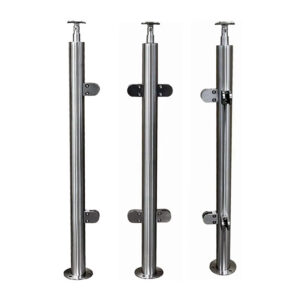
This compatibility requirement influences design details. For example, if a project uses a painted carbon steel post structure with 2205 cable attachments, the connection must be meticulously detailed with insulating gaskets or sleeves to prevent bimetallic contact. The most reliable strategy is to specify a complete cable railing system from a supplier that provides all components in the matching 2205 duplex alloy, ensuring material integrity from end to end.
Which Projects Are Better Suited for Type 316 Instead?
The Enduring Value of Type 316
Type 316 remains the optimal, cost-effective engineering solution for a vast range of marine-influenced applications. Its excellent corrosion resistance, proven over decades, is fully sufficient where environmental severity is moderate. This includes inland coastal properties, sheltered balconies or terraces, and structures that experience only intermittent salt spray. For these scenarios, the significant premium for 2205 cannot be justified on a performance basis.
Where Flexibility Dictates Material Choice
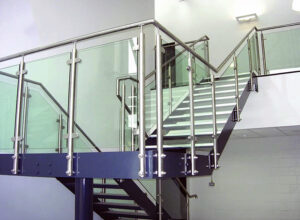
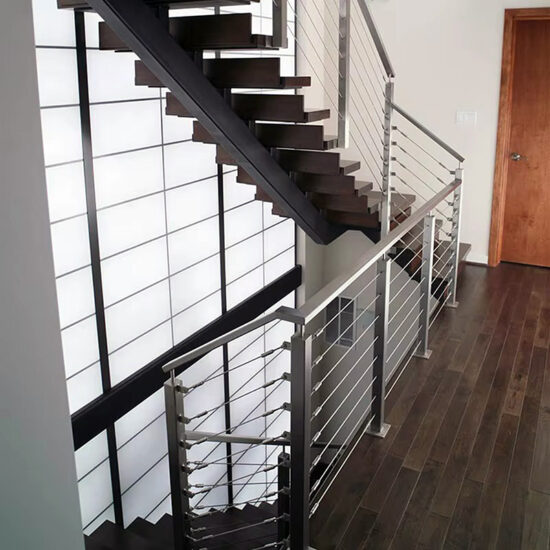
Beyond environment, design geometry can mandate the use of 316. The 1×19 construction standard for 2205 cable is stiff, making it challenging to use on layouts with tight radii or complex curves, such as spiral staircases. Type 316 is commonly available in more flexible 7×7 or 7×19 constructions, which can navigate pass-through corners and curved runs more easily. In such cases, 316’s workability becomes the primary selection criterion.
The decision matrix below helps identify projects where 316 is the more suitable choice:
| Project Characteristic | Recommended Alloy | Primary Reason |
|---|---|---|
| Intermittent salt spray | Type 316 | Cost-effective corrosion resistance |
| Curved stair runs | Type 316 | Greater flexibility vs. 1×19 cable |
| Sheltered balconies | Type 316 | Sufficient for less extreme conditions |
| Complex layout geometries | Type 316 | Better workability for tight curves |
Source: Technical documentation and industry specifications.
A Balanced Portfolio Approach
A mature specification strategy acknowledges that both alloys have their place. The goal is not to always specify the “best” material, but the most appropriate material for the specific combination of environment, design, and budget. Maintaining 316 as the standard for typical coastal applications allows project budgets to allocate funds to 2205 only where its performance is absolutely required, optimizing overall project value.
Final Selection Criteria for Extreme Marine Environments
A Structured Decision Framework
The final specification decision must integrate multiple, often competing, factors into a defensible framework. The first step is always to quantify environmental severity through available data on chloride deposition rates, average temperatures, and exposure profile. This analysis alone can often push the decision toward 2205 if thresholds for 316 are exceeded.
Integrating Cost, Design, and Risk
With the environmental baseline established, the analysis must overlay economic and practical constraints. A formal lifecycle cost analysis compares the net present value of a 2205 system (high initial cost, low maintenance) against a 316 system (lower initial cost, higher predicted maintenance). Simultaneously, design constraints are evaluated; if the layout requires tight curves, the stiffness of 2205 cable may force a switch to 316, accepting the need for more aggressive maintenance planning.
The final choice should be documented against clear criteria, as shown in this selection matrix:
| Decision Factor | Key Consideration | Quantitative Threshold/Goal |
|---|---|---|
| Environmental Severity | Chloride concentration, temperature | Exposure > splash zone, temps >122°F |
| Lifecycle Cost Model | Initial vs. total cost of ownership | Target: Lowest long-term cost |
| Design Constraints | Layout geometry, cable stiffness | Curves may force 316 specification |
| Risk Management | Liability, warranty requirements | Defensible, documented performance |
Source: NACE MR0175/ISO 15156 Materials for use in H2S-containing environments. This standard emphasizes the need for a systematic evaluation of environmental severity and material qualification, aligning with the structured selection criteria for corrosive marine applications.
The specification for 2205 duplex stainless steel cable railing is justified by a clear convergence of extreme environment, demanding performance requirements, and a lifecycle cost model that values long-term reliability. The decision hinges on moving beyond generic labels to a quantified analysis of chloride exposure, temperature, and project-specific risk tolerance. When these factors align, 2205 transitions from a premium option to the only technically correct choice, ensuring decades of maintenance-free service and protecting the asset’s value.
Need a professional partner to navigate the specification of high-performance railing systems for your next coastal project? The engineers at Esang can provide material selection guidance and supply fully compatible 2205 duplex cable railing systems engineered for extreme environments. For a detailed consultation on your specific application requirements, you can also Contact Us.
Frequently Asked Questions
Q: How do we quantitatively compare the corrosion resistance of 2205 duplex to standard 316 stainless steel for specification?
A: Use the Pitting Resistance Equivalent (PRE) number, a calculated metric based on alloy composition. 2205 duplex typically achieves a PRE above 34, while Type 316 ranges between 26 and 28. This higher value directly correlates to superior performance in chloride-rich settings and resistance to stress corrosion cracking at elevated temperatures. For projects requiring documented material performance in aggressive atmospheres, you should specify and verify the PRE as a key selection criterion, referencing material standards like ASTM A276/A276M.
Q: What is the critical mistake to avoid when specifying 2205 duplex cable for a railing system?
A: The most critical error is specifying 2205 cable with inferior-grade fittings and hardware. This creates a galvanic cell where the more noble 2205 can accelerate corrosion in components made of less resistant alloys like 316. To prevent this, ensure all exposed metallic parts—posts, terminals, tensioners, and fasteners—are of equivalent or higher corrosion resistance. This means your procurement strategy must treat the railing as a unified, compatible system package, not a collection of individual components.
Q: When does the higher initial cost of a 2205 duplex system become justifiable?
A: The investment is justified when a lifecycle cost analysis reveals higher long-term expenses for a 316 system. This applies to projects with direct saltwater immersion, difficult maintenance access, or severe consequences from failure. The premium for 2205 acts as cost-effective insurance, paying for itself through decades of minimal upkeep and avoided replacement. For critical coastal infrastructure or high-value properties, you should prioritize total cost of ownership over initial material cost.
Q: Are there design scenarios where Type 316 cable is actually preferable to 2205 duplex?
A: Yes, 316 is often the better practical choice for projects with complex geometries like curved stair runs or layouts needing pass-through corners. The 1×19 construction used for 2205 cable is relatively stiff, while 316 offers greater flexibility for intricate installations. This means if your design includes tight radii, you should select 316 for its workability, provided the environmental severity does not absolutely demand 2205’s superior chloride resistance.
Q: What installation challenges should we plan for when using 2205 duplex cable?
A: Expect to manage its high strength and stiffness, which demand precise alignment of all fittings during installation. You will need heavy-duty, purpose-made cutters to achieve a clean shear on the cable. Tensioning may also require higher torque. These factors make professional installation highly recommended. For your project timeline and budget, plan for skilled labor and appropriate tools to ensure the system’s integrity matches the material’s advanced capabilities.
Q: How do industry standards for sour service environments relate to specifying 2205 for marine railings?
A: Standards like NACE MR0175/ISO 15156 provide a rigorous framework for material selection in environments containing sulfides, which can coincide with chloride exposure in coastal or industrial settings. While primarily for oil and gas, its principles validate 2205’s suitability for severe corrosion threats. If your project is in a marine-industrial zone or requires maximum assurance against stress corrosion cracking, referencing this standard strengthens your specification’s defensibility.
Q: What are the final decision criteria for selecting 2205 over 316 in an extreme marine environment?
A: Your decision matrix must integrate four factors: quantified environmental severity (chloride load, temperature, exposure profile), a lifecycle cost model favoring low total ownership cost, an assessment of design constraints like cable stiffness, and an evaluation of liability and warranty needs. Specifying a fully compatible 2205 system is a defensible risk mitigation strategy. This means for extreme, high-liability sites, your specification should document this integrated analysis to protect all stakeholders long-term.