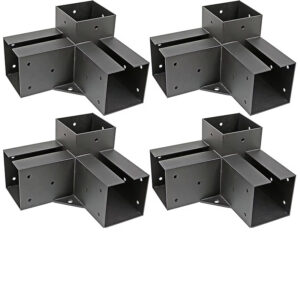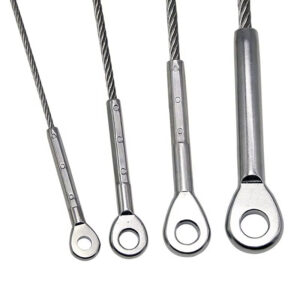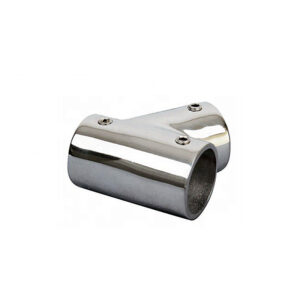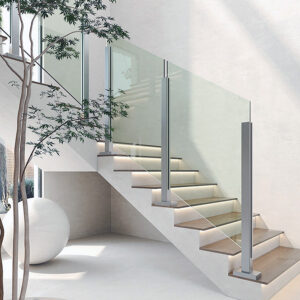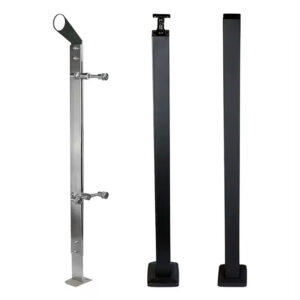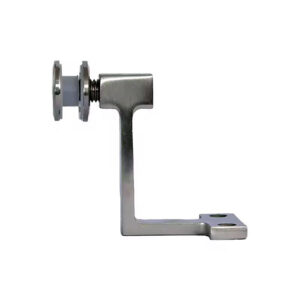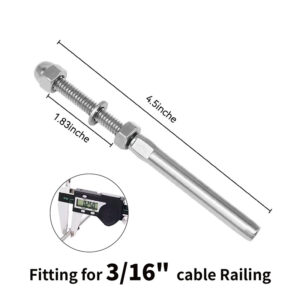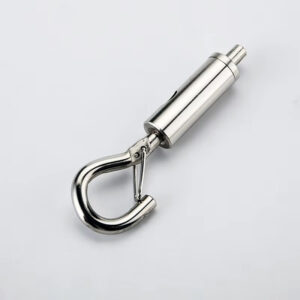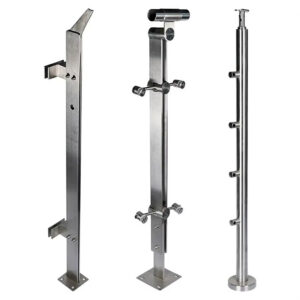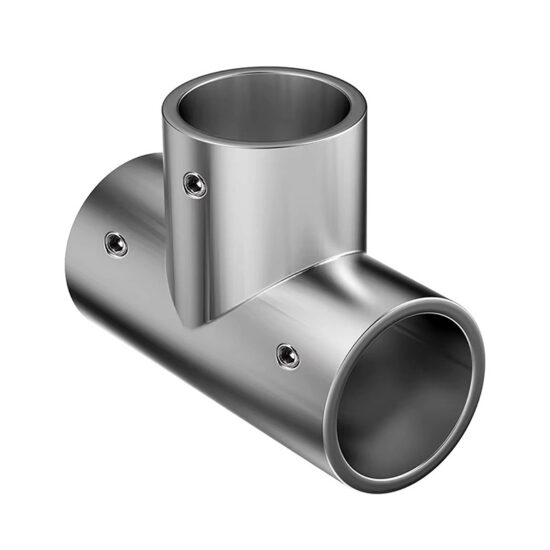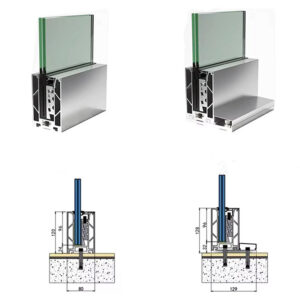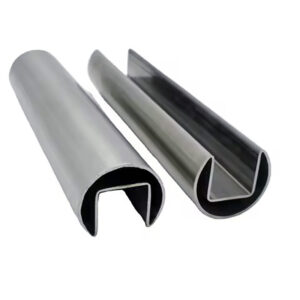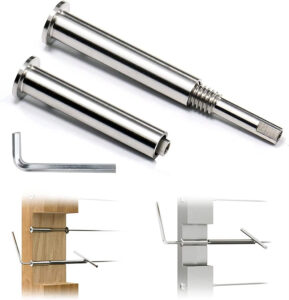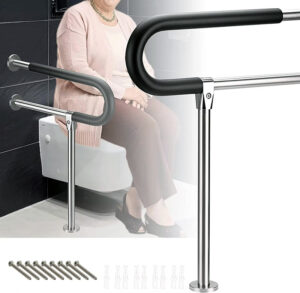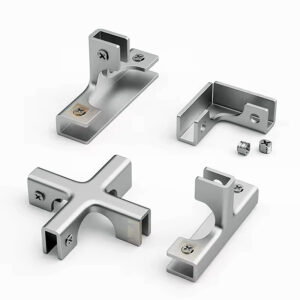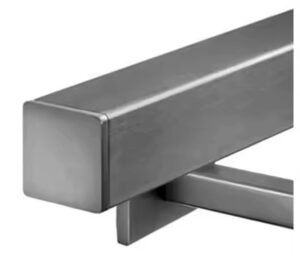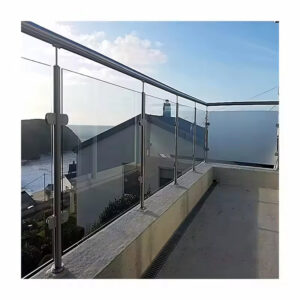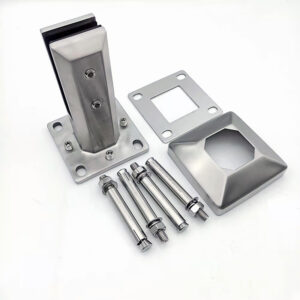

Finding reliable heavy duty wall brackets that meet code requirements without breaking installation schedules shouldn’t be this complicated. After 23 years manufacturing stainless steel railing hardware, we’ve learned that contractors need mounting solutions that deliver consistent performance, streamline installation, and provide long-term value. The challenge isn’t just finding brackets—it’s finding complete systems that work together reliably across different project types and environments.
Heavy Duty Wall Bracket Systems: What Actually Works
Handrail Wall Mounting Systems
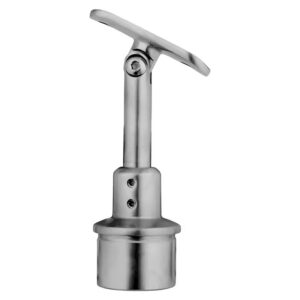
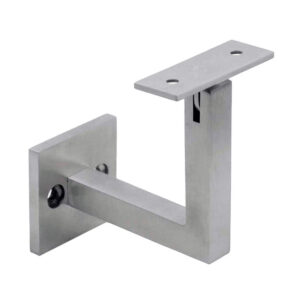
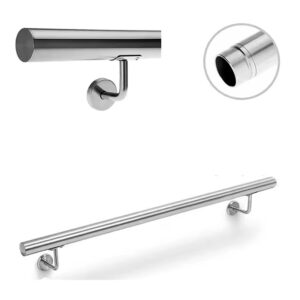
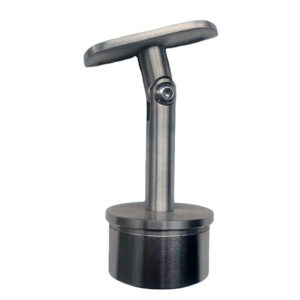
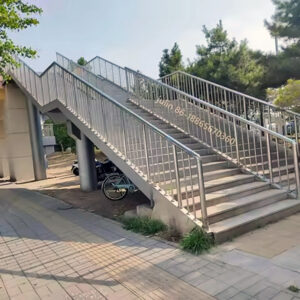
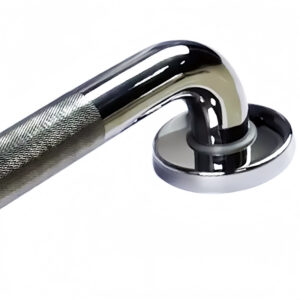
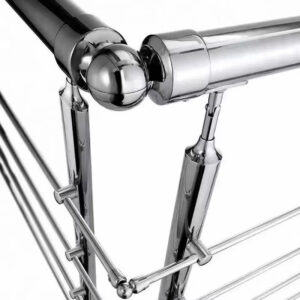
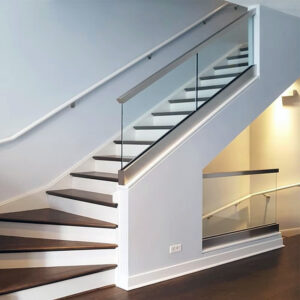
Heavy duty wall brackets for handrail systems require precise engineering to handle both static loads and dynamic forces. Our wall-mounted handrail brackets accommodate 1-1/2″ to 2″ diameter rails with adjustable projection distances from 2″ to 8″. Standard configurations include:
- Fixed Wall Brackets: Single-point mounting for straight runs, load-tested to 500 lbs vertical and 200 lbs horizontal
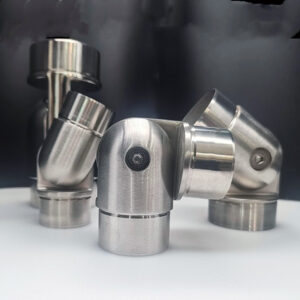
- Adjustable Wall Brackets: Variable angle capability for transitions and curved sections
- Continuous Wall Mounts: Distributed load systems for extended handrail runs
- Return Wall Brackets: End-of-run termination with integrated wall returns
Material standards focus on 304 stainless for interior applications and 316L stainless for exterior, marine, or chemical environments. Surface treatments include brushed finish for durability and mirror polish where appearance matters. Heavy duty bracket fabrication 316L specifications ensure corrosion resistance in harsh conditions.
Industrial Wall Bracket Systems for Heavy Applications
Industrial wall bracket systems ODM capabilities address unique mounting challenges in manufacturing, warehouse, and infrastructure projects. These systems handle loads from 750 lbs to 2,000 lbs per mounting point, engineered for continuous service in demanding environments.
Key specifications include:
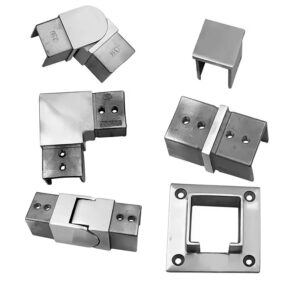
- Base plate dimensions: 6″ x 6″ to 12″ x 12″
- Welded construction with full penetration welds
- Anchor bolt patterns compatible with concrete, steel, and masonry substrates
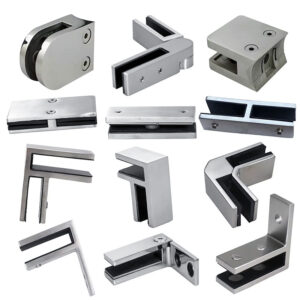
- Load distribution plates for hollow wall applications
- Vibration-resistant hardware for industrial environments
Marine Grade Heavy Duty Brackets
Marine grade heavy duty brackets require 316L stainless steel minimum, with specific attention to crevice corrosion resistance. Coastal and marine installations demand specialized fabrication techniques:
- Electropolished surfaces to remove microscopic contamination
- Welded joints with complete penetration and back-purging
- Fastener compatibility with galvanic corrosion prevention
- Drainage features to prevent water accumulation
- Salt spray testing certification per ASTM B117

Technical Specifications That Matter
| Material Grade | Environment | Typical Load Capacity | Expected Service Life |
|---|---|---|---|
| 304 Stainless | Interior, dry conditions | 500-750 lbs | 20+ years |
| 316 Stainless | Exterior, urban environments | 500-1000 lbs | 25+ years |
| 316L Marine Grade | Coastal, marine, chemical | 750-1500 lbs | 30+ years |
| Duplex 2205 | Extreme corrosion conditions | 1000-2000 lbs | 40+ years |
| Bracket Type | Installation Time | Anchor Requirements | Adjustment Range |
|---|---|---|---|
| Standard Wall Mount | 15-20 minutes | 4 x M12 anchors | Fixed position |
| Adjustable Heavy Duty | 25-30 minutes | 6 x M16 anchors | ±15 degrees |
| Industrial Mounting | 45-60 minutes | 8 x M20 anchors | Custom positioning |
| Marine Grade System | 35-45 minutes | Stainless anchor system | Environmental sealing |
Real Projects, Real Performance Results
Commercial Heavy Duty Wall Hardware Applications
Office buildings and retail facilities require commercial heavy duty wall hardware that balances performance with cost efficiency. A recent 40-story office complex project utilized our modular wall bracket system across 120 floors of handrails and safety barriers.
Results from this installation:
- 35% reduction in installation time compared to custom fabrication
- Zero callback issues for bracket failure or loosening
- Simplified inventory management with standardized components
- Code compliance verification streamlined through pre-approved designs
Industrial Manufacturing Facilities
Heavy manufacturing environments demand custom heavy duty manufacturing solutions that withstand continuous vibration, chemical exposure, and heavy use. A petrochemical facility installation required 316L brackets capable of supporting safety systems and equipment platforms.
Performance metrics after 18 months:
- No visible corrosion despite severe chemical exposure
- Mounting integrity maintained through daily thermal cycling
- Maintenance requirements limited to quarterly inspection
- Zero unplanned downtime related to bracket failure
Marine and Coastal Infrastructure
Coastal installations present the ultimate test for marine grade heavy duty brackets. A marina dock project required brackets supporting walkway systems exposed to continuous salt spray and tidal cycles.
Measured performance data:
- 316L electropolished brackets showing minimal pitting after 3 years
- Drainage design preventing salt accumulation and crevice corrosion
- Fastener system maintaining torque specifications despite thermal cycling
- Visual inspection revealing surface condition equivalent to new installation

Multi-Unit Residential Projects
High-volume residential projects benefit from standardized heavy duty wall bracket systems that reduce both material and installation costs. A 200-unit apartment complex used modular bracket systems across balconies, stairs, and common areas.
Project efficiency gains:
- Bulk procurement reduced material costs 28%
- Standardized installation procedures cut labor time 40%
- Single supplier relationship simplified project coordination
- Consistent appearance across all building phases
Installation Support and System Integration
Modular Design Advantages
Heavy duty wall brackets designed as modular systems simplify both installation and long-term maintenance. Standard connection methods, consistent fastener specifications, and compatible components reduce field assembly complexity.
Installation efficiency improvements include:
- Pre-drilled mounting patterns with standard anchor spacing
- Captive fasteners that prevent small part loss during installation
- Alignment guides for consistent positioning across multiple brackets
- Standard tools requirements eliminating specialized equipment needs
Quality Control and Field Performance
Manufacturing precision directly impacts field installation success. Our quality control process includes dimensional verification, weld inspection, surface finish consistency, and pre-assembly testing.
Quality metrics that matter to contractors:
- Dimensional tolerance held to ±0.5mm across all mounting surfaces
- Weld penetration verified through ultrasonic testing
- Surface finish consistency maintained within specified ranges
- Thread engagement tested under load conditions
| Installation Phase | Time Estimate | Common Issues | Prevention Method |
|---|---|---|---|
| Layout and Marking | 5-10 min per bracket | Misalignment | Template guides provided |
| Anchor Installation | 10-15 min per bracket | Concrete quality | Pre-drilling specifications |
| Bracket Mounting | 5-8 min per bracket | Hardware compatibility | Captive fastener design |
| Final Adjustment | 3-5 min per bracket | Access limitations | Adjustable mounting slots |
Frequently Asked Questions
How do I select the right stainless steel grade for my application?
Material selection depends on environmental exposure and budget considerations. 304 stainless works well for interior applications with normal humidity and temperature. 316 stainless handles exterior urban environments, occasional salt exposure, and temperature cycling. 316L marine grade addresses continuous moisture, salt spray, chemical exposure, and extreme temperature ranges. Duplex grades handle the most severe combinations of stress and corrosion.
What load capacities do heavy duty wall brackets actually support?
Load capacity depends on bracket design, material grade, mounting substrate, and anchor system. Standard wall brackets handle 500-750 lbs for typical handrail applications. Industrial brackets range from 1,000-2,000 lbs for equipment support and safety systems. Load ratings assume proper installation in concrete or structural steel. Hollow wall applications require load distribution plates and specialized fasteners.
How long does installation typically take for large projects?
Installation time varies with bracket complexity and site conditions. Standard wall brackets average 15-20 minutes including layout, drilling, and mounting. Heavy industrial brackets require 45-60 minutes due to larger anchor systems and alignment requirements. Modular systems reduce time compared to custom fabrication through standardized procedures and compatible components.
What’s involved in maintaining heavy duty wall brackets over time?
Maintenance requirements depend on material grade and environmental exposure. Interior 304 stainless brackets need annual visual inspection and fastener torque verification. Exterior 316 installations require semi-annual cleaning and detailed inspection. Marine applications need quarterly assessment with particular attention to crevice areas and fastener condition. Most maintenance involves cleaning and occasional fastener replacement rather than bracket replacement.
How do your brackets compare with other manufacturers?
Heavy duty wall bracket selection should consider material quality, manufacturing precision, load capacity verification, and supplier reliability. Esang Metal brings 23 years of manufacturing experience to applications ranging from residential to industrial. Our focus on modular design, consistent quality, and technical support helps contractors complete projects efficiently while meeting long-term performance requirements.
What documentation do you provide for code compliance?
Code compliance documentation includes material certifications, load test reports, installation specifications, and engineering calculations. We provide stamped drawings when required, material traceability certificates, and test data meeting local building code requirements. Pre-approved designs streamline permit processes for standard applications.
Supply Chain and Project Support
Reliable heavy duty wall bracket supply requires coordination between manufacturing, inventory management, and project schedules. Our approach emphasizes batch coordination, delivery reliability, and technical support throughout project phases.
Supply chain advantages include:
- Inventory forecasting based on project schedules
- Batch production ensuring consistent material properties across entire projects
- Quality hold points preventing shipment of non-conforming products
- Technical support during installation and commissioning phases
“Standardized heavy duty mounting systems reduce total project time while improving long-term reliability compared to custom fabricated solutions.” —Construction Industry Institute
“Proper material selection for wall brackets significantly impacts maintenance costs over facility lifecycles.” —Building Hardware Manufacturers Association
“Modular bracket systems simplify inventory management and reduce installation complexity for contractors.” —National Association of Construction Professionals
Heavy duty wall brackets represent a critical component in railing and safety systems where reliable performance directly impacts project success and long-term costs. Twenty-three years of manufacturing experience has taught us that contractors value consistent quality, technical support, and supply chain reliability as much as competitive pricing. Whether your project involves standard commercial handrails or custom industrial applications, the right bracket system should simplify installation while delivering decades of reliable service.