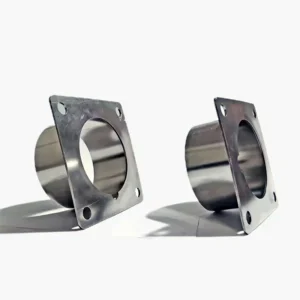
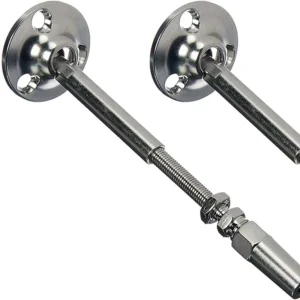
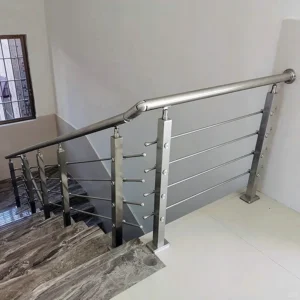
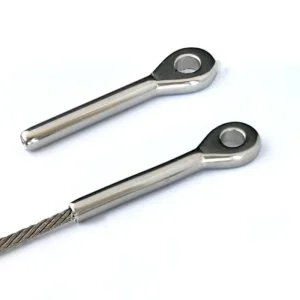
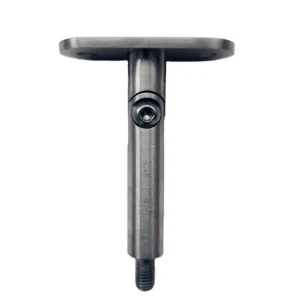
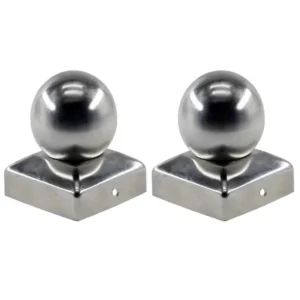
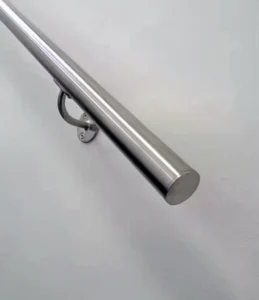
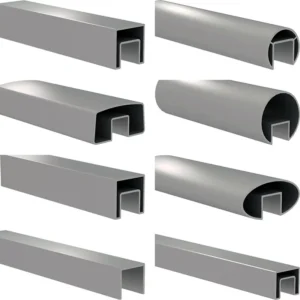
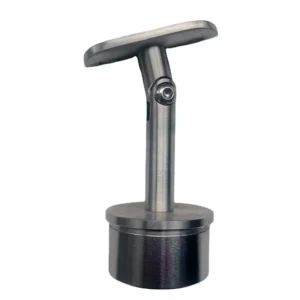
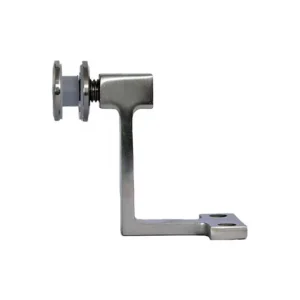
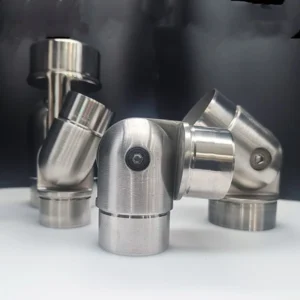
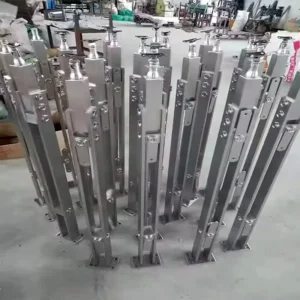
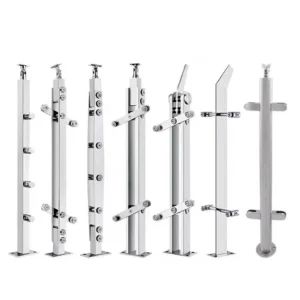
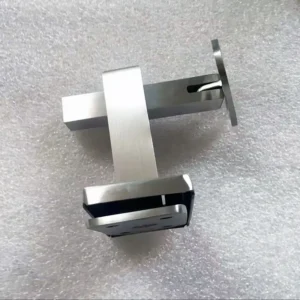
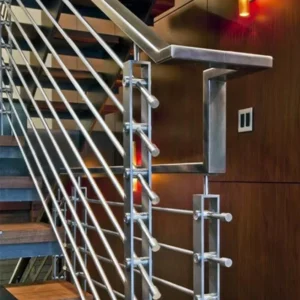
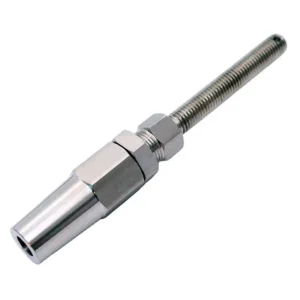
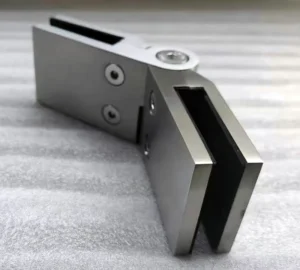
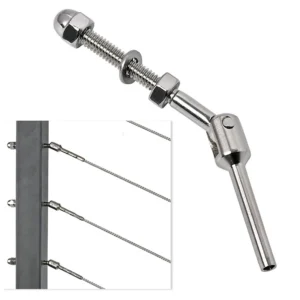
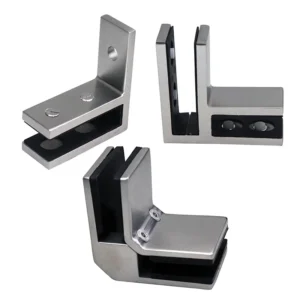
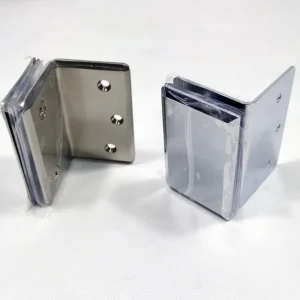
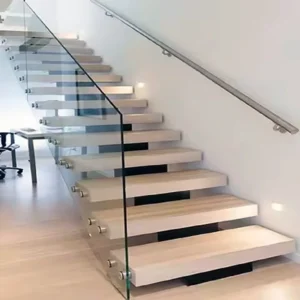
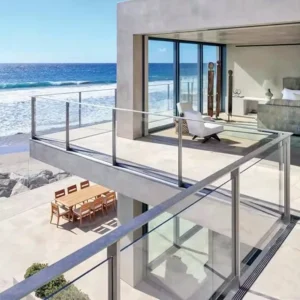
Top mount handrail brackets support a rail from the top of a post or mounting surface. The term describes the support-side position, not a universal fitting: the rail saddle, support footprint, height, hole pattern and adjustment still have to match the adjoining parts. ESANG can start from a bracket photo or marked-up detail and prepare a proposed configuration for comparison.
Send Your Bracket Detail on WhatsApp
Match the two interfaces separately
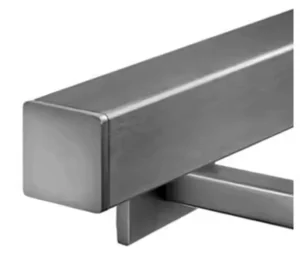
A bracket connects two defined surfaces. On the rail side, a flat saddle suits a flat underside while a radiused saddle must match the intended tube. On the support side, a plate for the top of a square post differs from a round receiver, a flange for a flat surface or a stem intended to enter a post. A bracket that looks similar in a catalogue can still fail to seat, align or accept the specified fasteners.
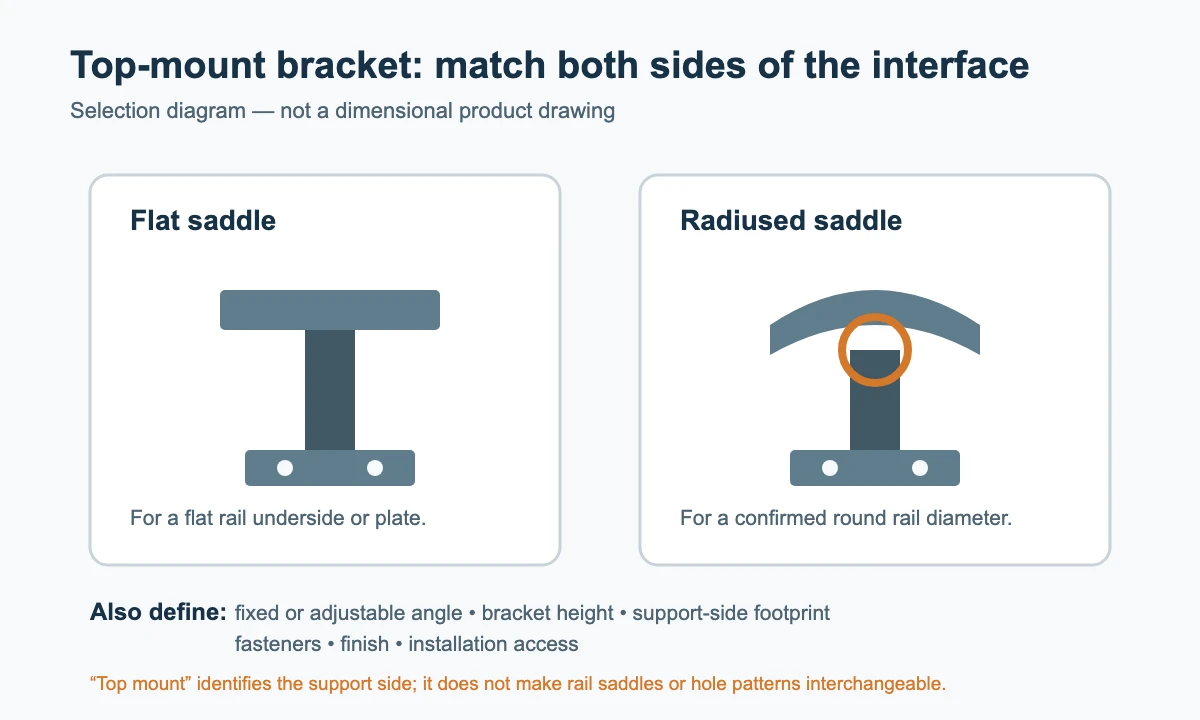
Five bracket choices that change fit
Rail profile and saddle
State whether the rail is round, square, rectangular or another formed section, then provide its outside dimensions and wall condition at the fixing point. For round tube, include the outside diameter. For flat or rectangular rail, include the contact width and whether a visible saddle plate is acceptable. Also identify whether fasteners can enter the rail and whether their heads must be concealed.
Support surface and footprint
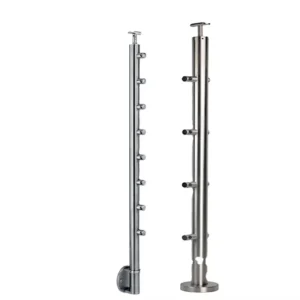
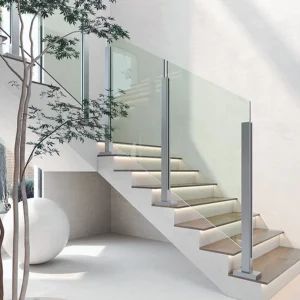
Provide the post or support profile, its outside dimensions and wall thickness if known. A two-hole top plate, a three-hole circular flange and a concealed stem create different fabrication and assembly requirements. The footprint must also avoid clashes with post caps, infill fittings and weld seams.
Fixed or adjustable angle
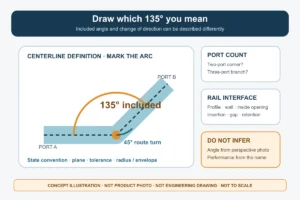
A fixed bracket simplifies appearance when the rail angle is known. An adjustable head can help on stairs, ramps or field-variable geometry, but the requested pivot direction and final locking method must be defined. “Adjustable” should not be read as every angle, every plane or movement during service. Send a side elevation with the design angle and note whether adjustment is for installation only.
Bracket height and offset
The stand-off between support and rail controls clearance for hands, infill panels, cable terminals and tools. It can also affect the finished rail line at transitions. Give the required support-to-rail datum and coordinate adjoining fixed brackets so a nominal height difference does not create a visible step.
Material, finish and exposure
Ask the proposal to name the material and finish rather than selecting by photograph. Indoor, exterior, coastal, poolside and chemical-cleaning locations require different review. If the rail, post, bracket or fasteners use dissimilar materials, identify any isolation or coating requirement in the project specification.

A short comparison before choosing
| Decision | Fixed top support | Adjustable top support |
|---|---|---|
| Best starting point | Known rail line and repeatable angle | Stair/ramp angle or defined installation adjustment |
| Information needed | Final angle, height and both interfaces | Adjustment plane, required angle, lock and final height |
| Main coordination risk | Wrong saddle or accumulated alignment error | Wrong pivot direction, insufficient lock or height variation |
| Quotation check | Footprint, holes and rail fasteners | All fixed-bracket fields plus pivot/locking components |
Keep bracket, rail and post responsibilities clear
The bracket does not establish the capacity of the complete handrail or guard by itself. Rail section, post, infill, fasteners, welds, base connection and substrate all participate in the final assembly. Ask for component information needed by the project designer, and have the complete installation checked against the governing requirements.
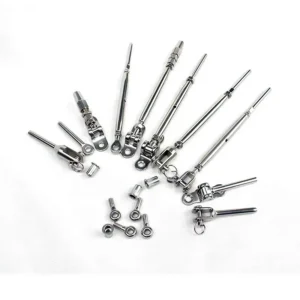
The proposed supply may include the bracket body, saddle, pivot or stem and component fasteners, but it should not silently imply rail, posts, anchors or site welding. For replacement work, send one removed sample or a dimensioned sketch; matching only the hole centers without checking the rail and post surfaces can still produce the wrong part.
What to send for quotation
- rail profile, outside dimensions, wall thickness if known and underside shape;
- post/support profile, top dimensions, wall thickness and available fixing area;
- fixed angle or required adjustment plane and design angle;
- support-to-rail height, any lateral offset and visible-fastener preference;
- indoor/outdoor exposure, requested material/finish and cleaning environment;
- hole pattern or existing sample details for replacement work;
- quantity, spare requirement, packing and documentation needs.
Ask the quotation to list the bracket geometry, saddle type, support-side connection, adjustment/locking parts, included fasteners, material/finish, dimensional approval points and exclusions. This lets two bracket proposals be compared by fit and responsibility, not only by their polished appearance.