A wall-mounted handrail package looks identical across quotes until the scope behind each number is checked. One supplier’s linear-foot total may include brackets and anchors matched to the actual wall condition; another’s may assume a substrate that isn’t present on the drawings. Without a common basis for runs, wall conditions, assembly details, and deliverables, the lowest price and the most complete price cannot be told apart.
Scope information suppliers need to price the same package
A wall-mounted handrail quote is only as comparable as the scope it responds to. When an RFQ states a single linear total without separating runs, locations, and conditions, each supplier fills the gaps with its own assumptions about bracket spacing, wall interface, and finish, and the resulting numbers stop describing the same package. The buyer’s task at this stage is not to price the work but to remove the discretion that produces mismatched quotes.
This matters because a wall handrail is not a self-supporting assembly. Its bracket type, anchor method, and even its finish specification can shift depending on where the run sits, what wall it attaches to, and whether the project includes a stair, ramp, or level condition along its length. If the RFQ treats all of this as background information rather than defined scope, suppliers price what they assume rather than what the project needs, and the comparison becomes a comparison of assumptions, not of capability or value.
Where the project includes more than one run, condition, or wall type, the RFQ should resolve each one individually rather than let an aggregate quantity stand in for the full scope. A single run on a masonry wall and a second run on a different substrate do not carry the same bracket or anchor implications, even if their combined footage looks identical to a run split differently across two other conditions. Suppliers that are given only a total quantity have no way to know this, and their resulting price may reflect a uniform assumption that does not match the actual project.
The same logic extends to the documents behind the RFQ. A drawing set establishes the basis every supplier is quoting against, and if that basis changes between the time one supplier quotes and another responds, the two numbers no longer describe the same scope even when the RFQ language stayed constant. Confirming which drawing revision governs the quote, and requiring every supplier to reference it, keeps the comparison anchored to one version of the project rather than to whichever version each supplier happened to receive.
What the buyer should establish before sending the RFQ is not the final design, but the boundary of what is being priced: which runs exist, what conditions apply to each, and which drawing defines them. That boundary is what later sections build on, because every other scope decision, from bracket selection to packaging, depends on knowing which runs and conditions are actually being quoted.
Run schedule and wall conditions to attach to the RFQ
| Schedule field | What to enter | Comparability check |
|---|---|---|
| Run identity and location | Identify each run and its location separately | Confirm every quote covers the same set of runs rather than one undifferentiated total |
| Level, stair, or ramp condition | Mark the applicable condition for each run | Check that suppliers have priced the same condition for each identified run |
| Quantity | State the quantity for each run | Compare quoted quantities against the run schedule before comparing totals |
| Wall assembly and substrate | Record the known wall assembly and substrate for each run | Check whether bracket and anchor scope is based on the same wall information |
| Backing, edge, and access constraints | State any known backing, edge, or access constraints by run | Identify quotes that rely on different attachment assumptions |
| Drawing basis | Name the drawing revision issued with the RFQ | Compare only quotes tied to the same drawing revision |
Once the project’s runs are identified, the wall conditions behind each one determine how differently suppliers may price the attachment scope. A wall-mounted handrail bracket transfers load into whatever substrate is behind the wall surface, and the bracket, anchor, and sometimes the backing plate selected for that transfer depend on what that substrate actually is. Where the RFQ does not state the wall assembly and substrate for each run, a supplier has to guess, and different suppliers will guess differently, producing quotes that price fundamentally different attachment systems under the same line-item description.
This is also where backing, edge, and access constraints change the scope rather than just the installation sequence. A run that approaches an edge condition, a corner, or a location with limited access for anchor installation can require a different bracket geometry or fastening approach than an equivalent run along an open, unobstructed wall. If the RFQ does not flag these constraints by run, a supplier pricing from a generic assumption may exclude the added hardware or labor that an edge or access condition requires, while another supplier who assumes the worst case prices it in. Both numbers will look like reasonable quotes; only one will match the actual condition once installation begins.
Where the wall assembly is already known from project documents, stating it directly in the RFQ removes this discretion. Where it is not yet confirmed, the RFQ should say so explicitly rather than leaving silence to be read as “standard” or “unknown, assume typical.” A stated unknown prompts suppliers to flag their assumption; an unstated unknown gets absorbed silently into each supplier’s own default, and that default is exactly what breaks comparability later.
The run schedule and wall condition information also ties directly to the drawing basis established earlier. A wall condition noted in the RFQ but contradicted by the referenced drawing creates ambiguity about which one governs, and suppliers resolve that ambiguity differently unless the RFQ clarifies which source controls. Attaching the run and wall information directly to the drawing reference, rather than as a separate narrative disconnected from it, keeps both documents describing the same project rather than drifting into two slightly different versions of it.
For runs where the wall type, backing, or access condition remains genuinely unconfirmed, the practical step is to mark it as an open item for site verification rather than omit it. That distinction tells every supplier the same thing: price against the stated condition, or price against the stated unknown, but do not substitute a private assumption that competing quotes will not share.
Rail, bracket, return, finish, and fastener selections to define
| Assembly element | RFQ definition | Difference to resolve in supplier responses |
|---|---|---|
| Rail | Profile and material for each applicable run | A different profile or material means the rail package is not directly comparable |
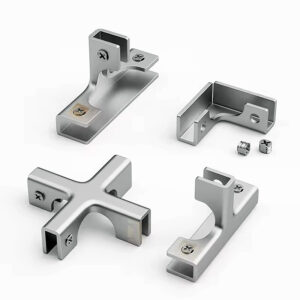
| Wall bracket | Bracket geometry matched to the stated wall condition | A different bracket basis can change both bracket and attachment scope |
| Returns | Required return condition for each applicable run | Omitted or differently configured returns create a scope gap |
| Connectors | Required connector scope between applicable rail sections | Inclusion and exclusion must match across quotes |
| Finish | Required finish for the applicable rail and hardware | A different finish basis prevents a like-for-like package comparison |
| Fasteners and anchors | Required fastener scope and the stated substrate basis | Supplier assumptions must be checked against the wall and backing information |
A handrail assembly is a set of coordinated parts, and the comparability of a quote depends on whether every supplier is pricing the same combination of rail, bracket, return, finish, and fastener. Changing any one element can change the others: a different rail profile may call for a different bracket geometry to achieve the same grip clearance from the wall, and a different finish requirement can affect which fastener and bracket hardware are compatible with the stated appearance standard. Treating these as independent line items invites suppliers to substitute compatible-looking components that do not actually match the rest of the stated assembly.
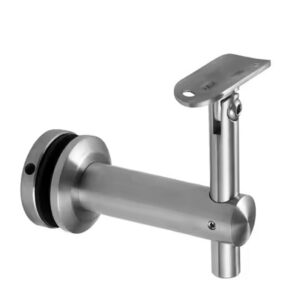
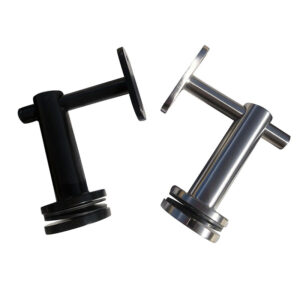
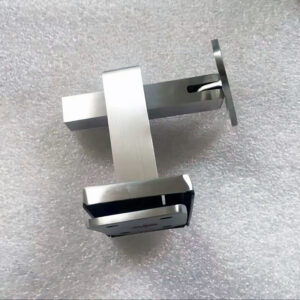
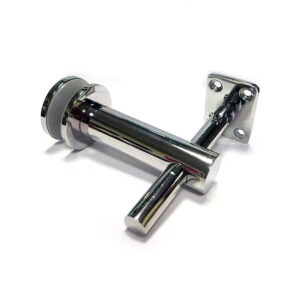
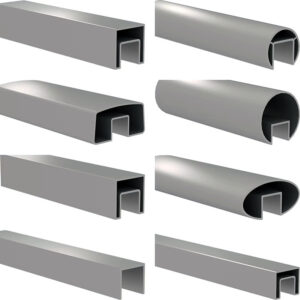
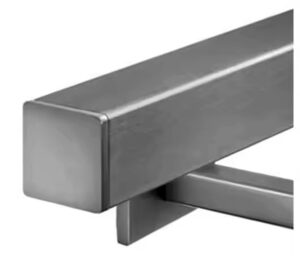
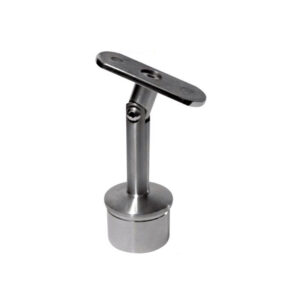
The rail profile and material form the starting point, because the wall bracket is selected to suit the rail it supports. Stainless steel wall handrails and the brackets that carry them are matched as a system, and a change in rail profile without a corresponding bracket specification leaves the bracket choice open to interpretation. Where the RFQ names the rail but not the bracket basis, two suppliers may each select a bracket compatible with that rail profile while differing in reach, mounting pattern, or finish compatibility, producing assemblies that look similar in a product photo but install differently against the stated wall condition.
Returns and connectors are easy to omit from an RFQ because they read as minor hardware relative to the rail itself, but omitting them creates a genuine scope gap rather than a rounding error. A run that terminates at a wall, door, or open end typically needs a return condition to meet code-driven or design-driven requirements, and if the RFQ does not state which runs require a return and which do not, one supplier may include it by default assumption while another prices only the straight rail length. The same applies to connectors joining rail sections across a run: whether they are included, their finish, and their compatibility with the specified rail profile all need to be stated rather than left to supplier discretion.
Finish and fastener scope close the loop. A finish specification affects the hardware’s substrate, so the bracket and fastener compatible with one finish basis may differ from what is compatible with another, particularly where the fastener is exposed and its appearance must match the rest of the assembly. The fastener and anchor scope also connects back to the wall and backing information: a fastener type suited to one substrate may not suit another, and the RFQ should make clear that the fastener scope is to be priced against the stated wall condition rather than against a generic or unstated substrate assumption. Where continuous wall handrail systems are specified instead of segmented runs, the connector and expansion-joint scope between sections becomes part of this same coordinated assembly definition, not a separate afterthought priced outside it.
Documents, samples, tests, and packaging to quote separately
| Deliverable | RFQ pricing instruction | Quote comparison check |
|---|---|---|
| Submittals | Show the submittal scope separately | Verify that each quote identifies what is included rather than burying it in the package total |
| Samples | Price the requested sample scope separately | Check whether samples are included, excluded, or subject to an explicit assumption |
| Testing evidence | Show the requested testing-evidence scope separately | Do not treat a document offer as proof of project acceptance; final criteria remain project specific |
| Packaging | Price the stated packaging scope separately | Compare the same packaging basis and identify any exclusion |
| Delivery | Price the stated delivery scope separately | Confirm the delivery inclusion and boundary before comparing package totals |
Hardware pricing and documentation pricing answer different questions, and collapsing them into one package total hides which supplier is actually offering more. A submittal package, a sample set, testing evidence, and packaging or delivery terms each carry their own scope and can be included, excluded, or priced as an option depending on how the supplier interprets a bundled RFQ line. Asking for these to be quoted separately is what lets the buyer see whether a lower total price reflects a lower hardware cost or simply the absence of deliverables another supplier included.
Submittals illustrate this directly. A project that requires drawings, material test certificates, load reports, or finish samples before fabrication or installation begins is asking for a defined deliverable set, not a formality attached to the order. If the RFQ does not separate this scope, a supplier that assumes no submittal review is required will quote faster and lower than one that assumes a full submittal package, and the difference will not be visible in the headline price. Making the submittal scope explicit, and pricing it apart from the hardware, surfaces that difference before it becomes a dispute during project execution.
Testing evidence requires a related but distinct caution. A supplier’s offer to provide test reports or documentation is not the same as confirmation that the documented evidence satisfies the project’s acceptance criteria, which remain governed by the project specification and the authority having jurisdiction over it. The scope question for the RFQ is simply whether testing evidence is requested, what form it takes, and whether it is priced in or out; whether that evidence ultimately satisfies a reviewing authority is a separate determination the project team retains.
Samples, packaging, and delivery follow the same logic at a more practical level. A finish or hardware sample set carries its own cost and lead time, and whether it is included in the quoted total or treated as a separate, possibly reimbursable item changes what the headline number represents. Packaging and delivery terms can vary by supplier even when the hardware scope is identical, since one quote may include delivery to a specified point while another ends at a different boundary. Stating the requested packaging and delivery scope explicitly, rather than letting “delivered” mean something different in each quote, keeps the comparison anchored to the same logistics basis rather than an assumed one.
Quote assumptions and exclusions that prevent valid comparison
Every quote carries assumptions, whether stated or not, and the RFQ’s job is to force those assumptions into the open where they can be compared rather than discovered later. A supplier who does not state an assumption has not avoided making one; the assumption is simply embedded in the price without a label, and the buyer has no way to know it exists until the gap surfaces during ordering, fabrication, or installation.
Requiring every supplier to mark assumptions and exclusions for brackets, returns, connectors, fasteners, samples, submittals, testing evidence, packaging, and delivery converts an invisible risk into a visible, comparable line. Where one supplier’s quote assumes a wall condition that differs from what the RFQ stated, that assumption needs to appear on the page, not be left for the buyer to infer from a lower bracket price. Where another supplier excludes returns because the RFQ language left their inclusion ambiguous, that exclusion needs the same visibility. The point is not to eliminate every difference between suppliers; some differences in approach are legitimate. The point is to make sure every difference is visible before it is compared.
This also governs where responsibility sits once the hardware is installed. A handrail’s final connection design and its acceptance by the jurisdiction with authority over the project are not scope items a supplier can absorb or waive simply by shipping compliant-looking hardware; this is project-specific engineering and approval responsibility that the RFQ should confirm stays with the project team unless the RFQ states otherwise. A supplier’s exclusion list should make clear whether it assumes this responsibility remains outside its quote, because a quote silent on this point can be read either way, and the two readings carry very different implications for what the project still needs to arrange.
Reading submitted quotes against this requirement means checking not just the number but the attached list of what each number assumes and excludes. Two quotes with identical totals can represent very different actual offers once their assumption lists are compared line by line, and a quote with no assumptions listed at all is not necessarily the cleanest one; it may simply be the one where the gaps have not yet been surfaced. Where ESANG’s configuration process depends on the wall, run, and assembly information the buyer provides in the RFQ, the clarity of that submitted information directly shapes how precisely a supplier can state its own assumptions in return, since a vague RFQ produces a vague quote regardless of the supplier’s intent.
Final comparison sheet for scope, responsibility, and delivery
| Comparison checkpoint | Common baseline | Comparable only when |
|---|---|---|
| Drawing basis | The same issued drawing revision | Every quote identifies or accepts that revision |
| Runs and quantities | The same run schedule, locations, conditions, and quantities | Each quote covers the same listed work without an undifferentiated substitute total |
| Wall interface | The same known wall assembly, substrate, backing, edge, and access information | Bracket, fastener, and anchor assumptions respond to the same conditions |
| Handrail assembly | The same rail profile, material, finish, bracket geometry, returns, connectors, and fastener scope | Inclusions and exclusions match or their price effect is isolated |
| Documents and evidence | The same requested submittal, sample, and testing-evidence scope | Each quote makes inclusion, exclusion, and separate price clear |
| Packaging and delivery | The same stated packaging and delivery scope | Logistics scope is aligned before total prices are compared |
| Design and approval responsibility | The same project boundary for final connection design and jurisdictional approval | No supplier assumption silently shifts responsibility away from the project team |
| Assumptions and exclusions | A visible list from every supplier | Material differences are resolved or normalized before selection |
With runs, wall conditions, assembly selections, deliverables, and assumptions all defined, the remaining task is confirming that every submitted quote actually responds to the same version of that scope before price enters the comparison at all. This is a checking step, not a new round of specification; it asks whether what was requested is what was returned, consistently, across every supplier.
The drawing basis is the first checkpoint, because a quote tied to an earlier or different drawing revision is answering a different question than one tied to the current issue, even if the supplier’s price looks competitive. The run schedule and quantities follow the same logic: a quote that substitutes an aggregate total for the itemized run list the RFQ requested has not demonstrated that it covers the same scope, regardless of how the final number compares to others. Wall interface information closes this first group, since a bracket and fastener price is only meaningful against the wall assembly, substrate, and access condition it was quoted against; a quote silent on this cannot be confirmed as comparable even if its price appears reasonable.
The next checkpoint group concerns the assembly itself and the deliverables around it. A handrail assembly comparison holds only where rail profile, material, finish, bracket geometry, returns, connectors, and fastener scope either match across quotes or where any difference has a clearly isolated price effect that the buyer can evaluate on its own terms. Submittal, sample, and testing-evidence scope need the same treatment: inclusion, exclusion, and separate pricing should be stated plainly enough that the buyer is not left inferring what silence means. Packaging and delivery terms require alignment before any total price comparison, since a quote ending delivery at a different point than another is not offering the same logistics scope even if the hardware line items match.
The final two checkpoints concern responsibility rather than hardware. Design and approval responsibility should sit with the same project boundary across every quote, meaning no supplier’s assumptions have quietly shifted final connection design or jurisdictional approval away from the project team without that shift being stated and agreed. And the assumptions and exclusions each supplier submitted need to be read side by side, with any material difference resolved or deliberately normalized, before the buyer treats the remaining price differences as meaningful. Where a stated assumption or exclusion conflicts with the governing project specification, such as the scope structure described in UFGS 05 52 00 for metal railing submittals and drawings, or the design and load criteria referenced in ASTM E985, that conflict is a scope question for the project team to resolve, not a detail to leave embedded in a single supplier’s unstated price basis. Only once these eight checkpoints hold consistently across every quote does comparing the bottom-line price actually compare what the project will receive, rather than comparing eight different versions of what each supplier assumed the project needed.
Frequently Asked Questions
Q: Can I issue a wall-mounted handrail RFQ before every wall condition is confirmed?
A: Yes, but identify each unknown wall assembly, substrate, backing, edge, or access condition by run and require every supplier to state the attachment assumptions used for pricing. Treat those assumptions as provisional until the project team confirms the final connection design and approval requirements.
Q: Should suppliers quote one total length for the entire handrail package?
A: A single undifferentiated total makes scope differences difficult to detect. Request quantities and pricing against a run schedule that separates locations, levels, stairs, ramps, and other distinct conditions, then check every response against the same schedule and drawing revision.
Q: What should I check if two quotes use different bracket or anchor allowances?
A: First compare the wall information and assembly definition behind each allowance. Confirm that bracket geometry, rail profile, returns, connectors, fasteners, anchors, and finish are based on the same stated conditions; otherwise isolate the difference before comparing price.
Q: Does an offer of testing evidence mean the handrail package is accepted for the project?
A: No. Define the requested testing-evidence scope and have it priced separately, but evaluate the offered documents against the project’s own criteria. Document availability does not replace project-specific review, final connection design, or jurisdictional approval.
Q: When are wall-mounted handrail quotes ready for a final price comparison?
A: Compare totals only after the drawing revision, runs, quantities, wall conditions, handrail assembly, documents, packaging, delivery, and responsibility boundaries are aligned. Resolve or separately price every material assumption and exclusion so the lowest total does not conceal a narrower scope.