A spinning anchor bolt or a base plate that keeps loosening after installation raises an immediate question for anyone responsible for the connection: is this a fastener problem, a hole problem, or a substrate problem, and does the answer change whether the anchor can be corrected in place or must be replaced? The symptom alone does not answer that question. What the inspector does next determines whether the eventual corrective action addresses the actual cause or only masks it.
What a spinning or loose anchor tells the inspector
| Estado observado | What it can indicate | Lo que no establece |
|---|---|---|
| Spinning anchor bolt | Lost engagement, an oversized or damaged hole, debris, or a missed setting step | The actual cause before the connection and substrate are examined |
| Loosening after installation | Connection movement, seating, an incorrect assembly, or an installation-control issue | That repeated tightening is an accepted correction |
| Cracking or spalling around the base plate | Substrate distress that requires project-engineer review | Remaining anchorage capacity from appearance alone |
| Base-plate movement | A connection or substrate issue that warrants inspection of the full connection and substrate | Whether the cause is in the connection, the substrate, or both |
A spinning anchor bolt means the fastener has stopped engaging the material around it, but that single observation does not say why. Lost engagement can result from a hole that was drilled oversized or that has become damaged, from debris left in the hole that prevented full seating, or from a setting step in the installation sequence that was skipped. Each of these has a different corrective path, and none of them can be distinguished from the others by the act of spinning itself. Treating the spin as the diagnosis, rather than as a symptom that points to several possible causes, is where field judgment goes wrong.
Loosening that appears after installation is a related but separate condition. Where a connection was adequately set at installation and later loosens, the cause may lie in movement of the connection under service conditions, in a seating process that was not complete at the time of installation, in an assembly that does not match the specified anchor system, or in an installation-control issue that was not caught during the original work. Distinguishing these requires examining the full connection and the substrate it sits in, not just the fastener itself, because a correctly installed anchor in a compromised substrate can loosen for reasons that have nothing to do with the bolt.
Cracking or spalling visible around the base plate changes the nature of the inspection entirely. Where this kind of substrate distress is present, the remaining anchorage capacity cannot be read from the appearance of the crack or the spall. A hairline crack and a wider one may or may not correspond to proportionally different losses of capacity, and the inspector has no reliable way to infer that relationship from a visual check alone. This is the condition that moves the decision out of routine field correction and into project-engineer review, because the structural question it raises is different in kind from a fastener that has simply lost its grip.
Base-plate movement sits between these two categories. It can originate in the connection, in the substrate, or in both at once, and the inspector’s first task is to work out which, because the corrective action for a connection issue is not the same as the corrective action for a substrate issue, and applying the wrong one leaves the actual cause unaddressed.
Hole, fastener, substrate, and setting conditions to examine
| Area to examine | Supported condition or issue | Diagnostic relevance |
|---|---|---|
| Anchor hole | Oversized or damaged hole | Can be associated with lost engagement and a spinning bolt |
| Hole cleanliness | Debris | Can be one cause of spinning and must be distinguished from other supported causes |
| Anchor and fastener | Anchor type and the applicable fastener-property scope | Anchor type must be confirmed; fastener properties alone do not determine anchor-system performance or the cause of concrete damage |
| Assembly and seating | Incorrect assembly or seating | May be involved in loosening after installation |
| Sustrato | Substrate condition, including cracking or spalling around the base plate | Visible damage requires project-engineer review because remaining anchorage capacity cannot be inferred from appearance alone |
| Setting and installation | Missed setting step or installation-control issue | Provides supported installation causes to examine for spinning or loosening |
Once a symptom has been observed, the inspection has to move systematically through the parts of the connection that could produce it, because a spinning bolt and a loosened base plate can each trace back to conditions in the hole, the fastener, the assembly, or the substrate, and confirming which one applies changes what happens next.
The anchor hole itself is one starting point. An oversized hole, whether drilled that way originally or enlarged through damage, reduces the engagement available to the anchor and is a condition directly associated with spinning. Hole cleanliness is a distinct condition from hole size: debris left in the hole can prevent the anchor from seating fully even where the hole itself was drilled correctly, and this cause has to be checked and ruled in or out separately from an oversized or damaged hole, since the corrective action differs.
The anchor and fastener together raise a different kind of question. Confirming the anchor type is a necessary step, because anchor systems vary in how they transfer load into a substrate and in what installation conditions they require. Fastener-property standards such as ISO 3506-1 define the mechanical and physical properties of corrosion-resistant stainless fasteners within that standard’s scope, but that scope does not extend to torque-clamp-force, shear, or fatigue properties, and it does not determine how the anchor system as a whole performs or why concrete around it may have been damaged. Where a buyer or inspector is tempted to treat a fastener-grade confirmation as evidence about the anchor system’s structural performance, that step has gone further than the fastener standard supports.
Assembly and seating conditions are where an incorrect assembly or an incomplete seating process shows up, and this is one of the areas that needs checking when loosening appears after installation rather than at the time of setting. Substrate condition is examined separately again: cracking or spalling around the base plate falls into this category, and because remaining anchorage capacity cannot be inferred from appearance alone, any substrate damage identified here is a trigger for engineer review rather than a field judgment call. Finally, the setting and installation process itself is reviewed for a missed step or an installation-control gap, which provides the supported installation-side causes an inspector checks against the hole, fastener, and substrate findings.
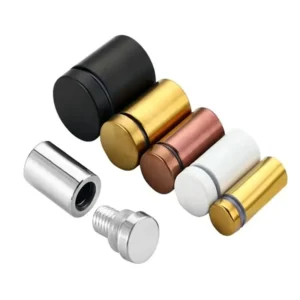
Where a project team is assembling an anchoring system from the outset rather than diagnosing an existing one, the same conditions apply in reverse: hole preparation, fastener-anchor matching, and substrate condition all need to be confirmed before setting, which is the same information a supplier’s sistemas de anclaje offering depends on to match the component to the installation.
Concrete cracking and base-plate movement escalation path
Not every observed condition at a railing anchor calls for the same response, and the point at which a field correction is no longer appropriate is tied to what the symptom indicates about the substrate rather than to how the fastener looks or feels under a wrench. Where the condition is limited to the anchor and hole, such as debris or a missed setting step, the corrective action can often be evaluated and carried out as part of the connection work itself, because the substrate has not been shown to be compromised.
Where cracking or spalling is visible around the base plate, the situation moves outside that category. Concrete distress around an anchor point means the substrate itself, not just the anchor within it, may have a reduced ability to carry the load the connection was designed to transfer. Because this reduction cannot be estimated from the visible extent of the crack or spall, the appropriate response is not to proceed with a standard correction and reassess later, but to escalate to project-engineer review before any further tightening, replacement, or loading decision is made.
Base-plate movement sits on the same escalation path when it accompanies visible substrate damage, since movement combined with cracking suggests the connection and substrate issues may be linked rather than independent. Where movement is present without visible substrate damage, the inspection can still proceed through the connection-level checks before engineer review becomes necessary, but the absence of visible damage at one point in time does not rule out substrate involvement if the movement continues or recurs after a connection-level correction has been made.
Corrective-action evidence before reuse or replacement
| Prueba | Why it matters before the decision | Límite de decisión |
|---|---|---|
| Confirmed anchor type | Identifies the anchor system being evaluated | The corrective path still depends on the substrate condition and approved procedure |
| Assessed substrate condition | Shows whether concrete cracking, spalling, or other substrate condition affects the decision | Remaining anchorage capacity cannot be inferred from appearance alone when damage is present |
| Approved procedure | Provides the procedure against which the correction can be checked | Repeated tightening does not substitute for an approved procedure |
| Confirmed corrective action | Establishes the correction to be evaluated before reuse or replacement | The action is not acceptance evidence by itself without the anchor type, substrate condition, and approved procedure |
The decision to reuse a connection after correction, or to replace it, depends on evidence rather than on whether the bolt now tightens without spinning. Four items of evidence bear on that decision, and each addresses a different part of the question.
Confirming the anchor type identifies which anchor system is actually in place, which matters because different anchor systems have different installation requirements and different tolerances for the kind of hole or substrate conditions found during inspection. Confirming the anchor type does not by itself resolve the reuse-or-replace question; it establishes what is being evaluated, and the substrate condition and approved procedure still have to be checked against that anchor type before a decision follows.
Assessing substrate condition is the step that determines whether cracking, spalling, or other substrate distress affects the decision at all. Where no such distress is present, the corrective path may stay within the connection itself. Where it is present, the earlier point about remaining anchorage capacity not being inferable from appearance alone applies directly here: the substrate assessment cannot be closed out with a visual check when damage has already been identified, and engineer input becomes part of the evidence record rather than an optional step.
An approved procedure gives the corrective action something to be checked against. Without a defined procedure for the anchor type and substrate condition identified, there is no basis for calling a given correction adequate, no matter how the fastener behaves afterward. Confirming the corrective action establishes what was actually done, which the decision-maker needs recorded and matched against the approved procedure. Repeated tightening, on its own, is not evidence of a resolved issue; it has to be understood against the anchor type, the substrate assessment, and the approved procedure before it can be treated as a correction rather than a temporary masking of the original symptom.
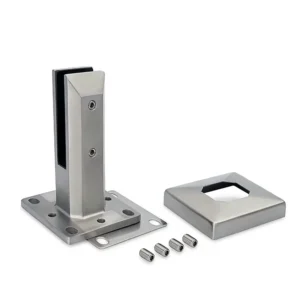
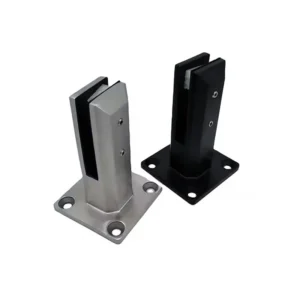
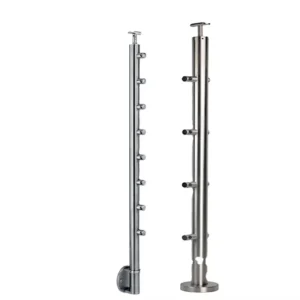
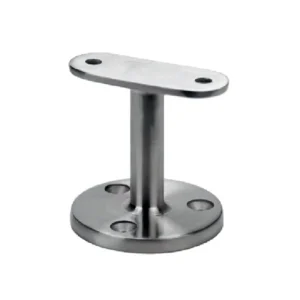
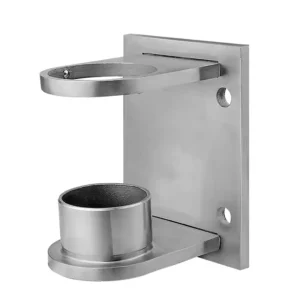
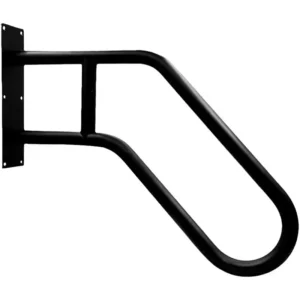
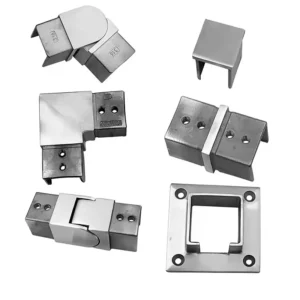
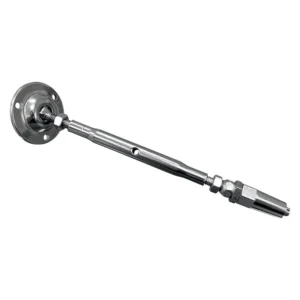
Where a base-plate connection is being replaced outright rather than corrected, the same four items of evidence still apply to the new installation, and the dimensions and mounting geometry of a surface mount base plate being substituted into the connection have to be confirmed against the original assembly rather than assumed from appearance.
Acceptance checks after the connection is remediated
| Acceptance evidence | What it addresses | Lo que no establece |
|---|---|---|
| Full connection and substrate inspection | Connection movement, seating, assembly, installation control, and substrate condition | Remaining anchorage capacity from appearance alone where cracking or spalling is present |
| Approved procedure and confirmed corrective action | Whether the remediation follows the approved path and the defined correction | Acceptance from repeated tightening alone |
| Anchorage-specific review under ASTM E894 | Anchor tension and shear, post-base testing, and mounting verification as anchorage subjects | A field-failure diagnosis or repair decision without the full standard and project review |
| Fastener-property review under ISO 3506-1 | Mechanical and physical properties within the standard’s covered corrosion-resistant stainless-fastener scope | Torque-clamp-force, shear, fatigue, anchor-system performance, or the cause of concrete damage |
Closing out a remediated anchor connection means checking specific evidence against specific limits, not treating a tightened bolt as proof that the issue is resolved. The full connection and substrate inspection, covering connection movement, seating, assembly, installation control, and substrate condition, addresses whether the originally observed symptom has been traced to a cause and corrected at that cause. Where cracking or spalling was present, this inspection cannot establish remaining anchorage capacity from appearance alone, which means the acceptance check has to rely on the substrate assessment and engineer review already obtained rather than on a renewed visual inspection after the correction.
Checking the approved procedure against the confirmed corrective action is a distinct acceptance step from the inspection itself. It verifies that what was done matches what was specified for the anchor type and substrate condition identified, and it is this comparison, not the fact that repeated tightening resolved the spin or looseness, that supports acceptance.
Anchorage-specific review under ASTM E894 covers anchor tension and shear, post-base testing, and mounting verification as subjects relevant to anchorage performance. Referencing this standard’s subject matter supports understanding what anchorage review generally addresses; it does not by itself diagnose the field failure that was observed or establish the repair that was made, since that requires the full standard and project-specific review rather than the subject list alone.
Fastener-property review under ISO 3506-1 covers mechanical and physical properties within that standard’s scope for corrosion-resistant stainless fasteners. This review supports confirming that the fastener itself meets the documented property requirements, but it does not extend to torque-clamp-force, shear, fatigue, anchor-system performance, or the cause of any concrete damage found during the original inspection. Where acceptance documentation leans on a fastener-property reference to imply anchor-system performance, that conclusion goes beyond what the referenced scope supports, and the project team needs the anchorage-specific evidence, not the fastener-property evidence, to close that part of the decision.
Preguntas frecuentes
P: Should a spinning railing anchor bolt be tightened again to see whether it holds?
A: No. Stop repeated tightening until the original condition is documented and the anchor type, hole condition, setting steps, assembly, and substrate have been examined. Further tightening can obscure whether lost engagement, hole damage, debris, or another supported condition caused the symptom.
P: Is replacing the loose fastener alone enough to correct the connection?
A: Not until the full connection and substrate have been inspected. Loosening can involve movement, seating, assembly, or installation control, so the corrective decision should address the identified condition rather than assume the fastener is the only issue.
P: Can an anchor be approved for reuse when the surrounding concrete only has minor visible damage?
A: Appearance alone cannot establish remaining anchorage capacity. Cracking or spalling around the base plate requires project-engineer review before a reuse or replacement decision is made.
P: What project information should be assembled before choosing a corrective action?
A: Confirm the anchor type, document the substrate condition and observed connection movement, identify the approved procedure, and define the proposed corrective action. These items let the team evaluate the correction against the actual connection instead of treating repeated tightening as acceptance evidence.
P: Does compliance with a stainless-steel fastener standard prove that the repaired anchor system is acceptable?
A: No. ISO 3506-1 covers defined mechanical and physical properties of corrosion-resistant stainless-steel fasteners, but it does not establish anchor-system performance or diagnose concrete damage; acceptance still requires anchorage-specific and project review.