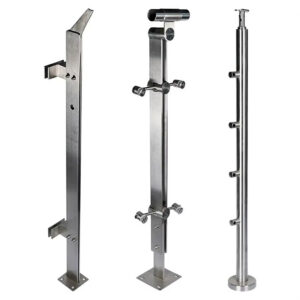
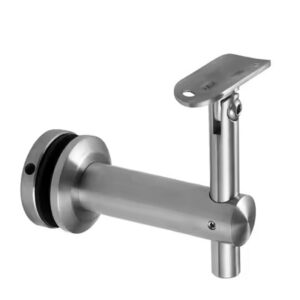
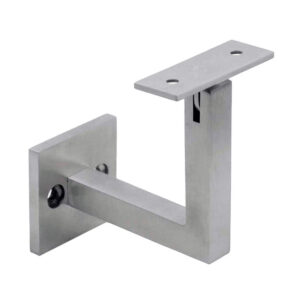
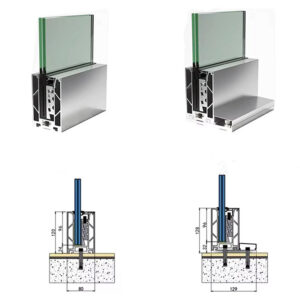
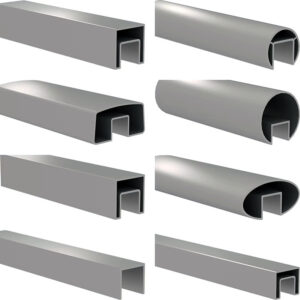
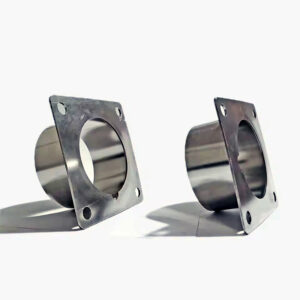
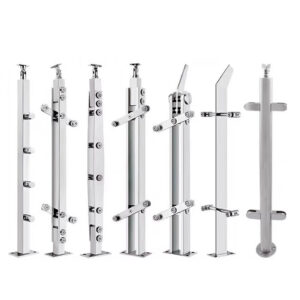
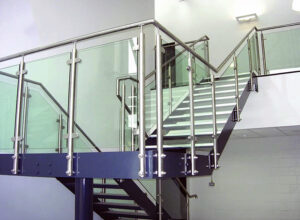
Buyers who treat a supplier’s catalogue as a browsing tool rather than a specification instrument often discover the gap too late — after issuing an RFQ against part numbers that carry no dimensional data, they spend the pre-award period emailing suppliers for tube outer diameter, wall thickness, and material grade information that a properly structured catalogue would have surfaced immediately. That delay is not a minor inconvenience; it compresses the sampling window, pushes submittal preparation into the fabrication schedule, and forces cost comparisons on incomplete data. The decision that prevents most of this friction is not which catalogue looks best, but whether a given catalogue can actually support bill-of-material work, finish specification, and code compliance verification before a single RFQ is sent. The checks in this article help buyers distinguish catalogues that are ready for serious procurement work from those that only appear to be.
RFQ inputs buyers should collect before catalogue review
Before opening a catalogue, a buyer needs a clear picture of the project’s mounting method, tube sizing requirements, and finish specification — because a catalogue that cannot answer those three questions in part-number format is not ready for RFQ use, regardless of how complete its photography appears.
The most practical early check is whether the catalogue exposes part numbers with explicit tube outer diameter and wall thickness. A format like 1.90 x 0.065 — outer diameter in inches followed by wall thickness — gives a buyer what is needed to compare material cost and structural adequacy across suppliers. This is not a regulatory naming requirement; it is a catalogue readiness criterion. When part numbers omit these dimensions, the buyer cannot verify that two suppliers are quoting equivalent tube, cannot cross-reference structural data against local code loads, and cannot build a BOM with confidence. The catalogue’s job at this stage is to eliminate ambiguity, not introduce it.
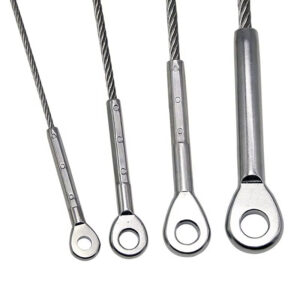
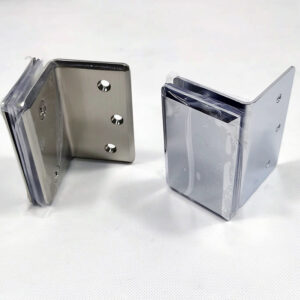
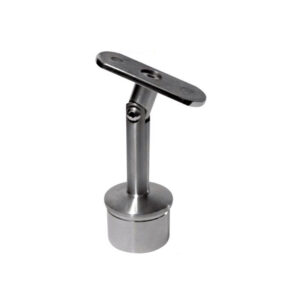
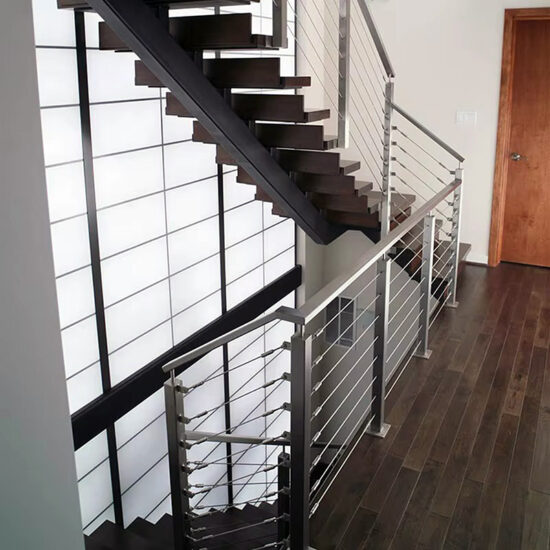
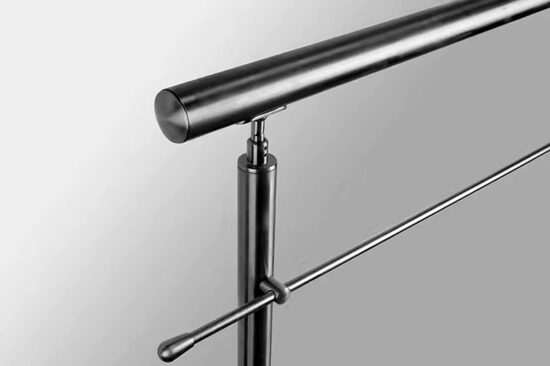
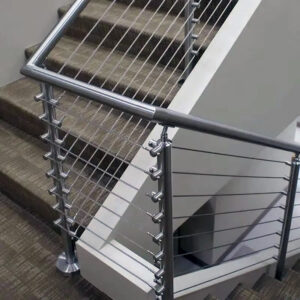
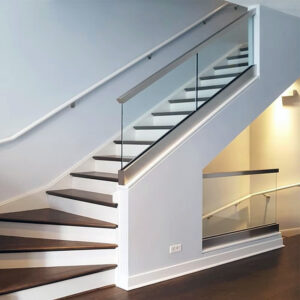
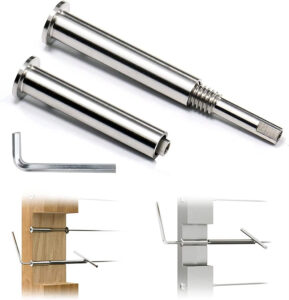
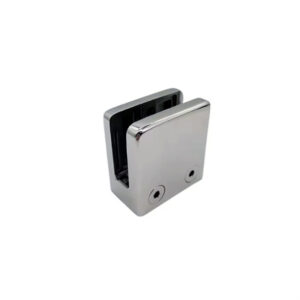
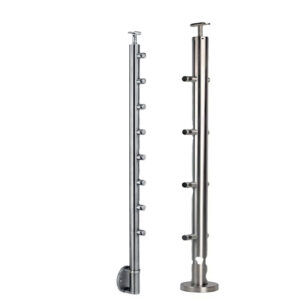
Mounting method matters here too, and it often gets overlooked until a contractor’s BOM is nearly complete. A catalogue that is organized around product families without clearly identifying which connectors and brackets support wall-mount versus post-mount versus glass-clamp configurations forces the buyer to map the connections manually — and if the needed variant is missing from the catalogue entirely, that gap surfaces only after sampling has started. For wall-mount applications specifically, pasamanos de pared de acero inoxidable with clearly documented bracket options and tube compatibility are far easier to specify from a catalogue that separates mounting families explicitly.
A broad catalogue that covers every product family the supplier offers helps a distributor plan range depth and evaluate SKU mix. But it works against a contractor who needs to build a clean BOM for a single project type — the irrelevant SKUs create noise and slow the comparison process. The practical input to collect before catalogue review is a defined scope: which mounting method, which tube diameter range, and which finish specification the project actually requires. That scope determines which catalogue structure will serve the work.
Budget drivers beyond stainless tube price
Raw tube price is the line item that draws the most attention in early procurement conversations, but it rarely accounts for the majority of budget variance in a completed handrail project. The cost elements that most commonly destabilize a project budget are those that appear during sampling, fabrication coordination, and site installation — not during initial material comparison.
Finish specification is one of the more reliable cost multipliers that buyers underweight early. A satin finish designation carries different labor and abrasive costs depending on where it sits in the #4-to-#6 range, and those differences are not visible from catalogue photography. When a buyer specifies finish by catalogue image rather than by surface roughness range and sample approval, the risk of a mid-project revision cycle — with associated delay and re-sampling cost — rises sharply.
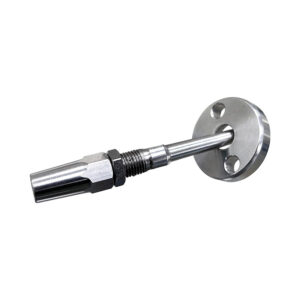
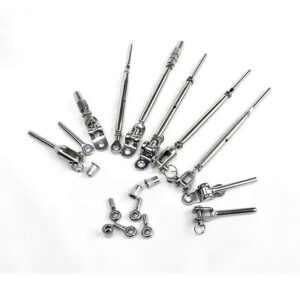
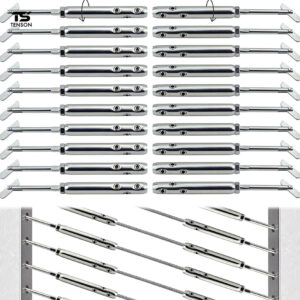
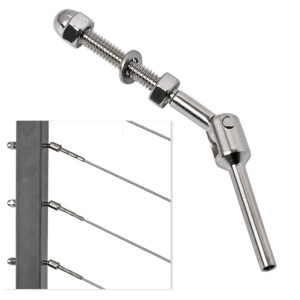
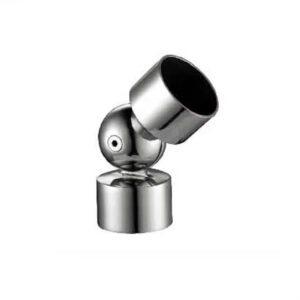
Connector and bracket compatibility is another cost driver that surfaces later than it should. If the specified tube outer diameter is not compatible with the listed connectors in the catalogue, the buyer may need custom fabrication or a tube substitution, both of which carry cost and schedule implications. Confirming connector compatibility before RFQ — rather than during sample review — is a procurement discipline that saves real money. For projects using continuous runs, sistemas de pasamanos de pared continuos that document connector ranges and transition hardware clearly reduce that compatibility risk at the catalogue stage.
Packaging assumptions for export orders also add budget variance that buyers rarely model accurately at the outset. Ocean freight for loose or inadequately protected handrail components can result in surface damage that either requires refinishing or triggers a replacement claim. If a catalogue does not document packaging configurations — inner wrapping, crating options, carton markings — the buyer has no basis for freight planning or insurance valuation at RFQ stage.
Tolerance, finish, and connector checks in catalogue selection
Finish specification is where catalogue review most frequently creates downstream delivery disputes, and the failure pattern is consistent: a buyer selects a finish from catalogue imagery, the supplier produces to its own interpretation of that finish designation, and the material that arrives does not match the project’s approved submittal. This is not always a supplier quality failure — it is often a specification gap that the catalogue enabled.
Satin finishes in the #4-to-#6 range are the most common site of this mismatch. The visual difference between a #4 and a #6 satin finish is meaningful on an architectural installation, but catalogue photography — particularly when shot under controlled lighting — often compresses that difference to the point of invisibility. A buyer who specifies “#4 satin” from a catalogue image without confirming whether the supplier’s #4 aligns with their own reference standard, and without requesting a physical approval sample, has no enforceable basis for a delivery dispute. The practical correction is to treat any satin finish specification as incomplete until a sample is approved and documented, and to confirm whether that sample process is part of the supplier’s standard workflow or requires a separate coordination step.
Bead blasted finishes introduce a different set of coordination requirements. Unlike satin finishes, bead blasting is a post-fabrication process that requires direct engagement with the fabricator on equipment settings, media type, and acceptable appearance range. It is also not applicable to stainless steel sheet components, which means a mixed product order — tube and sheet in the same system — cannot carry a uniform bead blasted specification. A catalogue that lists bead blast as a finish option without clarifying these constraints is signaling a coordination requirement, not a ready-to-order specification.
Each row in the table below captures where catalogue review must pause and where direct fabricator engagement becomes necessary.
| Finish Specification | Riesgo si no está claro | What to Confirm or Clarify |
|---|---|---|
| Satin #4–#6 | Catalogue images may not match production finish, causing mismatch on delivery | Confirm finish consistency across the #4–#6 range; check whether a physical approval sample is required before specification revision |
| Bead blasted | Requires direct fabricator coordination and is not applicable to stainless steel sheet | Obtain a pre-production control sample; coordinate with the fabricator on approval steps and material limitations |
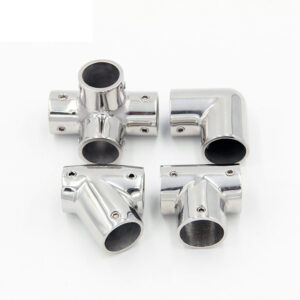
Connector compatibility should receive the same discipline as finish review. A catalogue that lists connectors without specifying the tube outer diameter range they accommodate leaves the buyer to assume compatibility — an assumption that becomes a fabrication problem if it is wrong. Before shortlisting a catalogue for RFQ, confirm that the connectors listed for the target mounting method explicitly support the specified tube diameter. If the catalogue requires a call or email to answer that question, it is not ready for BOM-level procurement work. A useful reference for the broader compatibility and tolerance confirmation process is covered in Sistemas de barandillas inoxidables: Lo que los compradores deben confirmar entre la tolerancia de los tubos, la calidad del acabado y la compatibilidad de los conectores.
Packaging and drawing expectations for export orders
Export order preparation reveals catalogue gaps that domestic procurement often absorbs without noticing. When a project involves cross-border shipping, the buyer needs more than product photography and price lists — they need drawing files that integrate into project documentation, specification language that supports submittal work, and installation guidance that reduces field coordination risk. A catalogue that lacks these elements shifts the preparation burden onto the buyer’s team at exactly the point in the project timeline when that burden is most costly.
CAD drawings are the most immediate gap to identify. A catalogue that offers DWG, DXF, and PDF formats for each railing product family allows the buyer to import geometry directly into BIM or fabrication files, cross-check critical dimensions without manual measurement, and attach the drawings to submittal packages without redrafting. When those files are absent, the buyer either spends engineering time recreating geometry from catalogue dimensions — introducing transcription risk — or delays the submittal until the supplier provides drawings, which often does not happen on the buyer’s schedule.
The planning consequence of missing any of these three elements compounds across the export timeline, and the table below maps each element to the specific preparation function it supports.
| Required Catalogue Element | Why It Matters for Export Orders |
|---|---|
| CAD drawings (DWG, DXF, PDF) for each railing product family | Supports BOM, submittal, and fabrication planning integration |
| Specification documents (e.g., Section 05720) and project planners | Speeds up order preparation with pre-written spec sections and planning tools |
| Installation instructions for each railing system | Reduces on-site assembly errors and avoids costly callbacks |
Specification documents in the format of Section 05720 or equivalent pre-written spec sections are undervalued in catalogue evaluation, particularly by buyers who have developed their own specification templates. The practical value is not in replacing the buyer’s spec — it is in providing a supplier-verified reference that reduces the risk of specifying a product configuration the supplier cannot actually produce. Pre-written spec sections also compress export order preparation time when the buyer is managing multiple concurrent projects. Installation instructions carry a related downstream value: if a contractor on a receiving site encounters an assembly question that the installation document does not answer, the callback reaches the buyer, not the manufacturer, and the resolution delay affects the buyer’s project delivery record.
Supplier shortlisting after scope and document needs are fixed
Once a buyer has defined project scope, confirmed finish requirements, and verified that a catalogue supports drawing and specification needs, the shortlisting decision shifts to two remaining verification points: whether the catalogue provides structural property data for the materials it lists, and whether it supports the specification writing work that code compliance and submittal review require.
Structural property data — yield strength, tensile strength, moment of inertia for listed tube sizes — is what allows a designer or specification writer to verify that a proposed railing system meets the load requirements in the applicable building code. Without that data, the buyer is either asking the supplier for it separately (extending the pre-award timeline) or making a code compliance assumption that is difficult to defend if a building official or structural reviewer challenges the submittal. A catalogue that includes structural property data signals that the supplier expects to work with buyers who have technical specification requirements, not just purchasing volume.
Guide specifications and engineering data serve a related but distinct purpose. A guide specification gives the specification writer a verified starting point for Section 05720 or equivalent language, reducing the risk of specifying a performance requirement the supplier’s products cannot meet. Engineering data — load tables, anchor calculations, span limits — supports the design work that precedes specification writing. Together, these elements reduce both specification errors and the number of pre-award clarification rounds.
Each of these catalogue elements functions as a shortlisting filter, not a negotiating variable.
| Required Data in Catalogue | Why It Matters for Shortlisting |
|---|---|
| Structural property data of materials | Enables code compliance design verification against local building codes |
| Guide specifications and engineering data | Supports specification writing and reduces design errors |
Process credentialing — whether a supplier holds ISO 9001:2015 certification — is a reasonable supporting signal during shortlisting, but it is not a substitute for catalogue completeness. ISO 9001:2015 addresses process consistency and quality management system requirements; it does not govern what a catalogue must contain or whether structural data is accurate. A certified supplier with a catalogue that omits tube dimensions or connector compatibility data is still unsuitable for BOM-level RFQ work. Treat the certification as a positive signal within a shortlist that has already passed the scope and document checks, not as a reason to skip those checks. For buyers evaluating manufacturing partners against these criteria more broadly, the considerations involved in choosing a reliable stainless steel handrail supplier in China address supplier qualification factors that extend beyond catalogue review into production and documentation capability.
The most defensible position before issuing an RFQ is knowing exactly which catalogue gaps will cost time or money to close after the order is placed. Finish mismatch, missing CAD files, absent structural data, and connector compatibility ambiguity are all resolvable — but each one resolved post-award costs more than it would have cost to filter at the catalogue review stage. The buyer who treats catalogue review as a specification instrument rather than a product browsing exercise enters the RFQ period with a shorter clarification list, a more accurate cost comparison, and a submittal package that does not depend on the supplier’s responsiveness to complete.
Before advancing any catalogue to RFQ, confirm three things: that part numbers carry tube dimensions and material grade, that the finish approval process is documented and actionable, and that the drawing and structural data needed for submittal work are available in usable formats. If any of those three are missing, the catalogue requires a follow-up conversation with the supplier before it can support serious procurement work — and that conversation is better held before scope is committed than after.
Preguntas frecuentes
Q: What should a buyer do if a supplier’s catalogue passes the scope and document checks but structural property data is only available on request?
A: Request the data before advancing the catalogue to RFQ, not after. A supplier who provides structural property data only on request introduces a pre-award delay that compresses the submittal window — the same friction the catalogue review process is designed to prevent. If the data cannot be delivered in a usable format within the buyer’s review timeline, treat the catalogue as incomplete for code-compliance work and evaluate whether that gap is acceptable given the project schedule.
Q: Does the mounting-method check apply equally to small residential projects, or is it mainly relevant at commercial scale?
A: It applies to both, but the consequences differ. On a commercial project, a mounting-method gap discovered during sampling can delay a multi-floor submittal package. On a small residential job, the same gap usually surfaces during installation and results in a field substitution or a return order. The check is the same in both cases; the cost of skipping it scales with order size and site complexity.
Q: If two catalogues both carry tube dimensions and material grade, what is the most useful differentiator for shortlisting one over the other?
A: The differentiator is which catalogue resolves connector compatibility for the target mounting method without requiring a follow-up email. Two catalogues may both list tube outer diameter and material grade but differ significantly in whether their connector and bracket data explicitly confirms compatibility with a specific tube size and mounting configuration. The catalogue that answers that question in its own documentation reduces pre-award clarification rounds more than one that matches on material data alone.
Q: Is it realistic to expect a single catalogue to serve both distributor range planning and contractor BOM work on the same project?
A: Rarely, and trying to use it that way usually creates noise rather than efficiency. A broad catalogue suited to distributor range planning includes SKUs across mounting families, finish variants, and accessories that a contractor building a single-project BOM does not need. The practical approach is to extract the relevant product family from a broad catalogue and treat that subset as the working document for BOM and submittal preparation — which only works if the catalogue is organized clearly enough to allow that extraction without manual cross-referencing.
Q: At what point in the procurement timeline does a missing specification document — such as a Section 05720 guide spec — cause the most damage?
A: The highest-cost moment is when submittal preparation overlaps with the fabrication schedule. If a buyer reaches the submittal stage without a supplier-verified specification reference and the building official or structural reviewer requests clarification, the resolution depends on the supplier’s responsiveness at a point when fabrication may already be in progress. A missing guide spec early in the process is a minor inconvenience; the same gap during active fabrication puts delivery timing at risk.