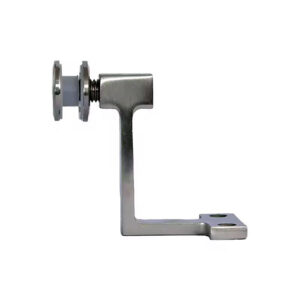
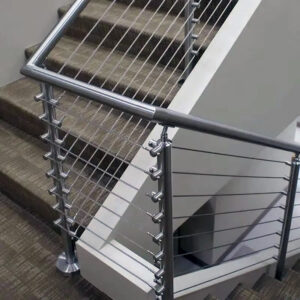
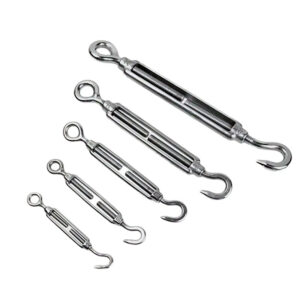
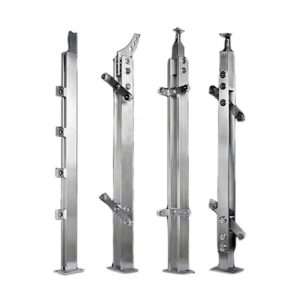
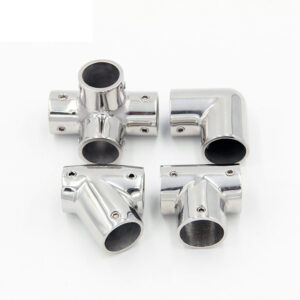
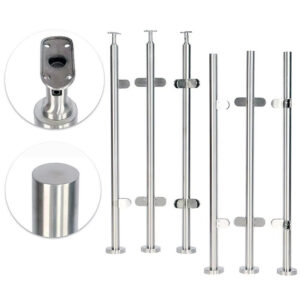
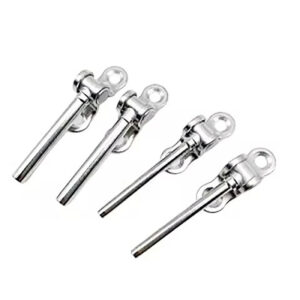
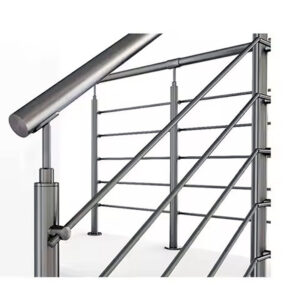
Missing post protector sleeves or a cable cutter that was never ordered can stop a crew mid-installation even when the main hardware kits arrive on schedule. That kind of delay doesn’t surface during purchasing—it surfaces when a mechanic reaches into a box and finds the wrong parts or nothing at all. The root cause is almost always a takeoff that treated hardware as a single line item rather than a position-by-position bill of materials. What follows gives procurement teams, estimators, and project managers a framework for catching those gaps before the RFQ goes out.
Run Schedule Inputs Needed Before Takeoff
Quantity takeoff cannot run ahead of the run schedule, and the run schedule is only as useful as the variables it captures. Three inputs drive kit selection at the most fundamental level: run slope, post material, and cable diameter. Leave any one of them open and the takeoff is working on assumptions that may not survive contact with the field.
Run slope is the most consequential of the three because it can determine which kit system applies at all. Some manufacturers separate their product lines between level runs and stair or angled runs, and those lines are not interchangeable—different hardware, different installation methods, different components. Specifying the wrong system doesn’t produce a mismatch that can be resolved with an adapter; it typically means a full system swap and a procurement restart. The slope condition for every run needs to be confirmed from drawings before a part number is selected, not after.
Post material follows closely. Wood posts and metal posts require different fastener types, and some manufacturers explicitly list distinct fitting families for each. A kit specified for a wood-post condition will arrive with lag screw fittings that cannot be substituted into a metal-post frame without either fabricating an adapter or reordering. That error is avoidable if the takeoff captures post material as a field-confirmed input rather than an assumed one.
Cable diameter closes the loop. Terminals are sized to grip a specific wire diameter, and specifying hardware before diameter is fixed means the fittings may not be able to secure the cable at all—a safety concern, not just a procurement nuisance. Manufacturers such as Ultra-tec offer five distinct diameters, each with its own hardware family.
Each unspecified variable is a precondition for accurate takeoff, and any gap in that information tends to force rework and procurement delay rather than just a minor cost adjustment.
| Input Variable | What It Determines | Risk if Left Unspecified |
|---|---|---|
| Run slope (level vs stair/angle) | Kit system required (e.g., WiseRail Legacy for straight only, Estate for stairs/angles) | Kit incompatibility; rework and procurement delay |
| Post material (wood vs metal) | Fitting type (e.g., lag screw for wood, machine screw for metal) | Missing or wrong fasteners; installation stoppage |
| Cable diameter (1/8″, 3/16″, 1/4″, 5/16″, 3/8″) | Terminal compatibility (hardware grips only the specified diameter) | Terminals cannot secure cable; railing unsafe |
Complete Kit Boundaries Beyond Cable and Terminals
A hardware kit label creates a false sense of completeness if the specifier hasn’t confirmed what the kit actually contains. At a minimum, three categories of items are routinely excluded from kit packaging and must be sourced and scheduled separately: the cable wire itself, installation tools, and post protector sleeves for intermediate wood posts.
Cable wire spools are the most significant omission. Hardware packs contain fittings, not wire. That may seem obvious in hindsight, but purchase orders that consolidate “cable railing hardware” into a single description frequently miss the wire because it is ordered through a different SKU or a different supplier. The installation cannot begin until wire is on site, and discovering the gap on day one of installation is a different problem than discovering it during procurement review.
Installation tools—tension pliers and cable cutters in particular—are listed as separate items by manufacturers such as Keuka. They are required for proper tensioning and trimming during installation, and no cable run can be finished without them. They rarely appear on a first-pass BOM because they feel like contractor-supplied tools, but if the contract doesn’t assign responsibility, no one orders them. The fix is to make tool requirements an explicit column in the kit schedule, with a clear notation of who is supplying them.
Post protector insert sleeves for intermediate wood posts are the highest-risk omission per run because they are easy to overlook and consequential to skip. Each pass-through post needs a sleeve to protect the cable from abrasion where it contacts the post hole. Where cable specification calls for stainless steel wire rope, the mechanical integrity of the wire must be maintained through the full run length—abrasion at unprotected pass-through points creates localized wear that undermines the cable’s working capacity over time. ISO 2408:2017 establishes wire rope quality requirements relevant to the cable specification itself; protecting that specification through proper sleeve installation is a separate but connected obligation.
Every missing line item in this category must appear on the specifier’s checklist before RFQ release.
| Omitted Component | Why It Is Needed | Risk of Omission |
|---|---|---|
| Installation tools (e.g., tension pliers, cable cutters) | Required for proper tensioning and cutting of cable | Work halts; last-minute tool ordering delays project |
| Post protector insert sleeves (for intermediate wood posts) | Protects cable passing through each post hole | Cable abrasion, reduced lifespan, potential code non-compliance |
| Cable wire spools | Hardware packs exclude the wire itself | No cable on site; installation cannot start until separately sourced |
Universal Packages Versus Run-Specific Assemblies
The appeal of a universal kit is real: fewer SKUs, simpler purchasing, a single point of contact for the order. The risk is that a universal package may cover only a subset of actual site conditions, forcing field adaptation for any run that falls outside the kit’s design envelope.
Some manufacturers resolve this by separating their product lines by run type rather than offering a single adjustable system. WiseRail’s separation between the Legacy series for straight runs and the Estate series for stairs, angles, and pitches illustrates the principle. These are not the same kit with an adjustment range—they use different hardware and different installation methods. A site with both level deck runs and stair runs cannot be served by a single part number from that product family. Whether other manufacturers bifurcate their lines the same way depends on their specific design approach, so the same evaluation applies: confirm whether a single kit covers all run types present on the project before the purchase order is written.
The alternative, run-specific kits, reduces field improvisation but demands more precise takeoff. Each run gets its own BOM, which is more work to prepare but produces a more accurate order and fewer surplus parts. The trade-off is essentially front-loaded planning effort versus back-loaded field problem-solving. For projects with mixed run conditions—level decks, stair sections, corner transitions—run-specific kits typically produce a more buildable package than a universal order that leaves the field crew to sort out what applies where.
The procurement choice should follow the site conditions, not the other way around.
Quantity Errors at Corners and End Posts
The most common quantity error in cable railing takeoff comes from drawings that treat all posts the same. On a plan view, a terminating end post and an intermediate pass-through post may look identical. They are not, and ordering hardware as if they were creates shortages that surface only when drilling begins.
The hardware difference between post types is specific enough that the error cannot be corrected in the field without the right parts. Terminating posts receive the end-fitting assembly—lag tensioner receivers, threaded tensioner ferrules, ferrule covers, and cable end swages in the case of the WiseRail Legacy series. Pass-through posts require post protector sleeves and a different hole size. The hole diameters diverge enough to matter: for the Legacy series, terminating posts use a 13/32-inch hole while intermediate posts use a 1/2-inch hole. For the Estate series, that relationship inverts—terminating posts use a 1/2-inch hole and intermediate posts use a 3/16-inch hole with adhesive washers. Drilling the wrong diameter for the wrong post type means re-drilling or replacing the post, neither of which is a minor field fix.
| Tipo de postagem | Kit Series | Hole Size | Key Hardware / Specification |
|---|---|---|---|
| End (terminating) | Legacy | 13/32″ | Lag Tensioner Receiver, Threaded Tensioner Ferrule, Ferrule Cover, Cable End Swage |
| Pass-through (intermediate) | Legacy | 1/2″ | Post Protector Insert Sleeves |
| End (terminating) | Estate | 1/2″ | Estate-specific end-fitting assembly |
| Pass-through (intermediate) | Estate | 3/16″ | Adhesive washers; post protector sleeves as needed |
Corner posts add a related complication. A corner post may function as a pass-through for cables running in one direction and a termination point for cables running in the other. If the takeoff counts it as one type only, the hardware count for that post will be wrong. Each post on the drawing needs a function designation—terminating end, pass-through, or dual-function corner—before quantities are summed.
This is a preventable failure. The inputs required to make it preventable are already on the drawings if the drawings are interpreted with enough specificity.
RFQ Release Check for a Buildable Hardware Package
An RFQ released before every run maps to a complete BOM is an RFQ that will generate change orders. The release check isn’t a formality; it’s the point at which the specifier confirms that what is being sent out for pricing can actually be installed as described.
For a cable run using the WiseRail Legacy system, a complete BOM at the terminating end includes a lag tensioner receiver, threaded tensioner ferrule, ferrule cover, and cable end swage. Each intermediate pass-through post requires post protector sleeves. The cable wire and installation tools are separate line items. No single kit part number covers all of these. A BOM that collapses them into one SKU will miss components at delivery.
The review should move run by run rather than treating the project as an aggregate. For each run, confirm: slope type identified and kit system selected accordingly, post material confirmed and fitting type matched, cable diameter fixed and terminal compatibility verified, terminating ends counted and end-fitting components fully listed, intermediate posts counted and sleeves included, cable wire sourced separately, installation tools assigned and noted in the BOM.
One additional review item belongs at the end of that list: code compliance. Manufacturer spacing recommendations—such as a 3-1/8-inch on-center figure used in some product documentation—reflect design intent, not a regulatory guarantee. The manufacturer’s own guidance acknowledges that regional code requirements vary and that local building authority confirmation is required. That confirmation should happen before RFQ release, not after, because a spacing change after ordering may alter the number of cables per run and therefore the hardware quantities.
For additional context on material selection, structural considerations, and installation requirements across both residential and commercial applications, the Complete Stainless Steel Cable Railing Guide for Commercial & Residential Projects covers the broader specification context that supports this pre-RFQ work.
A hardware package is only buildable when the BOM has been assembled at the run level, not the project level. The difference matters because quantity errors in cable railing almost always originate in the gap between how drawings represent posts and what those posts actually require in terms of hardware and drilling. Collapsing that into a single line item at procurement produces a package that looks complete on paper but generates shortages in the field.
Before releasing an RFQ, confirm that every run has a designated kit system matched to its slope condition, that terminating and pass-through posts have been distinguished and counted separately, that cable wire and installation tools appear as discrete line items, and that local code confirmation on spacing has been obtained. Any open variable in that list is a condition that will resolve itself in the field—at the project’s expense, not the supplier’s. The kits de peças para montagem de cabos available from Esang can support that BOM-building process, but the accuracy of the package depends on the quality of the inputs going into it.
Perguntas frequentes
Q: What if our project uses posts made of composite or other non-wood, non-metal materials?
A: The specification process must begin with a direct compatibility check between the post material and the hardware manufacturer’s fitting range. Kits designed for wood lag screws or metal machine screws typically cannot be installed into composite posts without altering the fastener interface, and some composite materials may not withstand the point-loading of tensioned terminals without additional blocking or reinforcement. Until the post material is confirmed as compatible by both the post and hardware suppliers, the takeoff cannot proceed.
Q: After we’ve submitted the RFQ with a complete run-level BOM, what is the most effective way to confirm the supplier won’t still ship a kit missing sleeves or mis-specified terminals?
A: Ask the supplier to return a line-by-line packing list that mirrors your BOM’s run-by-run structure, and review it before the order leaves the warehouse. The packing list should explicitly show each end-fitting assembly, pass-through sleeve, and any separately noted tool line items. Catching a substitution or omission at this stage prevents the crew from discovering the gap on installation day, when reordering causes the longest delay.
Q: We’re retrofitting an existing deck where the posts already have pre-drilled holes. How does that change the specification steps?
A: The existing hole diameters become the primary constraint that all other selections must serve. Measure every hole size first, then compare those dimensions against the drill requirements of the hardware kits under consideration. If the holes do not match, the viable options narrow to re‑drilling (if structurally possible), using adapter bushings, or sourcing a kit that accepts those hole sizes. The run-level BOM still applies; the holes simply replace post material as the first filter.
Q: The article frames universal and run-specific kits as a trade-off. On a project with both straight deck runs and stair runs, which approach actually causes fewer field delays?
A: Run-specific kits consistently cause fewer field delays on mixed-run projects. A universal order forces the installation crew to sort components into the correct run types on site, and a single misassigned terminal at a stair transition is enough to stop work while the correct part is reordered. The front‑loaded planning effort of a run‑specific BOM removes that sorting step and almost always pays back the time investment on the first angled run.
Q: For a small residential deck with only two identical straight runs, does a detailed run-level BOM still justify the effort?
A: For projects where every run shares the same slope, post material, and cable diameter, a fully multi‑line BOM may be overbuilt. The simpler approach can work if you purchase a single pre‑configured kit—like the kits de peças para montagem de cabos that cover a complete straight run—after verifying that the kit explicitly includes pass‑through sleeves for every intermediate post and that cable wire and installation tools are accounted for elsewhere in the order. The key is not the number of BOM lines, but confirming that nothing required for a complete installation remains unpurchased.