Most projects that run into trouble with cable railing systems don’t fail at installation — they fail earlier, at the specification stage, when structural and layout assumptions go unchecked until fabrication is already underway. Posts ordered to standard dimensions that can’t carry the actual line load, end fittings tucked into corners where retensioning is physically impossible, or standard aluminum components specified for a coastal site: each of these is a decision made early that becomes expensive to correct late. The judgment that separates a well-specified wire railing project from one that requires rework or commissioning surprises is whether spacing, post engineering, terminal routing, and site conditions were confirmed before procurement, not after. Readers who work through this guide will be better positioned to identify which of those checks their project still needs before anything is cut or ordered.
Cable spacing and post stiffness checks that come first
Cable spacing and post stiffness aren’t finishing details — they’re the structural constraints that govern every other layout decision, and skipping them in early specification is the most common reason wire railing projects reach fabrication with a structural problem already embedded.
The 4-inch (100 mm) maximum clear spacing between cables is a widely applied design figure derived from the sphere-test principle found across major building codes. It establishes the baseline for how many cable runs a panel needs, which in turn drives post spacing and anchor loading. Before any aesthetic or layout decision is worth committing to, that spacing limit needs to be applied to the proposed panel height so the full cable count is known. A post layout optimized for appearance before that check is done may not survive the structural review.
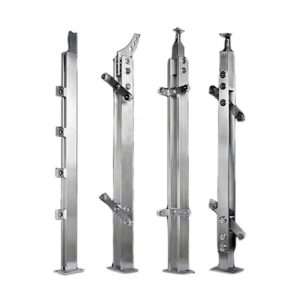
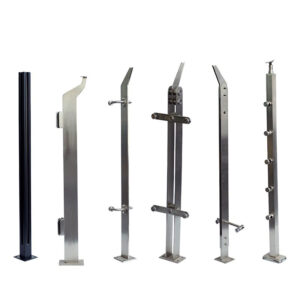
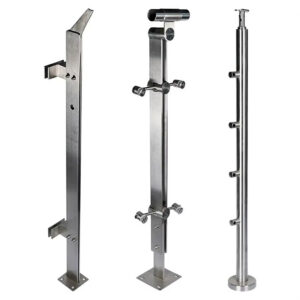
Post stiffness is the more consequential variable and the one more often treated as a supplier problem rather than a design problem. Posts in guardrail applications typically need to resist horizontal line loads in the range of 0.5–1.0 kN/m depending on building class and applicable jurisdiction — but that range requires engineering review to apply correctly, because the actual threshold varies. What’s consistent across building classes is that undersized posts will deflect under load in ways that also relax cable tension, compounding the maintenance problem before the system has been used. Specifying post section and base connection detail before layout is finalized is not over-engineering; it’s the check that keeps the structural and aesthetic decisions consistent with each other.
| Check | Requirement | Why It Matters |
|---|---|---|
| Cable spacing | Maximum 4 inches (100 mm) to pass sphere test | Determines post spacing and cable layout feasibility |
| Post stiffness (line load capacity) | Posts must resist 0.5–1.0 kN/m, depending on building class | Ensures structural rigidity to meet guardrail load requirements |
Both checks belong at the front of the specification sequence because they constrain what layout is actually buildable, not just what looks good on a drawing.
Open-view appeal that hides long-term tension maintenance
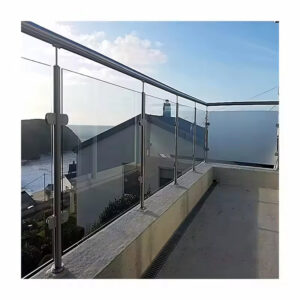
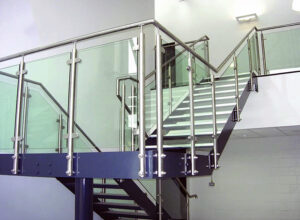
The transparency that makes a wire balcony railing worth specifying in the first place is not a permanent condition — it’s a maintained one. That distinction matters more than buyers typically expect at concept stage.
Cables relax over time. Weather cycling, thermal expansion and contraction, and applied loads all work against the tension set at installation. This isn’t a defect or a quality indicator; it’s a material behavior pattern that applies across wire rope systems regardless of specification grade. The practical consequence is that a system that looks clean and taut at handover may show visible sag within one to two seasons if the access and process for retensioning were never built into the design. The open view the system was chosen for gradually disappears, and the railing’s compliance with spacing requirements may also degrade.
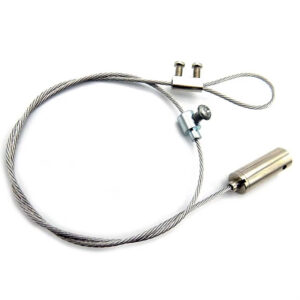
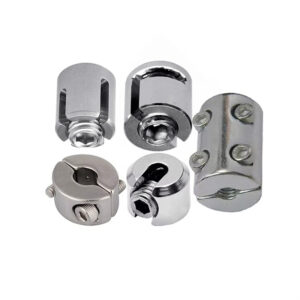
The design decision this creates is not whether to accept cables — it’s whether the end fitting locations are accessible for adjustment. Fittings routed into finish walls, buried behind cladding details, or positioned at corners where tooling clearance is tight create a maintenance obligation with no practical means of fulfilling it. Projects where that access wasn’t resolved at design stage tend to accumulate deferred tension adjustments until the visual and structural condition of the system has deteriorated enough to require component replacement rather than routine service.
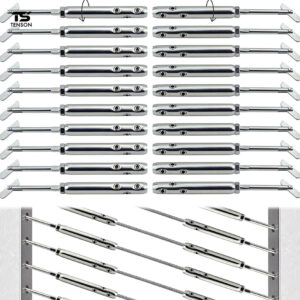
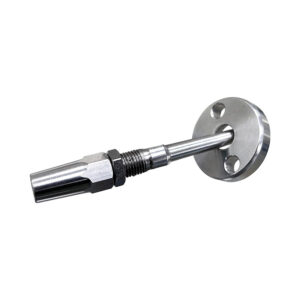
Paired with a robust cable tensioner system, the open-view benefit is durable. Without that access, it’s temporary. Buyers who treat the aesthetic as a given rather than a maintained outcome tend to underspec the maintenance access detail, which is where the real failure pattern begins.
Wire infill compared with rigid guard alternatives
Wire infill occupies a specific position in the cost-and-maintenance spectrum — not the lowest upfront cost, but typically the lowest sustained cost among the options that compete for the same applications.
The $89–$260 per linear foot range reported for stainless steel cable systems is a planning reference figure, not a fixed market price, and it spans a wide range of post specifications, fitting quality, and installation complexity. What the number signals is that wire railing enters the project at a premium relative to wood or wrought iron on a first-cost basis. Buyers who evaluate the options on initial line items alone will consistently favor those alternatives. The trade-off that changes that comparison is lifecycle cost: wood requires regular sanding, sealing, and repainting as the refinishing cycle compounds over years; wrought iron demands ongoing anti-corrosion treatment to manage rust that reappears regardless of initial coating quality. Stainless steel cable, maintained correctly, largely avoids both. The long-term cost profile is lower, but it takes a multi-year horizon to become visible in the budget.
| Infill Type | Upfront Cost (per linear ft) | Long-Term Maintenance Cost | Typical Upkeep Tasks |
|---|---|---|---|
| Stainless steel cable | $89–$260 | Lower (high corrosion resistance) | Occasional cleaning |
| Wood railing | Lower upfront cost | Higher (frequent refinishing) | Regular sanding/painting |
| Wrought iron railing | Lower upfront cost | Higher (ongoing corrosion control) | Anti-corrosion maintenance |
The practical implication for buyers comparing options is that the right comparison isn’t first cost against first cost — it’s total ownership cost against total ownership cost over the expected service life of the installation. Wire infill also holds its structural performance more consistently than wood in wet or high-humidity environments, which is worth weighting for balcony applications where moisture exposure is the baseline condition, not the exception.
Corner and terminal details that complicate long runs
Long balcony runs that change direction at least once are where wire railing projects most often encounter budget and schedule friction that wasn’t anticipated at concept stage. The physics of cable tension is the reason.
A straight cable run can be tensioned from one or both terminal ends. When that run reaches a corner, the cable can’t simply change direction and maintain the same tension geometry — either the run is terminated and re-anchored at the corner post, or the routing requires additional hardware to redirect the cable. Each approach adds cost: terminating and re-anchoring means more end fittings, more tensioning hardware, and more installation labor; redirecting means intermediate anchorage components and a more complex post detail at the turn. Neither is a workaround — both are legitimate design solutions — but both add to the unit cost in a way that flat-run pricing doesn’t reflect. Projects with multiple direction changes have meaningfully higher hardware and labor costs per linear foot than a simple straight run, and that difference should be priced before the layout is approved, not discovered during procurement.
Terminal details at the end posts of long runs carry a related risk. End posts bear the accumulated tension load of every cable in the run — a significant concentrated load that standard intermediate post sections may not be engineered to handle. If end posts are specified to match intermediate post sections for visual consistency without a load check, the result is a post that deflects under tension before the system is fully loaded. That deflection releases cable tension across the whole run. Catching that condition at design review costs nothing; correcting it after fabrication is expensive and may require a complete post replacement at both terminals.
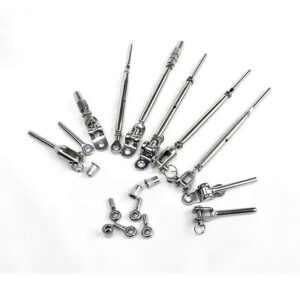
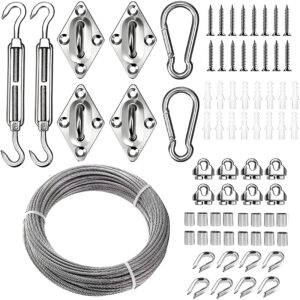
Buyers scoping complex layouts should treat corner count and run length as direct cost drivers and request detailed hardware takeoffs — including cable assembly hardware kits scoped to the actual routing — before approving a budget figure based on linear footage alone.
Maintenance tolerance that makes wire the right choice
Wire railing is the right system for the right conditions, and the most important condition isn’t aesthetic preference — it’s whether the site environment and the owner’s maintenance tolerance are compatible with what the system actually requires.
For inland projects, a cleaning frequency of one to three times per year is a practical baseline. That’s not a regulatory maintenance schedule; it’s a reasonable expectation based on how stainless steel cable systems accumulate surface contamination from airborne particulates, handling oils, and environmental exposure. At that frequency, stainless steel maintains its corrosion resistance and appearance without significant intervention. The maintenance commitment is manageable for most residential and commercial owners, and it compares favorably to the more intensive upkeep cycles that wood and iron alternatives require.
Coastal environments change that calculus. Within roughly ten miles of saltwater, chloride exposure accelerates the corrosion mechanism that standard aluminum post components and carbon steel hardware are not designed to resist. The failure mode isn’t gradual surface discoloration — it’s galvanic corrosion that progresses faster than standard inspection intervals catch, leading to structural degradation of fasteners and post connections before visible warning signs appear. At that point, the system doesn’t need maintenance; it needs replacement.
| Location | Annual Cleaning Frequency | Approved Railing Systems | Key Risk |
|---|---|---|---|
| Inland (non-coastal) | 1–3 times | All standard systems (e.g., Express with aluminum posts) | Standard corrosion risk; manageable maintenance |
| Coastal (within 10 miles of saltwater) | More frequent cleaning required | Signature systems only (2205 stainless steel or Endurance powder coat) | Galvanic corrosion with standard Express components; premature failure possible |
Specifying a system rated for coastal exposure — 2205 duplex stainless steel components or powder coat systems engineered for chloride resistance — is a material selection decision driven by site conditions, not an upgrade for aesthetics. Treating it as optional in a coastal project, or assuming that more frequent cleaning compensates for an incompatible material system, is where coastal installations most predictably fail. The cleaning schedule manages surface contamination; it doesn’t fix a galvanic couple built into the hardware.
For buyers evaluating suppliers or comparing system specifications for coastal projects, the guidance in How to Evaluate a Stainless Steel Railing Supplier Before Your First Bulk Order covers the material and quality questions worth asking before committing to a source.
Wire railing performs well when the conditions that support it are confirmed before specification is finalized — post stiffness adequate for the actual load, cable spacing validated against the applicable code threshold, terminal and corner routing resolved at layout stage, and material system matched to the site’s exposure environment. When those conditions are present, the transparency and long-term maintenance economics of wire infill are genuine advantages. When they’re absent or assumed rather than verified, the system that looked right at concept stage tends to reveal its problems at commissioning or shortly after.
The decision that matters most before procurement is not which product to buy — it’s which project conditions still need a confirmed answer. Post engineering, fitting access for retensioning, corner hardware count, and coastal material compatibility are the four checks that most reliably separate a well-specified wire railing project from one that generates callbacks. Confirming all four before ordering eliminates the category of problem that no amount of installation skill can fix after fabrication.
Frequently Asked Questions
Q: The article focuses on balcony railings, but does the same specification logic apply to rooftop terraces or elevated walkways?
A: The core checks — cable spacing, post load engineering, terminal routing, and material compatibility — apply to any elevated guardrail application, but rooftop and walkway installations typically carry higher wind and dynamic load requirements than a standard residential balcony. The 0.5–1.0 kN/m line load range cited for guardrails is a starting reference; jurisdictions often impose stricter thresholds for publicly accessible or commercial-grade elevated surfaces. An engineering review specific to the application class is necessary before treating balcony-derived specifications as transferable.
Q: Once the four pre-procurement checks are confirmed, what should a buyer do immediately before placing a hardware order?
A: Request a hardware takeoff itemized to your actual cable routing — including corner count, run lengths, and terminal post locations — rather than accepting a linear-footage estimate. Corner and terminal conditions add fittings, tensioners, and labor that flat-run pricing doesn’t capture, and the gap between a rough estimate and an accurate count only becomes visible at procurement if you ask for the breakdown first. Approving a budget figure before that routing-specific takeoff is complete is the most common point where project cost surprises are locked in.
Q: At what project scale does wire railing’s higher upfront cost become justified against a lower-cost rigid alternative?
A: The crossover point depends on service life expectation rather than project size. Wire railing’s lifecycle cost advantage over wood or wrought iron builds over time as refinishing and anti-corrosion treatment cycles compound — typically becoming visible in a multi-year comparison rather than at the first maintenance interval. For short-term installations, temporary structures, or projects with a defined replacement cycle under five years, the upfront premium is harder to justify on economics alone. For permanent residential or commercial installations where the railing is expected to perform for ten or more years, the total ownership cost comparison generally favors stainless steel cable.
Q: Can increasing cleaning frequency substitute for upgrading to coastal-rated components on a site near saltwater?
A: No — cleaning frequency manages surface contamination but does not address galvanic corrosion driven by incompatible materials. When standard aluminum posts and carbon steel fasteners are paired with stainless steel cable in a chloride environment, the electrochemical reaction between dissimilar metals occurs at the connection interfaces regardless of how clean the surface is kept. Structural degradation of fasteners and post connections can progress faster than standard inspection intervals detect. Material compatibility — 2205 duplex stainless or a powder coat system engineered for chloride resistance — is a design requirement that cleaning schedules cannot replace.
Q: If end fittings are already positioned in tight or enclosed locations on an existing installation, is there a practical fix short of full replacement?
A: Retrofitting access is possible in some cases but depends on what’s physically blocking the fitting. If the constraint is finish cladding or a trim detail, selective removal and reinstallation of that element can restore tooling clearance without disturbing the structural assembly. If the fitting is routed through a structural member or cast into a detail that can’t be modified without affecting load paths, replacement of the terminal hardware and its anchorage is usually the only reliable resolution. Assessing which condition applies before attempting a fix avoids converting a maintenance problem into a structural one.