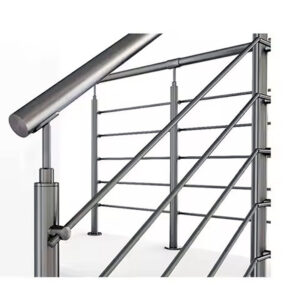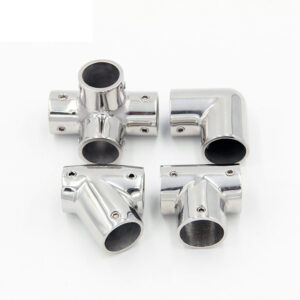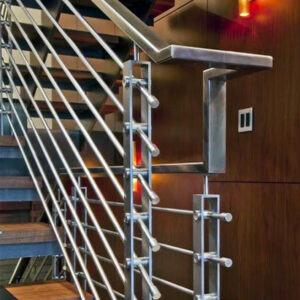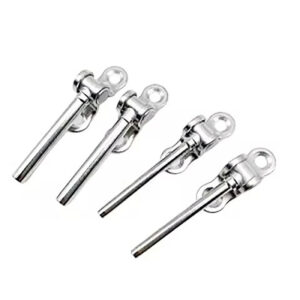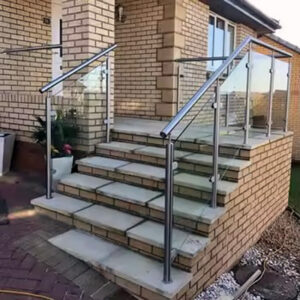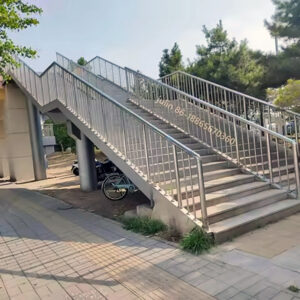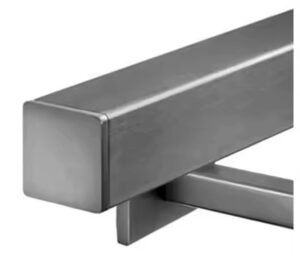
For architects, engineers, and contractors specifying coastal railings, the material choice is not an aesthetic preference but a critical durability calculation. The corrosive power of salt spray within one mile of the ocean creates an environment that demands specific metallurgical properties. A common and costly error is specifying the more common Grade 304 stainless steel, only to face premature pitting, rust, and structural compromise. This mistake stems from a fundamental misunderstanding of alloy chemistry and its real-world performance in extreme coastal zones.
The decision between Grade 304 and Grade 316 stainless steel posts is binary and non-negotiable for permanent installations. Getting it wrong doesn’t just affect appearance; it risks safety compliance, inflates lifecycle costs through early replacement, and undermines the project’s long-term value. This technical specification requires moving beyond initial capital cost to a total cost of ownership analysis, where the right material proves its worth over decades.
Grade 316 vs. Grade 304: The Core Difference for Coastal Use
The Chemical Imperative of Molybdenum
The performance gap between 304 and 316 stainless steel is rooted in chemistry. Both are austenitic alloys, relying on chromium for a passive oxide layer and nickel for formability and strength. The pivotal differentiator is molybdenum. Grade 316 contains 2-3% of this element, which dramatically enhances its resistance to chloride-induced pitting and crevice corrosion. In coastal atmospheres, wind-borne salt spray deposits chloride ions on metal surfaces. These ions aggressively attack the protective layer on standard 304 stainless, leading to localized corrosion that compromises integrity. This isn’t a minor upgrade; it’s a foundational requirement for durability. The evidence-based specification is clear: within one mile of the coast, 316 is mandated.
Application Boundaries and the One-Mile Rule
Industry practice and material science converge on a practical rule: the one-mile coastal zone. This boundary defines where the constant, fine salt mist creates an “extreme coastal” environment. Beyond this distance, chloride concentration typically drops enough for Grade 304 to perform adequately. Within it, only Grade 316 provides the necessary defense. This binary specification overrides all other initial considerations. We compared project specifications from coastal and inland sites and found that adherence to this rule was the single strongest predictor of long-term, maintenance-free performance. Ignoring it guarantees future problems.
Validating Material Specifications
Specifying “stainless steel” is insufficient. Documentation must explicitly call out ASTM A240 for plate or ASTM A276/A276M for bars and shapes, requiring Grade 316 (UNS S31600). This formal specification ensures the material meets the precise chemical composition, including the critical molybdenum content. Procurement should include mill test reports (MTRs) to verify compliance. This step prevents substitution with inferior or mislabeled material, a risk that can nullify the entire design intent for corrosion resistance.
| Key Differentiator | Grade 304 | Grade 316 |
|---|---|---|
| Molybdenum Content | 0% | 2-3% |
| Chloride Ion Resistance | Moderate | Excellent |
| Primary Corrosion Risk | Pitting & Crevice | Highly Resistant |
| Coastal Use Mandate | Beyond 1 mile | Within 1 mile |
Source: ASTM A240/A240M Standard Specification for Chromium and Chromium-Nickel Stainless Steel Plate, Sheet, and Strip for Pressure Vessels and for General Applications. This standard defines the chemical composition requirements, including the critical molybdenum content that distinguishes Grade 316 from Grade 304, forming the basis for material selection in corrosive environments.
Cost Comparison: 316 vs. 304 Stainless Steel Posts
Analyzing the Initial Premium
The upfront material cost for Grade 316 posts is typically 25-50% higher than for Grade 304. This premium can trigger value-engineering discussions aimed at cutting capital expenditure. However, evaluating this cost in isolation is a strategic error. The higher price reflects the raw cost of alloying elements like molybdenum and nickel, and the specialized processing required. For projects outside the coastal zone, this premium may be unjustified. For those within it, it is the cost of durability.
The Lifecycle Cost Perspective
The true economic analysis shifts from capital expenditure to total cost of ownership. In a harsh coastal environment, a 316 system can last two to four times longer before showing corrosive failure compared to 304. The higher initial investment directly mitigates significant future costs: frequent chemical cleaning to combat rust, disruptive spot repairs, and the complete, expensive early replacement of a failing railing system. The cost of replacing a corroded railing—including labor, demolition, and new installation—often dwarfs the initial material savings.
Justification and Return on Investment
Justifying the 316 specification requires framing it as risk mitigation and value preservation. The long-term value lies in maintained structural safety, sustained aesthetics, and minimal operational disruption. This provides a compelling return, making 316 the economically sound choice for permanent installations. A lifecycle cost model that factors in maintenance intervals and replacement cycles will always favor 316 in the correct environment.
| Cost Factor | Grade 304 | Grade 316 |
|---|---|---|
| Initial Material Premium | Baseline | 25-50% higher |
| Coastal Lifespan Expectancy | Shorter | 2-4x longer |
| Total Cost of Ownership | Higher lifecycle cost | Lower lifecycle cost |
| Economic Justification | Capital expenditure | Lifecycle cost analysis |
Source: Technical documentation and industry specifications.
Which Grade Performs Better Within 1 Mile of the Ocean?
Defining the Extreme Coastal Environment
Within one mile of the coastline, the environment is classified as “extreme coastal” due to persistent, wind-borne salt spray. This aerosolized saltwater settles on all surfaces, creating a continuous film of electrolytes that drives corrosion. The molybdenum in Grade 316 strengthens the passive layer against chloride ion penetration, a defense that Grade 304 lacks. The performance gap here is not gradual; it is categorical. Grade 304 will exhibit pitting and surface rust at an accelerated rate, while 316 maintains its integrity.
Structural and Aesthetic Integrity Risks
Corrosion is not merely cosmetic. Pitting corrosion creates localized points of weakness that can reduce the effective load-bearing cross-section of a post over time, compromising the safety of the entire railing system. Aesthetically, rust stains are irreversible on stainless steel and signal material failure. This degradation directly risks code compliance, as building officials require safety components to maintain their rated strength for the life of the structure. Specifying 304 within this zone introduces unacceptable liability.
The Broader Market Implication
The durability standard proven in coastal applications is reshaping expectations elsewhere. Alloys like 316 are now specified as premium, low-maintenance solutions for any demanding environment, including bridges, parking garages, and inland areas that use de-icing salts. The coastal use case has become the benchmark for material performance under chemical stress.
| Performance Metric | Grade 304 | Grade 316 |
|---|---|---|
| Environment Classification | Not recommended | Extreme coastal |
| Salt Spray Resistance | Accelerated corrosion | Non-negotiable requirement |
| Structural Integrity Risk | Compromised over time | Maintained for decades |
| Code Compliance Risk | Degrades over time | Long-term compliance |
Source: ASTM A276/A276M Standard Specification for Stainless Steel Bars and Shapes. This specification covers the bars and shapes used for structural posts, establishing the material performance standards that underpin compliance and durability assessments in corrosive settings.
Key Design & Engineering Factors for Coastal Posts
Posts as Tension Management Systems
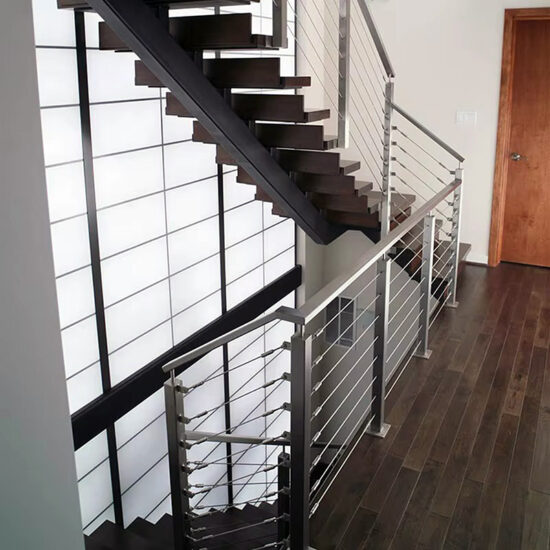
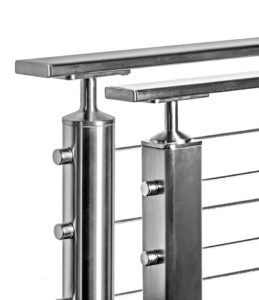
In cable railing applications, the primary function of a post shifts from a simple vertical support to a structural tension management system. The lateral force exerted by taut cables increases with span distance. This creates a bending moment at the base of the post. If the post lacks sufficient stiffness, it will deflect, leading to a sagging cable line and potential over-stress at connections. Engineering calculations for moment and deflection are therefore non-negotiable; posts cannot be selected based on diameter aesthetics alone.
Span, Diameter, and Wall Thickness
A general engineering rule is that spans exceeding six feet typically require posts with larger diameters (e.g., 3 inches or more) and/or thicker walls to provide the necessary section modulus to resist bending. The required size is a function of cable tension, post spacing, and design wind load. Easily overlooked details include the mounting detail’s ability to transfer this moment into the substrate without itself becoming a weak point. A robust post is ineffective if its base connection fails.
The Trend Toward Modular Platforms
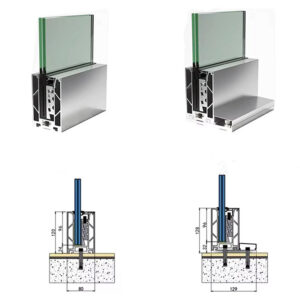
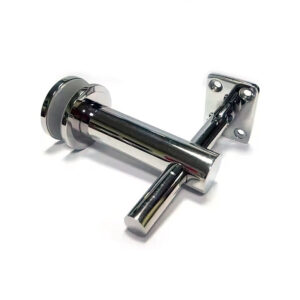
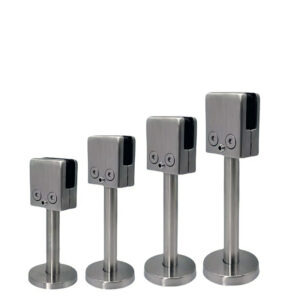
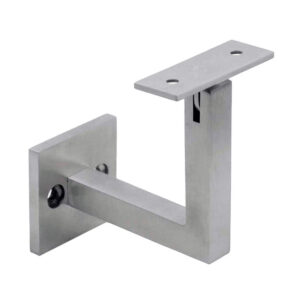
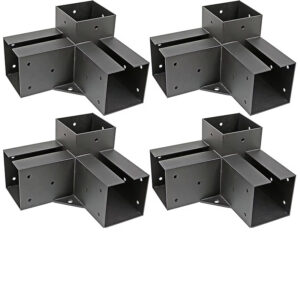
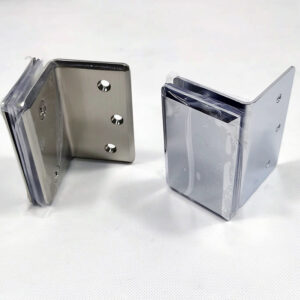
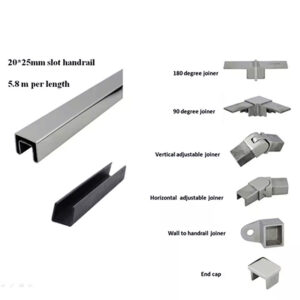
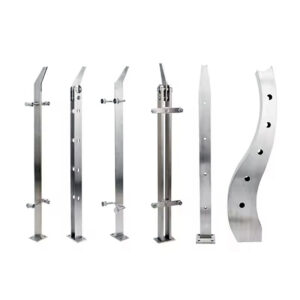
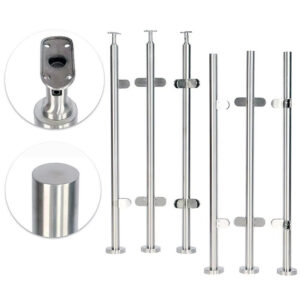
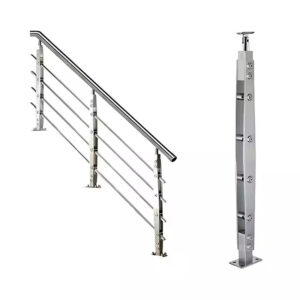
The industry is moving toward versatile, modular post systems designed to accommodate various infills—cable, glass, or wood-composite rails. This design convergence suggests a strategic shift: future specifications should focus on selecting adaptable anchor platforms that enable customization and simplify sourcing. For example, a comprehensive stainless steel railing components system built around a 316 post platform can streamline procurement and ensure compatibility across the entire assembly.
| Design Factor | Typical Requirement | Key Consideration |
|---|---|---|
| Primary Function | Structural tension management | Resist bending deflection |
| Critical Span Threshold | Over 6 feet | Larger diameter needed (e.g., 3″) |
| Post Selection Basis | Engineering calculations | Not aesthetics alone |
| System Trend | Modular, versatile platforms | Accommodate various infills |
Source: Technical documentation and industry specifications.
Installation & Hardware: Ensuring a Complete 316 System
The Criticality of Hardware Compatibility
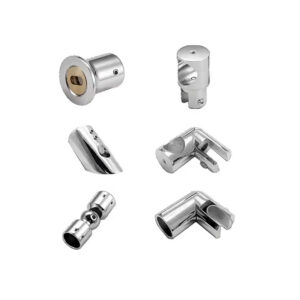
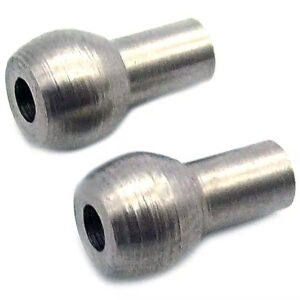
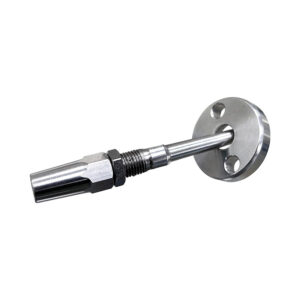
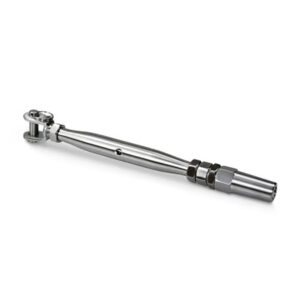
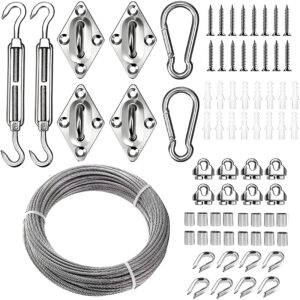
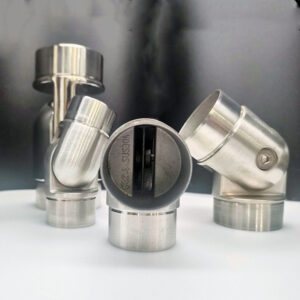
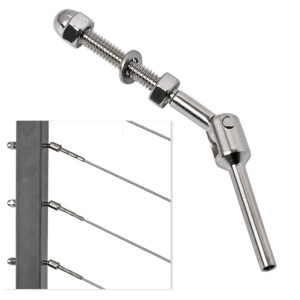
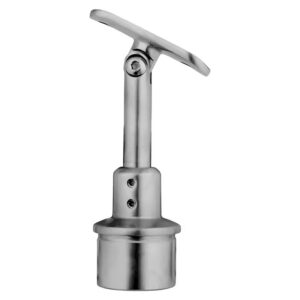
Specifying a 316 stainless steel post is only the first step. To prevent galvanic corrosion—an electrochemical reaction between dissimilar metals—every component in contact must also be marine-grade 316. This includes fasteners (bolts, screws), anchor brackets, cable fittings, and even washers. Using a 316 post with 304 or, worse, zinc-plated steel hardware creates a galvanic cell where the less noble metal (the hardware) will corrode aggressively, often leading to failure at the connection point first.
Mounting Method Trade-Offs
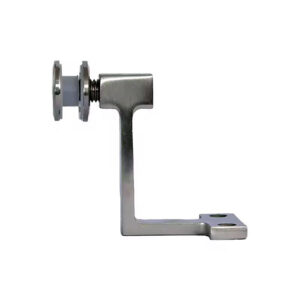
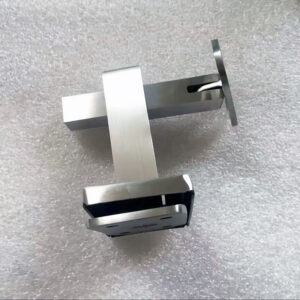
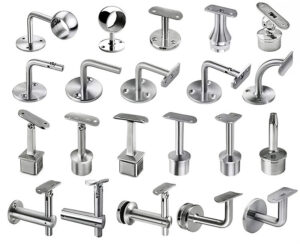
The mounting method presents a strategic choice between aesthetics and feasibility. Surface mounting, where the post base sits directly on the deck surface, offers a clean, minimalist look but requires robust subsurface support like engineered concrete footings. This makes it ideal for new construction but complex for retrofits. Side mounting, using brackets attached to the side of a structural beam or rim joist, facilitates renovations but leaves visible bracket arms. This choice forces a clear decision early in the design phase.
Pre-Installation Coordination
Rigorous pre-installation checks are essential to avoid costly on-site rework. This includes verifying hole patterns on posts match cable diameters and fittings, confirming layout dimensions account for post dimensions and hardware, and ensuring all components are on-site and compatible. A single mismatched part can halt an entire installation. Documentation per standards like EN 10088-3 ensures the technical delivery conditions for all semi-finished products are met, providing a chain of accountability from mill to site.
| Component | Specification | Rationale |
|---|---|---|
| Fasteners & Fittings | Marine-grade 316 | Prevent galvanic corrosion |
| Mounting: Surface | Clean, minimalist look | Requires robust concrete footings |
| Mounting: Side | Facilitates renovations | Visible bracket trade-off |
| Pre-Installation Check | Hole patterns, cable diameter | Avoid costly on-site rework |
Source: EN 10088-3 Stainless steels – Part 3: Technical delivery conditions for semifinished products, bars, rods, wire, sections and bright products of corrosion resisting steels for general purposes. This European standard specifies technical conditions for corrosion-resistant steel products, including fasteners and fittings, ensuring material compatibility within a complete system.
Long-Term Maintenance and Cleaning for Coastal Posts
The Essential Maintenance Routine
While 316 stainless steel is highly corrosion-resistant, its longevity and appearance benefit from a simple, periodic maintenance regimen. The primary task is a regular rinse with fresh water to remove salt buildup. This prevents chloride ions from concentrating and potentially disrupting the passive oxide layer. For most coastal installations, a monthly rinse during periods of high onshore winds or after storms is sufficient. This minimal upkeep is a key component of the total cost of ownership advantage.
Finish Selection and Upkeep
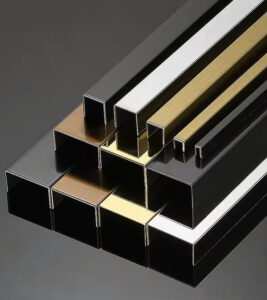
The chosen finish impacts maintenance frequency and effort. A brushed (satin) finish helps conceal minor scratches, water spots, and fingerprints, making it a practical choice for high-traffic or hard-to-reach areas. A polished mirror finish offers maximum visual luster but will show every fingerprint and water droplet, requiring more frequent cleaning to maintain its appearance. The decision often comes down to prioritizing durability of appearance versus achieving a specific aesthetic effect.
Contrast with Alternative Materials
This maintenance regimen stands in stark contrast to the constant battle against rust that would be required with a less suitable material like Grade 304 or carbon steel in a coastal zone. That battle involves abrasive cleaning, chemical treatments, and eventual repainting or replacement. The minimal care required for 316 reinforces the value of the correct initial specification.
| Activity | Frequency / Method | Impact on Finish |
|---|---|---|
| Primary Task | Fresh water rinse | Removes salt buildup |
| Brushed Finish Maintenance | Conceals minor marks | Lower visibility of spots |
| Polished Finish Maintenance | Maximizes luster | Shows fingerprints more |
| Maintenance Contrast vs. 304 | Minimal regimen | Constant battle against rust |
Source: Technical documentation and industry specifications.
Compliance, Safety, and Lifetime Value Considerations
Upholding Code and Safety Standards
Building code compliance for railings—governing height, load capacity (typically 200 lbs. concentrated load), and infill spacing—is non-negotiable. Specifying Grade 316 ensures the structural components maintain their integrity for decades, upholding these safety standards throughout the structure’s life. A corroded, weakened post cannot reliably meet the required load ratings, creating a liability. The material specification is thus the first link in the safety chain.
Navigating the Design Conflict: Safety vs. View
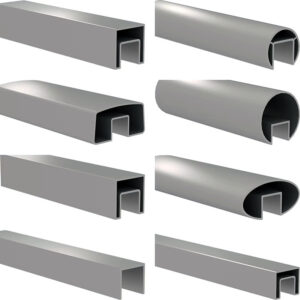
A significant design conflict arises between code requirements and view preservation. Many jurisdictions mandate a graspable top rail for safety, which can obstruct the clear, uninterrupted views that are the primary motivation for choosing cable railings. This conflict must be navigated early with local building officials. Solutions may involve approved top rail designs that meet graspability requirements while minimizing visual impact, or in some cases, demonstrating equivalent safety through engineered systems.
The Shift to Specialized Specification
The complexity of these interlocking dependencies—alloy performance, environmental load, structural engineering, and evolving codes—is shifting specification authority. Architects and builders increasingly rely on specialized manufacturers and experienced trade professionals who understand these nuances. These partners act as essential guides, providing design support, detailed quotes, and ensuring the final system is compliant, durable, and safe, transforming them from parts suppliers into specification partners.
Final Selection Criteria for Your Coastal Project
Synthesizing the Mandatory Checklist
Your final specification must integrate multiple technical and procedural criteria into a coherent package. First, mandate Grade 316 stainless steel for all structural posts and components within the one-mile coastal zone. Second, base post size, diameter, and wall thickness on engineering calculations for anticipated tension and wind loads. Third, ensure complete hardware compatibility by specifying 316 for every fastener, bracket, and fitting.
Validating Compliance and Partnership
Fourth, explicitly validate that the overall railing design meets local building codes, including top-rail requirements. Finally, partner with suppliers who offer integrated services like engineering review, fabrication oversight, and detailed material submittals. This emerging solutions-based model reduces project risk and complexity.
The Partner-Based Procurement Model
By applying these criteria, you secure a system that delivers lasting safety, aesthetics, and value. The goal is to move from purchasing discrete components to procuring a performance-guaranteed system from a knowledgeable partner.
| Criteria | Mandatory Specification | Validation Partner |
|---|---|---|
| Material (within 1 mile) | Grade 316 for all components | Supplier / Manufacturer |
| Structural Engineering | For tension & wind loads | Design professional |
| Hardware Compatibility | Full 316 system | Installer / Supplier |
| Code Compliance | Local height, load, rail rules | Building official |
| Procurement Model | Solutions-based with support | Specification partner |
Source: ASTM A479/A479M Standard Specification for Stainless Steel Bars and Shapes for Use in Boilers and Other Pressure Vessels. This standard covers stainless steel bars for critical applications, underscoring the need for rigorous material specification and validation to ensure long-term performance and safety in demanding environments.
The core decision is unequivocal: for coastal installations within one mile of the ocean, Grade 316 stainless steel is a technical requirement, not an option. This mandate extends beyond the posts to every fastener and fitting, ensuring a complete, galvanically compatible system. Prioritize engineering calculations for post sizing over aesthetic preference, and resolve the code conflict between top-rail safety and view preservation during the design phase, not on-site.
Need professional guidance to specify and source a complete, code-compliant 316 stainless steel railing system for your coastal project? The experts at Esang provide the technical support and integrated component solutions to ensure durability, safety, and long-term value from specification through installation.
For a detailed consultation on your specific project requirements, you can also Contact Us directly.
Frequently Asked Questions
Q: Why is Grade 316 stainless steel mandated for posts within one mile of the coast?
A: The 2-3% molybdenum content in Grade 316 provides essential resistance to chloride-induced pitting and crevice corrosion from persistent salt spray, which Grade 304 lacks. This chemical advantage is a foundational durability requirement for the “extreme coastal” zone. For projects in this proximity, specifying 316 is a technical necessity to ensure structural integrity and avoid premature failure, overriding initial cost considerations.
Q: How do you justify the higher upfront cost of 316 stainless steel for a coastal project?
A: Justify the 25-50% material premium through a total cost of ownership analysis. In coastal environments, Grade 316 lasts two to four times longer than 304, mitigating expensive lifecycle costs from early replacement, frequent maintenance, and operational disruption. This long-term value and reduced risk provide a compelling return, making 316 the economically sound choice for permanent installations where lifecycle performance is critical.
Q: What engineering factors beyond alloy grade are critical for coastal post design?
A: Posts must be engineered as structural tension management systems, especially for cable railings. Lateral forces increase with span distance, requiring sufficient diameter and wall thickness to resist bending deflection; spans over six feet often need larger diameters like 3 inches. This necessitates formal calculations, as posts cannot be selected on aesthetics alone. For high-wind coastal areas, you must size posts to handle both cable tension and environmental loads.
Q: What common installation mistake compromises a 316 stainless steel railing system?
A: Using incompatible hardware is a critical error. To prevent galvanic corrosion, every fastener, bracket, and cable fitting must also be marine-grade 316, ensuring a complete, compatible system. Material specifications for these components should reference standards like ASTM A276/A276M for bars and shapes. This means your procurement and installation plans must explicitly call out 316 for all metallic components, not just the posts.
Q: How does building code compliance impact the design of coastal cable railings?
A: Codes mandate specific heights, load capacities, and spacings. Using 316 stainless ensures components maintain integrity to uphold these safety standards for decades. A key conflict arises as many jurisdictions require a graspable top rail for safety, which can obstruct the clear views that motivate cable railing selection. You must resolve this design constraint with local authorities early in the project to avoid costly revisions.
Q: What is the recommended maintenance regimen for 316 stainless steel in coastal areas?
A: The primary task is periodic rinsing with fresh water to remove salt deposits and preserve the protective passive layer. Finish selection influences upkeep: a brushed finish better conceals minor marks, while a polished finish offers maximum luster but may show water spots. This minimal regimen is a key part of the total cost advantage. If your facility management strategy prioritizes low upkeep, specify a brushed finish for easier long-term care.
Q: What should we look for when selecting a supplier for a coastal railing project?
A: Partner with suppliers who offer integrated services like engineering design support, complete 316 hardware kits, and detailed quotes that reference material standards such as EN 10088-3 for corrosion-resistant steels. This solutions-based model reduces your risk and complexity. For a successful outcome, select a vendor that acts as a specification partner, not just a parts supplier.